
Prepare for your Dutch driving theory exam by delving into the specific rules for trams and priority situations that diverge from general traffic laws. This article explains these critical exceptions, helping you avoid common mistakes and build confidence for the CBR test. Understanding these nuances is key to safe driving in the Netherlands.
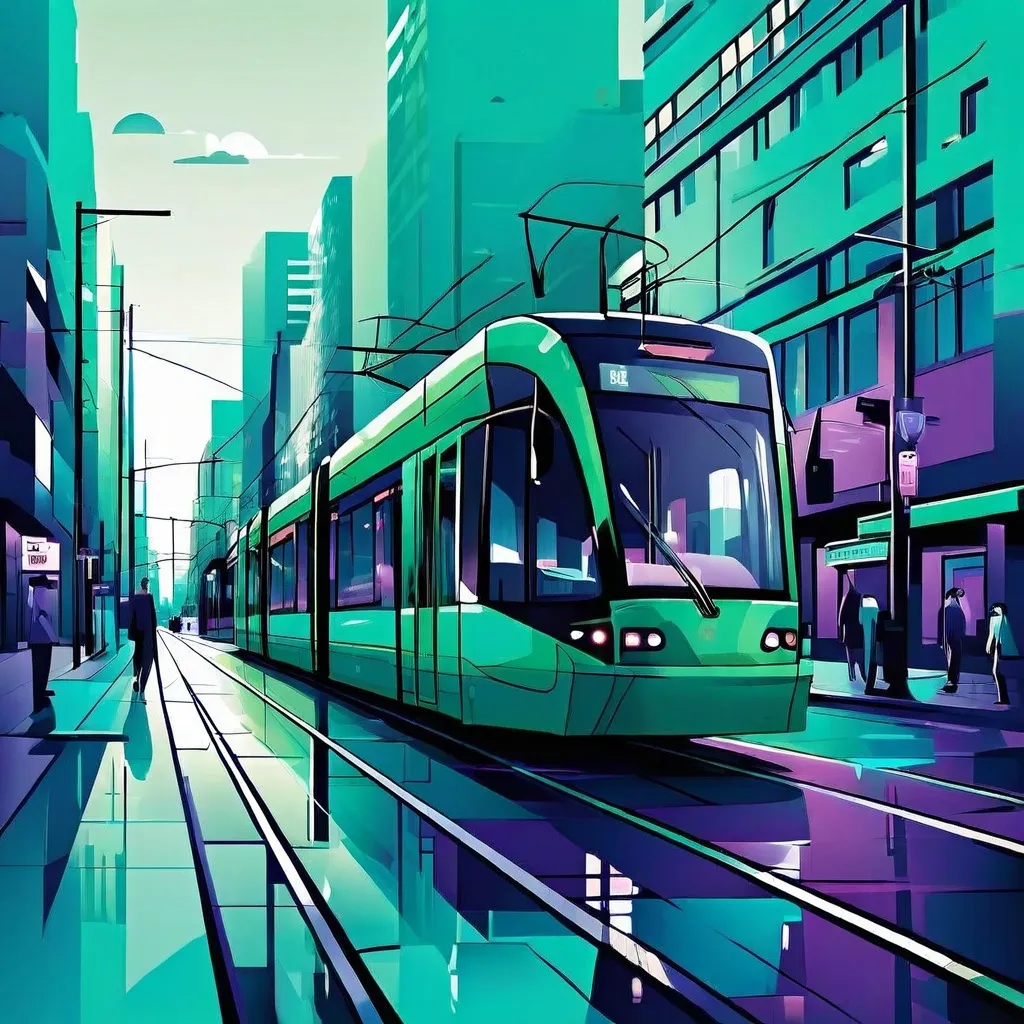
Article content overview
The Netherlands boasts a well-organized yet intricate road network, and as you prepare for your Dutch driving theory exam with the CBR, understanding its unique rules is paramount. Beyond the general principles of safe driving, certain situations, particularly those involving trams and specific priority scenarios, require careful attention. These Dutch traffic law nuances can often differ from what learners from other countries are accustomed to, leading to common misunderstandings and potential exam pitfalls. This article delves into these special road rules, providing clarity on tram priority, exceptions to standard traffic behaviour, and what the CBR expects you to know for a successful test and safe driving experience in the Netherlands.
Trams hold a unique position on Dutch roads, often possessing special privileges that can override general traffic rules. It's crucial to recognise that trams are not classified as emergency vehicles; their priority is a carefully legislated aspect of urban traffic management designed to keep public transport flowing efficiently. A common misconception is that trams always have priority, but this is not entirely true, and knowing the specifics is vital for both your exam and your safety.
At intersections, especially those without traffic lights or specific signage, trams generally have priority. This means that if you are approaching such an intersection and a tram is also approaching, you must yield to the tram. This rule is in place because trams often follow fixed routes and cannot easily deviate or stop. However, this priority is not absolute. For instance, if a tram encounters a stop sign or a yield sign, it is obligated to behave like any other road user and must give way to conflicting traffic. This distinction is frequently tested in CBR exam questions.
It is also important to remember that when a tram is turning, it often has priority over vehicles going straight or turning right. This is a complex situation where vigilance is key. Always be aware of a tram's intended path, especially when it is signalling a turn or appears to be changing lanes. The Dutch driving exam will assess your understanding of these varied tram priority rules to ensure you can navigate these situations safely and predictably.
The Netherlands has several specific road rules and conditions that can differ significantly from general traffic regulations or practices in other countries. These exceptions are designed to manage traffic flow, enhance safety, and accommodate various road users. Understanding these specific scenarios is a cornerstone of passing your CBR theory test, as the exam frequently probes these areas.
One critical area is the use of different road types and lanes. While most vehicles are expected to keep to the right, specific lanes might be designated for different users or purposes. For example, certain lanes might be reserved for public transport, including buses and sometimes trams, especially in busy urban areas. Drivers are prohibited from using these lanes unless specifically permitted by signage.
Another area of divergence involves situations where general rules about stopping and parking are modified. For instance, specific zones might have restrictions on stopping or parking, especially near junctions, pedestrian crossings, or bus stops, to maintain visibility and traffic flow. You must not stop on junctions, on parts of the road meant for other users (such as cycle lanes), on level crossings, within 5 meters of a pedestrian crossing, within 12 meters of a bus stop, in tunnels, or at the side of main roads where stopping is dangerous. These specific distances and locations are frequently tested.
Dutch traffic legislation outlines specific pathways for various road users, which may not always be the public carriageway. Pedestrians, cyclists, horse riders, and users of special vehicles (like mobility scooters) have designated areas. For instance, pedestrians may use the public carriageway if they form a column or are part of a procession. Horse riders are generally expected to use bridleways, or the roadside of the public carriageway if a bridle path is interrupted. Motorists and other vehicles not falling into these categories are expected to use the public carriageway.
Special attention is given to cycle paths and cycle/moped tracks. Road users other than cyclists and handicapped persons driving special vehicles are generally not permitted to use bicycle lanes marked with continuous lines, as these are exclusively for cyclists and moped riders. This segregation of traffic is a hallmark of Dutch road infrastructure and crucial to comprehend for the theory exam.
Intersections are critical points where the risk of conflict is high, and understanding priority rules is essential. While general rules about yielding to the right at unmarked intersections are fundamental, Dutch traffic also employs specific signage that clarifies or alters these rules.
The CBR will test your ability to interpret these signs and apply the corresponding priority rules. For example, encountering a yield sign means you must give way to all traffic on the intersecting road, even if it appears to be a minor road. Similarly, a stop sign necessitates a full stop and yielding to all other traffic. At unmarked intersections, the general rule of yielding to traffic on your right applies, unless other signs or road markings suggest otherwise. This seemingly simple rule can be a source of confusion, especially when combined with other traffic elements like trams or bicycles.
The CBR theory exam is designed to assess not just your knowledge of traffic rules but also your ability to apply them in practical, often nuanced, situations. Special Dutch road rules, especially those concerning trams and priority, are frequently featured to identify candidates who have a thorough understanding of the local traffic system.
One common exam trap involves situations where a tram must yield. Learners often assume trams always have priority. However, questions might present scenarios with trams approaching a yield or stop sign, requiring you to recognise that the tram must yield, not you. Always scrutinise the signs present in the scenario.
Another area to focus on is the distinction between different road users and their designated lanes. Understanding who is permitted to use cycle paths, pavements, or special bus lanes is crucial. The exam might present scenarios where you see a cyclist in a lane, and you need to know if you are allowed to enter that lane or if you must yield to the cyclist. The principle of driving as far to the right as possible is a fundamental rule, but exceptions exist, and understanding these is key.
While not strictly a "special" rule in terms of exceptions, the concept of safe speed is heavily tested. Article 19 of the traffic regulations states that a driver must always be able to bring their vehicle to a standstill within the distance they can see to be clear. This means your speed must always be appropriate for the visibility conditions and the traffic ahead. On motorways, the general speed limit is 130 km/h, on main roads 100 km/h, and on all other roads, it is typically 80 km/h, unless otherwise indicated by signs. Within built-up areas, the maximum speed for motor vehicles is generally 50 km/h, though this can be reduced to 30 km/h on specific paths like bicycle lanes, or 45 km/h on the road for mopeds.
The CBR exam also emphasizes understanding different road types, such as motorways (autoweg) and general roads (autosnelweg). For example, only motor vehicles capable of and permitted to travel at least 50 km/h are allowed on an autoweg. These distinctions are important for understanding where certain vehicles can and cannot go, and at what speeds.
Successfully navigating the Dutch driving theory exam, particularly concerning special road rules, requires diligent study and a keen eye for detail. The CBR is thorough in its assessment, and understanding the nuances of Dutch traffic law, especially regarding trams and priority situations, is non-negotiable. By familiarising yourself with these specific regulations, you not only prepare yourself for the exam but also equip yourself with the knowledge necessary to be a safe and confident driver on Dutch roads.
This article covers Dutch traffic law exceptions that differ from general driving principles, focusing on tram priority rules, stopping restrictions, and priority signage. Trams generally have priority at uncontrolled intersections but must yield at stop or yield signs. Specific prohibited stopping distances (5m from crossings, 12m from bus stops) are exact figures for the CBR exam. The content also clarifies the distinction between different road types, road user segregation, and the overriding Safe Speed Principle that requires adjusting speed to conditions even below posted limits.
A short set of high-value points that capture the most important ideas from this article.
Trams do not have absolute priority; they must yield at stop or yield signs, unlike emergency vehicles
You must not stop within 5 meters of a pedestrian crossing or within 12 meters of a bus stop
Priority road signs (B1/B2) and yield/stop signs (G1/G2) override general right-hand priority rules at intersections
Different road users have designated paths: cyclists use cycle paths, other vehicles use the public carriageway
Your speed must always allow you to stop within the distance you can see to be clear, regardless of posted limits
When a tram approaches a yield or stop sign, it must give way to you, not the other way around
The exact prohibited stopping distances are 5m from pedestrian crossings and 12m from bus stops
At unmarked intersections, yield to traffic from your right unless signs indicate otherwise
C3 sign prohibits entry for all vehicles except trams where their infrastructure dictates their path
The Safe Speed Principle (Article 19) requires you to always be able to stop within your visible clear distance
Assuming trams always have priority at every intersection, forgetting they must obey stop and yield signs
Confusing autoweg (motorway type) with autosnelweg (motorway), which have different access and speed rules
Believing that all lanes can be used by any vehicle, not recognizing reserved lanes for buses, trams, or cyclists
Forgetting the 5m and 12m stopping distance rules and incorrectly answering distance-based exam questions
Assuming posted speed limits override the safe speed obligation when visibility is reduced
Article content overview
A short set of high-value points that capture the most important ideas from this article.
Trams do not have absolute priority; they must yield at stop or yield signs, unlike emergency vehicles
You must not stop within 5 meters of a pedestrian crossing or within 12 meters of a bus stop
Priority road signs (B1/B2) and yield/stop signs (G1/G2) override general right-hand priority rules at intersections
Different road users have designated paths: cyclists use cycle paths, other vehicles use the public carriageway
Your speed must always allow you to stop within the distance you can see to be clear, regardless of posted limits
When a tram approaches a yield or stop sign, it must give way to you, not the other way around
The exact prohibited stopping distances are 5m from pedestrian crossings and 12m from bus stops
At unmarked intersections, yield to traffic from your right unless signs indicate otherwise
C3 sign prohibits entry for all vehicles except trams where their infrastructure dictates their path
The Safe Speed Principle (Article 19) requires you to always be able to stop within your visible clear distance
Assuming trams always have priority at every intersection, forgetting they must obey stop and yield signs
Confusing autoweg (motorway type) with autosnelweg (motorway), which have different access and speed rules
Believing that all lanes can be used by any vehicle, not recognizing reserved lanes for buses, trams, or cyclists
Forgetting the 5m and 12m stopping distance rules and incorrectly answering distance-based exam questions
Assuming posted speed limits override the safe speed obligation when visibility is reduced
Explore related topics, search based questions, and concepts that learners often look up when studying Dutch Special Road Rules & Trams. These themes reflect real search intent and help you understand how this topic connects to wider driving theory knowledge in the Netherlands.
Find clear and practical answers to common questions learners often have about Dutch Special Road Rules & Trams. This section helps explain difficult points, remove confusion, and reinforce the key driving theory concepts that matter for learners in the Netherlands.
Trams in the Netherlands generally have priority, especially at intersections without traffic lights or signs. However, they must yield to other traffic when encountering a stop sign or yield sign, similar to other vehicles.
When a tram is turning, it typically has priority over vehicles going straight or turning right. Always be aware of the tram's intended path.
No, trams are not considered emergency vehicles. While they have special traffic privileges and often priority, they do not operate under the same emergency protocols as police cars or ambulances.
Key exceptions include specific priority rules for trams, rules for special lanes (like bus lanes where trams might also travel), and understanding situations where general priority rules might be altered due to tram infrastructure.
While many countries give trams some priority, the Netherlands has specific regulations where trams often have priority even without explicit signage, and rules about turning trams are particularly emphasized for the CBR exam.
Start your targeted search now to explore a vast library of official Dutch driving theory articles and guides. Reinforce your understanding of specific traffic rules or road signs to ensure you are fully prepared for your upcoming CBR theory exam. Discover comprehensive explanations tailored for success.