Intersections are the primary location for accidents involving vulnerable road users, making them a central focus of the CBR theory exam. You will learn how to improve your situational awareness and lane positioning to reduce risks when navigating junctions. This guidance is essential for both your safety on the road and your ability to correctly answer hazard-perception questions in the Dutch theory test.
Article content overview
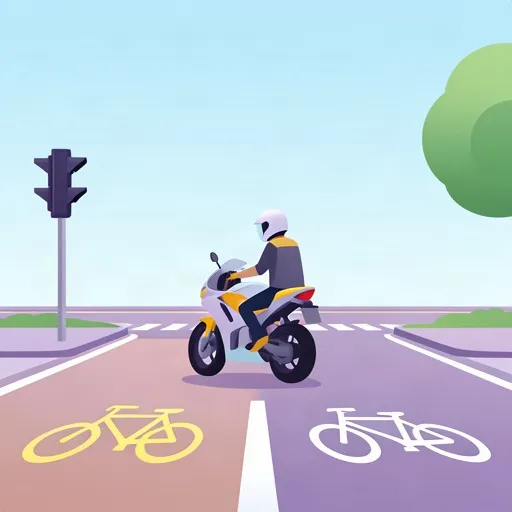
In the Netherlands, the density of traffic, combined with the shared use of space by cars, cyclists, and mopeds, creates complex urban environments. For motorcyclists, intersections are statistically the most dangerous zones, representing the primary location for serious accidents. Understanding why these junctions are high-risk areas is not just a matter of personal safety; it is a fundamental requirement for passing your CBR theory exam. By shifting your focus from simply following priority rules to mastering defensive driving and situational awareness, you can better navigate these hotspots and provide the correct answers in your theory test.
When you analyze traffic patterns in 50 km/h municipal zones, you will find that a significant majority of fatal accidents occur at intersections. This is where multiple traffic flows—cars turning left, cyclists crossing from the right, and pedestrians entering the zebra crossing—converge. Motorcyclists are particularly vulnerable in these scenarios because their smaller profile often makes them less visible to car drivers who may be distracted or preoccupied with oncoming traffic.
In the context of the CBR theory exam, you will often encounter questions regarding "hazard perception" at these junctions. The examiners test your ability to recognize that even if you have the legal right of way, the environment itself is inherently hazardous. Never assume that because you have priority, other road users will yield. A common mistake students make is focusing solely on the legal status of the road rather than the actual risk of a collision caused by another driver's error.
Visibility is your most effective tool for survival. As a motorcyclist, you must consciously manage your position in the lane to remain visible to all other road users. At an intersection, avoid "hiding" in the blind spots of larger vehicles, such as lorries or buses, which are common in Dutch urban traffic. By positioning yourself in the center of the lane, you make it harder for following traffic to crowd you and ensure you are clearly seen by drivers waiting at the intersection.
Always maintain a safe speed when approaching junctions, even those where you believe you have priority. The Dutch theory exam frequently uses scenarios involving slippery roads, low sun, or fog to test your ability to adapt to environmental factors. If your visibility is compromised, you must increase your following distance and reduce your speed significantly to ensure you have enough time to react to unexpected movements.
While the law dictates the rules of priority, the reality of the road demands caution. Many accidents involving motorcyclists at junctions occur because a car driver misjudged the speed of the approaching motorcycle. As a learner, you should adopt a proactive mindset: if you see a vehicle at a junction, do not wait for them to yield. Be ready to brake, keep your fingers on the clutch and brake levers, and monitor the driver's front wheels for any sign of movement.
Remember that in the Netherlands, your own safety is the absolute priority. If you are the first to arrive at an accident involving a motorcyclist or any other road user, your first step is to secure the scene, call 1-1-2, and ensure your own safety before attempting to help the victim.
Exam questions will often present you with a photo of a junction and ask what you should do. Do not just look for the road sign; look for the "danger" indicators. Is a bus obstructing your view? Is there a cyclist hidden behind a parked car? Your answer should always reflect a cautious approach, such as "reducing speed" or "preparing to brake," rather than simply "proceeding" because you have the right of way.
By internalizing these habits, you will not only perform better on the CBR theory exam but also develop the situational awareness necessary to navigate Dutch roads safely. The goal is to evolve from a learner who knows the rules to a rider who anticipates the errors of others, ensuring you arrive at your destination safely every time.
Article content overview
Explore related topics, search based questions, and concepts that learners often look up when studying Motorcyclist Safety at Intersections. These themes reflect real search intent and help you understand how this topic connects to wider driving theory knowledge in the Netherlands.
Find clear and practical answers to common questions learners often have about Motorcyclist Safety at Intersections. This section helps explain difficult points, remove confusion, and reinforce the key driving theory concepts that matter for learners in the Netherlands.
Intersections are where traffic flows cross, meaning this is where vehicles, cyclists, and motorcycles are most likely to enter each other's paths, significantly increasing the probability of a collision.
Always prioritize safety first. Look for answers that emphasize slowing down, scanning for other road users, and anticipating potential hazards before they occur.
Yes, proper lane positioning increases your visibility to other drivers and helps you maintain an escape route, which is a critical defensive driving habit for motorcycle riders.
Start your targeted search now to explore a vast library of official Dutch driving theory articles and guides. Reinforce your understanding of specific traffic rules or road signs to ensure you are fully prepared for your upcoming CBR theory exam. Discover comprehensive explanations tailored for success.