
Learners often confuse the speed capabilities of A1 motorcycles with mopeds, but legally they are treated much like passenger cars. This guide clarifies the maximum speed regulations on motorways, main roads, and built-up areas while emphasizing the defensive driving mindset required for riders. Mastering these rules will help you navigate both the CBR theory exam and real-world traffic scenarios with confidence.
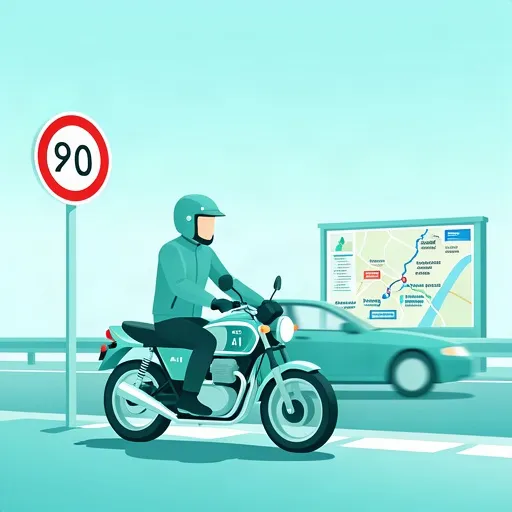
Article content overview
When preparing for your CBR theory exam, it is common to wonder how an A1 motorcycle—a light motorcycle with a capacity of up to 125cc—fits into the broader Dutch speed limit framework. A critical realization for learners is that, unlike mopeds or snorfietsen, A1 motorcycles are legally classified as motor vehicles. This means that, in terms of speed regulations, they are largely subject to the same limits as passenger cars.
While you are legally permitted to travel at the maximum speed posted on the road, your actual speed must always be tailored to environmental conditions. Mastering these rules is not just about memorizing numbers; it is about demonstrating to the CBR that you understand how to navigate Dutch motorways, main roads, and urban environments safely while on two wheels.
In the Netherlands, speed limits are standardized based on the type of road and the specific zone you are in. For an A1 motorcycle, you must adhere to the following general limits unless indicated otherwise by traffic signs:
| Road Type | Maximum Speed |
|---|---|
| Motorways (Autosnelweg) | 130 km/h (unless 100 km/h is posted) |
| Main Roads (Autoweg) | 100 km/h |
| Built-up Areas | 50 km/h |
| Outside Built-up Areas (Other roads) | 80 km/h |
A recurring theme in the Dutch theory exam is the distinction between what is legally allowed and what is considered safe driving behavior. Even if the law permits you to ride at 130 km/h on a motorway, doing so on an A1 motorcycle in heavy rain or high winds might be classified as dangerous driving. Article 5 of the Road Traffic Act (Wegenverkeerswet) stipulates that you should not act in a way that causes danger or hinders traffic.
Because a motorcycle lacks a protective chassis, the consequences of a collision at high speeds are significantly more severe than they would be in a car. When you encounter high-speed traffic, maintaining a defensive position—fully within your lane and not riding between lanes—is essential to ensuring your visibility to other drivers.
Learners frequently confuse the speed regulations of mopeds (bromfietsen) with those of A1 motorcycles. It is vital to remember that mopeds are restricted by design and regulation to much lower speeds (typically 45 km/h on the road), and they are strictly prohibited from using motorways and main roads. An A1 motorcycle is capable of reaching highway speeds, which subjects the rider to the same flow of traffic as heavy trucks and cars, requiring much higher situational awareness.
When you sit for your CBR theory exam, pay close attention to questions regarding "speed appropriate to the situation." If a question shows a scene with dense fog, heavy traffic, or a slippery road surface, the correct answer will almost always be to reduce your speed, regardless of what the standard road limit is. Additionally, never assume that because your A1 motorcycle can reach a certain speed, it is always wise to do so; demonstrating mature judgment is a key component of passing your theory test.
This article clarifies that A1 motorcycles, despite their light engine capacity (up to 125cc and 11kW), are legally classified as motor vehicles in the Netherlands and must follow the same speed limits as cars: 130 km/h on motorways (often reduced to 100 km/h during daytime), 100 km/h on main roads, 50 km/h in built-up areas, and 80 km/h on other roads outside built-up areas. The content emphasizes that while these are legal maximums, riders must always consider 'safe speed' relative to conditions—a key distinction tested on the CBR exam—citing Article 5 of the Road Traffic Act which prohibits endangering other road users. Unlike mopeds restricted to 45 km/h and banned from motorways, A1 motorcycles share the road with heavy trucks and high-speed traffic, requiring heightened situational awareness and defensive lane positioning to remain visible. For exam success, focus on recognizing that scenario-based questions with adverse conditions will always require reducing speed below the posted limit.
A short set of high-value points that capture the most important ideas from this article.
A1 motorcycles are classified as motor vehicles in Dutch law, meaning they follow the same speed limits as passenger cars, unlike mopeds which have their own restrictions.
Dynamic speed signs on Dutch motorways are legally enforceable—many default to 130 km/h but reduce to 100 km/h between 06:00 and 19:00.
The concept of 'safe speed' differs from 'legal speed'; you must always adjust your speed to match weather, traffic, and road conditions regardless of posted limits.
A1 motorcycles (up to 125cc, 11kW) can legally use motorways, unlike mopeds (bromfietsen) which are restricted to 45 km/h and prohibited from motorways.
Maintaining a defensive lane position—fully within your lane—is essential for visibility among high-speed traffic on motorways.
Motorway (Autosnelweg): 130 km/h default, often 100 km/h during daytime; Main road (Autoweg): 100 km/h; Built-up area (Bebouwde kom): 50 km/h; Other roads outside built-up areas: 80 km/h.
Mopeds (bromfietsen) are limited to 45 km/h and cannot access motorways or main roads—A1 motorcycles face none of these restrictions.
Article 5 of the Dutch Road Traffic Act (Wegenverkeerswet) requires you never to act in a way that endangers or hinders other road users.
On motorways, dynamic illuminated speed limits override the standard signposted limit when active—they must be obeyed.
Visibility to other drivers is critical; ride within your lane position rather than filtering between lanes.
Confusing mopeds with A1 motorcycles and applying the wrong speed limits or road access rules.
Assuming 130 km/h is always permitted on motorways without checking for active dynamic speed restrictions.
Thinking that if a speed is legally allowed, it is automatically the appropriate speed for current conditions.
Believing that lane filtering (riding between lanes) increases safety—it actually reduces visibility to other drivers.
Failing to adjust speed for adverse conditions such as rain, fog, wind, or heavy traffic on high-speed roads.
Article content overview
A short set of high-value points that capture the most important ideas from this article.
A1 motorcycles are classified as motor vehicles in Dutch law, meaning they follow the same speed limits as passenger cars, unlike mopeds which have their own restrictions.
Dynamic speed signs on Dutch motorways are legally enforceable—many default to 130 km/h but reduce to 100 km/h between 06:00 and 19:00.
The concept of 'safe speed' differs from 'legal speed'; you must always adjust your speed to match weather, traffic, and road conditions regardless of posted limits.
A1 motorcycles (up to 125cc, 11kW) can legally use motorways, unlike mopeds (bromfietsen) which are restricted to 45 km/h and prohibited from motorways.
Maintaining a defensive lane position—fully within your lane—is essential for visibility among high-speed traffic on motorways.
Motorway (Autosnelweg): 130 km/h default, often 100 km/h during daytime; Main road (Autoweg): 100 km/h; Built-up area (Bebouwde kom): 50 km/h; Other roads outside built-up areas: 80 km/h.
Mopeds (bromfietsen) are limited to 45 km/h and cannot access motorways or main roads—A1 motorcycles face none of these restrictions.
Article 5 of the Dutch Road Traffic Act (Wegenverkeerswet) requires you never to act in a way that endangers or hinders other road users.
On motorways, dynamic illuminated speed limits override the standard signposted limit when active—they must be obeyed.
Visibility to other drivers is critical; ride within your lane position rather than filtering between lanes.
Confusing mopeds with A1 motorcycles and applying the wrong speed limits or road access rules.
Assuming 130 km/h is always permitted on motorways without checking for active dynamic speed restrictions.
Thinking that if a speed is legally allowed, it is automatically the appropriate speed for current conditions.
Believing that lane filtering (riding between lanes) increases safety—it actually reduces visibility to other drivers.
Failing to adjust speed for adverse conditions such as rain, fog, wind, or heavy traffic on high-speed roads.
Explore related topics, search based questions, and concepts that learners often look up when studying A1 Motorcycle Speed Limits NL. These themes reflect real search intent and help you understand how this topic connects to wider driving theory knowledge in the Netherlands.
Find clear and practical answers to common questions learners often have about A1 Motorcycle Speed Limits NL. This section helps explain difficult points, remove confusion, and reinforce the key driving theory concepts that matter for learners in the Netherlands.
Yes, A1 motorcycles follow the same general maximum speed limits as passenger cars on Dutch roads: 130 km/h on motorways, 100 km/h on main roads, and 80 km/h on other roads outside built-up areas.
Yes. Mopeds are restricted to 45 km/h on the road, whereas A1 motorcycles are treated as regular motor vehicles and must adhere to standard speed limits applicable to cars.
Motorcyclists lack the protective chassis of a car, making them significantly more vulnerable in the event of a collision or incident, even when traveling at the same legal speed as other vehicles.
The maximum speed limit in built-up areas for A1 motorcycles is 50 km/h, unless otherwise indicated by road signs.
Start your targeted search now to explore a vast library of official Dutch driving theory articles and guides. Reinforce your understanding of specific traffic rules or road signs to ensure you are fully prepared for your upcoming CBR theory exam. Discover comprehensive explanations tailored for success.