While Tesla's FSD Supervised has received RDW type approval, it is essential to understand that it does not replace the need for an active, human driver. This guide covers the critical distinction between advanced driver assistance systems and autonomous driving, emphasizing that you remain legally responsible for the vehicle at all times. Understanding these limits is vital for safe driving practices and success in your CBR theory exam.
Article content overview
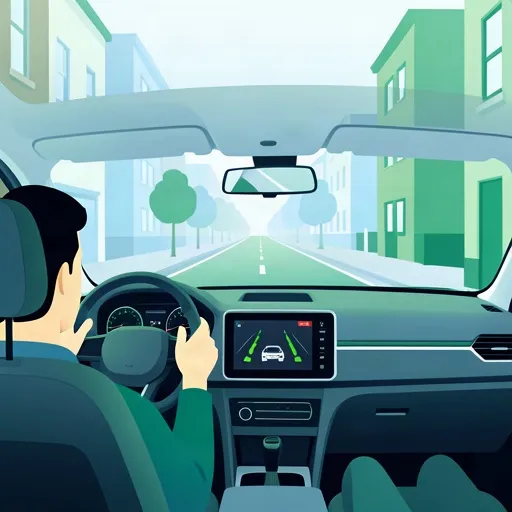
The automotive landscape in the Netherlands is evolving rapidly with the introduction of sophisticated vehicle technologies. Recently, the Netherlands Vehicle Authority (RDW) granted type approval for Tesla's FSD (Full Self-Driving) Supervised system. While this milestone highlights significant advancements in engineering, it is critical for learner drivers and experienced motorists alike to understand that this system is classified strictly as an Advanced Driver Assistance System (ADAS). Under Dutch traffic law, this classification means that the vehicle does not drive itself; rather, it provides support, and the human driver retains 100% of the legal liability at all times.
The RDW's decision to approve FSD Supervised followed over 1.5 years of rigorous testing, covering 1.8 million kilometers of European driving data and 3,000 hours of track and public road assessments. Despite this extensive verification, the system is not a substitute for human attention. In the context of your CBR theory exam, it is essential to distinguish between "autonomous driving" and "assistance." ADAS features, such as adaptive cruise control, lane-keeping assistance, and automatic emergency braking, are designed to aid the driver, not to replace the need for constant observation and control.
The principle that a human must always remain in full control of the vehicle, monitoring the surroundings and prepared to intervene instantly, regardless of the level of automated assistance active in the car.
Do not fall for the "false sense of security" trap. Even when your vehicle is navigating through traffic or managing its speed, you are legally obligated to keep your hands on the steering wheel and your eyes on the road. The system can make errors, and the Dutch law holds the human driver responsible for every action the vehicle takes on public roads.
According to the Road Traffic Act 1994, the driver is defined as the person operating the motor carriage or under whose immediate supervision the vehicle is driven. When using features like FSD Supervised, you are the supervisor of the system. If the vehicle fails to recognize a "zone" sign or reacts improperly to a cyclist or emergency vehicle, the legal consequences fall squarely on you. The RDW mandates monthly reporting on these systems precisely because the technology is not yet infallible and requires constant human oversight.
Many students confuse ADAS with autonomous driving. Autonomous driving would imply that the system is capable of navigating from point A to point B without any human intervention or supervision. Currently, no production vehicle available to the general public in the Netherlands is classified as fully autonomous. Features like FSD Supervised serve as "last-resort" safety tools—such as automatic emergency braking—or convenience tools like adaptive cruise control. They are intended to reduce the consequences of an accident, but they are not designed to prevent them entirely without your active, competent management.
On your theory exam, you may encounter questions regarding the limitations of modern vehicle technologies. Remember these core concepts: safety systems are an extension of your own capabilities, not a replacement. You must always be in a position to react to traffic situations faster and more accurately than the software. By maintaining a defensive driving mindset, you ensure that you stay compliant with Dutch traffic regulations and keep yourself and other road users safe.
Article content overview
Explore related topics, search based questions, and concepts that learners often look up when studying Tesla FSD Supervised and Driver Responsibility. These themes reflect real search intent and help you understand how this topic connects to wider driving theory knowledge in the Netherlands.
Find clear and practical answers to common questions learners often have about Tesla FSD Supervised and Driver Responsibility. This section helps explain difficult points, remove confusion, and reinforce the key driving theory concepts that matter for learners in the Netherlands.
No. RDW approval classifies FSD Supervised as an ADAS feature, meaning the driver must always remain fully alert and ready to intervene, as they are legally responsible for the vehicle at all times.
ADAS systems assist the driver with specific tasks like steering or braking but require the driver to remain in control. Autonomous driving theoretically removes the need for a human driver, which is not currently the case for FSD Supervised.
Yes. Under Dutch law, the human driver remains 100% liable for the vehicle's behavior, regardless of which driver assistance systems are currently active.
The exam emphasizes your duty to be in control and vigilant. Understanding that ADAS tools are only for support—not for replacing your attention—is a key concept in safe and responsible driving.
Start your targeted search now to explore a vast library of official Dutch driving theory articles and guides. Reinforce your understanding of specific traffic rules or road signs to ensure you are fully prepared for your upcoming CBR theory exam. Discover comprehensive explanations tailored for success.