
The AM driving licence is a critical component of Dutch traffic law that governs the operation of various low-speed motorised vehicles. This guide clarifies the distinctions between bromfiets, snorfiets, speed pedelecs, and brommobielen to ensure you understand exactly what you are qualified to drive. Whether you are preparing for your initial test or wondering how your existing car or motorcycle licence grants you automatic privileges, this article provides the essential legal framework you need for the theory exam.
Article content overview
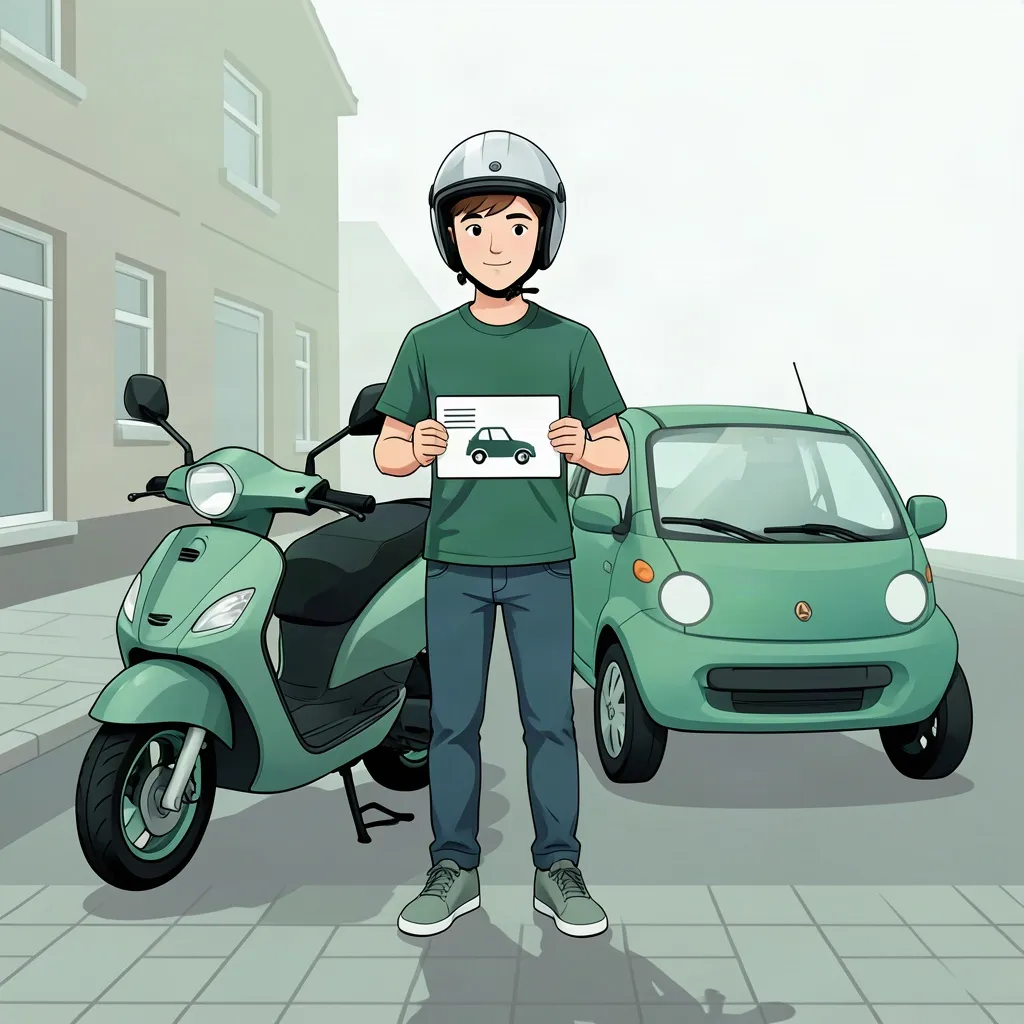
In the Netherlands, navigating the rules regarding mopeds, scooters, and microcars is a fundamental step for many young drivers. The category AM driving licence is the official credential required to operate these vehicles on public roads. Whether you are aiming to ride a traditional bromfiets or drive a closed-cabin brommobiel, understanding the specific legal requirements and age criteria is essential for your success in the CBR theory exam.
The category AM licence is a versatile credential that covers a range of motorized two-wheeled and certain four-wheeled vehicles. It is designed for low-speed transport and is distinct from motorcycle or car licences. In the Dutch traffic system, these vehicles are categorized based on their technical speed limits and construction, which directly impacts where you are allowed to drive and which traffic rules you must follow.
The AM licence is the official authorization in the Netherlands to operate mopeds (bromfietsen), light mopeds (snorfietsen), speed pedelecs, and moped cars (brommobielen).
It is a common point of confusion for students to distinguish between these vehicles. A bromfiets typically has a maximum design speed of 45 km/h, while a snorfiets is limited to 25 km/h and generally must use the bicycle path. A speed pedelec is a high-speed electric bicycle that also falls under this licence category. Finally, a brommobiel is a four-wheeled vehicle with a limited maximum speed, often used by those who prefer the safety and comfort of a closed cabin.
While the general category is AM, there is a technical distinction in how you qualify. If you undergo your practical training and exam on a two-wheeled moped, you receive the standard AM licence, which grants you the authority to drive any vehicle within this entire category, including moped cars. However, if you choose to take your practical exam specifically in a brommobiel, you will receive an AM4 qualification.
Be aware that if you obtain your licence via the AM4 practical exam, you are strictly limited to driving four-wheeled moped cars (brommobielen). You will not be legally permitted to ride a two-wheeled moped, snorfiets, or speed pedelec.
One of the most beneficial aspects of Dutch driving law is the automatic inclusion of the AM category for individuals who have already earned higher-level licences. If you already hold a valid Category A (motorcycle) or Category B (passenger car) driving licence, the AM qualification is added to your documentation automatically. You are not required to take a separate theory or practical exam for mopeds in this case.
The CBR has set clear age thresholds for starting your journey toward an AM licence. You can begin taking your theory exam as early as 15.5 years of age. This early start allows students to focus on road safety, priority rules, and traffic signs well before they reach the minimum age of 16 for the practical exam. Preparation is key, as the theory exam covers the same core traffic knowledge required for all motorized road users in the Netherlands.
| Vehicle Type | Max Speed | Typical Path |
|---|---|---|
| Snorfiets | 25 km/h | Bicycle path |
| Bromfiets | 45 km/h | Roadway/Bicycle path |
| Speed Pedelec | 45 km/h | Roadway/Bicycle path |
| Brommobiel | 45 km/h | Roadway |
When studying for the CBR theory exam, keep in mind that the authorities emphasize safety and situational awareness. A common exam trap involves the use of special mopeds, such as the Stint, Segway, or Trikke. Currently, these specialized vehicles do not require an AM driving licence to operate, though regulations are subject to change. Always ensure you are reviewing the most current definitions provided by the CBR, as the nuances between path usage—such as whether a moped belongs on the road or the cycle path—are frequent topics in theory questions.
The AM driving licence in the Netherlands authorises operation of mopeds (bromfiets), light mopeds (snorfiets), speed pedelecs, and moped cars (brommobielen), each with specific speed limits and path requirements. A critical distinction exists between the standard AM licence (gained via two-wheeled practical exam) and the AM4 qualification (gained via brommobiel practical exam), as AM4 holders cannot legally operate two-wheeled vehicles. Holders of Category A or B licences automatically receive AM privileges without additional testing. The CBR sets 15.5 years as the minimum age for theory exams and 16 for practical examinations, making early preparation essential for success.
A short set of high-value points that capture the most important ideas from this article.
The AM licence covers four vehicle types: bromfiets (45 km/h), snorfiets (25 km/h), speed pedelecs (45 km/h), and brommobielen (45 km/h)
The AM4 qualification restricts you to four-wheeled brommobielen only - you cannot legally ride two-wheeled mopeds with this licence
If you hold a Category A or B licence, AM is automatically included without additional exams
Snorfietsen (25 km/h) must use the bicycle path, while bromfietsen and speed pedelecs can use both the roadway and bicycle path
You can take the CBR theory exam at 15.5 years, but must wait until 16 for the practical exam
Bromfiets max speed is 45 km/h; snorfiets max speed is 25 km/h - this speed difference determines path usage rules
AM4 practical exam means you are limited to brommobielen only - this is a permanent restriction on your licence
Automatic AM inclusion applies only to holders of valid A or B licences, not other categories
Special vehicles like Stint, Segway, and Trikke currently do not require an AM licence, though regulations may change
The C16 road sign indicates the end of a mandatory cycle path where mopeds must rejoin the roadway
Assuming AM4 qualification allows driving all AM vehicles - it only permits brommobielen
Confusing snorfietsen with bromfietsen when answering path usage questions (25 vs 45 km/h)
Believing a separate AM exam is needed when already holding a Category A or B licence
Forgetting that speed pedelecs require AM licence despite being electrically assisted bicycles
Assuming all mopeds can use the roadway - snorfietsen must stay on bicycle paths by default
Article content overview
A short set of high-value points that capture the most important ideas from this article.
The AM licence covers four vehicle types: bromfiets (45 km/h), snorfiets (25 km/h), speed pedelecs (45 km/h), and brommobielen (45 km/h)
The AM4 qualification restricts you to four-wheeled brommobielen only - you cannot legally ride two-wheeled mopeds with this licence
If you hold a Category A or B licence, AM is automatically included without additional exams
Snorfietsen (25 km/h) must use the bicycle path, while bromfietsen and speed pedelecs can use both the roadway and bicycle path
You can take the CBR theory exam at 15.5 years, but must wait until 16 for the practical exam
Bromfiets max speed is 45 km/h; snorfiets max speed is 25 km/h - this speed difference determines path usage rules
AM4 practical exam means you are limited to brommobielen only - this is a permanent restriction on your licence
Automatic AM inclusion applies only to holders of valid A or B licences, not other categories
Special vehicles like Stint, Segway, and Trikke currently do not require an AM licence, though regulations may change
The C16 road sign indicates the end of a mandatory cycle path where mopeds must rejoin the roadway
Assuming AM4 qualification allows driving all AM vehicles - it only permits brommobielen
Confusing snorfietsen with bromfietsen when answering path usage questions (25 vs 45 km/h)
Believing a separate AM exam is needed when already holding a Category A or B licence
Forgetting that speed pedelecs require AM licence despite being electrically assisted bicycles
Assuming all mopeds can use the roadway - snorfietsen must stay on bicycle paths by default
Explore related topics, search based questions, and concepts that learners often look up when studying AM Licence Requirements Explained. These themes reflect real search intent and help you understand how this topic connects to wider driving theory knowledge in the Netherlands.
Find clear and practical answers to common questions learners often have about AM Licence Requirements Explained. This section helps explain difficult points, remove confusion, and reinforce the key driving theory concepts that matter for learners in the Netherlands.
You may take the theory exam for your AM driving licence from the age of 15.5 years.
No, if you already possess a valid B car licence or an A motorcycle licence, you are automatically qualified for category AM and do not need a separate exam.
The AM licence allows you to drive mopeds, snorfietsen, speed pedelecs, and brommobielen. The AM4 licence is specifically for microcars (brommobielen); if you pass your practical exam in a microcar, you are only qualified to drive a brommobiel and not two-wheeled mopeds.
Currently, you do not need a specific driver's licence for these special mopeds, though the Dutch Ministry is reviewing potential future regulations.
Start your targeted search now to explore a vast library of official Dutch driving theory articles and guides. Reinforce your understanding of specific traffic rules or road signs to ensure you are fully prepared for your upcoming CBR theory exam. Discover comprehensive explanations tailored for success.