Learn the specific Austrian traffic law requirements for yielding to emergency vehicles, as outlined in §26 StVO. This article details your obligations when encountering vehicles with blue lights and sirens, emphasizing the importance of moving to the right and stopping promptly. Understanding these rules is crucial for safe driving practice and for succeeding in your Austrian driving theory test.
Article content overview
Navigating Austrian roads requires a keen understanding of various traffic regulations, and few are as critical as knowing how to react when emergency vehicles approach. When you see flashing blue lights (Blaulicht) and hear the distinctive wail of a siren, your immediate actions are crucial for public safety and for demonstrating your competency as a driver. This article delves into the specific Austrian traffic laws, primarily §26 of the Straßenverkehrsordnung (StVO), that govern your obligations when encountering emergency services, ensuring you are well-prepared for your Austrian driving theory exam and for safe driving in practice.
Mastering these rules is not just about passing the theory test; it's about knowing how to act decisively and correctly in potentially life-saving situations. The principles of yielding to emergency vehicles are fundamental to maintaining traffic flow and allowing essential services to reach their destinations without delay. We will explore the legal requirements, the nuances of Austrian road conventions, and how these are assessed in the official driving theory examinations.
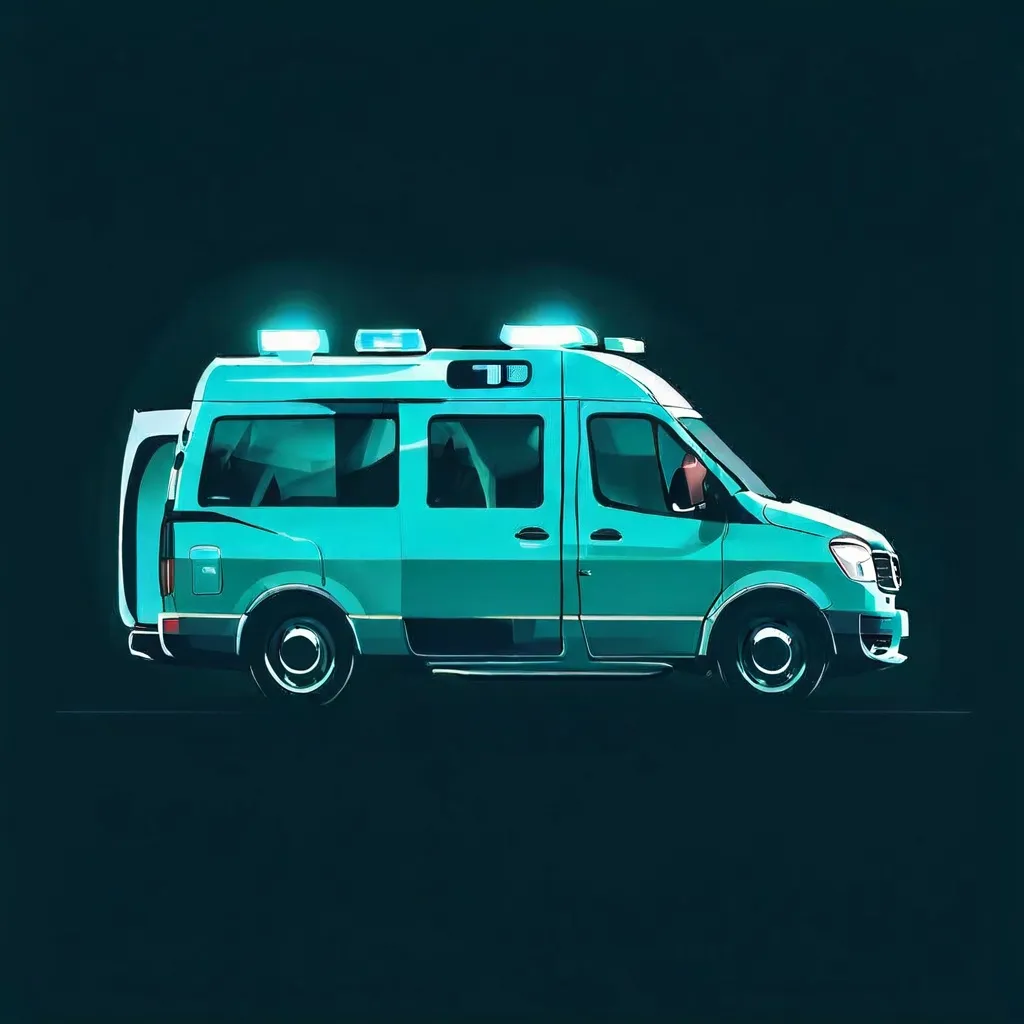
In Austria, the visual and auditory cues of an approaching emergency vehicle are unmistakable and demand immediate attention. Vehicles operated by the police (Polizei), ambulance services (Rettung), fire brigades (Feuerwehr), and other authorised emergency organisations are equipped with blue flashing lights and often the characteristic two-tone siren (Martinshorn). The law, as codified in §26 of the StVO, mandates that drivers of all other vehicles must make way for these vital services when they are in operation. This obligation applies to any situation where these vehicles are responding to an emergency, signifying a "Gefahr im Verzug" or imminent danger.
It's important to note that the use of blue lights and sirens is restricted to genuine emergencies. These signals are reserved for urgent situations, such as responding to accidents, fires, medical crises, or law enforcement operations. While the law requires you to yield, it also expects you to do so safely and without causing further hazards. The core principle is to ensure the emergency vehicle can proceed unimpeded, reaching its destination as quickly as possible.
Vehicles designated by Austrian law, equipped with blue flashing lights and/or sirens, used by emergency services like police, ambulance, and fire brigade to respond to urgent situations and provide essential services.
When an emergency vehicle, identifiable by its blue lights and siren, is approaching, the Austrian Road Traffic Act (§26 StVO) clearly states that all other road users must grant them priority. This is not a suggestion; it is a legal requirement. Your primary duty is to facilitate their passage as safely and swiftly as possible. This involves actively assessing the situation and taking appropriate action to clear the path ahead.
The most common and expected response is to move your vehicle to the right side of the carriageway and come to a complete stop. This action should be performed as soon as it is safe to do so, without abruptly braking or causing a dangerous situation for other road users. On multi-lane roads and motorways, this yielding behaviour is complemented by another crucial rule designed to create a clear passage.
A legal term in Austria signifying imminent danger, which justifies the use of emergency signals and overriding certain traffic rules by emergency vehicles.
Beyond simply moving to the right and stopping, Austrian law, specifically §46 StVO, mandates the formation of an emergency corridor, known as the "Rettungsgasse," on roads with multiple lanes. This rule is particularly vital on Autobahnen and Schnellstraßen, where traffic can be dense and high-speed. The purpose of the Rettungsgasse is to create a clear path down the centre of the road for emergency vehicles to navigate through stationary or slow-moving traffic.
On roads with two lanes in the same direction, drivers in the right lane must move to the right, and drivers in the left lane must move to the left. On roads with three or more lanes in the same direction, drivers in the leftmost lane must move to the far left, and drivers in all other lanes must move as far right as possible. This systematic manoeuvre ensures that a clear lane is created between the outermost right lane and the lane to its left. Failing to form a Rettungsgasse is a serious traffic offence and can significantly impede emergency response times.
When approaching an intersection, your obligation to yield to an emergency vehicle remains paramount, but it must be balanced with the rules of the intersection itself. A critical point to understand for your theory exam is that even when an emergency vehicle is approaching, you must not deliberately disregard traffic signals. For instance, if you are facing a red traffic light and an emergency vehicle needs to pass, you are not permitted to drive through the red light to make way.
Instead, the correct procedure is to move as far to the right as safely possible within your current position and stop, allowing the emergency vehicle to navigate around you and through the intersection. Running a red light, or Rotlichtverstoß, is a violation in itself, regardless of the reason. The emergency vehicle's driver is trained to assess the situation and will manoeuvre around stationary vehicles, or the intersection's traffic control system, if necessary. Prioritising a clear path for the emergency vehicle should never mean compromising your own safety or the safety of others by violating fundamental traffic rules like stopping at a red light.
The sequence of actions when you hear a siren and see blue lights is vital to internalise. First, locate the source of the emergency vehicle. This might involve checking your mirrors, looking ahead, and listening carefully. Once identified, assess your surroundings and your position on the road. Determine the safest way to yield, which typically involves signalling your intention and moving to the right and stopping. If you are on a multi-lane road or motorway, simultaneously begin forming the Rettungsgasse according to the rules. Continue to hold your position until the emergency vehicle has passed and it is safe to re-enter the traffic flow.
Always assume that any vehicle displaying blue lights and using a siren is an emergency vehicle requiring immediate right of way. Do not second-guess their urgency.
Austria relies on a network of dedicated emergency services, each with specific contact numbers and operational protocols that drivers should be aware of. While the EU-wide emergency number 112 is active, Austria also maintains dedicated numbers that directly connect to specific services. Knowing these can be crucial in reporting incidents or understanding the types of vehicles you might encounter.
While the unified EU emergency number 112 will route your call to the appropriate service in Austria, remembering the specific numbers like 133, 144, and 122 can expedite response in critical situations.
The Austrian driving theory exam frequently includes questions related to yielding to emergency vehicles, designed to assess your understanding of these life-saving procedures. Common scenarios might involve identifying the correct action when hearing a siren from behind, understanding the rules for forming a Rettungsgasse, or correctly interpreting situations at intersections.
A frequent exam trap involves scenarios where a driver is tempted to break a traffic rule, such as exceeding the speed limit or running a red light, to "help" an approaching emergency vehicle. The exam will test your knowledge that you must always obey traffic signals and rules, yielding by moving right and stopping. Another area of focus is the distinction between general yielding and the specific requirement to form a Rettungsgasse. Ensure you understand when and how to create this emergency corridor.
To confidently answer questions and understand Austrian traffic regulations, familiarising yourself with key terms is essential. These terms are regularly used in the official theory test and in official documentation like the StVO.
Understanding and diligently applying the rules for yielding to emergency vehicles is a critical component of responsible driving in Austria. It reflects not only adherence to the law but also a fundamental commitment to the safety and well-being of the community. By internalising the requirements of §26 and §46 StVO, being aware of the different emergency services, and preparing for potential exam questions, you are well on your way to becoming a safe and competent driver on Austrian roads. Remember to always stay alert, react promptly and safely, and contribute to a smooth and efficient flow for all road users, especially in times of emergency.
Article content overview
Explore related topics, search based questions, and concepts that learners often look up when studying Austria Emergency Vehicle Rules. These themes reflect real search intent and help you understand how this topic connects to wider driving theory knowledge in Austria.
Find clear and practical answers to common questions learners often have about Austria Emergency Vehicle Rules. This section helps explain difficult points, remove confusion, and reinforce the key driving theory concepts that matter for learners in Austria.
In Austria, drivers must immediately make way for approaching emergency vehicles with blue lights and/or sirens. This involves moving to the right as far as safely possible and stopping until the emergency vehicle has passed, according to §26 StVO.
§26 StVO mandates that all road users must yield to emergency vehicles. It specifies the priority order for different types of emergency vehicles and prohibits following too closely or entering an intersection directly behind them unless yielding.
Yes, on multi-lane roads and motorways, drivers must form a 'Rettungsgasse' (emergency corridor) to allow emergency vehicles to pass. This is a critical complementary rule to §26 StVO.
You must not enter a red light to yield. The rule is to move as far right as possible within your current position and stop, allowing the emergency vehicle to navigate around you. Running a red light is a separate violation.
Key Austrian emergency numbers include 133 for Police, 144 for Ambulance (Rettung), 122 for Fire Brigade (Feuerwehr), and 140 for Mountain Rescue (Bergrettung). The unified EU emergency number 112 also routes to the appropriate service.
Use the search bar above to delve deeper into any Austrian road rule, traffic sign, or specific driving procedure. Refine your understanding of complex theory concepts and fully prepare for your official driving licence examination. Start your targeted study now.