
Prepare for your Austrian driving theory exam by mastering defensive driving strategies and understanding the critical Rettungsgasse procedure. This section covers essential safety equipment, accident response, and specific Austrian traffic laws designed to keep you and others safe on all roads.
Mastering the Rettungsgasse is a mandatory skill for all drivers on Austrian Autobahnen and Schnellstraßen to ensure emergency services can reach incidents quickly. These articles also provide critical insights into defensive driving techniques, safe following distances, and mandatory vehicle safety equipment required by Austrian traffic law.
To comply with §102 KFG, drivers in Austria must carry specific safety gear and documentation at all times. This guide explains the strict regulations surrounding the use of reflective vests, which must be worn before exiting a vehicle, and details the necessary legal documents including the registration certificate and driver's license. Mastering these requirements will ensure you are prepared for both the theory examination and real-world traffic scenarios.
Navigating Austrian motorways requires strict adherence to specific safety protocols that are frequently tested in the driving theory exam. This guide explains the legal requirement to form an emergency corridor when traffic comes to a standstill, along with fundamental tips for maintaining safe following distances. You will learn how to prepare for your journey and handle emergency situations, ensuring you remain compliant with local traffic laws.
Learn the essential Austrian traffic law regarding the Rettungsgasse, the dedicated emergency corridor required on motorways and Schnellstraßen. We cover the specific actions needed for 2-lane and 3-lane roads when traffic slows, emphasizing the proactive nature of this rule and its vital importance for emergency vehicle access, directly preparing you for the theory exam.
Prepare for your Austrian driving theory test with expert articles on defensive driving techniques and the critical Rettungsgasse formation. Understand accident procedures and mandatory vehicle equipment to ensure safe driving practices according to Austrian traffic laws.
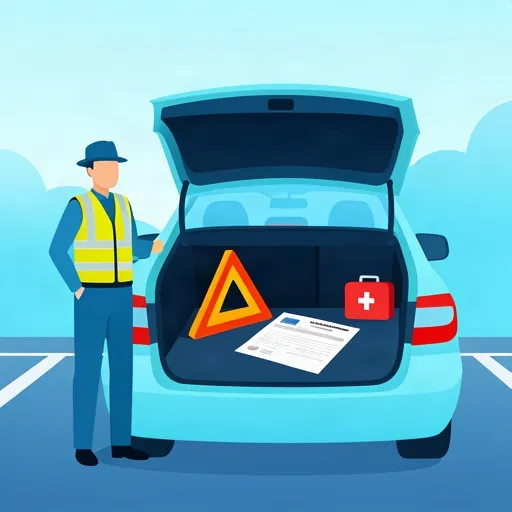
To comply with §102 KFG, drivers in Austria must carry specific safety gear and documentation at all times. This guide explains the strict regulations surrounding the use of reflective vests, which must be worn before exiting a vehicle, and details the necessary legal documents including the registration certificate and driver's license. Mastering these requirements will ensure you are prepared for both the theory examination and real-world traffic scenarios.
Updated on Sep 29, 2026

Navigating Austrian motorways requires strict adherence to specific safety protocols that are frequently tested in the driving theory exam. This guide explains the legal requirement to form an emergency corridor when traffic comes to a standstill, along with fundamental tips for maintaining safe following distances. You will learn how to prepare for your journey and handle emergency situations, ensuring you remain compliant with local traffic laws.
Updated on Sep 16, 2026

Learn the essential Austrian traffic law regarding the Rettungsgasse, the dedicated emergency corridor required on motorways and Schnellstraßen. We cover the specific actions needed for 2-lane and 3-lane roads when traffic slows, emphasizing the proactive nature of this rule and its vital importance for emergency vehicle access, directly preparing you for the theory exam.
Updated on Jun 23, 2026

When driving in Austria, encountering a Zivilschutzwarnung siren can be disorienting. This article clarifies the distinct siren tones and instructs you on the mandatory steps drivers must take, including safely stopping your vehicle and listening to specific ORF radio broadcasts for guidance. Understanding these procedures is crucial for complying with Austrian law and ensuring your safety during emergencies, a key topic for the theory exam.
Updated on Jun 23, 2026

When your vehicle breaks down on an Austrian motorway, knowing who to contact and what to expect is vital. This article details ASFINAG's dedicated Pannenhilfe patrols, their function, and the accessible SOS phone network. It distinguishes their free initial assistance from paid commercial services and outlines critical safety procedures for remaining on the Pannenstreifen while awaiting help, ensuring you are prepared for unexpected events on Austrian Autobahnen.
Updated on Jun 20, 2026

When an accident occurs with a driver lacking insurance or from another country, knowing the correct procedure in Austria is paramount. This article guides you through the official steps, including reporting requirements and compensation mechanisms like the Garantiefonds, ensuring you are prepared for such scenarios on Austrian roads and in your theory test.
Updated on Jun 20, 2026

Discover your crucial 'Hilfeleistungspflicht' (duty to assist) as a driver in Austria, especially when encountering injured individuals near mountain roads. This article clarifies the legal responsibilities under the Austrian Criminal Code (§94 StGB) and its importance for your driving theory knowledge. Prepare for real-world scenarios that extend beyond standard traffic incidents.
Updated on Jun 16, 2026
Discover other categories connected to Defensive Driving & Rettungsgasse Austria. These sections help you explore additional topics, expand your understanding of driving theory in Austrian, and build a more complete picture of the rules and situations tested during the exam.
Find answers to common questions learners ask about Defensive Driving & Rettungsgasse Austria. This section helps clarify difficult concepts, highlight critical exam information, and support your preparation for the Austrian driving theory exam in Austria.
A Rettungsgasse is an emergency lane that must be formed on motorways (Autobahn) and expressways (Autostraße) in Austria whenever traffic stops or moves at walking pace. It allows emergency vehicles unimpeded access. Drivers in the leftmost lane must move as far left as possible, while drivers in all other lanes must move as far right as possible.
Defensive driving in Austria involves anticipating potential hazards, maintaining safe following distances (like the 2-second rule, extended in poor weather), being aware of blind spots (especially around large vehicles on the Autobahn), and strictly adhering to speed limits and traffic laws, including the ban on handheld phone use.
In Austria, your vehicle must be equipped with a warning triangle (Pannendreieck), a high-visibility vest (Warnweste) that must be worn when exiting the vehicle on roads outside built-up areas or on motorways, and a first-aid kit (Verbandskasten) conforming to ÖNORM V 5101 standards.
If involved in or witnessing an accident, first secure the scene by placing the warning triangle at an adequate distance (at least 50m, 200m on the Autobahn). Then, call emergency services (112 or specific numbers like 133 for police, 144 for ambulance, 122 for fire). You have a legal duty to render assistance. Use the Europäischer Unfallbericht for property damage only incidents.
Austria has a strict ban on the use of handheld mobile phones while driving. This applies to all handheld devices, and any use requires a hands-free system. Exceeding this rule can result in significant fines and penalties.
Review these article categories to pinpoint your next study area or strengthen your understanding of Austrian traffic law. Each category offers detailed articles designed to help you master specific topics for your driving theory exam. Choose a category now to begin your structured learning path and prepare effectively.
Austrian Theory Article Categories