
Traffic lights are essential for regulating the flow of vehicles and pedestrians at intersections across Austria. They provide clear instructions through a sequence of colored lights: red, yellow, and green. Knowing the precise meaning of each signal and how to respond ensures orderly movement, reduces congestion, and significantly enhances road safety for all participants.
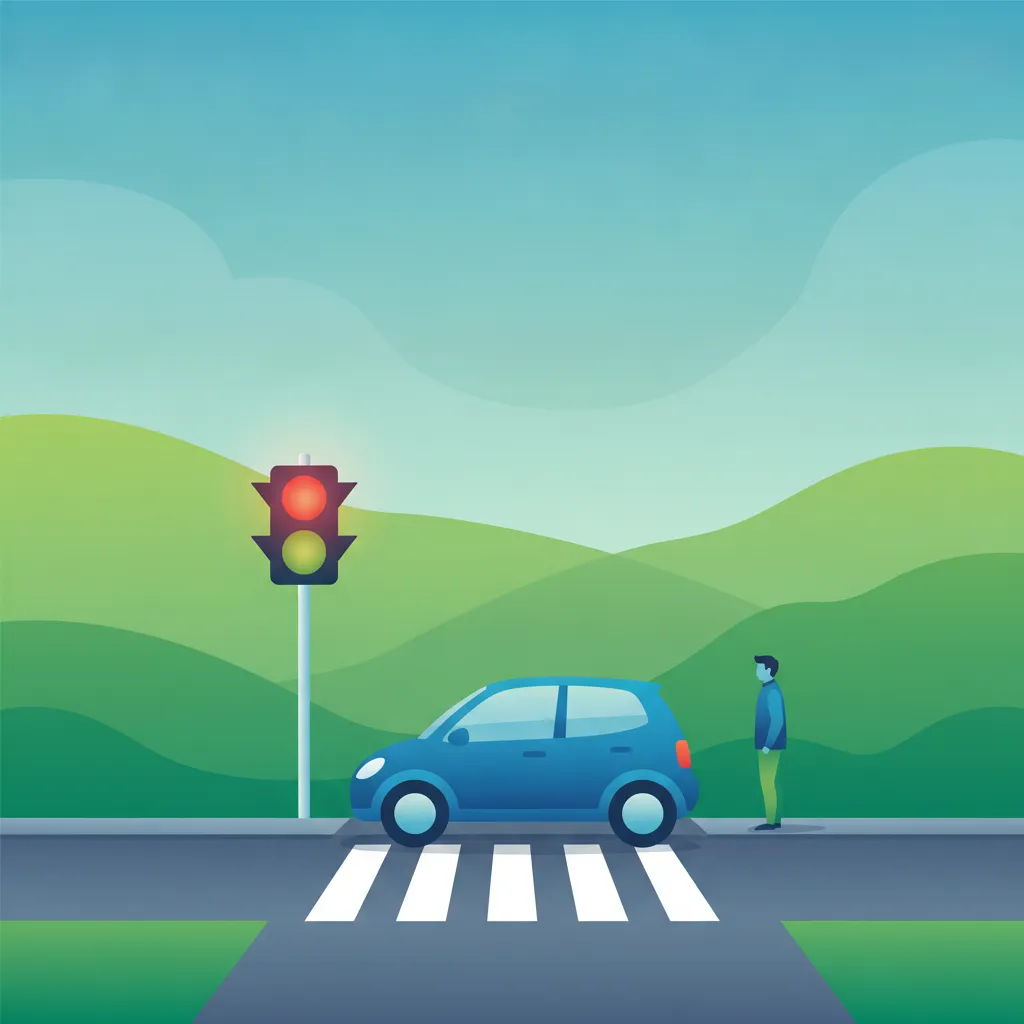
Theory topic content overview
Read the full theory topic guide for Traffic Light Meanings with structured, easy-to-scan content built for learners in Austria. This detailed section explains the exact rule, meaning, traffic context, comparison points, and exam logic behind this Austrian driving theory topic so you can study faster, understand the concept more clearly, and avoid common interpretation mistakes on the theory test.
Traffic lights, known as Ampeln or Lichtzeichen in Austria, are fundamental tools for managing traffic flow and ensuring safety at intersections, pedestrian crossings, and other conflict points on Austrian roads. They provide clear, instant instructions to drivers and pedestrians, preventing chaos and reducing the risk of collisions. Understanding the precise meaning of each signal and reacting correctly is paramount for obtaining your Austrian driving licence and for safe participation in traffic.
Traffic lights serve several critical functions in the Austrian road network:
For your Austrian driving theory exam, expect detailed questions not just on the basic colours, but also on nuanced scenarios involving yellow lights, turning arrows, and interactions with other road users under various traffic light conditions.
Austrian traffic lights primarily use three colours: red, yellow, and green, each with a distinct meaning according to the Straßenverkehrsordnung (StVO).
A steady red light means:
The yellow light serves as a warning signal for an imminent change. Its interpretation in Austria is critical and often a source of confusion for learners:
A steady green light signals "free to proceed" (Freie Fahrt), but with important conditions:
Beyond the basic red, yellow, and green, drivers in Austria will encounter other important light signals:
Green arrows control specific turning movements:
A flashing yellow light, whether a single lamp or an arrow, always means "Vorsicht" (caution):
Dedicated pedestrian signals use red and green figures:
On some multi-lane roads, especially on Autobahnen or at toll booths, you might see signals above individual lanes:
Many learner drivers and even experienced drivers make specific errors regarding traffic lights in Austria:
Let's look at how these rules apply in everyday Austrian driving:
Understanding Austrian traffic lights goes beyond memorizing colours; it's about anticipating changes, making safe decisions, and knowing specific local rules. Always remember:
By internalizing these rules and practising vigilant observation, you'll confidently navigate any intersection controlled by Ampeln in Austria.
Austrian traffic lights (Ampeln) use red, yellow, and green signals defined by StVO to regulate vehicles and pedestrians at intersections. Red always means stop, yellow warns of an imminent change and requires a safe-stop decision, and green grants conditional permission—never absolute priority, especially when turning left where oncoming traffic must be yielded to. Special signals include flashing yellow (reverting to standard priority rules), green arrows (directional or protected turns), and lane signals on major routes. A red-and-yellow phase precedes green, signaling preparation but not permission to move. Understanding these signals and their nuances is essential for both safe driving in Austria and passing the Austrian theory exam.
A short set of high-value points that capture the most important ideas from this theory explanation.
Red always means stop in Austria—there is no right turn on red unless explicitly permitted by a green arrow signal.
Yellow light requires judgment: stop if you can do so safely, but clear the intersection if you are already too close to stop.
Green does not grant absolute priority; when turning left, you must yield to oncoming traffic going straight or turning right per StVO §38.
A blinking yellow light means traffic light control is inactive, and standard priority rules (such as right-before-left) apply.
Even with a green light, you must never enter an intersection if you cannot clear it, as this causes Kreuzungsblockierung.
Red + yellow (both lit) means prepare to move—do not start driving until green appears; this phase lasts about two seconds.
A flashing green arrow permits the turn but requires you to give way to other road users.
Lane signals: red cross means closed lane; green down arrow means open; blinking yellow arrow means leave the lane immediately.
Pedestrian signals: green walking figure permits crossing but with caution; if already crossing when it changes, continue safely to the island or far side.
When a traffic light is off or flashing yellow, treat the intersection as unregulated and apply general StVO priority rules.
Assuming a green light gives automatic priority when turning left, leading to collisions with oncoming vehicles.
Entering an intersection on yellow when a safe stop was clearly possible, or failing to clear when already committed.
Starting to drive on red-and-yellow instead of waiting for full green—a common and dangerous error.
Stopping incorrectly at the light: either too far past the Haltelinie/Schutzweg, or so far back that view or traffic flow is obstructed.
Ignoring pedestrian signals or turning into a Schutzweg when pedestrians have a green light.
Start with a short, direct summary of Traffic Light Meanings before reading the full explanation below.
Traffic lights, known as "Ampeln" in Austria, use red, yellow, and green signals to control traffic. A red light means stop behind the stop line. A green light grants permission to proceed, provided the intersection is clear and safe. A yellow light signals an imminent change to red, requiring drivers to stop if safe, or clear the intersection if already inside.
Review the most important terms, rule signals, and traffic concepts linked to Traffic Light Meanings.
Explore related theory topic pages connected to Traffic Light Meanings and continue with the next useful rule explanation.
See the common search queries learners use when trying to understand Traffic Light Meanings in Austria.

Ready to delve deeper into specific theory topics? Continue exploring detailed explanations of Austrian road signs, traffic rules, and critical driving situations. Solidify your knowledge, clarify any doubts, and ensure you're fully prepared for every aspect of your official driving licence theory exam.
Austrian Driving Theory TopicsTheory topic content overview
A short set of high-value points that capture the most important ideas from this theory explanation.
Red always means stop in Austria—there is no right turn on red unless explicitly permitted by a green arrow signal.
Yellow light requires judgment: stop if you can do so safely, but clear the intersection if you are already too close to stop.
Green does not grant absolute priority; when turning left, you must yield to oncoming traffic going straight or turning right per StVO §38.
A blinking yellow light means traffic light control is inactive, and standard priority rules (such as right-before-left) apply.
Even with a green light, you must never enter an intersection if you cannot clear it, as this causes Kreuzungsblockierung.
Red + yellow (both lit) means prepare to move—do not start driving until green appears; this phase lasts about two seconds.
A flashing green arrow permits the turn but requires you to give way to other road users.
Lane signals: red cross means closed lane; green down arrow means open; blinking yellow arrow means leave the lane immediately.
Pedestrian signals: green walking figure permits crossing but with caution; if already crossing when it changes, continue safely to the island or far side.
When a traffic light is off or flashing yellow, treat the intersection as unregulated and apply general StVO priority rules.
Assuming a green light gives automatic priority when turning left, leading to collisions with oncoming vehicles.
Entering an intersection on yellow when a safe stop was clearly possible, or failing to clear when already committed.
Starting to drive on red-and-yellow instead of waiting for full green—a common and dangerous error.
Stopping incorrectly at the light: either too far past the Haltelinie/Schutzweg, or so far back that view or traffic flow is obstructed.
Ignoring pedestrian signals or turning into a Schutzweg when pedestrians have a green light.
Start with a short, direct summary of Traffic Light Meanings before reading the full explanation below.
Traffic lights, known as "Ampeln" in Austria, use red, yellow, and green signals to control traffic. A red light means stop behind the stop line. A green light grants permission to proceed, provided the intersection is clear and safe. A yellow light signals an imminent change to red, requiring drivers to stop if safe, or clear the intersection if already inside.
Review the most important terms, rule signals, and traffic concepts linked to Traffic Light Meanings.
Explore related theory topic pages connected to Traffic Light Meanings and continue with the next useful rule explanation.
See the common search queries learners use when trying to understand Traffic Light Meanings in Austria.
Ready to delve deeper into specific theory topics? Continue exploring detailed explanations of Austrian road signs, traffic rules, and critical driving situations. Solidify your knowledge, clarify any doubts, and ensure you're fully prepared for every aspect of your official driving licence theory exam.
Austrian Driving Theory TopicsUse this exam-focused revision tip to understand how Traffic Light Meanings is likely to appear in theory questions for learners in Austria. This section helps you identify the most testable part of the rule, avoid common traps, and remember the concept more effectively during Austrian driving theory exam preparation.
Pay close attention to yellow light scenarios in your Austrian theory exam, especially regarding whether you must stop or are permitted to proceed. Also, remember that a green light does not automatically grant priority over oncoming traffic when turning left, or over pedestrians crossing on a green light.
Read direct answers to the most common learner questions about Traffic Light Meanings in Austria. This FAQ focuses on rule confusion, practical meaning, comparison with similar concepts, and the exact uncertainties that appear most often in Austrian driving theory revision and exam preparation.
A red traffic light in Austria means you must stop your vehicle before the stop line, the intersection, or the pedestrian crossing. You must remain stopped until the light turns green.
A steady yellow light indicates that the signal is about to change to red. If you can stop safely before the stop line without sudden braking, you must do so. If you are already in the intersection or cannot stop safely, you should proceed through with caution.
While a green light grants permission to proceed, it does not automatically give you priority in all situations. When turning left, you must yield to oncoming traffic going straight or turning right. You must also yield to pedestrians crossing legally.
A blinking yellow light in Austria means "Vorsicht" (caution). It indicates that the traffic light is temporarily out of service or operating in a warning mode. In such cases, standard priority rules (e.g., right-before-left) or road signs at the intersection apply.
Yes, some traffic lights in Austria feature arrow signals (e.g., green arrow) which indicate permission to turn in a specific direction. When a green arrow is lit, you may proceed in that direction, usually with priority over conflicting traffic flows.
Pedestrian traffic lights (often called "Fußgängerampeln") use red and green figures. A red standing figure means pedestrians must not enter the roadway. A green walking figure means pedestrians may cross, ensuring they do so safely and attentively.
If a traffic light is completely dark or non-functional, it is treated as an uncontrolled intersection. In this situation, you must apply the general priority rules, such as "right before left" (Rechtsregel), or heed any existing road signs.
Lane signals, often seen on Austrian motorways or at tunnels, use red crossed bars, green downward arrows, or blinking yellow arrows above individual lanes. They indicate whether a lane is open, closed, or requires drivers to move into an adjacent lane.
Refine your study plan by searching for specific Austrian driving theory practice sets. Pinpoint questions related to particular road rules, signs, or challenge levels, and begin practicing immediately to reinforce your knowledge and excel in your official exam with confidence. Get started with focused revision today.