
Seat belts are one of the most vital safety features in any vehicle, designed to keep occupants secure during sudden stops or collisions. In Austria, the correct use of seat belts is legally mandatory for all passengers and drivers. Understanding their function is not only essential for your safety but also a key component of the Austrian driving theory exam.
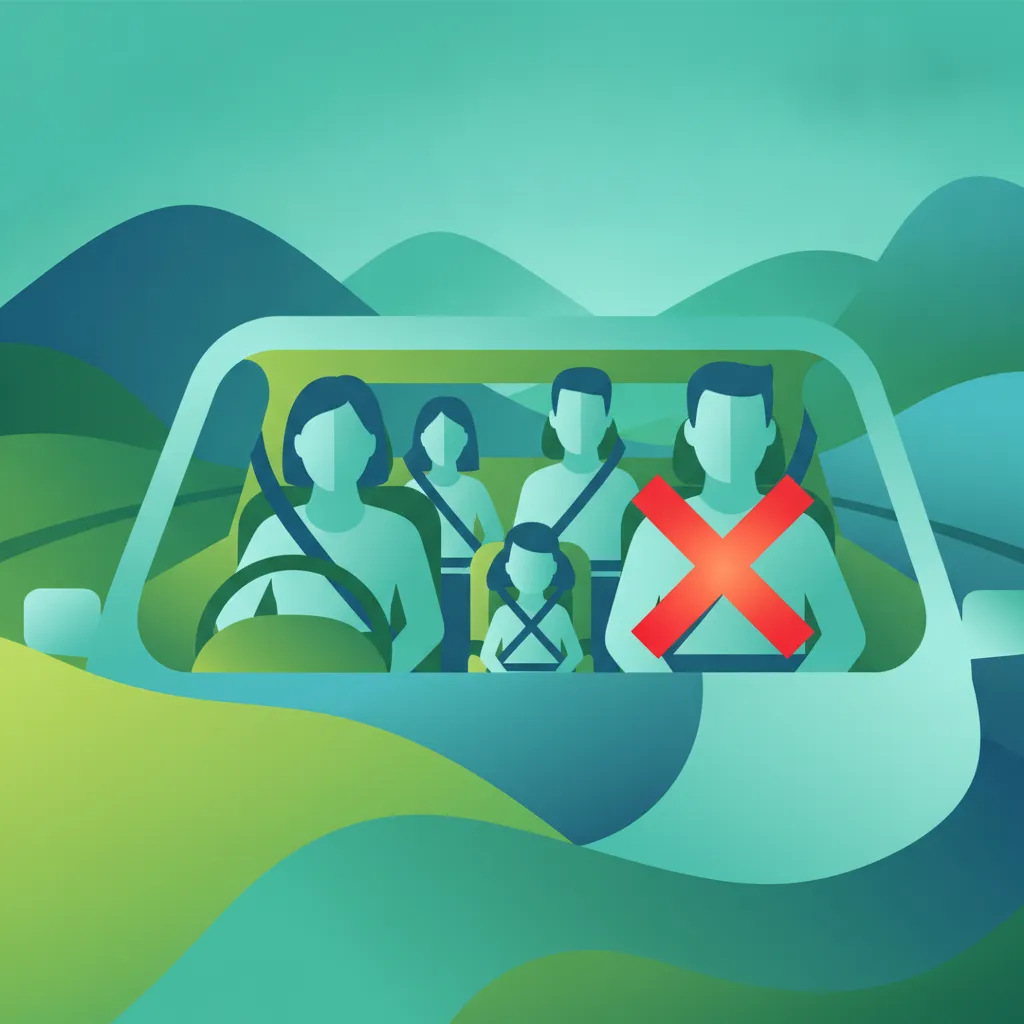
Theory topic content overview
Read the full theory topic guide for Seat Belt Rules with structured, easy-to-scan content built for learners in Austria. This detailed section explains the exact rule, meaning, traffic context, comparison points, and exam logic behind this Austrian driving theory topic so you can study faster, understand the concept more clearly, and avoid common interpretation mistakes on the theory test.
Seat belts are fundamental passive safety devices designed to protect vehicle occupants during sudden deceleration or collisions. Their primary purpose is to counteract the physical principle of inertia. When a vehicle stops abruptly or is involved in a crash, your body wants to continue moving forward at the speed the vehicle was travelling just before the impact. This is inertia.
A properly worn seat belt physically restrains you, preventing you from being violently thrown forward into the dashboard, steering wheel, windshield, or other occupants. It distributes the immense forces of a collision across the stronger parts of your body – specifically your chest, pelvis, and shoulders – rather than concentrating them on weaker, more vulnerable areas. This drastically reduces the risk of severe injury, ejection from the vehicle, or even fatality.
In Austria, the use of seat belts (known as Gurtpflicht) is legally mandatory for all occupants of a vehicle, whether they are in the front or rear seats. This isn't merely a rule; it's a cornerstone of road safety legislation, backed by extensive research showing that seat belts are the single most effective safety feature in reducing traffic-related injuries and deaths.
For your Austrian driving theory exam, understanding the legal requirement and the fundamental safety mechanism of seat belts is crucial. It’s not just about avoiding a fine; it’s about grasping a critical concept that underpins occupant protection in everyday traffic and emergency situations on Austrian roads.
A modern three-point seat belt system works through several interconnected components:
Together, these components create a highly effective occupant restraint system that absorbs and distributes kinetic energy, protecting you from the full force of a collision.
For a seat belt to provide its maximum protection and comply with Austrian Gurtpflicht, it must be worn correctly:
Incorrect wearing drastically compromises safety. Wearing the shoulder belt under your arm or behind your back, for example, can lead to severe internal injuries or ejection during a crash, as the force is no longer distributed correctly.
A common misconception in Austrian traffic is that seat belts are only necessary for long journeys or at high speeds. This is dangerously false:
The Gurtpflicht in Austria applies to all occupants, irrespective of age or seating position, with very few, strictly defined exceptions (e.g., specific medical certificates, certain postal delivery vehicles, or very old vehicles not originally fitted with belts). These exemptions are rare and do not apply to the vast majority of drivers or vehicles on Austrian roads.
Child Restraint Systems (Kindersitze): For children, specific child seat rules apply based on their height and age. Children up to 14 years of age who are smaller than 150 cm must be secured in an approved, age-appropriate child restraint system. This is a crucial area often tested in the Austrian driving theory exam, emphasizing that regular adult seat belts are not suitable for smaller children.
Failure to comply with Gurtpflicht is an administrative offense in Austria and can result in fines for each unsecured occupant.
Learners and even experienced drivers often make mistakes regarding seat belt use:
The most important practical takeaway is to make wearing your seat belt, and ensuring all passengers do the same, an automatic habit every time you enter a vehicle. This simple action takes seconds but provides life-saving protection. In Austria, adhering to Gurtpflicht is not just a legal obligation; it's a personal commitment to your own safety and the safety of everyone in your vehicle, reflecting a responsible approach to driving that is fundamental to the Austrian driving culture and theory.
Seat belts are passive safety devices that protect occupants by counteracting inertia during sudden stops or collisions, distributing immense forces across stronger body areas rather than vulnerable regions. In Austria, the Gurtpflicht legally requires all vehicle occupants to wear seat belts correctly, with modern systems featuring pretensioners and load limiters that enhance protection by tightening at impact and releasing excess force. Correct usage means the shoulder belt across the chest (not neck), the lap belt across the pelvis (not stomach), and a snug fit without slack. Common mistakes include wearing belts incorrectly, ignoring rear passengers, and misunderstanding that airbags supplement rather than replace seat belts. For children under 14 or under 150 cm, approved child restraint systems are mandatory in Austria.
A short set of high-value points that capture the most important ideas from this theory explanation.
Seat belts counteract inertia by physically restraining occupants and distributing collision forces across stronger body areas like the chest, pelvis, and shoulders
The Gurtpflicht (mandatory seat belt law) in Austria applies to all vehicle occupants in front and rear seats without exception for most drivers
Modern three-point seat belts include pretensioners that tighten instantly at impact and load limiters that release webbing to prevent chest injuries
Airbags are supplementary restraint systems (SRS) that work only in conjunction with seat belts, not as replacements
Children under 14 years and shorter than 150 cm must use approved child restraint systems, not adult seat belts
Shoulder belt goes over the middle of your shoulder and across your chest—never under your arm, behind your back, or across your neck
Lap belt must fit snugly across your hips and pelvis, never across your stomach where internal organs are vulnerable
Seat belts are essential even at low speeds (10-15 km/h) and short trips near home—most accidents happen close to where you live
Drivers are legally responsible for ensuring all passengers, including rear-seat occupants, are correctly belted before driving
Modern vehicles with pretensioners and load limiters provide optimal protection, but only if the belt is worn correctly
Wearing the shoulder belt under the arm or behind the back, which concentrates impact forces on vulnerable areas and risks ejection
Leaving dangerous slack in the belt by not pulling the shoulder strap to remove looseness
Assuming rear-seat passengers are safe without a belt—they can become projectiles seriously injuring front-seat occupants
Believing airbags make seat belts unnecessary; without a seat belt, you could strike the deploying airbag with excessive force
Unbuckling immediately after a minor collision or before fully stopping, which is dangerous if a secondary impact occurs
Start with a short, direct summary of Seat Belt Rules before reading the full explanation below.
Seat belts are passive safety devices that restrain vehicle occupants during sudden deceleration or impacts, preventing them from being thrown forward or ejected. They work by distributing the forces of a collision across stronger parts of the body, such as the chest and pelvis, significantly reducing the risk of severe injury or fatality. Wearing a seat belt correctly is a legal requirement in Austria and a cornerstone of road safety.
Review the most important terms, rule signals, and traffic concepts linked to Seat Belt Rules.
Explore related theory topic pages connected to Seat Belt Rules and continue with the next useful rule explanation.
See the common search queries learners use when trying to understand Seat Belt Rules in Austria.

Ready to delve deeper into specific theory topics? Continue exploring detailed explanations of Austrian road signs, traffic rules, and critical driving situations. Solidify your knowledge, clarify any doubts, and ensure you're fully prepared for every aspect of your official driving licence theory exam.
Austrian Driving Theory TopicsTheory topic content overview
A short set of high-value points that capture the most important ideas from this theory explanation.
Seat belts counteract inertia by physically restraining occupants and distributing collision forces across stronger body areas like the chest, pelvis, and shoulders
The Gurtpflicht (mandatory seat belt law) in Austria applies to all vehicle occupants in front and rear seats without exception for most drivers
Modern three-point seat belts include pretensioners that tighten instantly at impact and load limiters that release webbing to prevent chest injuries
Airbags are supplementary restraint systems (SRS) that work only in conjunction with seat belts, not as replacements
Children under 14 years and shorter than 150 cm must use approved child restraint systems, not adult seat belts
Shoulder belt goes over the middle of your shoulder and across your chest—never under your arm, behind your back, or across your neck
Lap belt must fit snugly across your hips and pelvis, never across your stomach where internal organs are vulnerable
Seat belts are essential even at low speeds (10-15 km/h) and short trips near home—most accidents happen close to where you live
Drivers are legally responsible for ensuring all passengers, including rear-seat occupants, are correctly belted before driving
Modern vehicles with pretensioners and load limiters provide optimal protection, but only if the belt is worn correctly
Wearing the shoulder belt under the arm or behind the back, which concentrates impact forces on vulnerable areas and risks ejection
Leaving dangerous slack in the belt by not pulling the shoulder strap to remove looseness
Assuming rear-seat passengers are safe without a belt—they can become projectiles seriously injuring front-seat occupants
Believing airbags make seat belts unnecessary; without a seat belt, you could strike the deploying airbag with excessive force
Unbuckling immediately after a minor collision or before fully stopping, which is dangerous if a secondary impact occurs
Start with a short, direct summary of Seat Belt Rules before reading the full explanation below.
Seat belts are passive safety devices that restrain vehicle occupants during sudden deceleration or impacts, preventing them from being thrown forward or ejected. They work by distributing the forces of a collision across stronger parts of the body, such as the chest and pelvis, significantly reducing the risk of severe injury or fatality. Wearing a seat belt correctly is a legal requirement in Austria and a cornerstone of road safety.
Review the most important terms, rule signals, and traffic concepts linked to Seat Belt Rules.
Explore related theory topic pages connected to Seat Belt Rules and continue with the next useful rule explanation.
See the common search queries learners use when trying to understand Seat Belt Rules in Austria.
Ready to delve deeper into specific theory topics? Continue exploring detailed explanations of Austrian road signs, traffic rules, and critical driving situations. Solidify your knowledge, clarify any doubts, and ensure you're fully prepared for every aspect of your official driving licence theory exam.
Austrian Driving Theory TopicsUse this exam-focused revision tip to understand how Seat Belt Rules is likely to appear in theory questions for learners in Austria. This section helps you identify the most testable part of the rule, avoid common traps, and remember the concept more effectively during Austrian driving theory exam preparation.
Exam questions often focus on the fundamental principle of seat belt protection (counteracting inertia, distributing force) and the legal obligation to wear them correctly. Remember that seat belts are critical even for short trips and at low speeds, as accidents can happen anywhere, anytime. Ensure you know the rules for child restraints too.
Read direct answers to the most common learner questions about Seat Belt Rules in Austria. This FAQ focuses on rule confusion, practical meaning, comparison with similar concepts, and the exact uncertainties that appear most often in Austrian driving theory revision and exam preparation.
Seat belts are crucial because they prevent occupants from being violently thrown against the vehicle's interior or ejected during a collision. They hold you securely, allowing the vehicle's crumple zones and airbags to work effectively in absorbing crash energy.
Yes, in Austria, seat belts are mandatory for all occupants of a vehicle, both in the front and back seats, provided the vehicle is equipped with them and the occupant meets the height and age requirements for standard belts.
The lap belt part should be snug across your hips, not your stomach, and the shoulder belt should go across the middle of your shoulder and chest, not your neck or under your arm. It should be fitted as tightly as possible without causing discomfort.
Not wearing a seat belt in Austria can result in a fine, as it is a violation of traffic law. More importantly, it drastically increases your risk of severe injury or death in the event of an accident.
Yes, children require specific child restraint systems (child seats or booster seats) appropriate for their age, height, and weight, until they are 14 years old or reach a height of 150 cm, whichever comes first. After that, they can use regular seat belts.
During a collision, inertia causes your body to continue moving forward at the vehicle's original speed. A seat belt acts as a restraint, applying a counter-force that slows your body down gradually with the vehicle, reducing the impact force you experience.
Refine your study plan by searching for specific Austrian driving theory practice sets. Pinpoint questions related to particular road rules, signs, or challenge levels, and begin practicing immediately to reinforce your knowledge and excel in your official exam with confidence. Get started with focused revision today.