
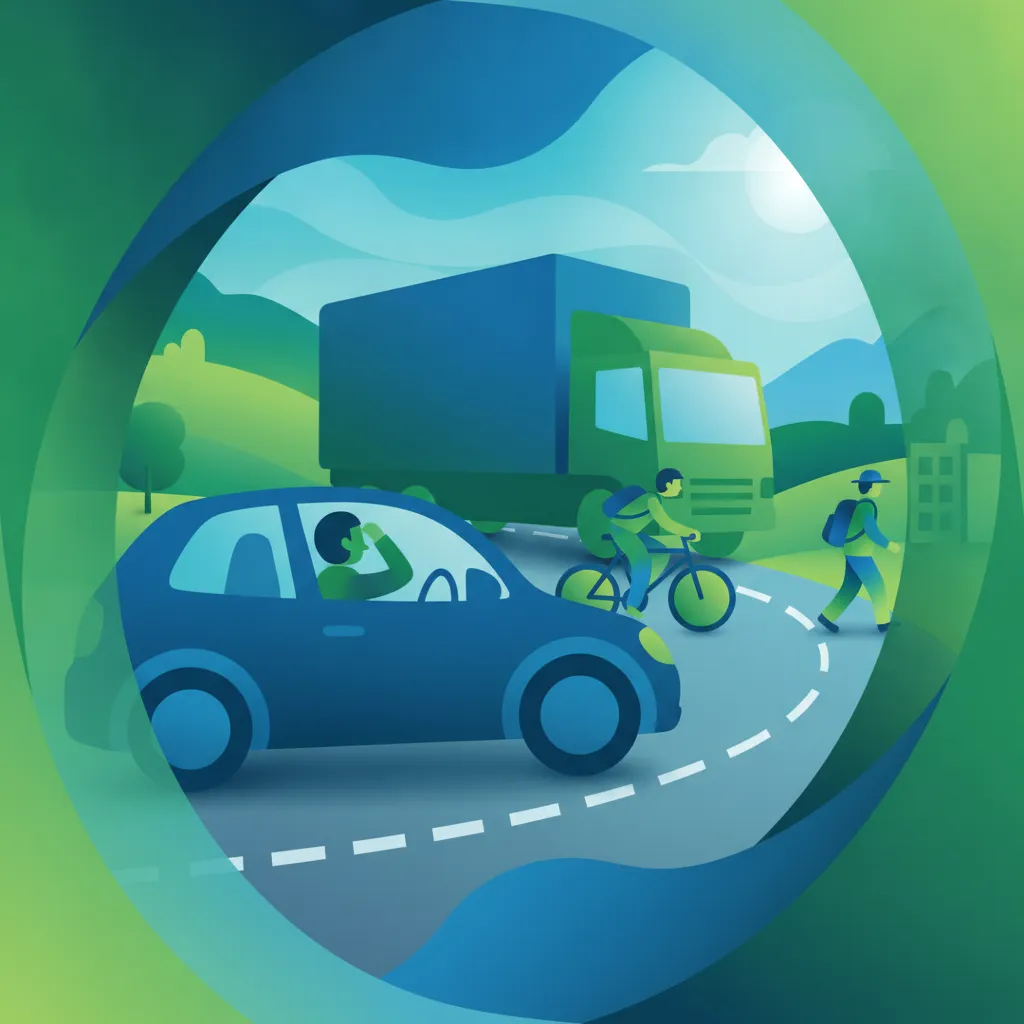
Austria's roads are shared by many different types of users, each with unique characteristics and vulnerabilities. As a driver, it's your responsibility to anticipate the actions of others, adjust your driving style, and ensure the safety of everyone. This means being particularly cautious around pedestrians, cyclists, and motorcyclists, and understanding the specific challenges posed by larger vehicles like buses and trucks.
Theory topic content overview
Read the full theory topic guide for Road Sharing Safety with structured, easy-to-scan content built for learners in Austria. This detailed section explains the exact rule, meaning, traffic context, comparison points, and exam logic behind this Austrian driving theory topic so you can study faster, understand the concept more clearly, and avoid common interpretation mistakes on the theory test.
Sharing the road safely is a foundational principle of Austrian traffic law and a core component of defensive driving. It encompasses the crucial understanding that roads are shared spaces, and drivers must constantly adapt their behaviour to account for the presence, characteristics, and vulnerabilities of all other traffic participants. This concept is often summarised in Austria as "Miteinander im Verkehr" – cooperation in traffic.
At its heart, sharing the road means acknowledging that every road user, from a pedestrian to a large truck driver, has rights and responsibilities. However, not all users have the same level of protection. As a driver of a vehicle, you operate a machine with significant potential energy and mass, making you responsible for exercising extra caution towards more vulnerable road users. This includes actively anticipating their actions, recognizing their limitations, and providing ample space and time to ensure their safety.
Understanding how to share the road effectively is paramount for several reasons:
Pedestrians are the most vulnerable road users. They are often unpredictable, especially children, the elderly, or those distracted.
Cyclists are faster than pedestrians but still highly vulnerable. Their movements can be influenced by road conditions, and they may need to swerve to avoid obstacles.
Motorcyclists are less stable and less visible than cars. Their smaller profile means they can be easily obscured.
Buses (Autobusse) and trucks (LKW) are massive vehicles with very different dynamics.
Learners and even experienced drivers often make these mistakes:
The concept of "Miteinander im Verkehr" is fundamental to Austrian driving culture and theory. It underscores the shared responsibility of all road users to contribute to safety and cooperation. This isn't just about following rules; it's about a respectful and empathetic mindset. The Austrian theory test frequently incorporates scenarios designed to evaluate your understanding of this principle, particularly concerning vulnerable road users and situations demanding extra caution. Always remember the principle of Vertrauensgrundsatz (principle of trust), which means you can trust other road users to follow the rules, unless there are clear signs they won't (e.g., a child running near the road, or a clearly distracted pedestrian).
To excel in sharing the road, adopt a defensive and empathetic driving style. Always consider the perspective of other road users, especially those more vulnerable than you. Anticipate potential hazards, provide generous space, and be prepared to react safely. Your ability to drive cooperatively and with foresight is not only key to passing your Austrian driving theory exam but, more importantly, to ensuring the safety and well-being of everyone on the road.
This topic teaches drivers how to interact safely with all road users in Austria, emphasizing the 'Miteinander im Verkehr' principle of cooperative driving. Pedestrians are most vulnerable and have priority at Zebrastreifen crossings, cyclists require specific passing distances (1.5m outside, 1m inside built-up areas), motorcyclists are hard to spot in blind spots requiring thorough checks, and large vehicles need extra space for turns and stopping. The core lesson is that drivers of heavier vehicles bear greater responsibility to anticipate, adapt, and ensure the safety of more vulnerable road users.
A short set of high-value points that capture the most important ideas from this theory explanation.
Roads are shared spaces where drivers must adapt behavior to account for the varying vulnerabilities of all road users
Pedestrians have priority at Zebrastreifen (zebra crossings) when visible and intending to cross, but not elsewhere
Cyclists are entitled to ride further from the curb for visibility and safety, and may wobble or swerve unexpectedly
Large vehicles require significantly more space for turns and have extensive blind spots where collisions often occur
The Austrian principle of 'Miteinander im Verkehr' emphasizes cooperation and mutual respect over aggressive driving
Minimum cyclist passing distance: 1.5 meters outside built-up areas, 1 meter within built-up areas (mandatory since 2022)
If you cannot see a large vehicle's mirrors, the driver cannot see you—avoid lingering in 'no-zones'
Always perform Schulterblick (shoulder check) before changing lanes or turning to detect hidden motorcyclists
Zebrastreifen priority only applies when pedestrians are clearly visible and intending to cross
Vertrauensgrundsatz means you trust others to follow rules unless there are clear signs they will not
Not maintaining the mandatory lateral distance when overtaking cyclists, especially on narrow roads
Failing to perform a shoulder check (Schulterblick) before turning or changing lanes, missing motorcycles in blind spots
Assuming other road users see you just because you see them—always try to make eye contact or confirm with signals
Attempting to squeeze past a large vehicle on the right during a turn when it needs to swing wide left first
Driving too fast in areas with high pedestrian activity without reducing speed for adequate reaction time
Start with a short, direct summary of Road Sharing Safety before reading the full explanation below.
Sharing the road safely means actively adapting your driving behavior to accommodate all other traffic participants, recognizing their varying vulnerabilities and needs. This involves maintaining ample space around pedestrians and cyclists, being highly aware of motorcyclists, and understanding the blind spots and maneuvering requirements of large vehicles. Patience, foresight, and cooperation are key to preventing incidents and ensuring everyone's safety on Austrian roads.
Review the most important terms, rule signals, and traffic concepts linked to Road Sharing Safety.
Explore related theory topic pages connected to Road Sharing Safety and continue with the next useful rule explanation.
See the common search queries learners use when trying to understand Road Sharing Safety in Austria.

Ready to delve deeper into specific theory topics? Continue exploring detailed explanations of Austrian road signs, traffic rules, and critical driving situations. Solidify your knowledge, clarify any doubts, and ensure you're fully prepared for every aspect of your official driving licence theory exam.
Austrian Driving Theory TopicsTheory topic content overview
A short set of high-value points that capture the most important ideas from this theory explanation.
Roads are shared spaces where drivers must adapt behavior to account for the varying vulnerabilities of all road users
Pedestrians have priority at Zebrastreifen (zebra crossings) when visible and intending to cross, but not elsewhere
Cyclists are entitled to ride further from the curb for visibility and safety, and may wobble or swerve unexpectedly
Large vehicles require significantly more space for turns and have extensive blind spots where collisions often occur
The Austrian principle of 'Miteinander im Verkehr' emphasizes cooperation and mutual respect over aggressive driving
Minimum cyclist passing distance: 1.5 meters outside built-up areas, 1 meter within built-up areas (mandatory since 2022)
If you cannot see a large vehicle's mirrors, the driver cannot see you—avoid lingering in 'no-zones'
Always perform Schulterblick (shoulder check) before changing lanes or turning to detect hidden motorcyclists
Zebrastreifen priority only applies when pedestrians are clearly visible and intending to cross
Vertrauensgrundsatz means you trust others to follow rules unless there are clear signs they will not
Not maintaining the mandatory lateral distance when overtaking cyclists, especially on narrow roads
Failing to perform a shoulder check (Schulterblick) before turning or changing lanes, missing motorcycles in blind spots
Assuming other road users see you just because you see them—always try to make eye contact or confirm with signals
Attempting to squeeze past a large vehicle on the right during a turn when it needs to swing wide left first
Driving too fast in areas with high pedestrian activity without reducing speed for adequate reaction time
Start with a short, direct summary of Road Sharing Safety before reading the full explanation below.
Sharing the road safely means actively adapting your driving behavior to accommodate all other traffic participants, recognizing their varying vulnerabilities and needs. This involves maintaining ample space around pedestrians and cyclists, being highly aware of motorcyclists, and understanding the blind spots and maneuvering requirements of large vehicles. Patience, foresight, and cooperation are key to preventing incidents and ensuring everyone's safety on Austrian roads.
Review the most important terms, rule signals, and traffic concepts linked to Road Sharing Safety.
Explore related theory topic pages connected to Road Sharing Safety and continue with the next useful rule explanation.
See the common search queries learners use when trying to understand Road Sharing Safety in Austria.
Ready to delve deeper into specific theory topics? Continue exploring detailed explanations of Austrian road signs, traffic rules, and critical driving situations. Solidify your knowledge, clarify any doubts, and ensure you're fully prepared for every aspect of your official driving licence theory exam.
Austrian Driving Theory TopicsUse this exam-focused revision tip to understand how Road Sharing Safety is likely to appear in theory questions for learners in Austria. This section helps you identify the most testable part of the rule, avoid common traps, and remember the concept more effectively during Austrian driving theory exam preparation.
In Austrian theory exams, questions about sharing the road often test your understanding of different road users' vulnerabilities and your responsibility to adapt. Pay close attention to scenarios involving cyclists, pedestrians near crosswalks, and the safe interaction distances or blind spots associated with trucks and buses. Always prioritize safety and defensive driving when answering.
Read direct answers to the most common learner questions about Road Sharing Safety in Austria. This FAQ focuses on rule confusion, practical meaning, comparison with similar concepts, and the exact uncertainties that appear most often in Austrian driving theory revision and exam preparation.
Vulnerable road users primarily include pedestrians, cyclists, and motorcyclists. They are at higher risk in traffic due to their lack of protective vehicle structure and smaller size, making them less visible.
When passing cyclists, you must always leave sufficient lateral distance to ensure their safety. While no specific minimum distance is legally defined for all situations, a general guideline of at least 1.5 meters is recommended outside urban areas, and a safe distance within urban areas.
At a marked crosswalk (Zebrastreifen), you must always stop to allow pedestrians to cross safely. Approach with caution and be prepared to stop even if no one is immediately visible, as pedestrians may appear suddenly.
Large vehicles like trucks and buses have significant blind spots on all sides, especially along their length and directly behind them. Avoid lingering in these zones, as the driver may not see you.
Anticipating the actions of other road users helps you react proactively and avoid dangerous situations. For example, a cyclist might suddenly swerve to avoid a pothole, or a pedestrian might step into the road unexpectedly. Always assume others might make mistakes.
'Miteinander im Verkehr' translates to 'togetherness/cooperation in traffic' and is a core principle of Austrian road safety. It emphasizes mutual respect, consideration, and cooperative behavior among all road users to ensure a safe and smooth traffic flow.
Refine your study plan by searching for specific Austrian driving theory practice sets. Pinpoint questions related to particular road rules, signs, or challenge levels, and begin practicing immediately to reinforce your knowledge and excel in your official exam with confidence. Get started with focused revision today.