
Understanding the interaction between physics, braking distribution, and rider posture is vital for any motorcyclist. This guide explains how to properly execute an emergency stop while maintaining control, preventing target fixation, and utilizing your brakes according to standard safety protocols required for the Dutch motorcycle license.
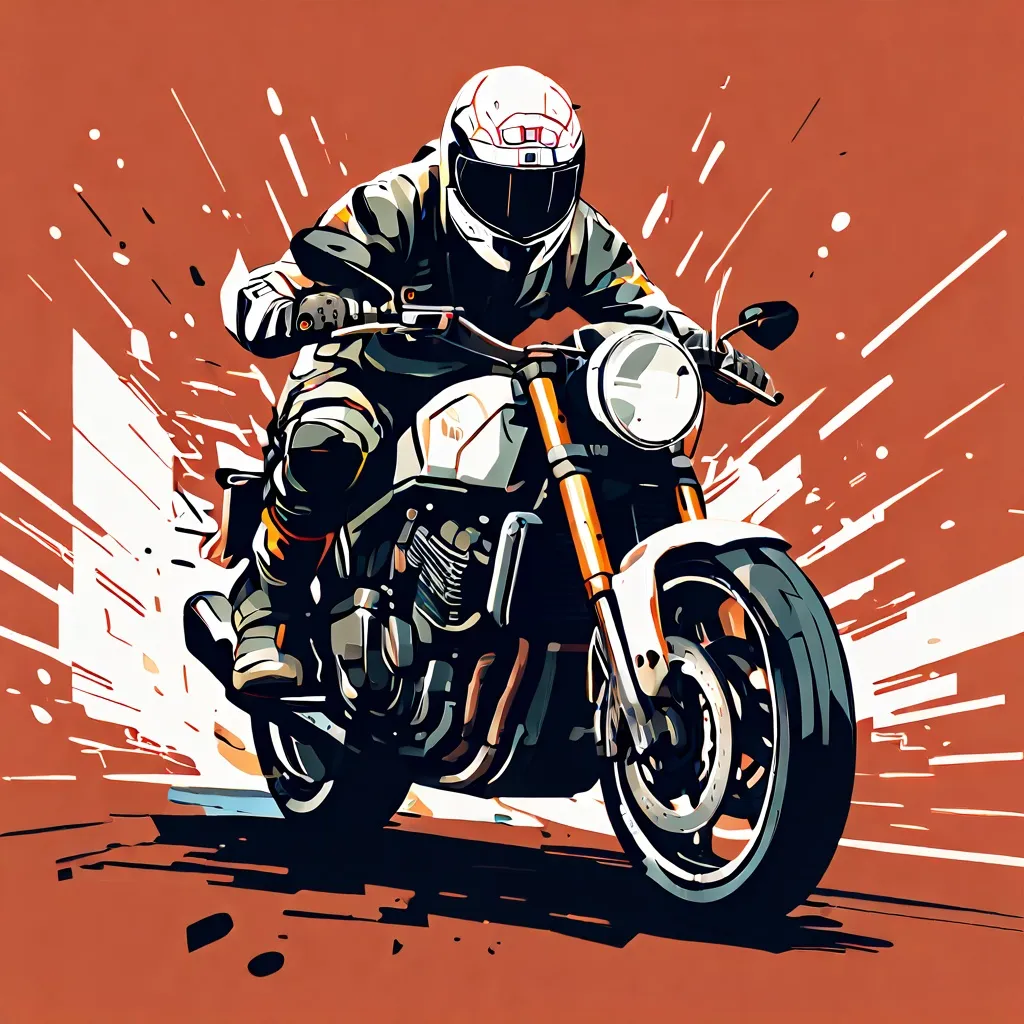
Article content overview
Effective braking is one of the most critical skills a motorcyclist must master, not only for passing the CBR theory exam but for ensuring personal safety on Dutch roads. Unlike passenger cars, motorcycles require a nuanced approach to weight transfer and pressure modulation. Understanding how to manage your braking forces at high speeds allows you to maintain control during emergency situations, navigate challenging weather conditions, and effectively handle the motorcycle in accordance with official CBR standards.
In the context of the Dutch theory exam, it is vital to understand that the front brake is your primary source of stopping power. When you apply the brakes on a motorcycle, momentum causes the weight of the vehicle to shift forward onto the front tire. This increased downward force on the front wheel significantly improves its grip on the road surface, allowing it to handle higher braking forces without locking up.
Under ideal conditions, approximately 80 percent of a motorcycle's total braking power is generated by the front brake, while the rear brake contributes the remaining 20 percent. This 80/20 distribution is a fundamental concept in motorcycle control. Attempting to stop using only the rear brake will result in drastically longer stopping distances and, in many cases, a loss of stability. However, never forget that this ratio is dynamic; you must balance your inputs to maintain the motorcycle’s balance and ensure the tires remain in contact with the pavement.
When facing an emergency, your reaction must be both swift and controlled. The goal is to maximize deceleration without triggering a slide or losing directional control. In the Netherlands, examiners look for your ability to remain calm and apply progressive pressure rather than simply "stabbing" at the levers.
One of the most common pitfalls for new riders is "target fixation." This psychological phenomenon occurs when a rider stares intently at a hazard—such as a stationary vehicle or a patch of oil—and unintentionally steers the motorcycle directly toward it. In the Dutch theory syllabus, you are taught to look exactly where you want to go. By scanning the road far ahead and identifying your escape route, you keep your body posture relaxed and your steering inputs precise, allowing you to maneuver around hazards while braking.
Anti-lock Braking Systems (ABS) have revolutionized motorcycle safety, providing a crucial safety net by preventing wheel lock-up during hard braking. However, it is a common misconception that ABS always results in the shortest possible stopping distance. While ABS allows you to maintain steering control during an emergency, your technique remains the deciding factor in how quickly you stop.
Regular maintenance is equally important. Driving with worn brake pads or leaking brake fluid is not only a safety risk but also a violation of basic vehicle requirements in the Netherlands. If you notice a "spongy" feel in your levers, reduced stopping power, or warning lights on your dashboard, you must have the system inspected by a qualified professional immediately.
Dutch traffic legislation places a high premium on observing the environment. Road surfaces, weather conditions, and surrounding signs dictate how much braking force you can safely apply. Always anticipate the need to brake when approaching intersections or warning signs.
High-speed motorcycle braking is dominated by front-wheel physics, where weight transfer during deceleration allows the front brake to handle roughly 80 percent of stopping force while the rear provides stability at 20 percent. The emergency stop procedure emphasizes smooth, progressive brake application with eyes focused on the escape route rather than the hazard, while ABS serves as a safety net rather than a substitute for proper technique. Target fixation and braking while leaned are critical errors that compromise control, and regular brake maintenance is essential for reliable performance on Dutch roads.
A short set of high-value points that capture the most important ideas from this article.
The front brake provides approximately 80 percent of total stopping power on a motorcycle due to weight transfer during deceleration
Effective emergency braking requires progressive pressure application rather than sudden lever movements
Target fixation causes riders to steer toward hazards they are staring at; always look where you want to go
ABS prevents wheel lock-up but does not guarantee the shortest stopping distance; rider technique remains decisive
Hard braking while leaned over in a turn causes immediate traction loss and high-side crash risk
The 80/20 brake distribution rule: front brake handles 80 percent of braking force, rear brake handles 20 percent
Weight transfer during braking increases front tire grip, allowing higher front brake pressure without lock-up
When equipped with ABS, maintain constant brake pressure even when feeling feedback vibrations
Brake fade occurs from excessive heat and reduces braking effectiveness; watch for spongy lever feel
Reduce speed before turns and corners; never apply front brake while the motorcycle is leaned over
Relying primarily on the rear brake, which dramatically extends stopping distance and reduces stability
Staring directly at hazards (target fixation), which causes unintentional steering toward the obstacle
Applying front brake suddenly or aggressively instead of using progressive, increasing pressure
Assuming ABS always provides the shortest stopping distance regardless of rider technique
Neglecting brake maintenance, leading to worn pads, fluid leaks, or spongy lever response
Article content overview
A short set of high-value points that capture the most important ideas from this article.
The front brake provides approximately 80 percent of total stopping power on a motorcycle due to weight transfer during deceleration
Effective emergency braking requires progressive pressure application rather than sudden lever movements
Target fixation causes riders to steer toward hazards they are staring at; always look where you want to go
ABS prevents wheel lock-up but does not guarantee the shortest stopping distance; rider technique remains decisive
Hard braking while leaned over in a turn causes immediate traction loss and high-side crash risk
The 80/20 brake distribution rule: front brake handles 80 percent of braking force, rear brake handles 20 percent
Weight transfer during braking increases front tire grip, allowing higher front brake pressure without lock-up
When equipped with ABS, maintain constant brake pressure even when feeling feedback vibrations
Brake fade occurs from excessive heat and reduces braking effectiveness; watch for spongy lever feel
Reduce speed before turns and corners; never apply front brake while the motorcycle is leaned over
Relying primarily on the rear brake, which dramatically extends stopping distance and reduces stability
Staring directly at hazards (target fixation), which causes unintentional steering toward the obstacle
Applying front brake suddenly or aggressively instead of using progressive, increasing pressure
Assuming ABS always provides the shortest stopping distance regardless of rider technique
Neglecting brake maintenance, leading to worn pads, fluid leaks, or spongy lever response
Explore related topics, search based questions, and concepts that learners often look up when studying Motorcycle Braking Theory. These themes reflect real search intent and help you understand how this topic connects to wider driving theory knowledge in the Netherlands.
Find clear and practical answers to common questions learners often have about Motorcycle Braking Theory. This section helps explain difficult points, remove confusion, and reinforce the key driving theory concepts that matter for learners in the Netherlands.
The 80/20 rule refers to the distribution of braking power, where approximately 80% of your stopping power comes from the front brake and 20% from the rear. Proper modulation is required to safely utilize this power.
Not necessarily; ABS is primarily designed to maintain steering control during heavy braking and prevent wheel lock-up, rather than to shorten the absolute stopping distance.
Looking far ahead helps prevent target fixation, which is the tendency to steer toward whatever you are looking at. Focusing too close to the front wheel can cause you to swerve or lose stability.
It is generally advised to complete your heavy braking before entering a turn while the motorcycle is upright. Braking while leaned over can lead to loss of traction and destabilize the bike.
Start your targeted search now to explore a vast library of official Dutch driving theory articles and guides. Reinforce your understanding of specific traffic rules or road signs to ensure you are fully prepared for your upcoming CBR theory exam. Discover comprehensive explanations tailored for success.