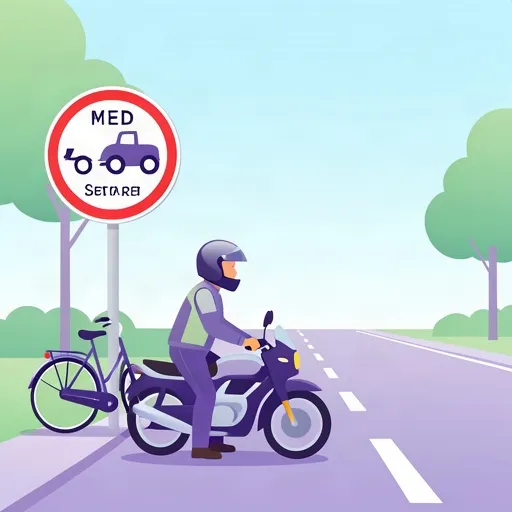
Achieving your motorcycle license requires more than just memorizing traffic rules; it demands an understanding of your own decision-making process. This guide explores the cognitive challenges riders face regarding speed perception and how to effectively self-regulate your behavior to stay safe. Mastering these psychological principles will prepare you for the safety-critical sections of your CBR theory exam.
Article content overview
Obtaining your motorcycle license in the Netherlands is a milestone that requires more than just mastering mechanical control; it demands a deep understanding of human factors and safe riding behavior. When studying for your CBR theory exam, you will encounter numerous questions regarding hazard perception and risk assessment. Many of these questions are designed to test not just your knowledge of the RVV (Reglement verkeersregels en verkeerstekens), but your ability to recognize how your own mental state impacts your decisions on the road.
Riding a motorcycle involves a unique cognitive load. Unlike driving a car, a motorcyclist is physically exposed, which can significantly alter the perception of speed. Research shows that as riders become more experienced, they often experience "speed adaptation," where higher velocities begin to feel normal. This cognitive distortion is a common cause of accidents, as it leads to delayed braking reactions and poor judgment in complex traffic situations.
In the context of the Dutch road network, where urban environments transition rapidly into high-speed N-roads, your ability to consciously regulate your speed is essential. Sensation-seeking—the tendency to pursue varied, novel, and complex sensations—is a psychological trait that frequently conflicts with safe riding habits. Understanding this bias is a critical part of your exam preparation, as the CBR will often present scenarios involving riders who underestimate stopping distances or ignore speed limits due to overconfidence.
Decision-making on a motorcycle is heavily influenced by how we interpret the environment. One common pitfall is the "optimism bias," where riders believe they possess superior skills that allow them to handle risks others cannot. On Dutch roads, this can manifest as illegal overtaking near intersections or failing to yield when the rules clearly demand it.
To pass your CBR theory exam, you must learn to override these impulses with analytical, rule-based thinking. This involves active hazard perception: constantly scanning for potential conflicts, such as cars emerging from side roads or cyclists moving unpredictably.
Self-regulation is the practice of monitoring your own behavior and adjusting it to match the demands of the road. In the Netherlands, where traffic density is high, this is not just a suggestion but a requirement for survival. Effective self-regulation involves acknowledging your current fatigue levels, emotional state, and the environmental conditions before you even start the engine.
| Factor | Impact on Riding | Self-Regulation Strategy |
|---|---|---|
| Sensation-Seeking | Increases risk-taking behavior | Focus on technical precision, not speed. |
| Speed Adaptation | Underestimation of closing speed | Check your speedometer regularly. |
| Overconfidence | Delayed hazard detection | Practice defensive driving at all times. |
| Fatigue | Slowed reaction time | Take regular breaks during long rides. |
When you are taking your theory exam, approach every question with this mindset. Do not choose the answer that you "might" do in a moment of excitement; choose the answer that follows the rules of the road and minimizes risk.
The CBR evaluates your readiness to hold a motorcycle license through a rigorous theoretical framework. They look for candidates who understand that road safety is a shared responsibility. When questions ask about your speed or decision-making in specific road conditions, always default to the safest possible action.
This article explores the psychological factors that influence motorcycle speed perception and rider decision-making on Dutch roads, including speed adaptation, sensation-seeking tendencies, and optimism bias. It provides a structured five-step hazard assessment procedure and a table linking psychological factors to specific self-regulation strategies riders can apply. The content emphasizes that passing the CBR theory exam requires overriding impulsive responses with analytical, rule-based thinking. Understanding these cognitive distortions is essential for developing safe riding habits and recognizing why defensive riding techniques are not optional but necessary for survival on high-density Dutch roads.
A short set of high-value points that capture the most important ideas from this article.
Speed adaptation causes experienced riders to underestimate their actual speed, leading to delayed braking and poor judgment in traffic.
Sensation-seeking personality traits conflict with safe riding by encouraging risk-taking behavior that increases accident probability.
Optimism bias makes riders believe they can handle risks that other road users cannot, leading to illegal overtaking and failure to yield.
Self-regulation requires monitoring your fatigue, emotional state, and environmental conditions before and during every ride.
Effective hazard perception involves scanning the entire environment, predicting other users' movements, and acting early.
The legal speed limit is a maximum, not a target; you must adjust speed to conditions allowing a safe stop within your visible range.
Defensive riding means anticipating errors by other road users and maintaining time and space to react.
Cognitive distortions like speed adaptation and optimism bias can override rational decision-making on Dutch roads.
The five-step hazard assessment procedure: scan, identify conflicts, predict movements, decide on action, execute early.
CBR exam questions require analytical rule-based answers, not reactive choices made in moments of excitement.
Believing personal skill allows you to exceed speed limits or take risks that others cannot safely attempt.
Failing to check the speedometer regularly because speed adaptation makes high velocities feel normal.
Focusing only on the vehicle directly ahead instead of scanning the entire road environment for potential conflicts.
Ignoring fatigue or emotional state, assuming mental condition does not affect riding ability.
Choosing the answer you would 'like to do' rather than the answer that follows traffic rules and minimizes risk on the CBR exam.
Article content overview
A short set of high-value points that capture the most important ideas from this article.
Speed adaptation causes experienced riders to underestimate their actual speed, leading to delayed braking and poor judgment in traffic.
Sensation-seeking personality traits conflict with safe riding by encouraging risk-taking behavior that increases accident probability.
Optimism bias makes riders believe they can handle risks that other road users cannot, leading to illegal overtaking and failure to yield.
Self-regulation requires monitoring your fatigue, emotional state, and environmental conditions before and during every ride.
Effective hazard perception involves scanning the entire environment, predicting other users' movements, and acting early.
The legal speed limit is a maximum, not a target; you must adjust speed to conditions allowing a safe stop within your visible range.
Defensive riding means anticipating errors by other road users and maintaining time and space to react.
Cognitive distortions like speed adaptation and optimism bias can override rational decision-making on Dutch roads.
The five-step hazard assessment procedure: scan, identify conflicts, predict movements, decide on action, execute early.
CBR exam questions require analytical rule-based answers, not reactive choices made in moments of excitement.
Believing personal skill allows you to exceed speed limits or take risks that others cannot safely attempt.
Failing to check the speedometer regularly because speed adaptation makes high velocities feel normal.
Focusing only on the vehicle directly ahead instead of scanning the entire road environment for potential conflicts.
Ignoring fatigue or emotional state, assuming mental condition does not affect riding ability.
Choosing the answer you would 'like to do' rather than the answer that follows traffic rules and minimizes risk on the CBR exam.
Explore related topics, search based questions, and concepts that learners often look up when studying Motorcycle Speed and Safety. These themes reflect real search intent and help you understand how this topic connects to wider driving theory knowledge in the Netherlands.
Find clear and practical answers to common questions learners often have about Motorcycle Speed and Safety. This section helps explain difficult points, remove confusion, and reinforce the key driving theory concepts that matter for learners in the Netherlands.
The CBR emphasizes hazard awareness and the ability to anticipate risks. Understanding how speed distorts your perception helps you make better decisions, which is a core component of the exam's focus on safe driving.
Self-regulation involves consciously identifying your triggers for speed and maintaining a mental buffer. You can improve by practicing defensive driving habits and regularly assessing your risk tolerance against current road conditions.
Yes, the theory exam tests your knowledge of specific traffic rules and behavioral expectations for motorcyclists, emphasizing the importance of responsible driving and awareness of other road users.
Start your targeted search now to explore a vast library of official Dutch driving theory articles and guides. Reinforce your understanding of specific traffic rules or road signs to ensure you are fully prepared for your upcoming CBR theory exam. Discover comprehensive explanations tailored for success.