
Understanding the needs of vulnerable road users like senior cyclists is a critical component of safe driving and succeeding in your CBR theory exam. This article provides essential insights into managing road interactions with elderly cyclists, including those on e-bikes, by focusing on anticipation and appropriate speed adjustments. Learning these defensive driving techniques will help you stay safe and demonstrate responsible traffic awareness in various real-world scenarios.
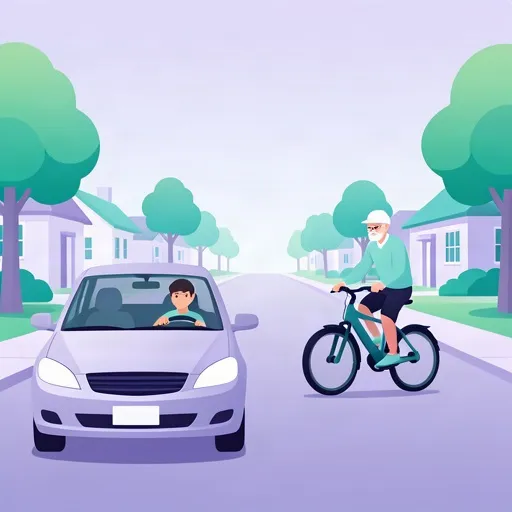
Article content overview
This article teaches new drivers how to interact safely with senior cyclists on Dutch roads by focusing on defensive driving and anticipation. Senior cyclists face natural declines in vision, hearing, and reaction times, making them particularly vulnerable, while e-bikes add complexity with higher speeds. Key strategies include scanning ahead for cyclist indicators, reducing speed proactively, and maintaining generous lateral distance when passing. Specific Dutch traffic signs (J38 and C15) signal areas requiring extra caution, and the CBR exam often tests your ability to choose safe behavior over asserting priority. Supporting the goals of the Doortrappen program means being predictable, using indicators early, and yielding when necessary to prevent collisions.
A short set of high-value points that capture the most important ideas from this article.
Senior cyclists may have reduced vision, hearing, and reaction times that affect their ability to perceive and respond to traffic
Always assume reduced awareness from elderly cyclists and maintain increased vigilance with larger safety buffers
E-bikes allow seniors to travel faster than expected; visual estimation of their speed is often unreliable
Lateral distance when passing cyclists is critical—wait if the road is too narrow to pass safely
Dutch traffic law strongly prioritizes protecting vulnerable road users over asserting right of way in ambiguous situations
Road sign J38 warns of cyclist crossings—reduce speed and increase braking readiness
Road sign C15 indicates a mandatory bicycle path where cyclists often have priority over turning vehicles
The Doortrappen program promotes senior mobility and highlights why drivers must be predictable
Look for wobbling, frequent head-turning, or hesitant movements near intersections as signs of cyclist uncertainty
The CBR exam frequently requires choosing to slow down or wait rather than asserting legal priority
Assuming that a senior cyclist has heard your vehicle approaching or seen your car
Underestimating the speed of e-bikes based on the cyclist's appearance or age
Pressuring cyclists by driving too close behind them, which causes stress and erratic behavior
Passing cyclists too closely on narrow roads instead of waiting for a safer opportunity
Confusing legal right of way with the safest course of action in hazard perception scenarios
Article content overview
A short set of high-value points that capture the most important ideas from this article.
Senior cyclists may have reduced vision, hearing, and reaction times that affect their ability to perceive and respond to traffic
Always assume reduced awareness from elderly cyclists and maintain increased vigilance with larger safety buffers
E-bikes allow seniors to travel faster than expected; visual estimation of their speed is often unreliable
Lateral distance when passing cyclists is critical—wait if the road is too narrow to pass safely
Dutch traffic law strongly prioritizes protecting vulnerable road users over asserting right of way in ambiguous situations
Road sign J38 warns of cyclist crossings—reduce speed and increase braking readiness
Road sign C15 indicates a mandatory bicycle path where cyclists often have priority over turning vehicles
The Doortrappen program promotes senior mobility and highlights why drivers must be predictable
Look for wobbling, frequent head-turning, or hesitant movements near intersections as signs of cyclist uncertainty
The CBR exam frequently requires choosing to slow down or wait rather than asserting legal priority
Assuming that a senior cyclist has heard your vehicle approaching or seen your car
Underestimating the speed of e-bikes based on the cyclist's appearance or age
Pressuring cyclists by driving too close behind them, which causes stress and erratic behavior
Passing cyclists too closely on narrow roads instead of waiting for a safer opportunity
Confusing legal right of way with the safest course of action in hazard perception scenarios
Explore related topics, search based questions, and concepts that learners often look up when studying Driving Safely Near Senior Cyclists. These themes reflect real search intent and help you understand how this topic connects to wider driving theory knowledge in the Netherlands.
Find clear and practical answers to common questions learners often have about Driving Safely Near Senior Cyclists. This section helps explain difficult points, remove confusion, and reinforce the key driving theory concepts that matter for learners in the Netherlands.
Elderly cyclists may have reduced reaction times, hearing, or vision, and they are more susceptible to serious injury if involved in a collision, making anticipation and safe spacing essential for drivers.
E-bikes allow seniors to travel at higher speeds than traditional bicycles, which can lead to misjudgments by car drivers regarding closing speeds, increasing the need for extra caution at intersections.
The Doortrappen program aims to help people aged 65 and older continue cycling safely and confidently for as long as possible through awareness, education, and improved road infrastructure.
Always maintain a sufficient distance, anticipate potential sudden movements or errors, and reduce your speed, especially when passing or turning at intersections where visibility might be limited.
Start your targeted search now to explore a vast library of official Dutch driving theory articles and guides. Reinforce your understanding of specific traffic rules or road signs to ensure you are fully prepared for your upcoming CBR theory exam. Discover comprehensive explanations tailored for success.