When a company is removed from the Chamber of Commerce, vehicles registered to that entity must be formally transferred to a new owner or holder. This guide clarifies the regulatory obligations set by the RDW and the risks associated with driving an improperly registered vehicle. Staying compliant with these administrative rules is vital for avoiding police enforcement and maintaining the legal right to use your vehicle on public roads.
Article content overview
Understanding vehicle registration is a fundamental component of the Dutch theory exam. Beyond the rules of the road, every driver must comprehend the administrative link between the RDW (Rijksdienst voor het Wegverkeer) and the legal status of a vehicle. A critical scenario that often confuses both new drivers and business owners involves vehicles registered to companies that have been removed from the Chamber of Commerce (Kamer van Koophandel or KVK).
When a company is deregistered from the KVK, its legal existence ends, yet its vehicles remain in the national registry. This creates an administrative disconnect that requires immediate action. The RDW maintains a strict database, and if a vehicle is registered to a company that no longer exists, that registration is eventually slated for termination. Failing to address this can result in the vehicle losing its legal right to participate in public road traffic, leading to significant legal and financial consequences.
The RDW is the official authority in the Netherlands responsible for vehicle registration. In the Dutch theory exam, you are expected to understand that a registration certificate (kentekenbewijs) is not just a piece of paper; it is a document that proves the legal status of a vehicle. For a vehicle to be lawfully driven on public roads, it must have a valid registration linked to a recognized owner or holder.
When a company is dissolved, the entity can no longer be held liable for traffic offenses, road tax, or insurance obligations. Because the RDW system requires a valid, active legal entity to act as the holder of the vehicle, those 11,000 vehicles currently linked to deregistered companies represent a significant compliance risk. If you are driving a vehicle that is registered to a business that has been struck from the KVK registry, you are effectively operating a vehicle that may be flagged for removal from the national traffic register.
The consequences of failing to transfer the registration of a vehicle from a defunct business are severe. Once the RDW terminates the registration, the vehicle is no longer permitted on public roads. If you are pulled over by the police during a traffic control, they will check the license plate in the RDW system. If the registration has been terminated, the vehicle is considered "unregistered."
Operating an unregistered vehicle can lead to immediate enforcement actions, including potential police seizure of the vehicle. Furthermore, you will face hefty fines and will be unable to purchase the mandatory WA insurance, as insurance companies require a valid registration to issue a policy. It is vital to remember that in the Netherlands, legal ownership and administrative possession are strictly tracked; driving without proper documentation is treated with the same seriousness as driving without a valid driving license.
Driving a vehicle after its registration has been terminated is illegal. Police can seize your vehicle immediately during a roadside control, and you will be held responsible for all associated towing and impoundment costs.
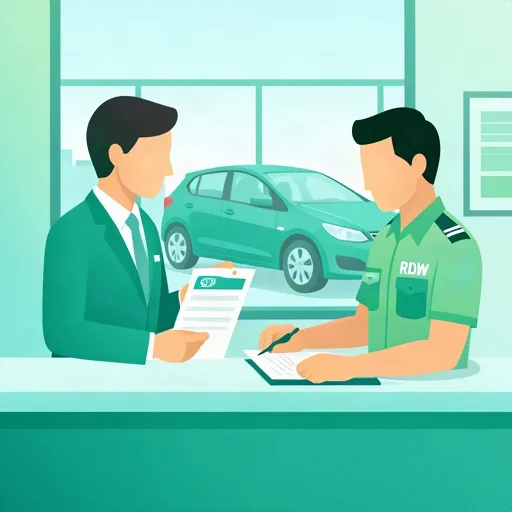
If you find yourself in possession of a vehicle registered to a company that is no longer in the KVK, you must initiate a transfer of ownership as soon as possible. This process is straightforward but mandatory. You can perform this transfer online through the RDW website or at a designated license plate service point.
While this topic focuses on administrative law, it is essential for the Dutch theory exam because it highlights your responsibility as a vehicle keeper. The exam often tests your knowledge of the requirements for being on the road, including having valid insurance, a valid APK, and a valid registration. Understanding that the RDW and KVK work in tandem to maintain order is part of being a responsible road user.
Always remember that as a driver, you are expected to ensure that your vehicle is compliant before you start the engine. Ignoring an administrative notice from the RDW is a major risk that can disrupt your ability to drive and lead to unnecessary legal entanglements.
This article explains the administrative obligations when a company is deregistered from the Dutch Chamber of Commerce (KVK) regarding vehicles registered to that entity. The RDW requires all vehicles to have valid registration linked to an active legal entity; if the company no longer exists, the RDW will eventually terminate the registration, making the vehicle illegal to drive on public roads. Consequences of non-compliance include immediate police seizure, hefty fines, and inability to obtain mandatory WA insurance. Drivers must proactively transfer ownership through the RDW website or service point, provide the original registration card, and ensure new insurance coverage in the new owner's name. Understanding the RDW-KVK relationship and vehicle compliance requirements is tested in the Dutch driving theory exam as part of responsible vehicle keeper knowledge.
A short set of high-value points that capture the most important ideas from this article.
When a company is deregistered from the KVK, its legal existence ends but vehicles remain registered to it, creating an administrative disconnect that requires immediate action
The RDW maintains a strict vehicle database and will terminate registrations linked to non-existent entities, removing the vehicle's legal right to road use
Driving a vehicle registered to a deregistered company can result in police seizure and hefty fines during traffic controls
A valid registration certificate (kentekenbewijs) proves the legal status of a vehicle and must be linked to an active, recognized owner or holder
Insurance companies cannot issue a WA policy without valid vehicle registration, making compliance essential for legal driving
RDW (Rijksdienst voor het Wegverkeer) is the Dutch authority responsible for vehicle registration and manages the national registry
The registration transfer process (overschrijven) can be completed online via the RDW website or at certified service points using the registration card
A vehicle needs valid registration, WA insurance, and APK to be lawfully driven on Dutch public roads
Tenaamstelling means putting the vehicle into someone's legal name and must be updated immediately when ownership changes
Company deregistration does NOT automatically transfer vehicle ownership; the owner must actively initiate the transfer process
Assuming the vehicle registration continues automatically when a company is deregistered without taking any administrative action
Believing that road tax (Motorrijtuigenbelasting) payment alone keeps a vehicle legal for road use
Driving a company vehicle after the employer goes out of business without checking if registration was properly transferred
Not realizing that the 11,000 vehicles linked to deregistered companies represent a significant compliance risk that affects road legality
Forgetting to update insurance to the new owner's name after completing the ownership transfer
Article content overview
A short set of high-value points that capture the most important ideas from this article.
When a company is deregistered from the KVK, its legal existence ends but vehicles remain registered to it, creating an administrative disconnect that requires immediate action
The RDW maintains a strict vehicle database and will terminate registrations linked to non-existent entities, removing the vehicle's legal right to road use
Driving a vehicle registered to a deregistered company can result in police seizure and hefty fines during traffic controls
A valid registration certificate (kentekenbewijs) proves the legal status of a vehicle and must be linked to an active, recognized owner or holder
Insurance companies cannot issue a WA policy without valid vehicle registration, making compliance essential for legal driving
RDW (Rijksdienst voor het Wegverkeer) is the Dutch authority responsible for vehicle registration and manages the national registry
The registration transfer process (overschrijven) can be completed online via the RDW website or at certified service points using the registration card
A vehicle needs valid registration, WA insurance, and APK to be lawfully driven on Dutch public roads
Tenaamstelling means putting the vehicle into someone's legal name and must be updated immediately when ownership changes
Company deregistration does NOT automatically transfer vehicle ownership; the owner must actively initiate the transfer process
Assuming the vehicle registration continues automatically when a company is deregistered without taking any administrative action
Believing that road tax (Motorrijtuigenbelasting) payment alone keeps a vehicle legal for road use
Driving a company vehicle after the employer goes out of business without checking if registration was properly transferred
Not realizing that the 11,000 vehicles linked to deregistered companies represent a significant compliance risk that affects road legality
Forgetting to update insurance to the new owner's name after completing the ownership transfer
Explore related topics, search based questions, and concepts that learners often look up when studying Vehicle Ownership for Deregistered Companies. These themes reflect real search intent and help you understand how this topic connects to wider driving theory knowledge in the Netherlands.
Find clear and practical answers to common questions learners often have about Vehicle Ownership for Deregistered Companies. This section helps explain difficult points, remove confusion, and reinforce the key driving theory concepts that matter for learners in the Netherlands.
The vehicle's registration must be transferred to a new owner or holder. If this is not done by the specified deadline set by the RDW, the registration will be terminated, and the vehicle will no longer be permitted on public roads.
Once the RDW terminates a registration, the vehicle is no longer officially recognized for road use. Driving it on public roads is illegal, and authorities such as the police may seize the vehicle during a traffic control.
You can complete the transfer online via the official RDW website, at a license plate service point, at an RDW counter, or at an official inspection station.
Start your targeted search now to explore a vast library of official Dutch driving theory articles and guides. Reinforce your understanding of specific traffic rules or road signs to ensure you are fully prepared for your upcoming CBR theory exam. Discover comprehensive explanations tailored for success.