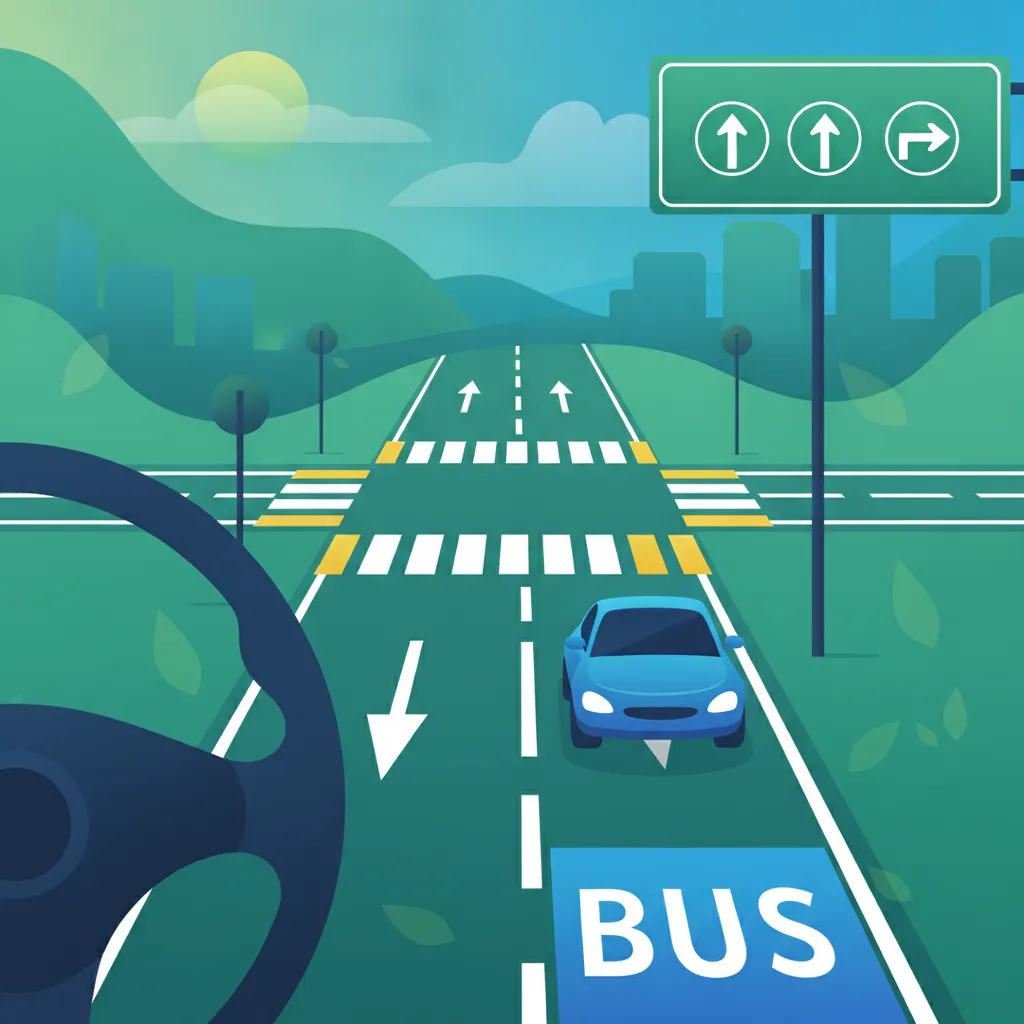
This unit provides a comprehensive guide to interpreting the painted markings and lane configurations on Irish roads. You will learn the legal distinctions between road markings, essential lane discipline, and how to navigate special zones like bus lanes and yellow boxes. Mastering these concepts is vital for both passing the Category B theory test and staying safe on the road.
Browse all lessons that make up Road Markings, Lane Use and Traffic Directions. Each lesson focuses on specific topics, learning objectives, and core concepts, helping you build essential knowledge and follow a clear, structured progression toward your study goals in Ireland.
The painted lines on the road surface act as continuous instructions to help drivers steer, position, and pass safely. This lesson explains the strict legal prohibitions of crossing solid white lines compared to broken lines, which indicate it is safe to cross if clear. You will also discover the purpose of coloured reflective road studs, known as cat's eyes, which improve safety during night driving and poor visibility.
Irish driving theory demands that drivers keep to the left-hand side of the road unless overtaking or turning right. This lesson explains how to maintain consistent lane discipline on multi-lane roads, how to perform safe lane changes, and the dangers of drifting. You will learn the safety sequence of checking mirrors, checking blind spots, signalling, and smoothly executing a lane change without disrupting trailing traffic.
Specific road markings are used to create safety zones for pedestrians and cyclists, requiring extra care from motorists. This lesson explains the markings of zebra, pelican, and toucan crossings, with emphasis on the white zigzag lines that prohibit overtaking and parking. You will also learn about cycle lanes, mandatory versus non-mandatory cycle track markings, and the safety benefits of advanced stop lines at traffic lights.
Bus lanes and cycle tracks are designed to encourage public transport and safe active travel in congested urban areas. This lesson explores the differences between with-flow and contra-flow bus lanes, detailing the restricted operating hours during which other vehicles are banned. You will understand when taxi drivers or emergency vehicles can use these lanes, and how to avoid costly traffic violations and safety risks.
No-overtaking zones are marked in areas with restricted visibility, such as approaching bends, humps, or narrow bridges. This lesson details how continuous solid white lines legally prohibit passing, along with the very narrow exceptions allowed under Irish law. You will learn to identify these high-risk areas from visual markings, ensuring you never initiate a passing manoeuvre that puts oncoming traffic in immediate danger.
Explore high-intent keywords and long-tail search topics learners use when researching Road Markings, Lane Use and Traffic Directions. These terms reflect how people search for reliable study materials, structured explanations, and unit-level theory preparation support in Ireland.
Find clear answers to the most common questions learners ask about Road Markings, Lane Use and Traffic Directions. Understand how the unit is organized, what learning goals it supports, and how it contributes to your study progression with structured explanations and practical guidance tailored for learners in Ireland.
A broken white line indicates that you may cross it if it is safe to do so, typically to overtake or turn. A continuous solid white line indicates that you must not cross or straddle it, except to enter a side road or property when necessary, as it marks a no-overtaking zone.
You must only enter a bus lane during its hours of operation if you are turning left at the next junction or entering an access point. Outside of operational hours, as indicated on signage, you may treat it as a normal traffic lane unless otherwise specified.
You must not enter the yellow box unless your exit is clear. The only exception is when you are turning right and are prevented from doing so only by oncoming traffic or other vehicles waiting to turn right.
You must not drive or park in a mandatory cycle lane, which is marked by a continuous white line. You should show extra caution near advisory cycle lanes, marked by a broken line, and avoid encroaching on them whenever possible.
All included lessons
Lessons in Road Markings, Lane Use and Traffic Directions
See who benefits most from studying Road Markings, Lane Use and Traffic Directions. This overview explains how the unit supports different learning needs, what level of knowledge is helpful before starting, and how it fits into the overall study path in Ireland.
This unit is designed for all learner drivers preparing for the Category B Driver Theory Test in Ireland. It is particularly useful for those who struggle with understanding road positioning, interpreting complex road markings, or complying with traffic flow regulations.

Begin your Irish Driver Theory Test journey today. Explore our guided curriculum, choose a structured course that fits your learning style, and start mastering every official RSA topic and rule of the road. Our approach ensures comprehensive preparation for your learner permit.
Explore Theory Test CoursesExplore all units and lessons included in this driving theory course.
Begin your Irish Driver Theory Test journey today. Explore our guided curriculum, choose a structured course that fits your learning style, and start mastering every official RSA topic and rule of the road. Our approach ensures comprehensive preparation for your learner permit.
Explore Theory Test Courses