
This lesson guides you through the correct road positioning and lane discipline required for Category B drivers in Ireland. You will learn how to maintain your lane, execute safe lane changes, and navigate multi-lane roads while adhering to the official Rules of the Road. Developing these habits is essential for both your theory exam performance and safe, predictable driving in real-world traffic.

Lesson content overview
In the official Irish Driver Theory Test, mastering lane discipline is not just a matter of passing your exam—it is a core pillar of safe driving on Ireland's public roads. Correct positioning ensures predictable traffic flow, minimises conflict points between vehicles, and reduces the risk of serious collisions.
Whether you are navigating narrow rural roads in Kerry or multi-lane motorways around Dublin, the principles of positioning require constant observation, precise vehicle control, and strict compliance with the Road Safety Authority (RSA) guidelines. This lesson details the legal requirements, safety procedures, and practical habits necessary for maintaining perfect lane discipline under Category B passenger car regulations.
In Ireland, all motorists must drive on the left-hand side of the road. This fundamental concept is codified in the official driving rules and carries legal obligations that apply to all road types, from single-track lanes to multi-lane motorways.
Under Road Rule 32 of the Irish driving code, you must keep your vehicle as close to the left-hand side of the road as is safe and practical. This rule exists to keep oncoming traffic separated by a safe margin of space and to allow overtaking vehicles to pass safely on your right.
The legal mandate requiring drivers in Ireland to use the left-most lane of travel, except when overtaking slower traffic, turning right, or complying with specific road signs or lane markings.
Keeping left is not optional; it is a mandatory requirement. Many novice drivers make the mistake of "middle-lane hogging" or drifting towards the center line on wider roads. This behavior restricts traffic flow, causes unnecessary congestion, and can lead other drivers to perform dangerous maneuvers, such as overtaking on the left (undertaking).
Never "hog" the outer lanes: Driving continuously in the right-hand or middle lane of a multi-lane road when the left lane is clear is a serious breach of lane discipline. You must return to the left-hand lane as soon as it is safe to do so after overtaking.
Lane positioning refers to the lateral placement of your vehicle within its designated lane. Correct positioning gives you the best possible view of the road ahead, keeps you visible to other road users, and provides a buffer zone if an emergency maneuver is required.
Under normal driving conditions, your vehicle should be positioned in the center of your lane, or slightly to the left of the center. This is known as the normal road position.
While the normal road position is your default, you must proactively adjust your position depending on road circumstances:
Unintended lateral deviation from your lane—commonly known as road drift—is a highly dangerous driving error. Road drift often occurs without the driver realizing it, bringing the vehicle perilously close to side collisions or run-off-road accidents.
According to Road Rule 45, drivers must keep their vehicles entirely within the lane boundaries indicated by road markings. Straddling lanes or crossing solid or broken white lines without a valid reason is an offence.
To prevent drift, keep your eyes focused far down your intended path rather than directly in front of your bonnet. This visual steering technique naturally helps you maintain a stable, centered position within your lane.
Changing lanes on multi-lane roads, dual carriageways, or roundabouts is a maneuver that demands a high degree of situational awareness. You must follow a precise safety sequence to avoid disrupting or endangering trailing traffic.
Assess the Need: Determine if changing lanes is truly necessary (e.g., to prepare for a turn, exit a motorway, or overtake a slow vehicle). Never change lanes on a whim.
Check Interior Mirror: Assess the speed and distance of traffic directly behind you.
Check Exterior Mirror: Look in the side mirror corresponding to the direction you intend to move (e.g., the right mirror if moving right) to see vehicles approaching in the adjacent lane.
Check the Blind Spot: Perform a rapid, decisive head-turn over your shoulder (the "life-saver glance") to check the area beside your vehicle that mirrors cannot show.
Signal Your Intentions: Activate your indicator early enough to give other road users time to react, but not so early that it causes confusion at preceding junctions.
Re-check Mirrors: Ensure the situation has not changed and that no vehicle has accelerated into your path.
Smoothly Change Lane: Maintain your speed or adjust it slightly to match the flow of the new lane, then steer smoothly across. Avoid sudden, sharp steering inputs.
Cancel Signal: Ensure your indicator cancels immediately after completing the maneuver to avoid misleading other drivers.
One of the most frequent causes of collisions on multi-lane roads is the failure to check the blind spot. Standard car mirrors are convex to provide a wider angle of view, but this creates a physical blind spot of approximately 10 to 15 degrees alongside your rear doors and quarter panels.
Always remember that a mirror check alone is insufficient. If you do not perform a physical head-turn before moving laterally, you risk sideswipe collisions with motorcycles or smaller passenger cars traveling parallel to you.
Road Rule 44 specifies that you must not change lanes without proper signaling and ensuring that you can do so without forcing other road users to brake or swerve. If a vehicle in the adjacent lane must slow down to accommodate you, the gap is not large enough, and you must wait for a safer opportunity.
Overtaking is a complex driving maneuver that combines lane positioning, speed adjustment, and strict legal compliance.
In Ireland, Road Rule 36 dictates that overtaking must be performed on the right. You should only overtake on the left in very specific, legally defined circumstances:
Overtaking on the left in standard traffic conditions (known as "undertaking") is highly dangerous because drivers do not expect to be passed on their left side, where blind spots are often larger.
Roundabouts require strict lane discipline. Entering a multi-lane roundabout in the incorrect lane or drifting across lane markings while navigating the circular junction is a primary cause of minor collisions. You must select your entry lane based on your intended exit, maintain your position within the concentric lane lines, and signal left only after passing the exit preceding the one you intend to take.
Indecision often leads to sudden, late lane changes at major intersections. If you realize you are in the wrong lane as you approach a junction, do not attempt to force your way into the correct lane at the last second.
Instead, proceed in your current lane, take the alternative route safely, and find a secure location further down the road to turn around.
Reduced visibility significantly increases the difficulty of maintaining lane discipline. In heavy Irish rain or thick fog, road markings may become obscured.
To ensure safety and prepare effectively for your Irish Driver Theory Test, keep these key points in mind:
This lesson covers the fundamental Irish road positioning rules that every Category B driver must master. The core principle is keeping left under Road Rule 32, with normal road position centered slightly left in your lane. Safe lane changes require the full mirror-blind spot-signal-manoeuvre sequence, with a mandatory shoulder check to cover the 10-15 degree blind spot that mirrors cannot show. Overtaking must always be done on the right; undertaking is hazardous and illegal except in specific legally defined circumstances. Learners must also adjust position for vulnerable road users, giving cyclists at least 1.5 metres clearance in speed zones over 50 km/h, and maintain lane discipline strictly at roundabouts and junctions to avoid late, dangerous lane changes.
A short set of high-value points that capture the most important learning from this lesson.
Always keep your vehicle as far left as is safe and practical under Road Rule 32, returning to the left lane after overtaking
Maintain the normal road position centered in your lane, slightly left of center, to preserve safety margins on both sides
Use the mirror-signal-blind spot-manoeuvre sequence before every lane change, checking mirrors twice before moving
Overtake only on the right in Ireland; overtaking on the left (undertaking) is illegal under normal traffic conditions
Adjust your lane position proactively for cyclists (1.5m clearance above 50 km/h), pedestrians, and when preparing to turn right
Explore all units and lessons included in this driving theory course.
Road Rule 44: Never change lanes without proper signaling and without ensuring you won't force others to brake or swerve
Road Rule 45: You must keep your vehicle entirely within lane boundaries marked by white lines at all times
The life-saver glance is a mandatory physical head-turn over your shoulder to check your blind spot—mirrors alone are insufficient
On sharp left-hand bends, move slightly toward the center line for better visibility; on right-hand bends, stay well left to avoid oncoming traffic
If you realize you're in the wrong lane approaching a junction, do not force a late lane change—continue safely and find an alternative route
Middle-lane hogging on multi-lane roads when the left lane is clear, which causes congestion and encourages dangerous undertaking
Failing to perform the blind spot check and relying solely on mirrors, risking sideswipe collisions with motorcycles or cars in adjacent lanes
Signaling too early at a junction when another junction is approaching, confusing other drivers about your intended path
Crossing lane markings at roundabouts by not selecting the correct entry lane based on your intended exit before entering
Using mobile phones or adjusting the radio while driving, causing unintentional road drift that can span significant distance at motorway speeds
Lesson content overview
A short set of high-value points that capture the most important learning from this lesson.
Always keep your vehicle as far left as is safe and practical under Road Rule 32, returning to the left lane after overtaking
Maintain the normal road position centered in your lane, slightly left of center, to preserve safety margins on both sides
Use the mirror-signal-blind spot-manoeuvre sequence before every lane change, checking mirrors twice before moving
Overtake only on the right in Ireland; overtaking on the left (undertaking) is illegal under normal traffic conditions
Adjust your lane position proactively for cyclists (1.5m clearance above 50 km/h), pedestrians, and when preparing to turn right
Explore all units and lessons included in this driving theory course.
Road Rule 44: Never change lanes without proper signaling and without ensuring you won't force others to brake or swerve
Road Rule 45: You must keep your vehicle entirely within lane boundaries marked by white lines at all times
The life-saver glance is a mandatory physical head-turn over your shoulder to check your blind spot—mirrors alone are insufficient
On sharp left-hand bends, move slightly toward the center line for better visibility; on right-hand bends, stay well left to avoid oncoming traffic
If you realize you're in the wrong lane approaching a junction, do not force a late lane change—continue safely and find an alternative route
Middle-lane hogging on multi-lane roads when the left lane is clear, which causes congestion and encourages dangerous undertaking
Failing to perform the blind spot check and relying solely on mirrors, risking sideswipe collisions with motorcycles or cars in adjacent lanes
Signaling too early at a junction when another junction is approaching, confusing other drivers about your intended path
Crossing lane markings at roundabouts by not selecting the correct entry lane based on your intended exit before entering
Using mobile phones or adjusting the radio while driving, causing unintentional road drift that can span significant distance at motorway speeds
Explore search topics learners often look for when studying Lane Discipline and Positioning on the Road. These topics reflect common questions about road rules, driving situations, safety guidance, and lesson level theory preparation for learners in Ireland.
Browse additional driving theory lessons that cover connected traffic rules, road signs, and common driving situations related to this topic. Improve your understanding of how different rules interact across everyday traffic scenarios.
Learn the official rules for selecting the correct entry lane on roundabouts and maintaining stable positioning through exit. This guide covers how to interpret road markings and signals to safely navigate complex circular junctions without causing traffic flow disruption or conflict with other road users.

Navigating multi-lane roundabouts requires precise lane selection, continuous scanning, and timely signaling. This lesson teaches you the 'clock rule' for determining which lane to enter, how to yield to traffic already on the roundabout from your right, and when to activate your left indicator to exit. Mastering these procedures minimizes lane-drift accidents and ensures a seamless flow of traffic on busy roundabouts.

This lesson provides a comprehensive guide to navigating single and multi-lane roundabouts safely in accordance with the Irish Rules of the Road. It covers correct lane selection on approach, signaling rules for exiting, and maintaining a steady path through traffic. Riders will learn to anticipate lane-changing mistakes made by other drivers and manage the unique banking angles of roundabouts.
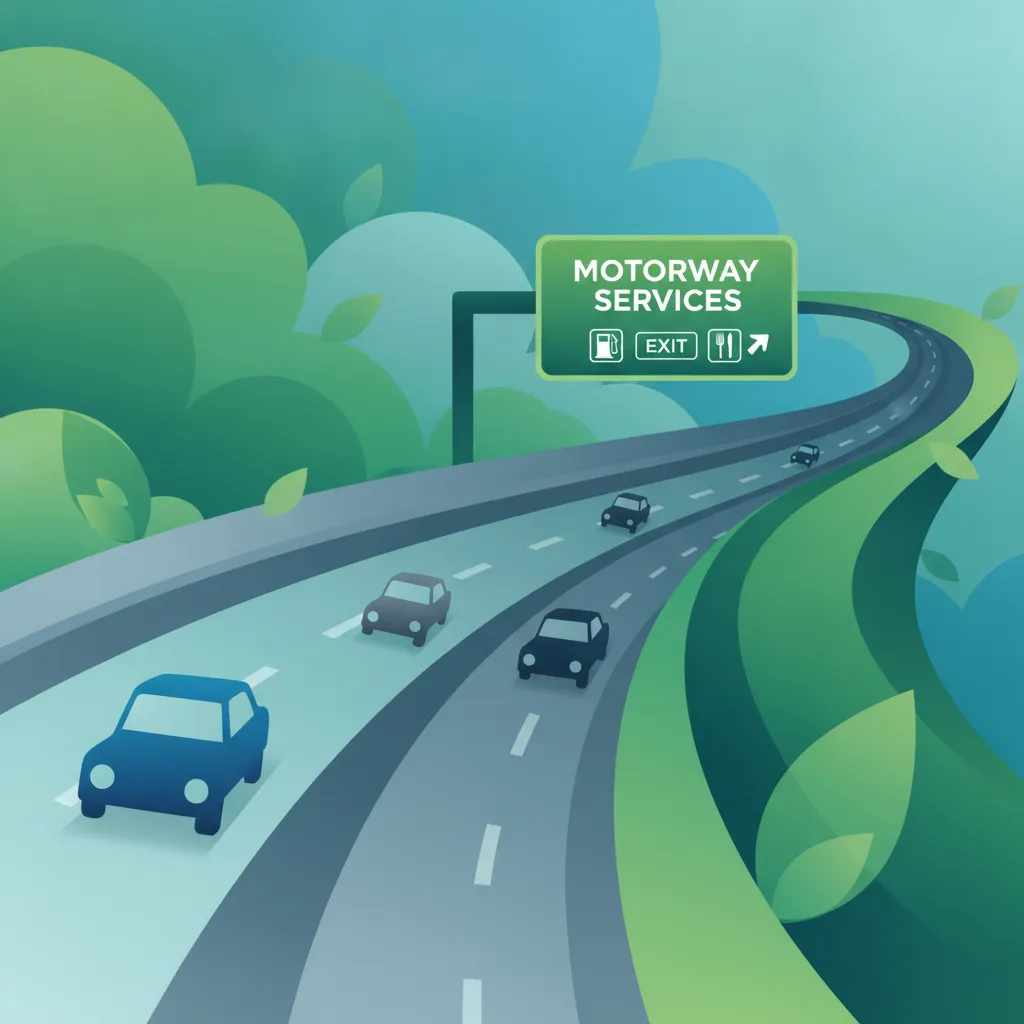
Motorways are designed for safe, high-speed travel, but require strict adherence to lane discipline and specific regulations. This lesson explains that the left lane is for normal driving, while middle and right lanes are strictly for overtaking slower traffic. You will learn how to identify motorway exits, use the hard shoulder during absolute emergencies, and understand the legal restrictions placed on learner permit holders.

Large passenger vehicles must maintain consistent lane positioning to prevent side-swipe incidents and sustain smooth urban traffic patterns. This lesson covers standard lane selection rules, safe overtaking procedures, and how to use designated public transit corridors correctly. Drivers will learn the importance of checking mirrors continuously and planning lane changes well in advance.

This lesson explains how to choose the safest riding position within a traffic lane, considering the standard left-side driving rule in Ireland. It details the concept of dominant positioning to prevent other vehicles from crowding your space, while remaining visible to oncoming traffic. Riders will learn to adjust their track constantly to avoid road surface hazards, oil deposits, and wind currents.

No-overtaking zones are marked in areas with restricted visibility, such as approaching bends, humps, or narrow bridges. This lesson details how continuous solid white lines legally prohibit passing, along with the very narrow exceptions allowed under Irish law. You will learn to identify these high-risk areas from visual markings, ensuring you never initiate a passing manoeuvre that puts oncoming traffic in immediate danger.

Overtaking requires rapid judgment, clear visibility, and precise execution to avoid catastrophic head-on collisions. This lesson guides you through checking oncoming traffic, verifying legal passing zones via road markings, and checking mirrors and blind spots before accelerating. You will learn how to signal your intentions, maintain a safe gap, and return to your driving lane smoothly without cutting up the passed vehicle.

This lesson clarifies the legal regulations surrounding bus lanes and cycle lanes in Ireland, highlighting when motorcycles are permitted to enter them. It outlines how to cross these lanes safely when turning left, and how to scan for cyclists approaching from behind. Riders will learn to respect lane markings, observe signposted operational hours, and avoid blocking designated public transit lanes.

This lesson explains the critical meanings of solid, broken, and continuous lines painted on Irish road surfaces. It defines the legal rules surrounding bus lanes, bicycle lanes, and yellow box junctions in urban settings. Riders will learn correct lane discipline to ensure their safety and maintain proper separation from surrounding traffic.

This lesson outlines the rules and procedures for riding safely on dual carriageways and motorways in Ireland. It covers merging from slip roads, maintaining lane discipline, and executing high-speed overtaking manoeuvres in accordance with RSA standards. Motorcyclists will learn to anticipate turbulence from large commercial trucks and recognize the safety signs used on high-speed routes.
Understand the legal framework for overtaking, including when it is permitted to pass on the right and the safety risks associated with undertaking. This lesson explains the necessary observation sequence and positioning adjustments required to overtake slower vehicles safely while maintaining compliance with official Irish road traffic legislation.
Overtaking requires rapid judgment, clear visibility, and precise execution to avoid catastrophic head-on collisions. This lesson guides you through checking oncoming traffic, verifying legal passing zones via road markings, and checking mirrors and blind spots before accelerating. You will learn how to signal your intentions, maintain a safe gap, and return to your driving lane smoothly without cutting up the passed vehicle.

This lesson explains the sequential steps for executing safe overtaking manoeuvres on single and dual-carriageway roads in Ireland. It focuses on assessing speed differentials, establishing clear lines of sight, and evaluating oncoming traffic before committing. Riders will learn the correct signaling routine, safe abort procedures, and how to return smoothly to their lane without cutting in.
No-overtaking zones are marked in areas with restricted visibility, such as approaching bends, humps, or narrow bridges. This lesson details how continuous solid white lines legally prohibit passing, along with the very narrow exceptions allowed under Irish law. You will learn to identify these high-risk areas from visual markings, ensuring you never initiate a passing manoeuvre that puts oncoming traffic in immediate danger.

Your vehicle's lighting system is crucial for illuminating your path and making your presence and intentions clear to other road users. This lesson explains the legal requirements for using dipped headlights, full beams, fog lights, and hazard signals in Ireland. You will learn when to switch from full to dipped beams to avoid blinding oncoming drivers, and how to perform simple checks to ensure all bulbs are working.
Motorways are designed for safe, high-speed travel, but require strict adherence to lane discipline and specific regulations. This lesson explains that the left lane is for normal driving, while middle and right lanes are strictly for overtaking slower traffic. You will learn how to identify motorway exits, use the hard shoulder during absolute emergencies, and understand the legal restrictions placed on learner permit holders.
This lesson outlines the rules and procedures for riding safely on dual carriageways and motorways in Ireland. It covers merging from slip roads, maintaining lane discipline, and executing high-speed overtaking manoeuvres in accordance with RSA standards. Motorcyclists will learn to anticipate turbulence from large commercial trucks and recognize the safety signs used on high-speed routes.

Driving at night presents severe challenges due to reduced visibility, driver fatigue, and headlight glare from oncoming vehicles. This lesson teaches you how to manage your headlights, use road edge markers to steer through dark curves, and look away from oncoming bright lights. You will learn to drive within the range of your headlights and remain highly alert for pedestrians or cyclists not wearing reflective gear.

Irish rural roads are often narrow, winding, and bordered by high hedges, presenting unique hazards compared to urban streets. This lesson focuses on scanning for hidden hazards such as slow-moving farm machinery, mud on the road surface, and loose livestock. You will learn how to adjust your speed before entering blind bends, sound your horn at blind crests, and safely share the road with local agricultural traffic.
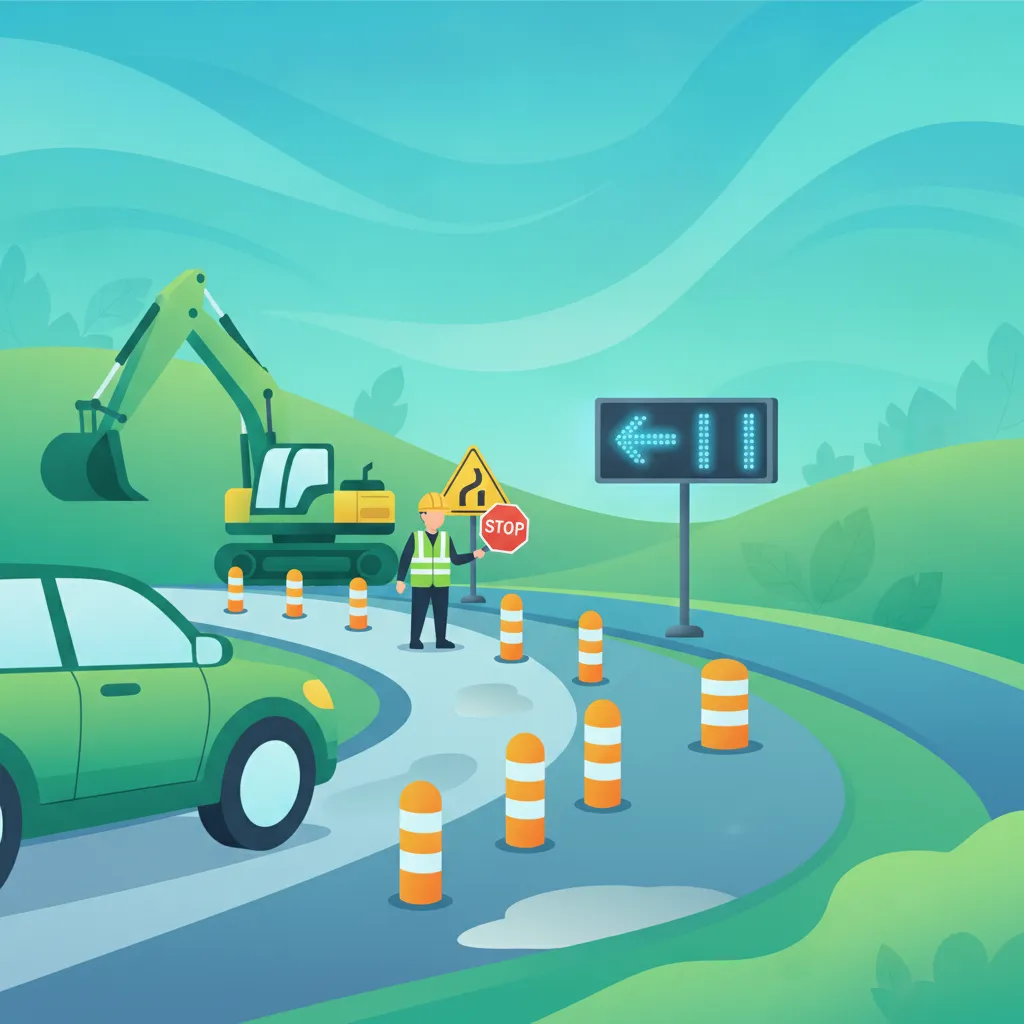
Road construction zones feature dynamic hazards, including changed lane configurations, temporary barriers, and workers near live traffic. This lesson details how to follow temporary signage, navigate narrow chicanes, and obey 'Stop-Go' flag systems or temporary traffic lights. You will understand the legal requirement to obey temporary speed limits, which are strictly enforced to protect both motorists and road crews.
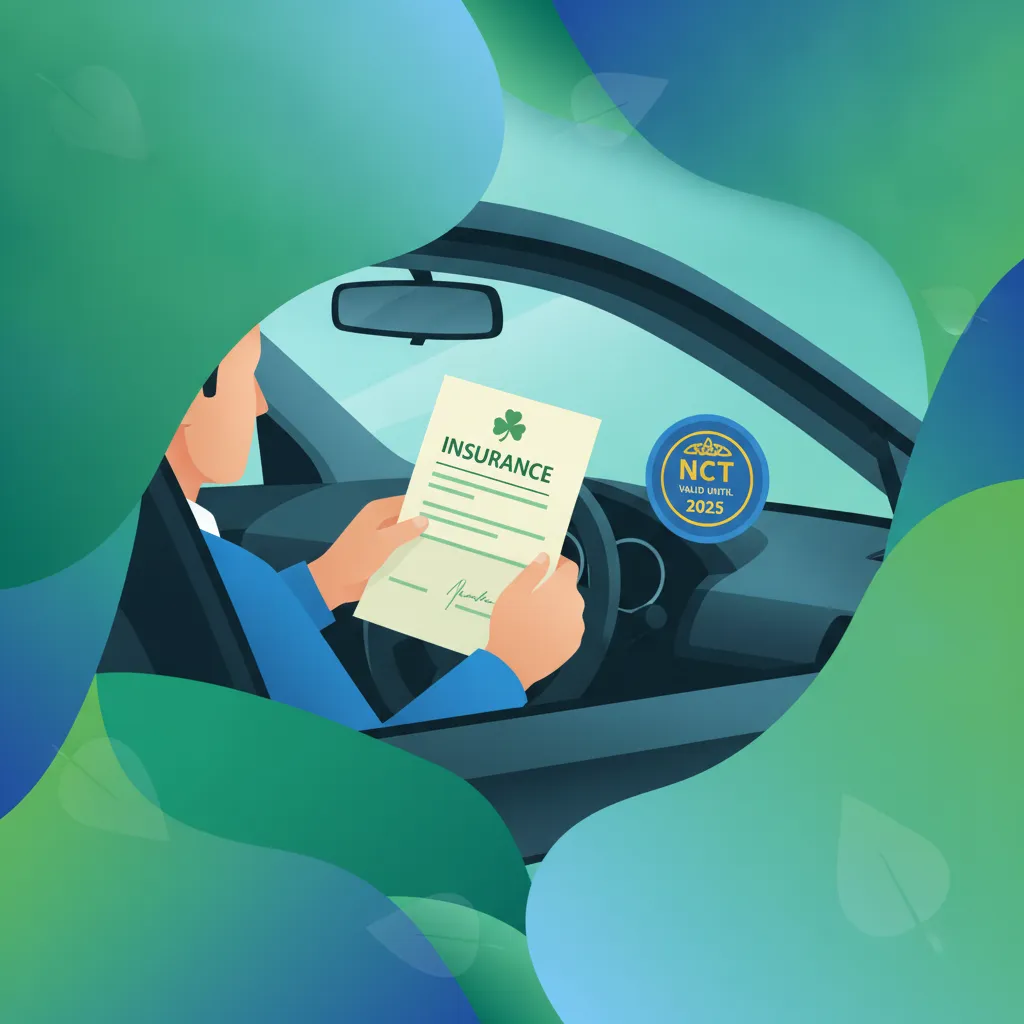
This lesson details the legal requirements for motorcycle insurance under Irish law, emphasizing the absolute necessity of holding valid third-party cover. It outlines the rider's responsibility to maintain their motorcycle in a completely roadworthy condition, focusing on critical safety components like tyres, brakes, and lights. Learners will examine how mechanical failures and non-compliance with maintenance standards compromise legal eligibility and safety.
Find clear answers to common questions learners have about Lane Discipline and Positioning on the Road. Learn how the lesson is structured, which driving theory objectives it supports, and how it fits into the overall learning path of units and curriculum progression in Ireland. These explanations help you understand key concepts, lesson flow, and exam focused study goals.
In Ireland, driving on the left is the standard legal requirement to ensure a predictable traffic flow. The right lane is primarily for overtaking or turning right; lingering there unnecessarily can impede faster traffic and is a common source of test faults.
Always follow the OSM-PSL routine: Observe (check mirrors and blind spots), Signal your intention, and then perform the Manoeuvre. Ensure there is sufficient gap before moving and never force other drivers to brake due to your lane change.
Many theory test scenarios present visual diagrams of multi-lane roads. Failing to recognize the correct lane for a specific destination or direction is a common way to lose points, as it shows a lack of preparation and hazard awareness.
Yes, motorway lane discipline requires earlier planning and more careful observation of fast-moving traffic. You must always return to the left lane once your overtaking manoeuvre is complete and it is safe to do so.
Use the practice question search tool to pinpoint specific topics, road signs, or rules you need to master for your official Driver Theory Test. Refine your study strategy and ensure comprehensive preparation for all aspects of the Irish driving exam. Start your focused revision now and build confidence for your learner permit test.