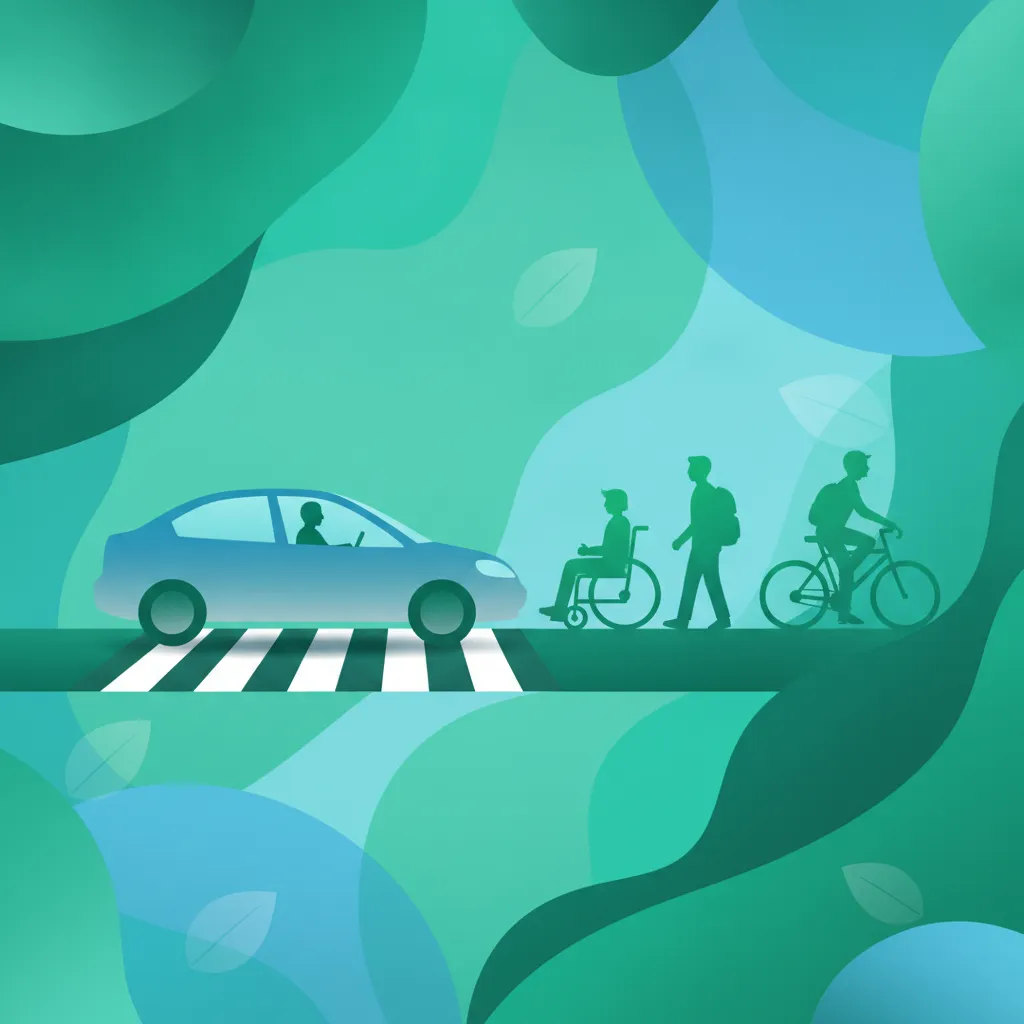
This unit provides a vital guide on how to interact safely with vulnerable road users who lack the protection of a vehicle structure. You will explore specific crossing protocols, cyclist infrastructure, and the legal responsibilities drivers have toward pedestrians and those with physical challenges. Mastering these concepts is essential for both passing your theory test and developing responsible, defensive driving habits on Irish roads.
Browse all lessons that make up Pedestrians, Crossings, Cyclists and Vulnerable Road Users. Each lesson focuses on specific topics, learning objectives, and core concepts, helping you build essential knowledge and follow a clear, structured progression toward your study goals in Ireland.
Pedestrians are the most common vulnerable road users, and drivers must maintain constant vigilance to protect them. This lesson covers pedestrian priority, especially when you are turning into side roads or navigating busy urban centres. You will learn why you must yield to pedestrians already crossing, how to scan blind spots for hidden walkers, and the safety dangers of blocking footpaths or pedestrian zones with your car.
Pedestrian crossings are dedicated refuge zones on public roads that require drivers to perform distinct actions depending on the crossing type. This lesson explores uncontrolled zebra crossings where pedestrians have immediate priority, and light-controlled pelican, toucan, and puffin crossings. You will learn how to handle the flashing amber light phase, avoid parking near crossings, and never overtake another vehicle in these zones.
Cyclists share public roads under unique safety constraints, requiring drivers to keep wide clearances and anticipate sudden steering changes. This lesson covers the minimum safe passing distance of 1 to 1.5 metres, rules for driving near cycle tracks, and the danger of the 'dooring' hazard when parking. You will also learn to check your left-side blind spot before turning, preventing dangerous side-swipe collisions.
Children, the elderly, and disabled individuals often require extra time and understanding when navigating road networks. This lesson outlines special safety hazards, such as children unexpectedly running into school zones, or senior citizens needing longer times to cross wide junctions. You will learn how to recognise visually impaired pedestrians by their white canes or guide dogs, and the absolute requirement to drive slowly and patiently.
Safeguarding vulnerable road users requires more than simple obedience to traffic signs; it demands a defensive driving mindset. This lesson summarizes safe practices, including scanning far ahead in urban areas, keeping massive safety margins in wet weather, and executing thorough blind spot checks before reversing. By anticipating the unpredictable movements of others, you can prevent accidents and support a safe road culture.
Explore high-intent keywords and long-tail search topics learners use when researching Pedestrians, Crossings, Cyclists and Vulnerable Road Users. These terms reflect how people search for reliable study materials, structured explanations, and unit-level theory preparation support in Ireland.
Find clear answers to the most common questions learners ask about Pedestrians, Crossings, Cyclists and Vulnerable Road Users. Understand how the unit is organized, what learning goals it supports, and how it contributes to your study progression with structured explanations and practical guidance tailored for learners in Ireland.
You must always be prepared to stop at a pedestrian crossing. If a pedestrian has stepped onto the crossing, you must yield and allow them to cross safely before you proceed.
Cyclists are legitimate road users and are entitled to use the road network. Drivers must provide them with sufficient space when overtaking and be aware of their vulnerability, particularly at junctions.
Schools present a higher risk of children suddenly stepping into the road. Drivers should reduce their speed, be vigilant, and always obey the instructions of school wardens or traffic signs in the vicinity.
You should give cyclists as much room as you would a car. The official advice is to allow at least 1 meter of space in speed zones up to 50km/h, and at least 1.5 meters in zones with higher speed limits.
All included lessons
Lessons in Pedestrians, Crossings, Cyclists and Vulnerable Road Users
See who benefits most from studying Pedestrians, Crossings, Cyclists and Vulnerable Road Users. This overview explains how the unit supports different learning needs, what level of knowledge is helpful before starting, and how it fits into the overall study path in Ireland.
This unit is designed for all Category B learners preparing for the Irish Driver Theory Test. It is particularly beneficial for those who want to ensure they fully understand their duty of care towards vulnerable road users and need to clear up any confusion regarding priority at pedestrian crossings.

Begin your Irish Driver Theory Test journey today. Explore our guided curriculum, choose a structured course that fits your learning style, and start mastering every official RSA topic and rule of the road. Our approach ensures comprehensive preparation for your learner permit.
Explore Theory Test CoursesExplore all units and lessons included in this driving theory course.
Begin your Irish Driver Theory Test journey today. Explore our guided curriculum, choose a structured course that fits your learning style, and start mastering every official RSA topic and rule of the road. Our approach ensures comprehensive preparation for your learner permit.
Explore Theory Test Courses