
This lesson explores the essential defensive driving techniques required to safely interact with vulnerable road users on Irish streets. By learning to anticipate the movements of pedestrians, cyclists, and the elderly, you will gain the skills needed to pass the Category B driving theory exam and foster a safer driving culture.
Lesson content overview
Safeguarding vulnerable road users (VRUs) is one of the most critical responsibilities you assume when preparing for your Category B passenger car driving licence. In Ireland, the Road Safety Authority (RSA) emphasizes that roads are shared public spaces. Operating a motor vehicle—which possesses significant mass, speed, and protective steel structure—places a strict legal and moral duty on you to protect those who do not have these protections.
This lesson covers the essential safe practices, defensive driving techniques, and statutory rules required to pass the Irish Driver Theory Test and maintain safety on Irish roads.
A Vulnerable Road User (VRU) is defined as any road user who has a significantly heightened risk of injury or death in the event of a collision. This broad category includes pedestrians, cyclists, motorcyclists, children, the elderly, and individuals with disabilities.
Any road user who lacks a protective metal shell or safety systems (such as airbags and seatbelts) and is consequently highly susceptible to injury or fatality during a collision.
Unlike the occupants of a modern passenger car, VRUs bear the direct kinetic energy of an impact. The physics of a collision involving a car weighing over 1,500 kg and a pedestrian or cyclist are catastrophic, even at low speeds.
For this reason, Irish traffic law and the RSA Rules of the Road require drivers to maintain a high level of hazard awareness. You must actively anticipate the presence of VRUs and modify your driving behavior long before a critical situation develops.
Defensive driving is a proactive approach to vehicle operation. It requires you to anticipate potential hazards, maintain generous safety margins, and make conservative, safety-first decisions. Instead of merely reacting to events as they occur, a defensive driver looks for early warning signs of conflict.
Defensive driving means "driving for others." Always assume that other road users, particularly children and cyclists, may make sudden, unpredictable movements.
Proactive scanning is the continuous visual search of the road environment ahead, to the sides, and behind. In dense urban areas where VRUs are highly concentrated, your scanning technique must be systematic:
In urban settings, the density of visual information can cause cognitive overload. By slowing down and scanning systematically, you give your brain the necessary time to process hazards and react appropriately.
Space is your best safety feature. Maintaining a generous physical buffer around your vehicle gives you the time and distance needed to avoid collisions. This buffer is divided into two main categories: following distance and lateral clearance.
Under normal, dry road conditions in Ireland, you must maintain a minimum following distance of two seconds behind the vehicle in front. This is calculated by picking a stationary object (such as a lamp post or road sign) and counting "one-thousand-and-one, one-thousand-and-two" after the vehicle ahead passes it. If you pass the same object before finishing the count, you are tailgating.
However, Irish weather is notoriously unpredictable, and wet roads drastically alter vehicle physics:
Failing to double your following distance on wet roads is a major cause of rear-end collisions. If the vehicle ahead brakes suddenly to avoid a pedestrian, you will not have the space to stop safely.
When overtaking or passing cyclists, motorcyclists, or pedestrians walking along rural roads, you must leave a generous lateral safety margin. The RSA recommends the following minimum lateral clearance distances:
These distances account for sudden wind gusts, road defects (such as potholes or glass) that might cause a cyclist to swerve, and the general instability of two-wheeled vehicles.
Zebra crossings are easily identified by alternating black and white stripes painted on the road surface, accompanied by yellow flashing beacons (historically known as Belisha beacons) on both sides of the street.
Irish law is absolute when it comes to pedestrian priority at these locations:
When yielding at a zebra crossing, stop well before the white line. Do not use your horn, flash your headlights, or wave your hand to beckon pedestrians forward. Doing so can be highly dangerous; it may encourage them to cross without checking other lanes of traffic where vehicles may not have stopped. Allow them to cross at their own pace.
Cyclists are highly vulnerable at intersections, where the paths of motor vehicles and bicycles frequently cross. One of the most common collision types is the "left-hook," which occurs when a motorist overtakes a cyclist and then turns left directly across their path.
At many modern, controlled junctions in Irish cities, traffic lights feature dedicated signal phases for cyclists. These are indicated by a green light shaped like a bicycle or a cyclist-specific green arrow.
Additionally, you should be aware of Advanced Stop Lines (ASLs). These are marked areas at the front of a traffic lane, painted with a bicycle symbol, which allow cyclists to wait ahead of motor vehicles at red lights. You must not drive your vehicle into the ASL box when the traffic light is red.
[ Traffic Light Junction Layout with ASL ]
-----------------------------------------
|               [Intersection]          |
-----------------------------------------
|    [ Cyclist Waiting Box / ASL ]      | <-- Motor vehicles must not enter
|=======================================|     this box on a red light
|    [ White Stop Line for Cars ]       |
|                                       |
|            [ Passenger Car ]          |
Children represent a unique challenge for drivers. Due to their physical and cognitive development, they process the road environment differently than adults:
To mitigate these risks, the RSA and local authorities implement designated school zones with reduced speed limits—typically 30 km/h during school hours.
Reduce Speed immediately: As soon as you see school warning signs or enter a designated zone, reduce your speed to 30 km/h or lower.
Scan beneath parked cars: Watch for children's feet or sudden movements between parked vehicles.
Anticipate school buses: If a school bus is pulling over, expect children to alight and potentially run across the road from behind or in front of the bus.
Obey School Wardens: Always stop immediately when a school warden displays their "STOP" sign. It is a serious legal offence to ignore their signal.
A blind spot is any area around your vehicle that cannot be directly observed in your rearview or side mirrors. In a Category B passenger car, significant blind spots exist to the rear-left and rear-right corners of the vehicle, as well as directly behind the boot.
                 [ Front of Car ]
                      |___|
                     /     \
                    |       |
      [Left Mirror] |       | [Right Mirror]
                \   |       |   /
                 \  |_______|  /
                  \           /
                   \         /
  [BLIND SPOT] >>>  \_______/  <<< [BLIND SPOT]
                    /       \
                   /         \
                  /           \
Reversing is a high-risk manoeuvre because your rear visibility is severely restricted. Small children, toddlers, and cyclists are easily obscured by the bodywork of your car.
Before engaging reverse gear, you must execute a comprehensive 360-degree check:
Under the Road Traffic (Traffic and Parking) Regulations, failing to perform adequate blind spot and physical checks before reversing can result in a conviction for careless or dangerous driving if an accident occurs.
Understanding the mistakes of others can help you avoid making them yourself. The following list details the most common violations and misconceptions regarding vulnerable road users:
Why do we need such extreme caution? The answer lies in simple physics and human biology:
By maintaining a defensive mindset, performing proactive scanning, and strictly adhering to speed limits and safety margins, you protect the lives of those sharing the road with you and ensure your success in the Category B Irish Driver Theory Test.
This lesson covers the essential defensive driving mindset required to protect vulnerable road users on Irish roads, emphasising that drivers bear both legal and moral responsibility due to the physics of collisions between vehicles and unprotected road users. Key skills include proactive scanning techniques, maintaining appropriate following distances (two seconds dry, four seconds wet), and providing adequate lateral clearance when passing cyclists. The lesson details specific legal obligations at zebra crossings, Advanced Stop Lines, and school zones where reduced 30 km/h limits apply. Learners must master blind spot management through physical checks rather than relying on technology alone, and understand how impact speed directly affects pedestrian survival rates, making speed reduction the most effective protective measure.
A short set of high-value points that capture the most important learning from this lesson.
Vulnerable road users (VRUs) include pedestrians, cyclists, motorcyclists, children, elderly, and disabled individuals who lack protective vehicle structures and face catastrophic consequences even at low-speed impacts
Defensive driving requires proactive scanning 10-15 seconds ahead, systematic side-to-side sweeps, and assuming other road users may make unpredictable movements
You must maintain at least two seconds following distance in dry conditions and at least four seconds in wet weather due to increased braking distances
Lateral clearance when passing cyclists must be minimum 1.0 metre in zones up to 50 km/h and 1.5 metres in zones over 50 km/h
Speed reduction dramatically improves pedestrian survival rates: 30 km/h yields 80-90% survival versus less than 50% at 50 km/h
Explore all units and lessons included in this driving theory course.
Zebra crossings require mandatory yielding to pedestrians who have stepped on or are about to step onto the crossing; never overtake a stopped vehicle at a zebra crossing
Advanced Stop Lines (ASLs) are reserved for cyclists waiting at red lights; motor vehicles must not enter these boxes
School zones typically enforce 30 km/h speed limits during school hours; always stop for school wardens displaying a STOP sign
Before reversing, perform a full 360-degree check including physical shoulder checks over both shoulders; electronic aids have blind spots
Cyclists may legally take the primary position (centre of lane) to avoid hazards, potholes, debris, or to prepare for right turns
Assuming cyclists will always stay far left; they frequently move to the centre of the lane for safety reasons and must not be endangered by improper overtaking
Using the horn to warn VRUs of your presence; this can startle cyclists or pedestrians causing them to fall or step unexpectedly into your path
Relying solely on reversing cameras or parking sensors without performing physical shoulder checks, which have blind spots that technology cannot detect
Stopping on zebra crossing markings blocks pedestrians from safe passage and forces them into live traffic lanes where other drivers may not have stopped
Using high-beam headlights in built-up areas or when approaching pedestrians and cyclists at night causes dangerous glare that impairs their vision
Lesson content overview
A short set of high-value points that capture the most important learning from this lesson.
Vulnerable road users (VRUs) include pedestrians, cyclists, motorcyclists, children, elderly, and disabled individuals who lack protective vehicle structures and face catastrophic consequences even at low-speed impacts
Defensive driving requires proactive scanning 10-15 seconds ahead, systematic side-to-side sweeps, and assuming other road users may make unpredictable movements
You must maintain at least two seconds following distance in dry conditions and at least four seconds in wet weather due to increased braking distances
Lateral clearance when passing cyclists must be minimum 1.0 metre in zones up to 50 km/h and 1.5 metres in zones over 50 km/h
Speed reduction dramatically improves pedestrian survival rates: 30 km/h yields 80-90% survival versus less than 50% at 50 km/h
Explore all units and lessons included in this driving theory course.
Zebra crossings require mandatory yielding to pedestrians who have stepped on or are about to step onto the crossing; never overtake a stopped vehicle at a zebra crossing
Advanced Stop Lines (ASLs) are reserved for cyclists waiting at red lights; motor vehicles must not enter these boxes
School zones typically enforce 30 km/h speed limits during school hours; always stop for school wardens displaying a STOP sign
Before reversing, perform a full 360-degree check including physical shoulder checks over both shoulders; electronic aids have blind spots
Cyclists may legally take the primary position (centre of lane) to avoid hazards, potholes, debris, or to prepare for right turns
Assuming cyclists will always stay far left; they frequently move to the centre of the lane for safety reasons and must not be endangered by improper overtaking
Using the horn to warn VRUs of your presence; this can startle cyclists or pedestrians causing them to fall or step unexpectedly into your path
Relying solely on reversing cameras or parking sensors without performing physical shoulder checks, which have blind spots that technology cannot detect
Stopping on zebra crossing markings blocks pedestrians from safe passage and forces them into live traffic lanes where other drivers may not have stopped
Using high-beam headlights in built-up areas or when approaching pedestrians and cyclists at night causes dangerous glare that impairs their vision
Explore search topics learners often look for when studying Vulnerable Road User Awareness and Safe Practices. These topics reflect common questions about road rules, driving situations, safety guidance, and lesson level theory preparation for learners in Ireland.
Browse additional driving theory lessons that cover connected traffic rules, road signs, and common driving situations related to this topic. Improve your understanding of how different rules interact across everyday traffic scenarios.
Understand the systematic approach to proactive scanning and defensive driving in dense urban environments. This guide explains how to identify potential hazards early and maintain safe margins when navigating busy streets with cyclists, pedestrians, and complex junction layouts in Irish traffic conditions.
Proactive hazard perception involves constantly scanning the road ahead to identify potential dangers before they turn into actual emergencies. This lesson covers active scanning techniques, helping you look far ahead, check mirrors regularly, and identify subtle risk clues such as exhaust smoke from parked cars or children playing near kerbs. Anticipating these developments gives you the time to adjust speed and position safely.
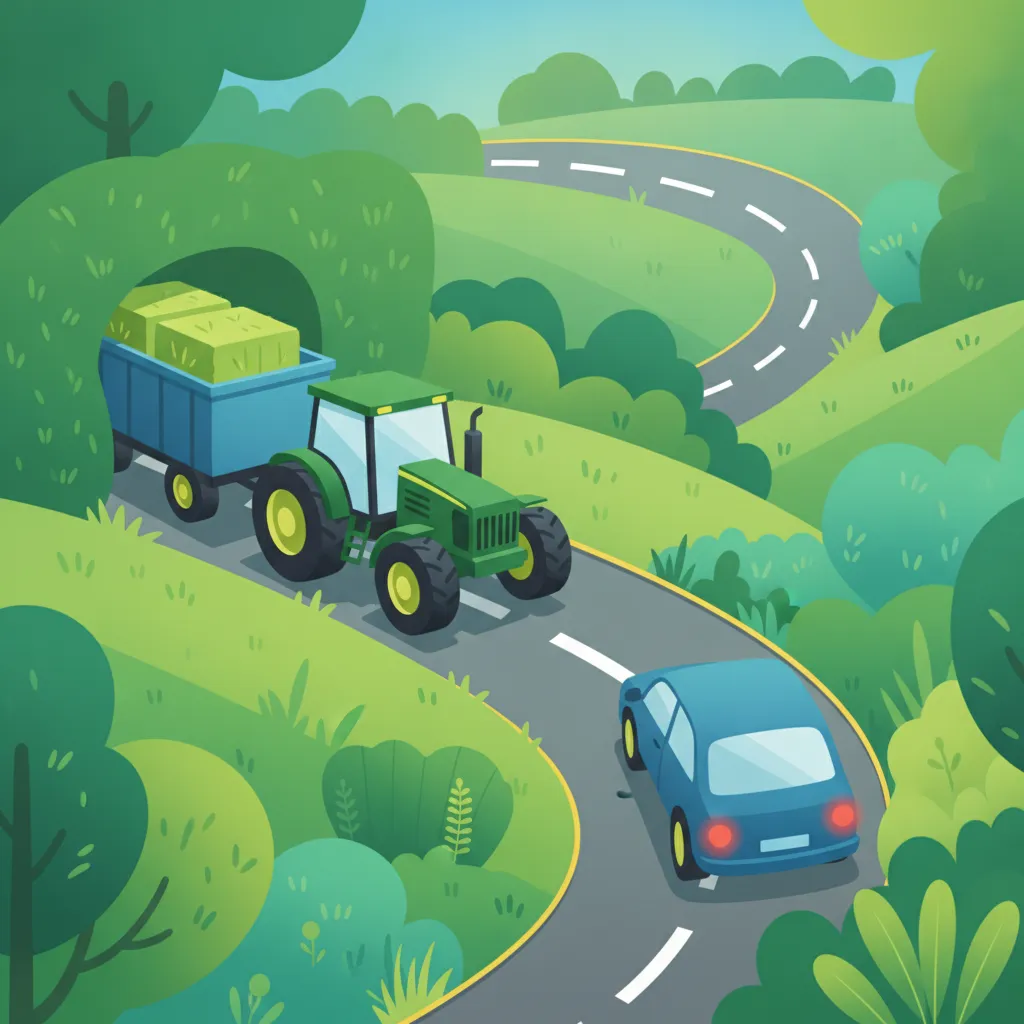
Irish rural roads are often narrow, winding, and bordered by high hedges, presenting unique hazards compared to urban streets. This lesson focuses on scanning for hidden hazards such as slow-moving farm machinery, mud on the road surface, and loose livestock. You will learn how to adjust your speed before entering blind bends, sound your horn at blind crests, and safely share the road with local agricultural traffic.
Heavy vehicles require continuous visual scanning to identify small or slow-moving road users who may enter the path of travel. This lesson explores the typical behaviors of young children, elderly pedestrians, and visually impaired road users. Drivers will build strong hazard perception skills to anticipate sudden movements, ensuring they can brake safely and avoid serious accidents.
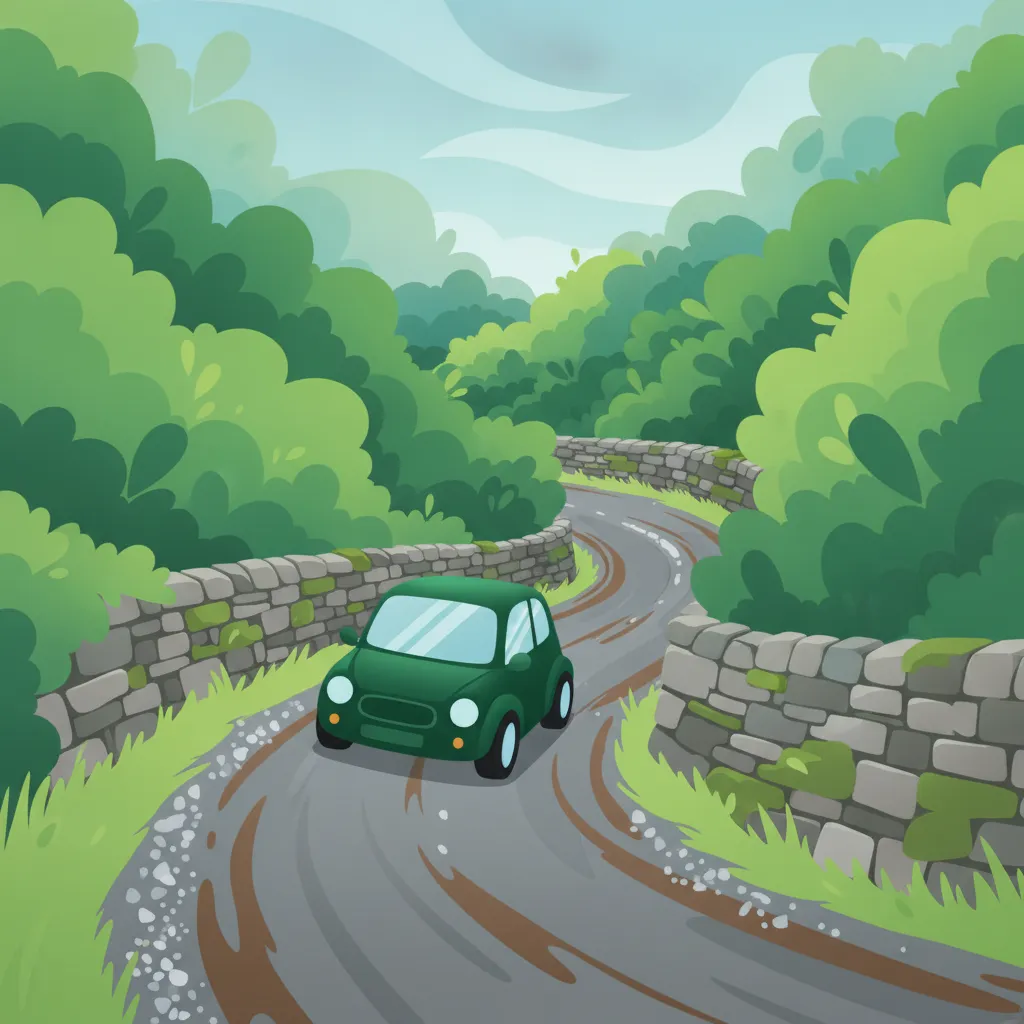
Irish rural routes are often narrow, lacking central markings, and bordered by tall hedges that restrict forward visibility on sharp bends. This lesson teaches drivers how to negotiate blind curves, anticipate slow-moving agricultural machinery, and respond to wandering farm animals. Drivers will learn to regulate vehicle speed proactively, maintaining a safe stopping margin in rural areas.
Defensive driving prepares you to react safely when facing unexpected mechanical failures or immediate road hazards. This lesson explains how to execute an emergency stop using Anti-lock Braking Systems (ABS) and how to recover from front and rear-wheel skids on slippery roads. You will learn the importance of remaining calm, avoiding panic-steering, and applying controlled evasive actions to prevent collisions.
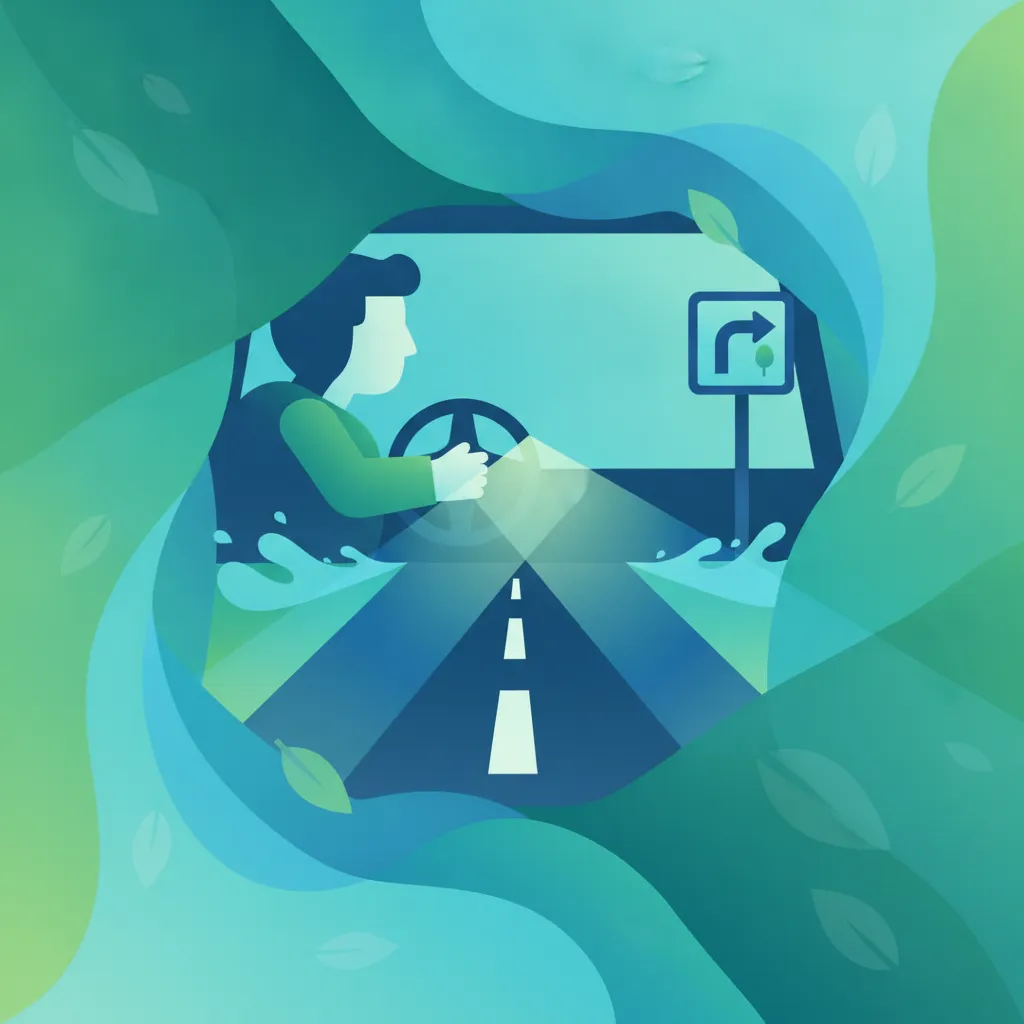
Driving at night presents severe challenges due to reduced visibility, driver fatigue, and headlight glare from oncoming vehicles. This lesson teaches you how to manage your headlights, use road edge markers to steer through dark curves, and look away from oncoming bright lights. You will learn to drive within the range of your headlights and remain highly alert for pedestrians or cyclists not wearing reflective gear.
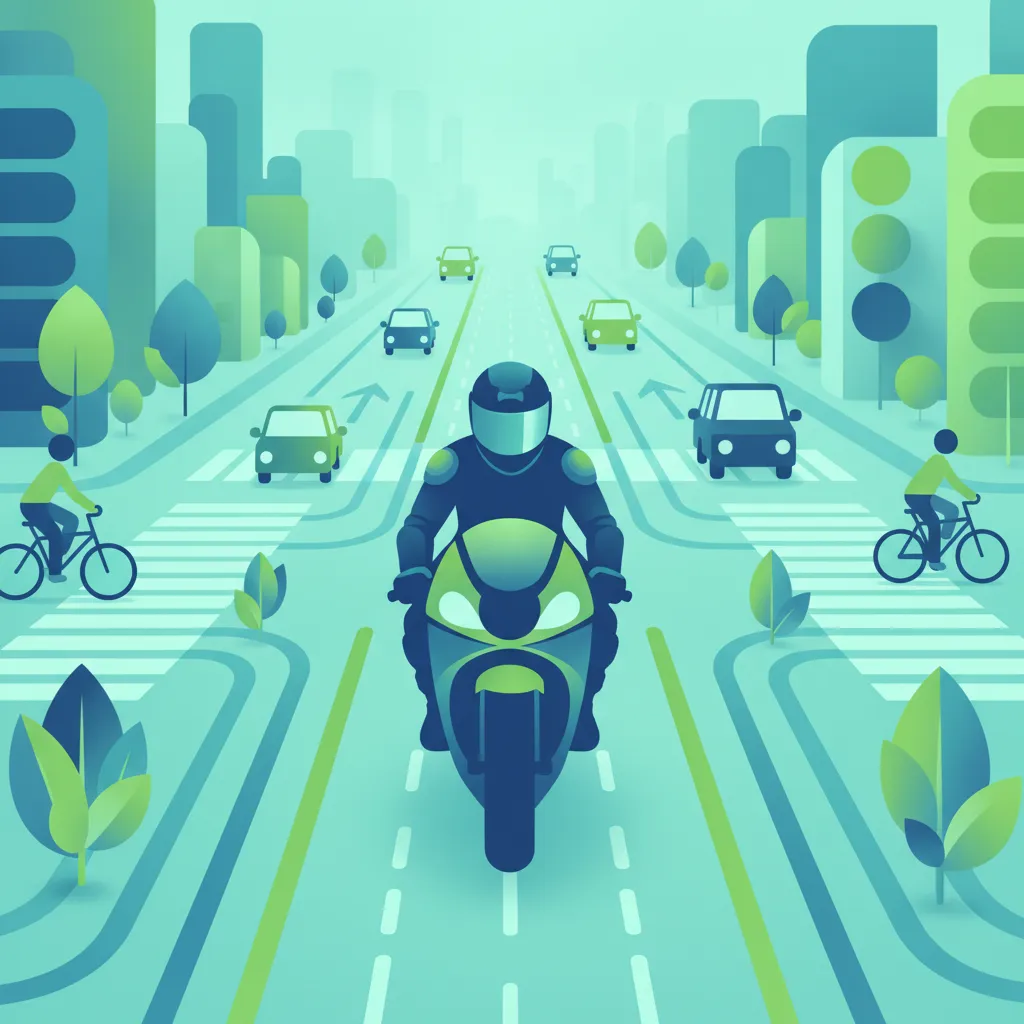
This lesson analyzes traffic flow characteristics in dense municipal areas and teaches safe riding methods for congested gridlock situations. It covers the maintenance of adequate safety cushions, scanning for opening car doors, and monitoring pedestrians stepping from between parked cars. Riders will learn to manage frequent stopping, constant clutch wear, and the stress of urban commuting.
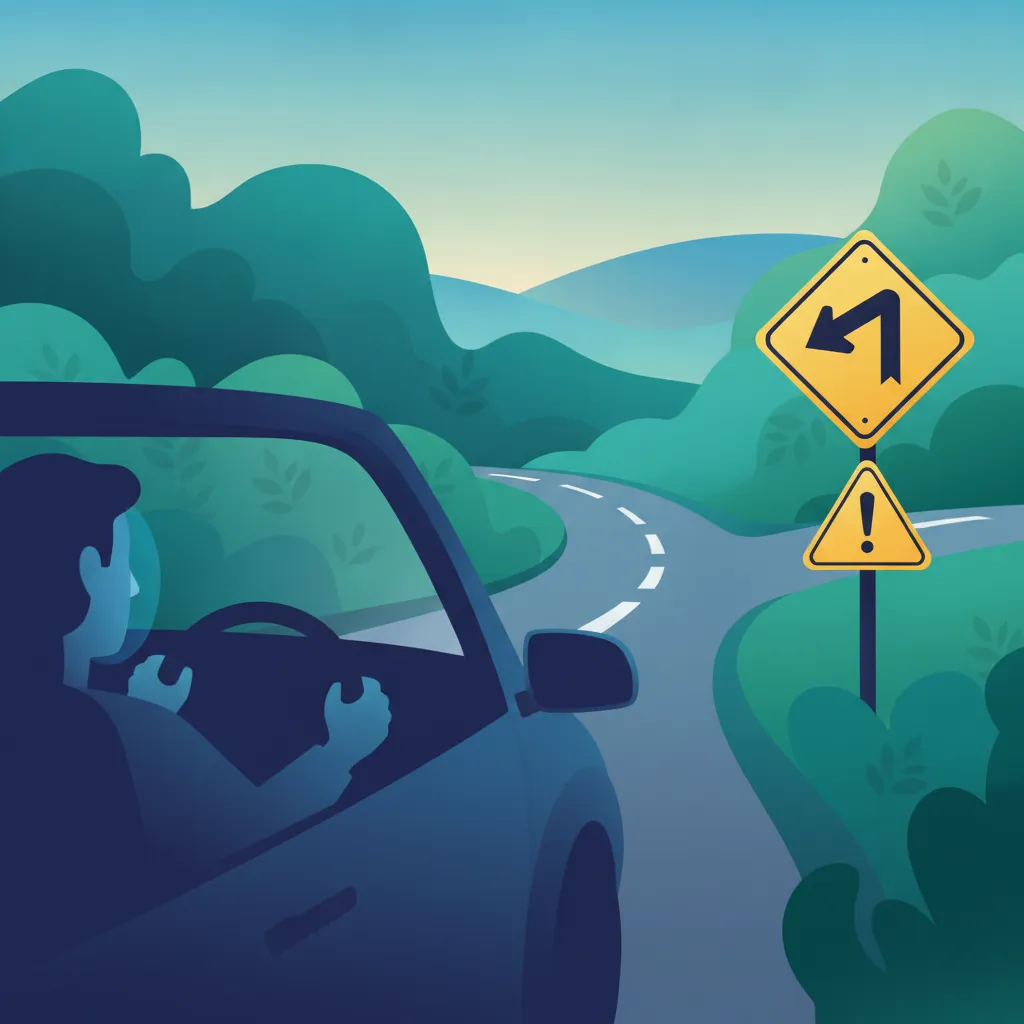
Warning signs in Ireland are typically diamond-shaped with yellow backgrounds and black symbols, indicating potential dangers on the road ahead. This lesson details signs for upcoming sharp bends, narrow roads, steep hills, pedestrian activity, and animal hazards. Learning to spot these warning indicators early allows you to reduce speed safely and adjust your vehicle positioning before encountering the hazard itself.
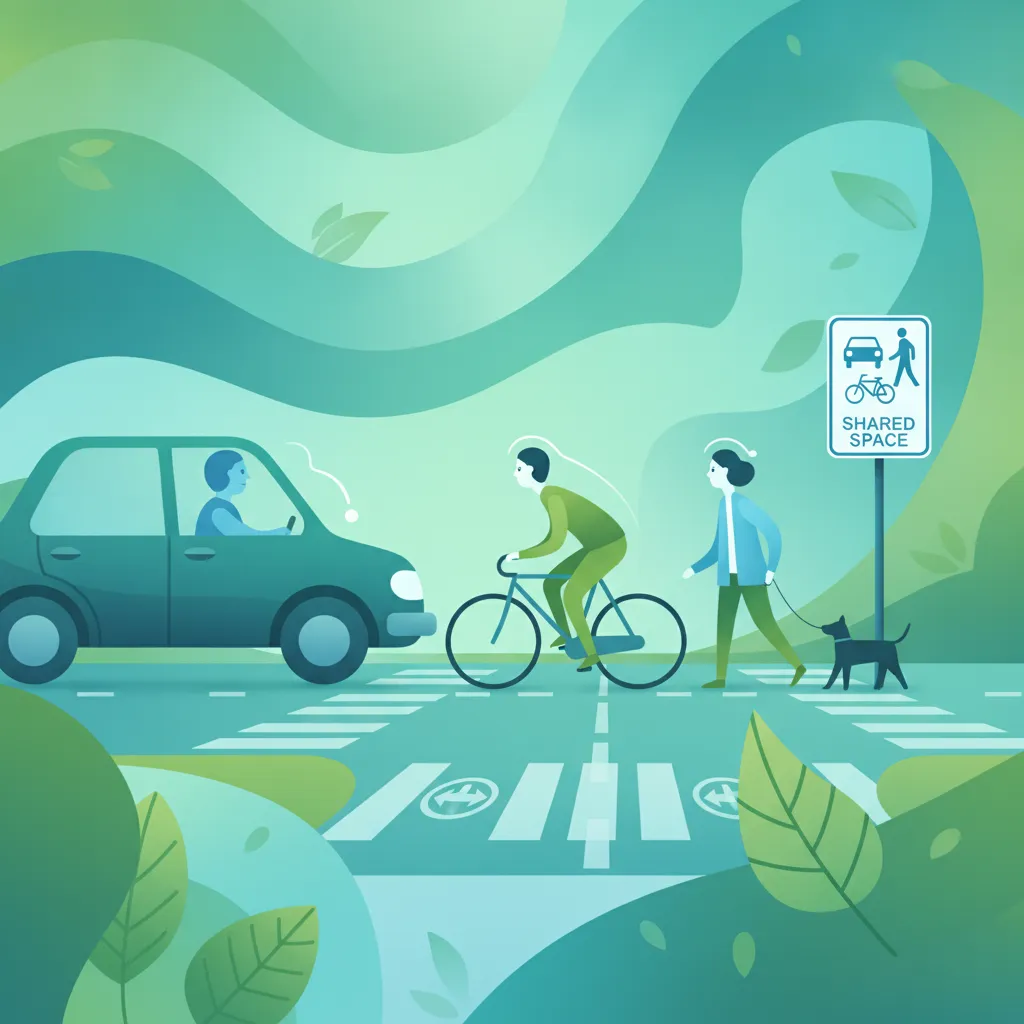
Shared public spaces rely heavily on road user cooperation, low speeds, and active visual communication rather than traditional traffic signals. This lesson teaches drivers how to navigate these open zones safely, yielding priority to pedestrians and integrated cyclists. Drivers will study how traffic calming designs alter vehicle trajectories, allowing safe, stress-free transit through modern city centers.
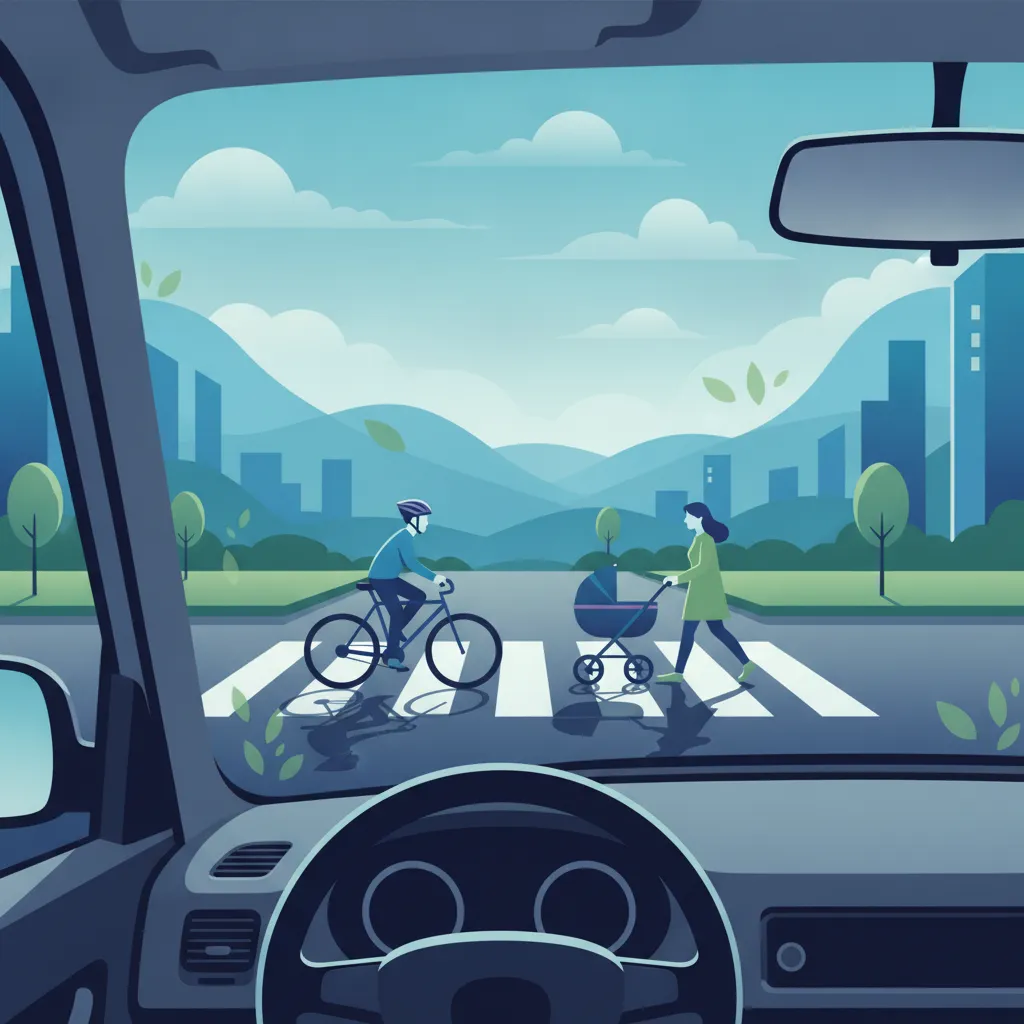
This lesson focuses on managing the interactions between commercial goods vehicles and non-motorized or lightweight commuters. It outlines defensive driving techniques to utilize when overtaking cyclists, navigating pedestrian crossings, or negotiating shared junctions in Irish cities. Drivers will examine common cyclist behaviors at roundabouts and understand how to maintain massive safety margins to protect lives.
Explore the official priority rules for navigating uncontrolled junctions, roundabouts, and pedestrian crossings in Ireland. This guide clarifies the legal responsibilities of drivers when interacting with other road users at intersections to ensure safe and predictable traffic flow.
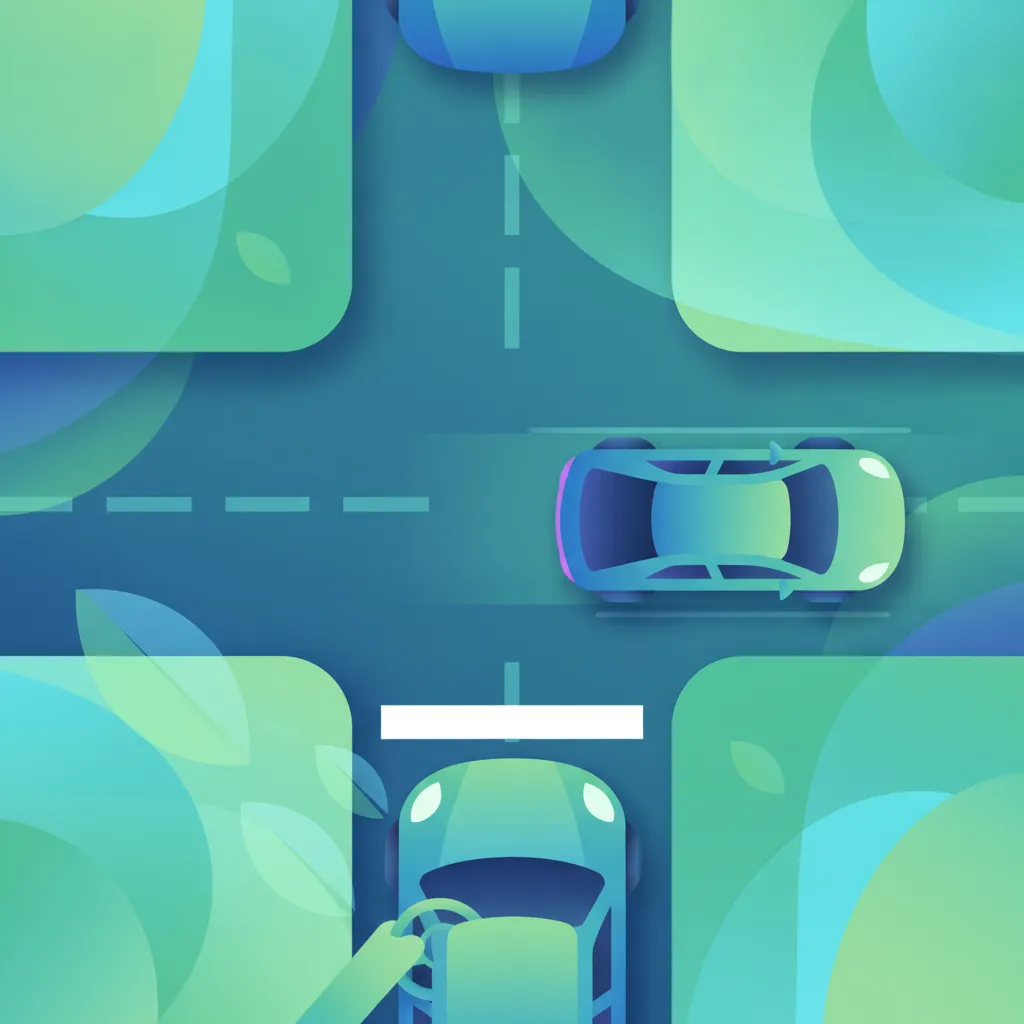
Right-of-way rules establish a clear order of precedence when the paths of two or more vehicles cross. This lesson explains how traffic on a major road has priority over traffic emerging from a minor road, and the general rule of yielding to oncoming vehicles when turning right. You will develop a solid understanding of how to approach intersections defensively, assessing speed and distance to make safe decisions.
This lesson teaches the fundamental principles of priority and right-of-way at controlled and uncontrolled intersections across Ireland. It explains the legal obligations at yield signs, stop lines, and when meeting oncoming traffic turning across your lane. Motorcyclists will learn to carefully verify other drivers' intentions rather than assuming they will yield the correct right-of-way.
This lesson covers the absolute rules of priority that regulate junctions, roundabouts, and pedestrian crossings in Ireland. It teaches riders when they must yield, who has right-of-way, and how to read Stop and Yield signs correctly. Understanding these priority hierarchies prevents collisions and maintains orderly, predictable movement at busy junctions.
Uncontrolled junctions represent a high-risk scenario because they lack physical signs, lines, or lights to dictate priority. This lesson covers the crucial 'priority to the right' principle, where you must yield to any traffic approaching from your right-hand side. You will learn the importance of reducing your speed, preparing to stop, and verifying the intentions of other drivers at these equal-status crossings.
Stop and yield signs require drivers to surrender right-of-way to crossing traffic, but they command different physical actions. This lesson explains that a stop sign mandates a complete, absolute halt behind the line, whereas a yield sign requires you to slow down and stop only if other traffic is approaching. You will learn how to manage restricted visibility at junctions and how to creep forward safely when clear.
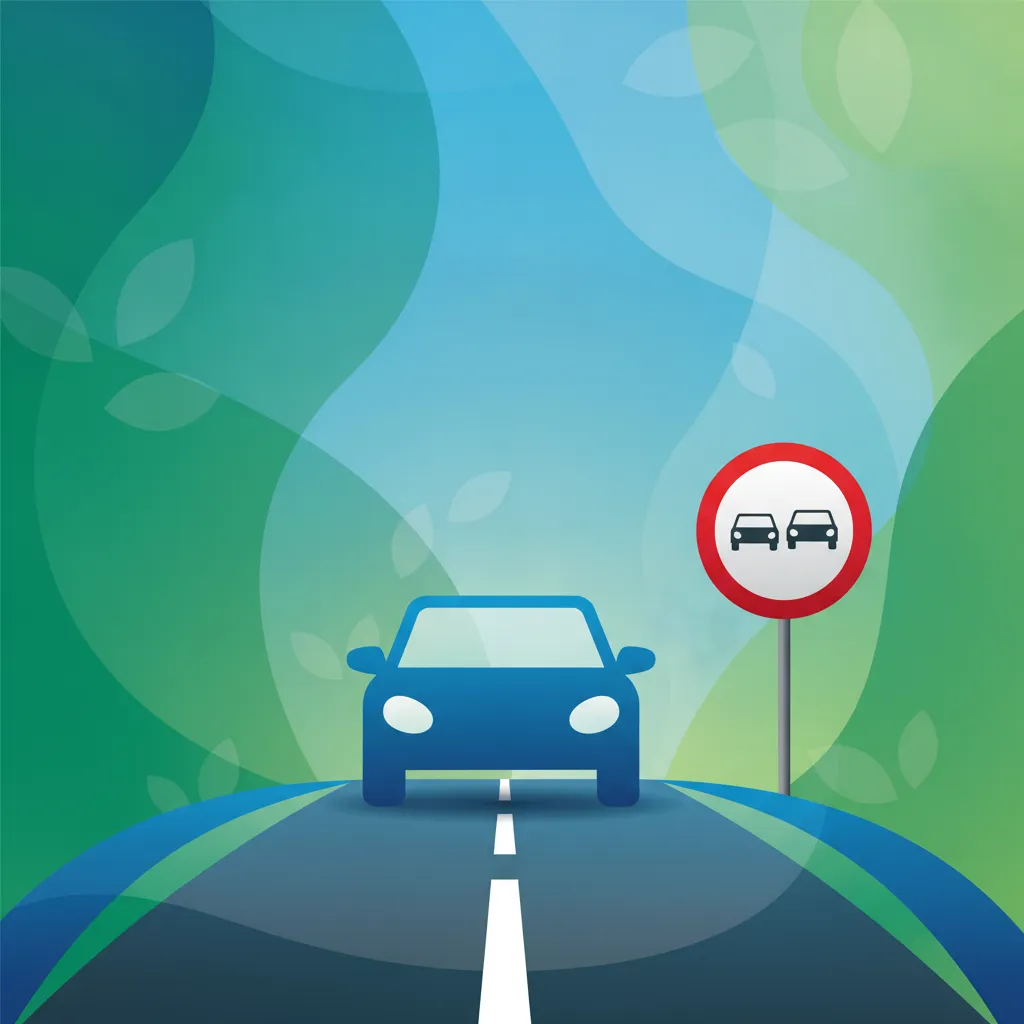
No-overtaking zones are marked in areas with restricted visibility, such as approaching bends, humps, or narrow bridges. This lesson details how continuous solid white lines legally prohibit passing, along with the very narrow exceptions allowed under Irish law. You will learn to identify these high-risk areas from visual markings, ensuring you never initiate a passing manoeuvre that puts oncoming traffic in immediate danger.
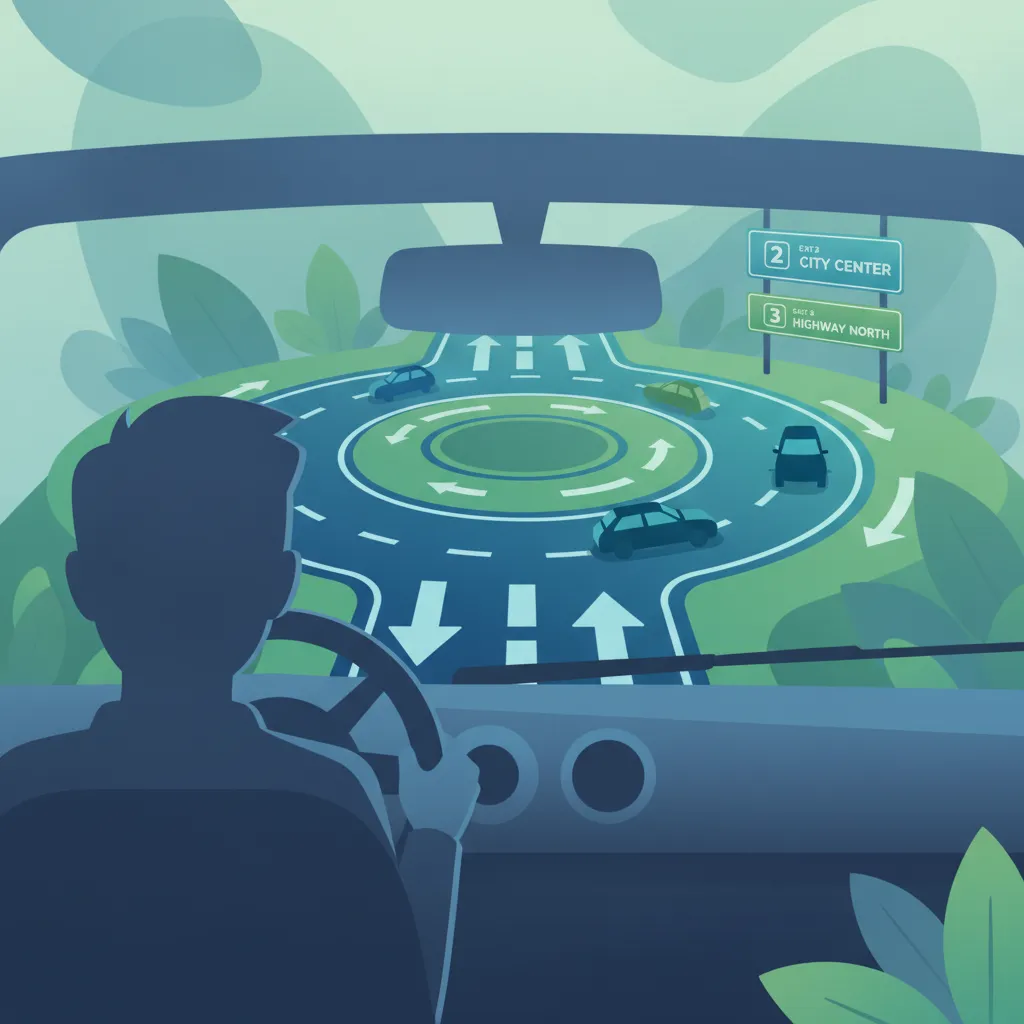
Navigating multi-lane roundabouts requires precise lane selection, continuous scanning, and timely signaling. This lesson teaches you the 'clock rule' for determining which lane to enter, how to yield to traffic already on the roundabout from your right, and when to activate your left indicator to exit. Mastering these procedures minimizes lane-drift accidents and ensures a seamless flow of traffic on busy roundabouts.
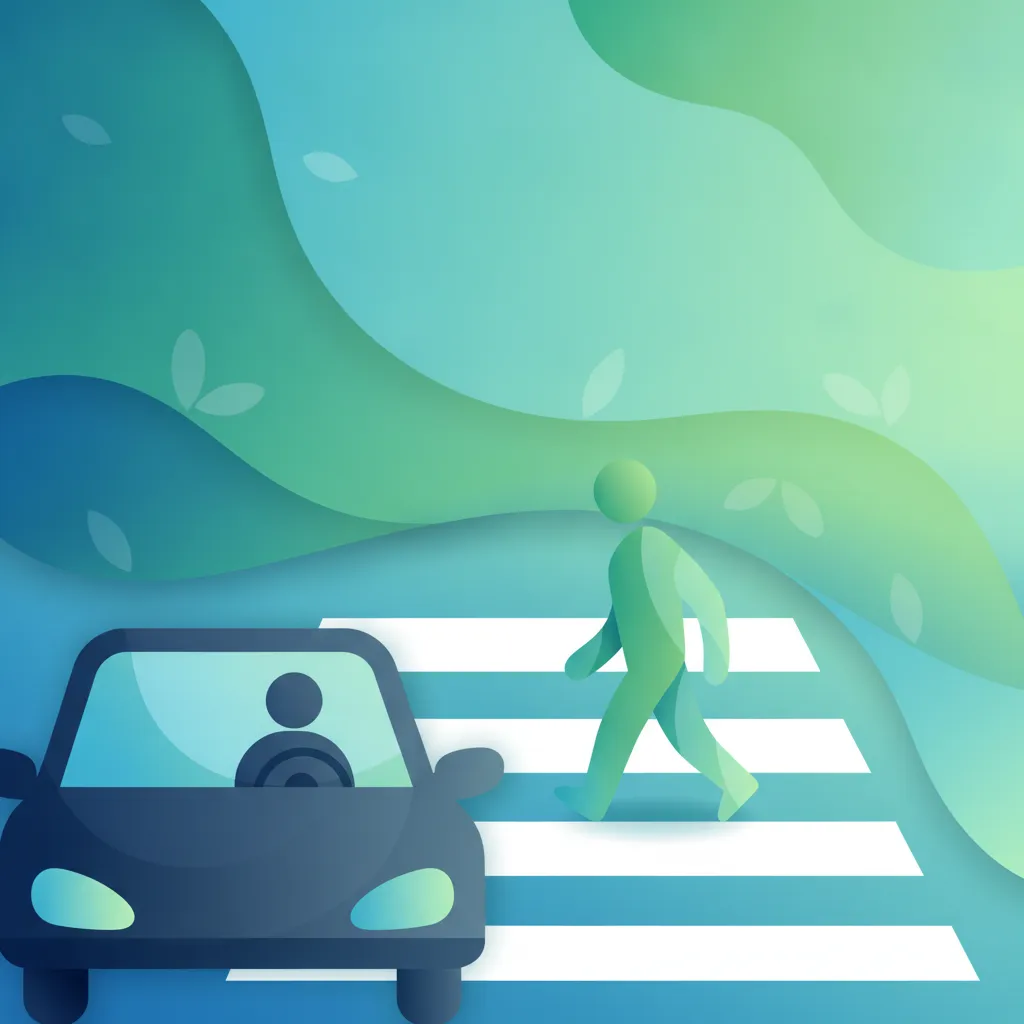
Pedestrians are the most common vulnerable road users, and drivers must maintain constant vigilance to protect them. This lesson covers pedestrian priority, especially when you are turning into side roads or navigating busy urban centres. You will learn why you must yield to pedestrians already crossing, how to scan blind spots for hidden walkers, and the safety dangers of blocking footpaths or pedestrian zones with your car.
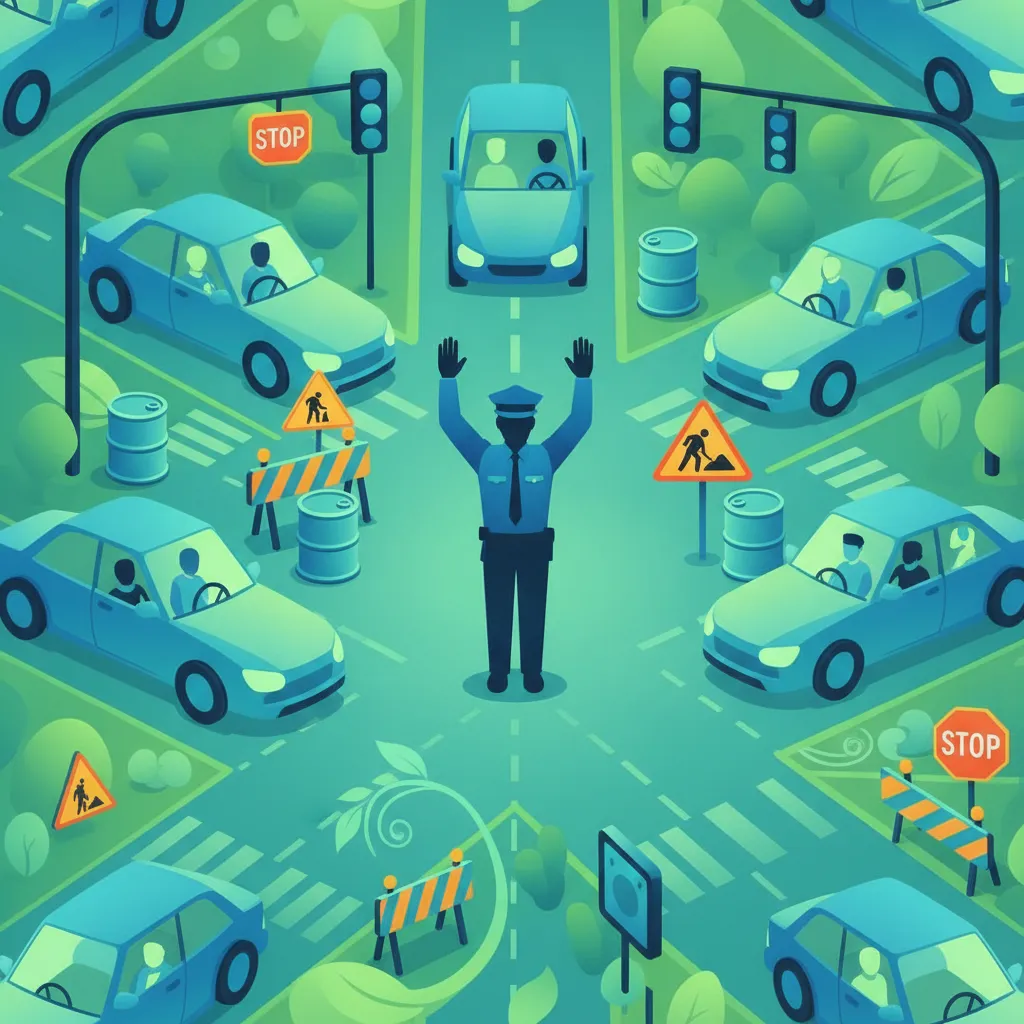
When traffic control is actively performed by a Garda, a school warden, or authorized marshals, their hand signals override all standard traffic lights and road signs. This lesson illustrates the common hand gestures used by officers to stop, release, or slow down traffic. You will learn your strict legal obligation to obey these manual commands, ensuring public safety during emergencies, events, or school crossings.
This lesson details the sequential steps required to approach and exit junctions safely under the Irish driving rules. It teaches riders how to select the correct lane, utilize mirrors, apply early signals, and reduce speed appropriately. Effective observation strategies are highlighted to help riders identify crossing pedestrians or approaching side traffic.
Find clear answers to common questions learners have about Vulnerable Road User Awareness and Safe Practices. Learn how the lesson is structured, which driving theory objectives it supports, and how it fits into the overall learning path of units and curriculum progression in Ireland. These explanations help you understand key concepts, lesson flow, and exam focused study goals.
The two-second rule is a minimum guide for dry conditions; when driving near cyclists, you should allow even more space. Always give cyclists plenty of room, especially when overtaking, and never cut them off when turning.
Scanning ahead helps you identify vulnerable road users like children or cyclists long before they reach your path. This extra time allows you to adjust your speed or position, preventing the need for sudden braking.
Always be prepared to stop for pedestrians waiting at a pedestrian crossing. In Ireland, you must exercise extra caution and yield if a pedestrian has clearly signaled an intent to cross.
Yes, always anticipate that children and the elderly may move unpredictably or at a slower pace. Drive slowly, remain vigilant in residential areas, and never assume they have seen you or will react as an experienced driver would.
Use the practice question search tool to pinpoint specific topics, road signs, or rules you need to master for your official Driver Theory Test. Refine your study strategy and ensure comprehensive preparation for all aspects of the Irish driving exam. Start your focused revision now and build confidence for your learner permit test.