
This lesson explores the essential duty of care you have towards vulnerable road users, a critical focus for both the Irish Driver Theory Test and real-world safety. You will learn to anticipate the unpredictable movements of children, understand the needs of elderly pedestrians, and identify the requirements for assisting individuals with disabilities. This topic bridges your foundational knowledge from earlier units to the practical application of defensive driving habits required for your Category B licence.
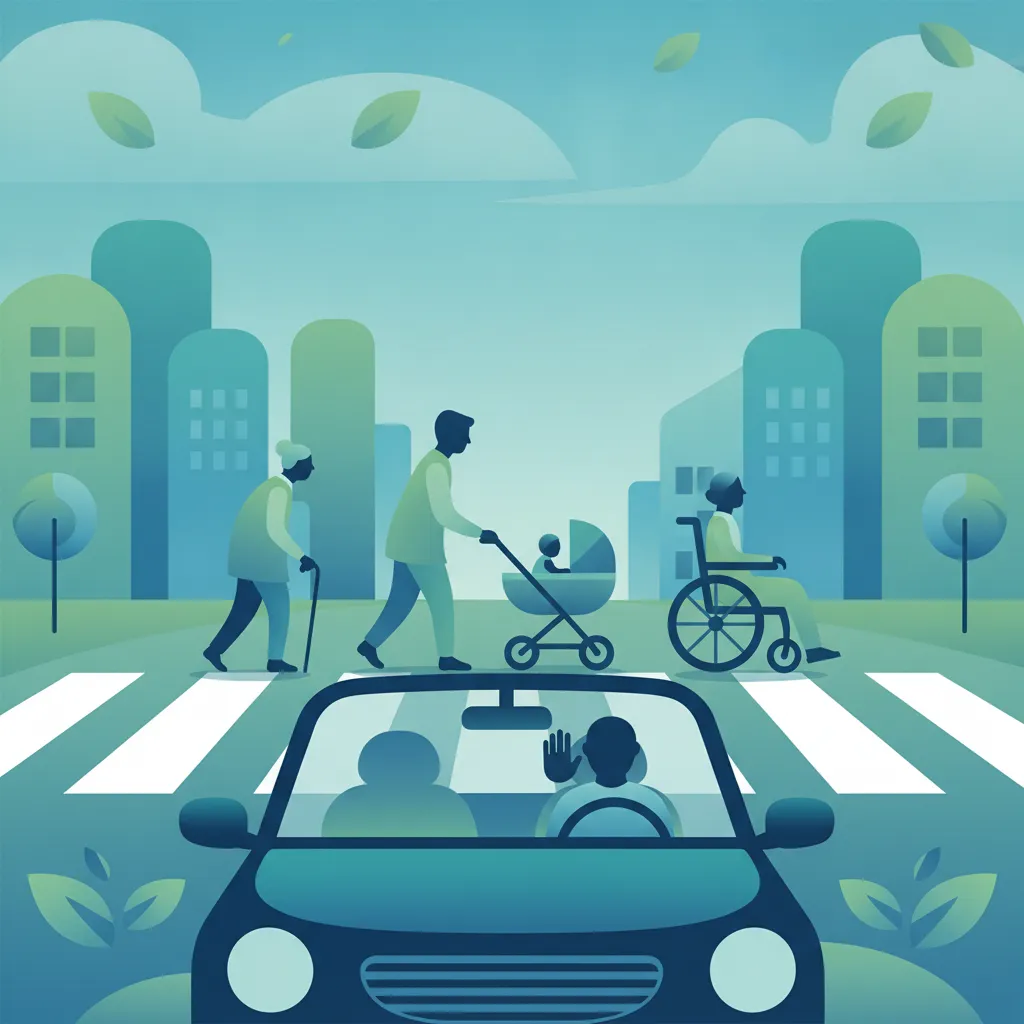
Lesson content overview
As a driver operating a passenger car under a Category B licence, you share the Irish road network with a wide variety of road users. While vehicles offer structural safety to their occupants, pedestrians possess no such protection. Among pedestrians, children, elderly individuals, and people with disabilities are classified as highly vulnerable road users.
This lesson covers the heightened awareness, legal obligations, and defensive driving techniques required to safeguard these groups. Understanding their unique physical, sensory, and cognitive profiles is essential to passing the Irish Driver Theory Test and exercising your moral and legal duty of care on the road.
In road traffic law, the "Duty of Care" is a foundational legal and moral obligation. It dictates that every driver must operate their vehicle with reasonable foresight, caution, and active consideration for the safety of others.
Because children, the elderly, and disabled individuals have a significantly higher risk of severe injury or fatality in collisions due to their physical vulnerability, the law expects drivers to anticipate their mistakes and adapt their driving accordingly.
The legal and moral obligation of a driver to exercise reasonable caution and anticipation to avoid causing harm to other road users, particularly those with a diminished capacity to protect themselves.
The relationship between vehicle speed and pedestrian survival rates is stark. Research consistently shows that:
This dramatic difference is the scientific rationale behind reduced speed limits in residential areas, town centres, and school zones across Ireland.
Children under the age of 12 are exceptionally vulnerable on our streets. Their physical development, cognitive limitations, and spontaneous psychological nature make them highly unpredictable.
Drivers must understand that children do not perceive the traffic environment in the same way adults do:
School zones are designated areas around school properties where children are present in high numbers, particularly during morning drop-off (08:00 to 09:30) and afternoon pick-up hours (13:00 to 15:30).
In many Irish towns and cities, local authorities implement periodic or permanent 30 km/h speed limits in school zones. You must strictly adhere to these limits. Even where a speed limit is technically 50 km/h, road conditions near schools during busy hours require you to voluntarily reduce your speed to a safe, controlled crawl.
Under Section 96 of the Irish Road Traffic Act 1961, school wardens (often referred to as crossing patrols) are legally authorised to stop traffic to allow school children to cross the road safely.
Anticipate the Hazard: Look out for high-visibility clothing and the circular "STOP" sign held by the warden.
Reduce Speed Early: Do not wait until the warden steps into the road. Begin slowing down as soon as you see the crossing point.
Stop Completely: When the warden displays the "STOP" sign, you must bring your vehicle to a complete stop behind the stop line or at a safe distance from the crossing.
Remain Stationary: Do not rev your engine, creep forward, or show impatience. You must remain stopped until the warden and all children have completely cleared the roadway and the warden has returned to the footpath.
Failing to stop for a school warden is a major traffic offence in Ireland. It carries heavy penalty points, a mandatory fine, and can result in court prosecution.
In housing estates and areas designated as "Play Streets," you must assume that children could run into the road at any moment.
Always look under parked cars for visual cues like small feet, bicycle wheels, or toys. Keep your foot poised over the brake pedal (known as "covering the brake") when driving past rows of parked vehicles.
Visually impaired individuals navigate our streets using specialized sensory aids. As a driver, you must recognize these cues immediately and accord these pedestrians absolute priority and space.
When you see a visually impaired pedestrian attempting to cross the road, or navigating a junction, apply the following safety protocols:
Our aging population means drivers will regularly encounter older pedestrians and drivers. Aging introduces several physical and sensory changes that affect how these individuals interact with traffic.
When encountering elderly pedestrians, drivers must show patience and practice defensive driving.
Disabled road users include individuals with physical disabilities, sensory impairments, or cognitive conditions. They may require specific infrastructure and extra spatial clearance to navigate the road network.
Wheelchair users and individuals utilizing mobility scooters or electric powerchairs face distinct challenges:
Parking Restriction: Never park your vehicle on or near a dropped kerb. Doing so is illegal and severely restricts the independence and safety of wheelchair users and parents with prams.
Mobility scooters have become increasingly popular for individuals with limited mobility.
To help you visualize these rules in practice, let us examine common hazardous scenarios and the correct, defensive response compared to incorrect, illegal actions.
To ensure safety on the road and prepare for your theory test, commit these core behaviors to memory:
To solidify your understanding of vulnerable road users and prepare for relevant questions in your driver theory exam, explore these resources:
This lesson covers the legal duty of care drivers owe to vulnerable road users including children, elderly pedestrians, and those with disabilities. Children under 12 are particularly unpredictable due to their narrow peripheral vision and inability to judge speed and distance, making reduced speeds essential in school zones during peak times. Visually impaired pedestrians are identifiable by their white canes, red-banded canes (deafblind), or guide dogs, and drivers must never honk, flash lights, or overtake stopped vehicles at crossings when these users are present. Elderly pedestrians require extra patience and crossing time due to reduced mobility and slower reaction times. Mobility scooter users and wheelchair users depend on dropped kerbs and need at least 1.5 metres of clearance when passed, with drivers prohibited from parking near kerb ramps.
A short set of high-value points that capture the most important learning from this lesson.
Children, elderly, and disabled pedestrians are classified as vulnerable road users due to their physical vulnerability and require heightened driver awareness
Reducing speed from 50 km/h to 30 km/h dramatically lowers pedestrian fatality risk from approximately 50% to under 10%
Children have significantly narrower peripheral vision, cannot accurately judge vehicle speed or distance, and behave impulsively without anticipating danger
School zones operate under specific time-based restrictions (08:00-09:30 and 13:00-15:30) with 30 km/h limits, but conditions may require voluntary speed reduction outside these hours
Never overtake a stopped vehicle at a crossing - a vulnerable pedestrian is likely crossing ahead and completely hidden from view
Explore all units and lessons included in this driving theory course.
School crossing wardens are legally authorized under Section 96 of the Road Traffic Act 1961 to stop traffic using a STOP sign
A white cane indicates visual impairment; a red-banded white cane indicates deafblindness; a guide dog in a harness indicates a blind handler who relies on the dog for navigation
Never park on or near a dropped kerb - this blocks wheelchair users and mobility scooter users from safely crossing the road
Provide extra crossing time at controlled crossings for elderly pedestrians and wait until they have reached the opposite footpath before proceeding
Maintain at least 1.5 metres of clearance when passing mobility scooter riders and expect them to swerve suddenly around road defects
Maintaining 50 km/h speed in school zones because it is technically within the normal limit, ignoring that conditions require lower speeds
Honking the horn or flashing headlights at visually impaired pedestrians, which can startle them, panic guide dogs, or disorient deafblind individuals
Overtaking a stopped vehicle at a crossing without checking if a pedestrian is crossing ahead, creating a collision vector with an unseen vulnerable user
Pressuring hesitant elderly pedestrians by edging the vehicle forward, which can cause them to rush and fall
Failing to anticipate children near parked cars - always look under vehicles for small feet, bicycle wheels, or toys indicating child presence
Lesson content overview
A short set of high-value points that capture the most important learning from this lesson.
Children, elderly, and disabled pedestrians are classified as vulnerable road users due to their physical vulnerability and require heightened driver awareness
Reducing speed from 50 km/h to 30 km/h dramatically lowers pedestrian fatality risk from approximately 50% to under 10%
Children have significantly narrower peripheral vision, cannot accurately judge vehicle speed or distance, and behave impulsively without anticipating danger
School zones operate under specific time-based restrictions (08:00-09:30 and 13:00-15:30) with 30 km/h limits, but conditions may require voluntary speed reduction outside these hours
Never overtake a stopped vehicle at a crossing - a vulnerable pedestrian is likely crossing ahead and completely hidden from view
Explore all units and lessons included in this driving theory course.
School crossing wardens are legally authorized under Section 96 of the Road Traffic Act 1961 to stop traffic using a STOP sign
A white cane indicates visual impairment; a red-banded white cane indicates deafblindness; a guide dog in a harness indicates a blind handler who relies on the dog for navigation
Never park on or near a dropped kerb - this blocks wheelchair users and mobility scooter users from safely crossing the road
Provide extra crossing time at controlled crossings for elderly pedestrians and wait until they have reached the opposite footpath before proceeding
Maintain at least 1.5 metres of clearance when passing mobility scooter riders and expect them to swerve suddenly around road defects
Maintaining 50 km/h speed in school zones because it is technically within the normal limit, ignoring that conditions require lower speeds
Honking the horn or flashing headlights at visually impaired pedestrians, which can startle them, panic guide dogs, or disorient deafblind individuals
Overtaking a stopped vehicle at a crossing without checking if a pedestrian is crossing ahead, creating a collision vector with an unseen vulnerable user
Pressuring hesitant elderly pedestrians by edging the vehicle forward, which can cause them to rush and fall
Failing to anticipate children near parked cars - always look under vehicles for small feet, bicycle wheels, or toys indicating child presence
Explore search topics learners often look for when studying Safeguarding Children, Elderly and Disabled Road Users. These topics reflect common questions about road rules, driving situations, safety guidance, and lesson level theory preparation for learners in Ireland.
Browse additional driving theory lessons that cover connected traffic rules, road signs, and common driving situations related to this topic. Improve your understanding of how different rules interact across everyday traffic scenarios.
Learn how to actively scan the road for potential dangers including vulnerable pedestrians and cyclists. This theory guide covers the essential techniques for defensive driving, anticipating traffic movements, and maintaining awareness of your surroundings to ensure safety in various Irish road environments.
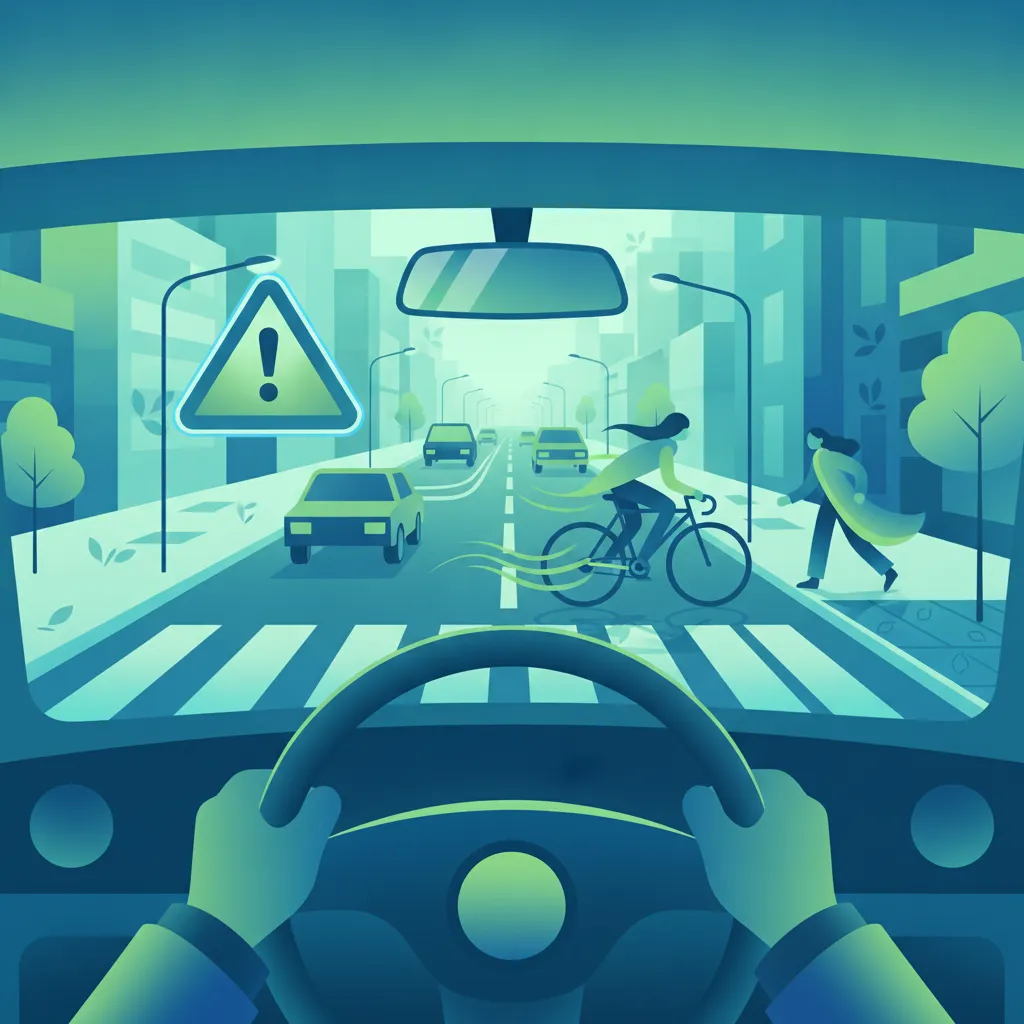
Proactive hazard perception involves constantly scanning the road ahead to identify potential dangers before they turn into actual emergencies. This lesson covers active scanning techniques, helping you look far ahead, check mirrors regularly, and identify subtle risk clues such as exhaust smoke from parked cars or children playing near kerbs. Anticipating these developments gives you the time to adjust speed and position safely.
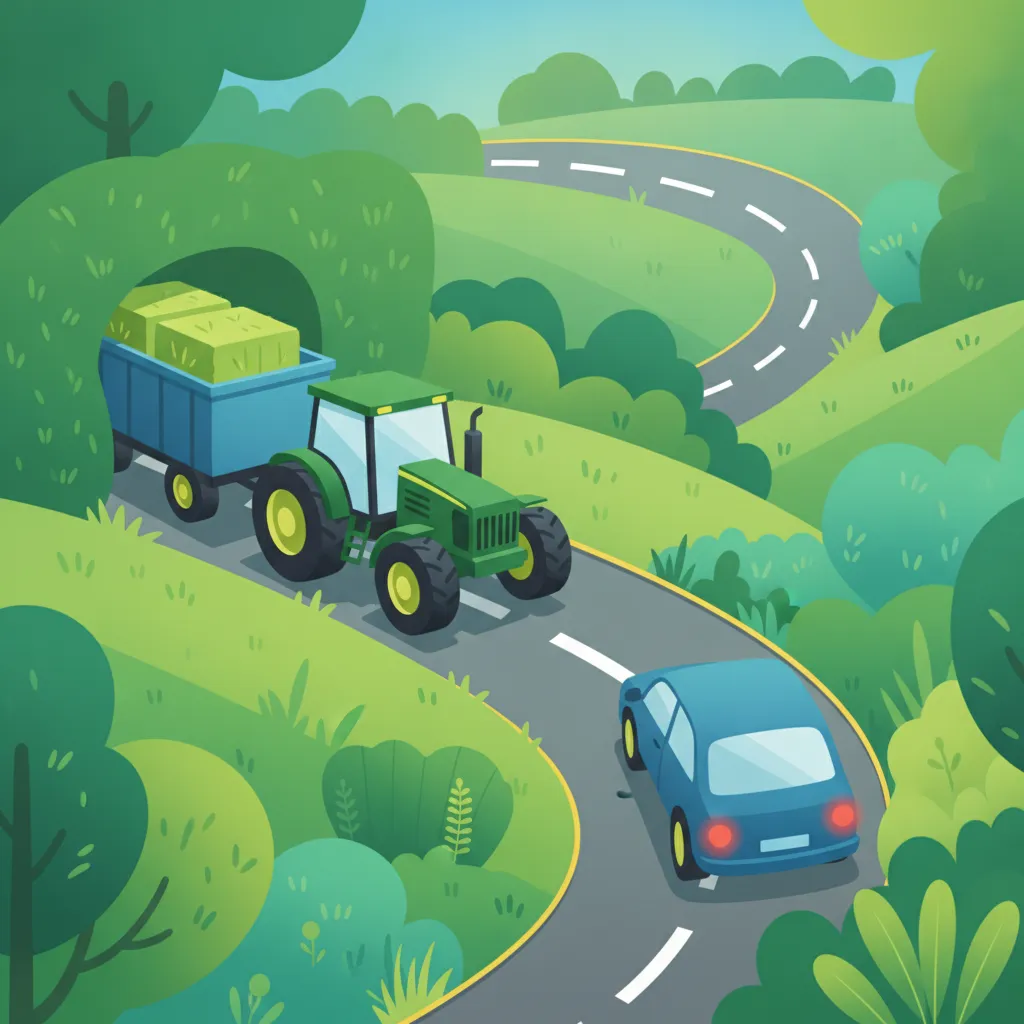
Irish rural roads are often narrow, winding, and bordered by high hedges, presenting unique hazards compared to urban streets. This lesson focuses on scanning for hidden hazards such as slow-moving farm machinery, mud on the road surface, and loose livestock. You will learn how to adjust your speed before entering blind bends, sound your horn at blind crests, and safely share the road with local agricultural traffic.
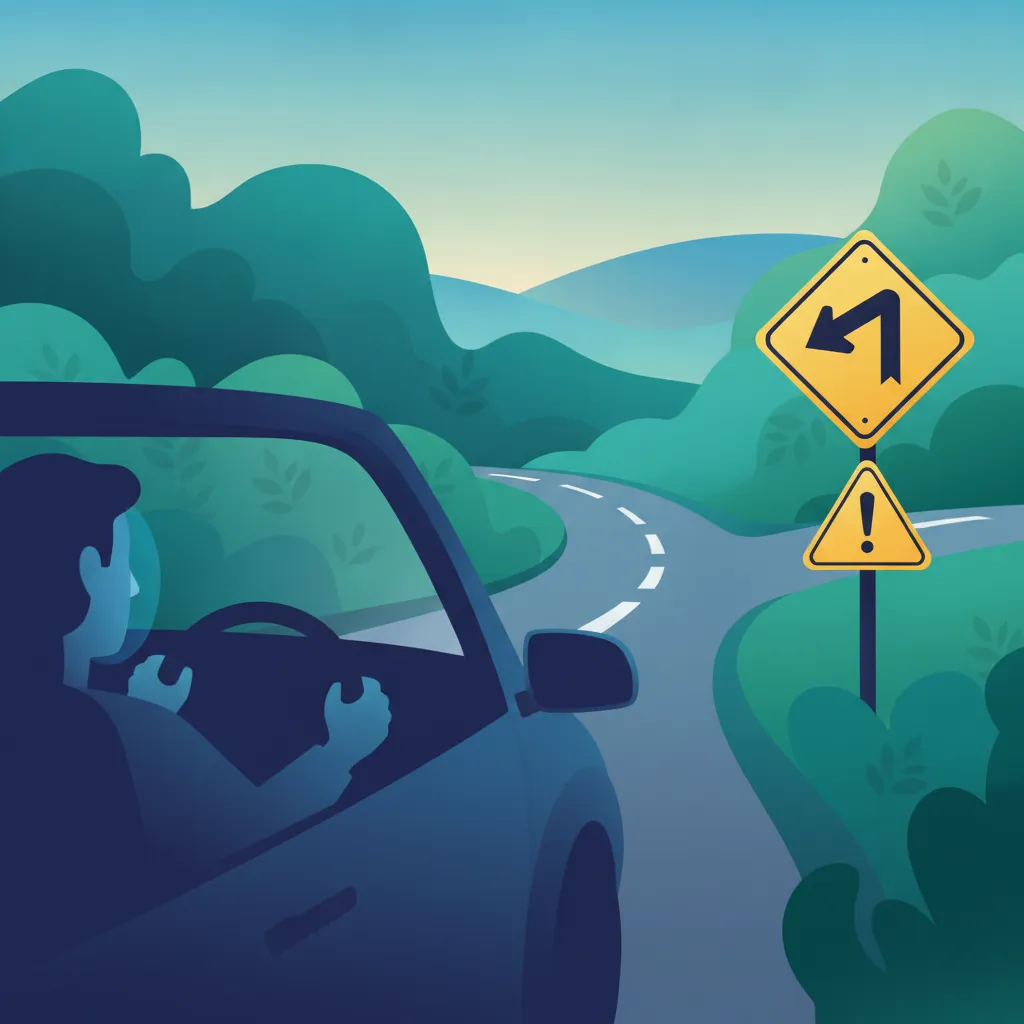
Warning signs in Ireland are typically diamond-shaped with yellow backgrounds and black symbols, indicating potential dangers on the road ahead. This lesson details signs for upcoming sharp bends, narrow roads, steep hills, pedestrian activity, and animal hazards. Learning to spot these warning indicators early allows you to reduce speed safely and adjust your vehicle positioning before encountering the hazard itself.
Heavy vehicles require continuous visual scanning to identify small or slow-moving road users who may enter the path of travel. This lesson explores the typical behaviors of young children, elderly pedestrians, and visually impaired road users. Drivers will build strong hazard perception skills to anticipate sudden movements, ensuring they can brake safely and avoid serious accidents.
Irish rural routes are often narrow, lacking central markings, and bordered by tall hedges that restrict forward visibility on sharp bends. This lesson teaches drivers how to negotiate blind curves, anticipate slow-moving agricultural machinery, and respond to wandering farm animals. Drivers will learn to regulate vehicle speed proactively, maintaining a safe stopping margin in rural areas.
Variable Message Signs and roadwork indicators communicate temporary safety conditions, such as lane closures, heavy delays, or dynamic speed restrictions. This lesson teaches you how to interpret digital overhead gantries, temporary hazard cones, and specific detour layouts often encountered on Irish motorways and regional routes. Adhering to these real-time instructions protects both you and the vulnerable road crews working ahead.

Driving at night presents severe challenges due to reduced visibility, driver fatigue, and headlight glare from oncoming vehicles. This lesson teaches you how to manage your headlights, use road edge markers to steer through dark curves, and look away from oncoming bright lights. You will learn to drive within the range of your headlights and remain highly alert for pedestrians or cyclists not wearing reflective gear.
Safeguarding vulnerable road users requires more than simple obedience to traffic signs; it demands a defensive driving mindset. This lesson summarizes safe practices, including scanning far ahead in urban areas, keeping massive safety margins in wet weather, and executing thorough blind spot checks before reversing. By anticipating the unpredictable movements of others, you can prevent accidents and support a safe road culture.

This lesson outlines how motorcyclists should respond when permanent road signs are dirty, damaged, or hidden by overgrown trees and hedges. It introduces the temporary signage, warning cones, and detour markers commonly deployed at active roadwork zones in Ireland. Riders will learn to read the road ahead defensively, reducing speed when visual information is incomplete or compromised.
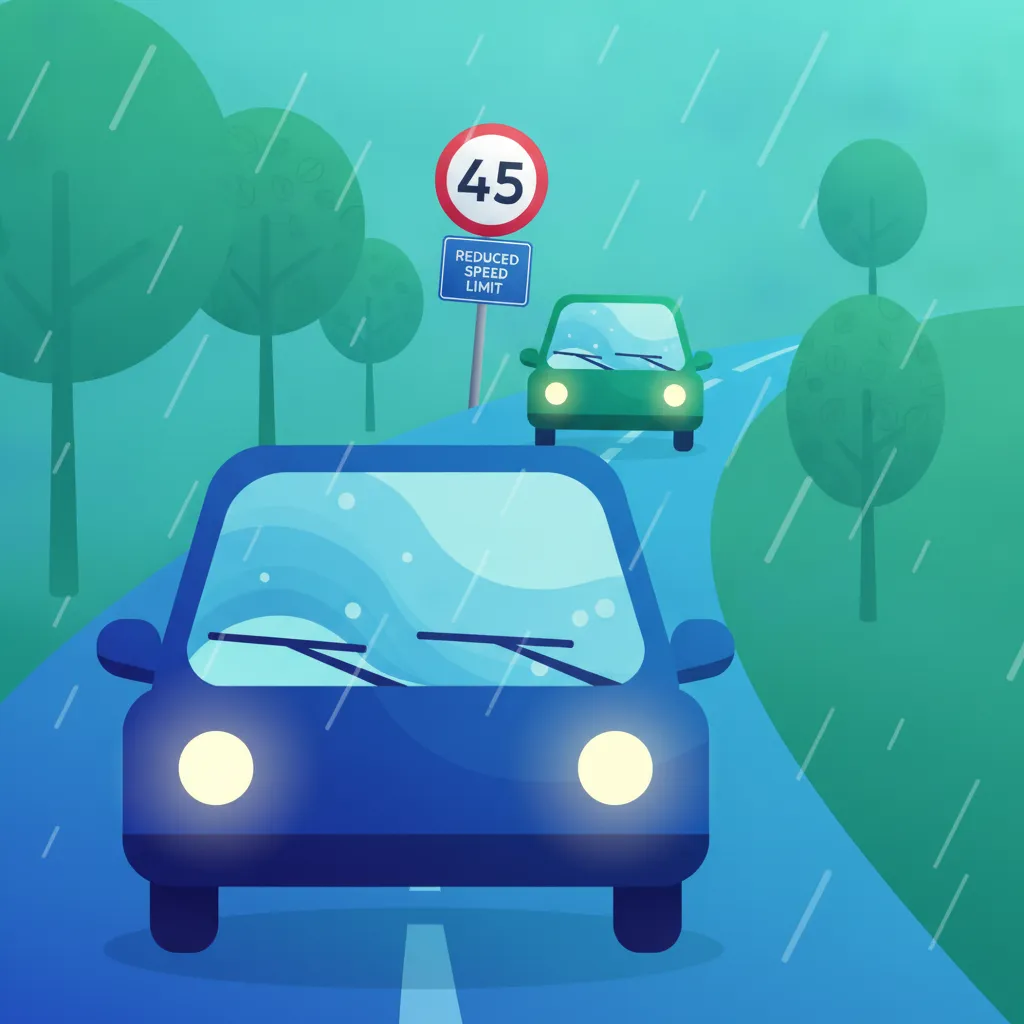
Adverse weather severely compromises tyre traction and forward visibility, demanding immediate speed reductions and extra space. This lesson focuses on the physics of aquaplaning in heavy rain, driving safely on black ice, and navigating thick fog using designated fog lamps. You will learn how to manage your windshield defoggers, adjust wipers, and handle high crosswinds that can destabilise your vehicle.
Examine the relationship between vehicle speed and stopping distances in environments shared with pedestrians. This lesson explains the legal requirements for speed limits in school zones, housing estates, and urban areas, highlighting the importance of managing speed to protect vulnerable road users across the Irish road network.
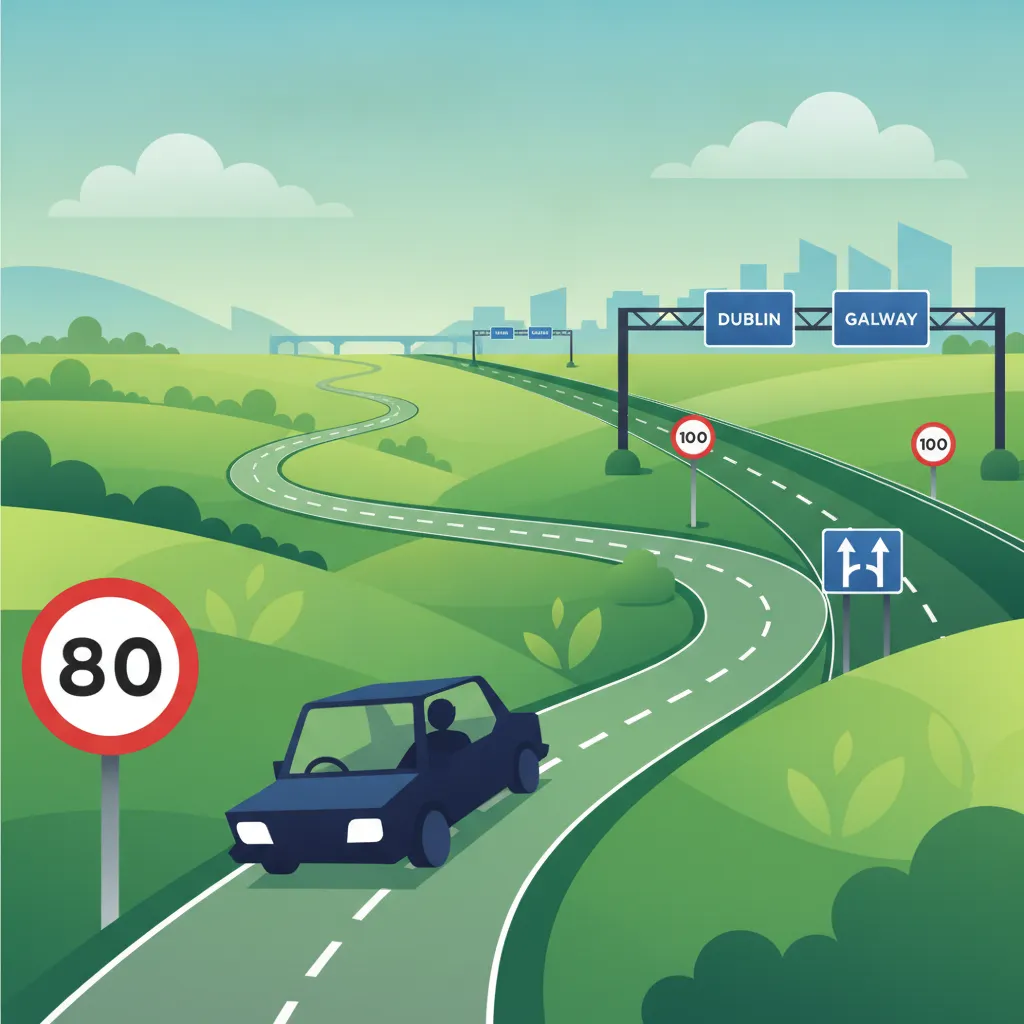
Ireland has designated statutory speed limits ranging from 30 km/h in slow urban zones to 120 km/h on motorways. This lesson details these default limits for Category B passenger cars, the placement of speed signs, and how local authorities apply special temporary limits. You will learn that a speed limit represents the absolute maximum legal speed under ideal conditions, and must always be adjusted downwards for safety.
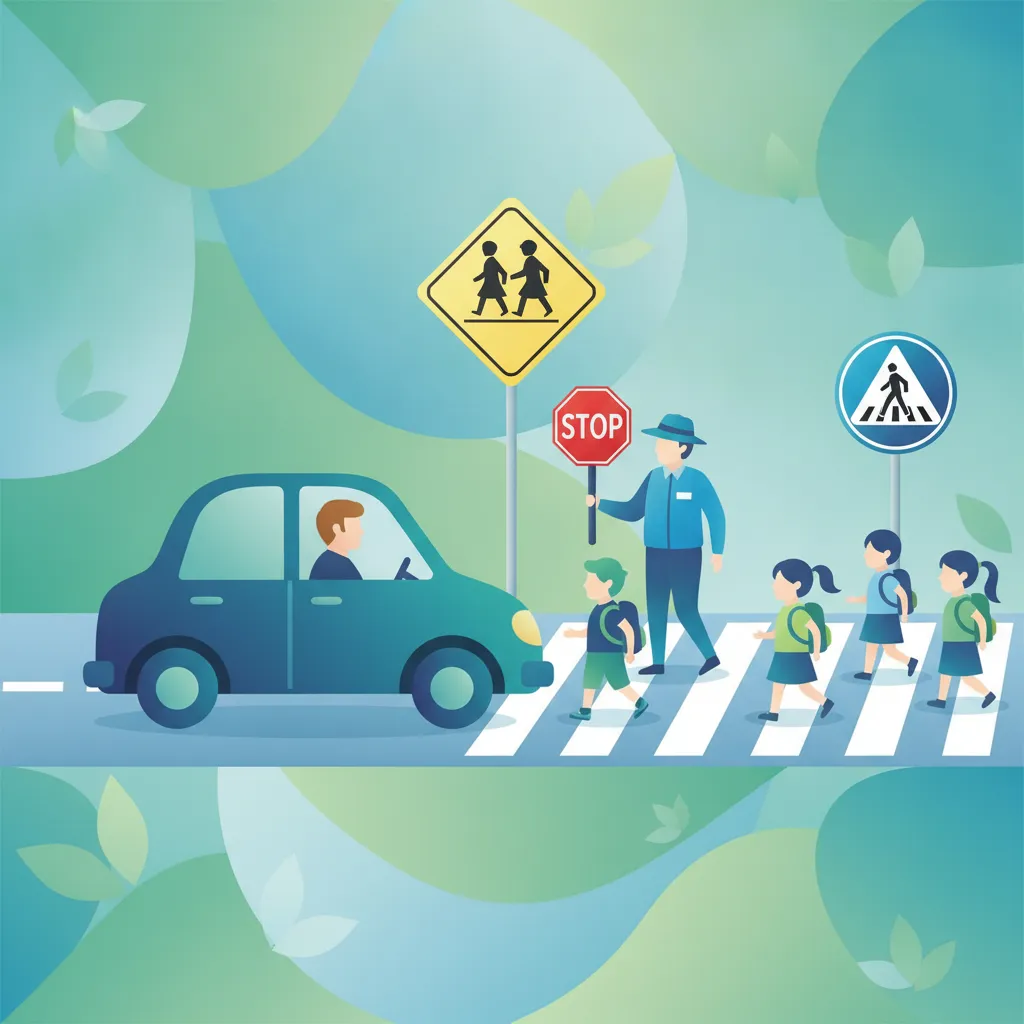
School zones and pedestrian crossings require high driver alertness and strict compliance with local speed limits in Ireland. This lesson details the legal rules of zebra and pelican crossings, explaining driver requirements when amber warning beacons are flashing. Drivers will study safety procedures for dropping off or picking up children, preventing common blind-spot accidents near schools.
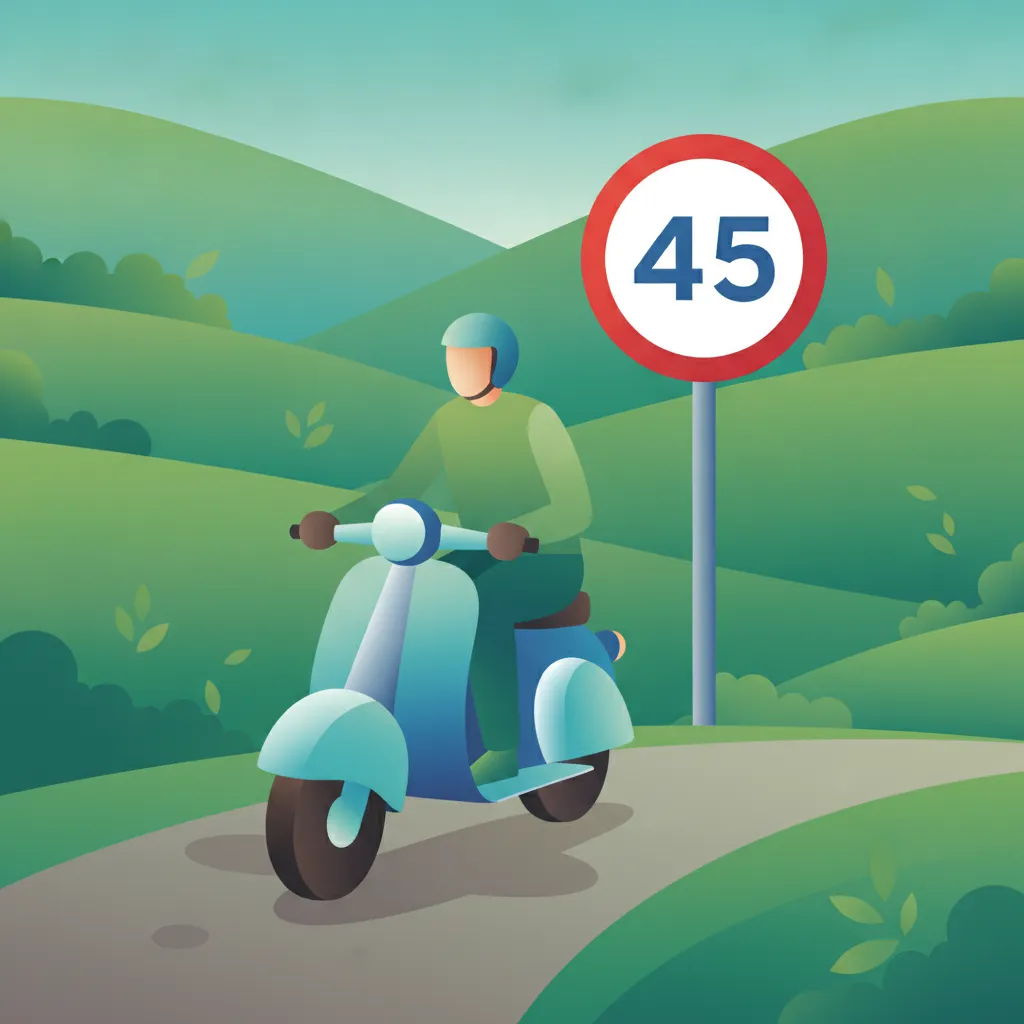
This lesson outlines the legal speed limits governing mopeds and light quadricycles in various Irish environments, including urban centers and school zones. It clarifies why Category AM vehicles are strictly prohibited from driving on motorways due to safety and speed disparities. Riders will also study the legal penalties, including fines and points, for speeding.
Speed management requires adjusting vehicle velocity to suit current weather, passenger load, and the specific limits of Irish roads. This lesson details speed restrictions for buses and minibuses on motorways, national routes, and built-up areas throughout Ireland. It highlights the driver obligation to prioritize passenger safety over schedule delays by maintaining appropriate speeds.
Road construction zones feature dynamic hazards, including changed lane configurations, temporary barriers, and workers near live traffic. This lesson details how to follow temporary signage, navigate narrow chicanes, and obey 'Stop-Go' flag systems or temporary traffic lights. You will understand the legal requirement to obey temporary speed limits, which are strictly enforced to protect both motorists and road crews.
This lesson covers the legal statutory speed limits for goods vehicles on various road classes, including regional corridors and dual carriageways in Ireland. It focuses on how cargo mass and distribution alter the vehicle's safe maximum operational speed under dry, wet, or icy conditions. Drivers will also understand the purpose, function, and legal requirement of vehicle speed limiter systems.
No-overtaking zones are marked in areas with restricted visibility, such as approaching bends, humps, or narrow bridges. This lesson details how continuous solid white lines legally prohibit passing, along with the very narrow exceptions allowed under Irish law. You will learn to identify these high-risk areas from visual markings, ensuring you never initiate a passing manoeuvre that puts oncoming traffic in immediate danger.
Motorways are designed for safe, high-speed travel, but require strict adherence to lane discipline and specific regulations. This lesson explains that the left lane is for normal driving, while middle and right lanes are strictly for overtaking slower traffic. You will learn how to identify motorway exits, use the hard shoulder during absolute emergencies, and understand the legal restrictions placed on learner permit holders.
Adhering to legal speed limits is not always sufficient; you must continuously adapt your speed to match real-world hazards. This lesson teaches you how to reduce speed when encountering rain, fog, heavy traffic, or narrow winding rural roads with restricted visibility. You will learn the importance of matching your speed to your range of clear vision, ensuring you can stop safely within the distance you can see ahead.
This lesson explains the critical meanings of solid, broken, and continuous lines painted on Irish road surfaces. It defines the legal rules surrounding bus lanes, bicycle lanes, and yellow box junctions in urban settings. Riders will learn correct lane discipline to ensure their safety and maintain proper separation from surrounding traffic.
Find clear answers to common questions learners have about Safeguarding Children, Elderly and Disabled Road Users. Learn how the lesson is structured, which driving theory objectives it supports, and how it fits into the overall learning path of units and curriculum progression in Ireland. These explanations help you understand key concepts, lesson flow, and exam focused study goals.
You must treat them with extreme caution as they may have limited vision or hearing. Always reduce your speed, allow them plenty of time to cross, and do not use your horn as this can cause them significant alarm or confusion.
Children are often unpredictable and may run into the road without checking for traffic. The theory test emphasizes that you must always be ready to stop suddenly in these zones and maintain a very slow, cautious pace to account for their limited road safety awareness.
While no single 'elderly' rule exists, the test requires you to recognize that older pedestrians may take longer to cross junctions or react to traffic. You are expected to demonstrate patience and avoid rushing them, which is a core component of defensive driving.
While legal priority rules apply to vehicles, the Rules of the Road state you must always show consideration for all road users. When a vulnerable person is attempting to cross, standard driving practice is to yield to ensure their safety regardless of formal priority at an intersection.
Use the practice question search tool to pinpoint specific topics, road signs, or rules you need to master for your official Driver Theory Test. Refine your study strategy and ensure comprehensive preparation for all aspects of the Irish driving exam. Start your focused revision now and build confidence for your learner permit test.