
This lesson covers the critical safety standards for passenger vehicles, including correct seatbelt use, luggage distribution, and accessibility features. It is a core component of your Category D and D1 training, ensuring you are prepared to manage passenger welfare in accordance with RSA guidelines.
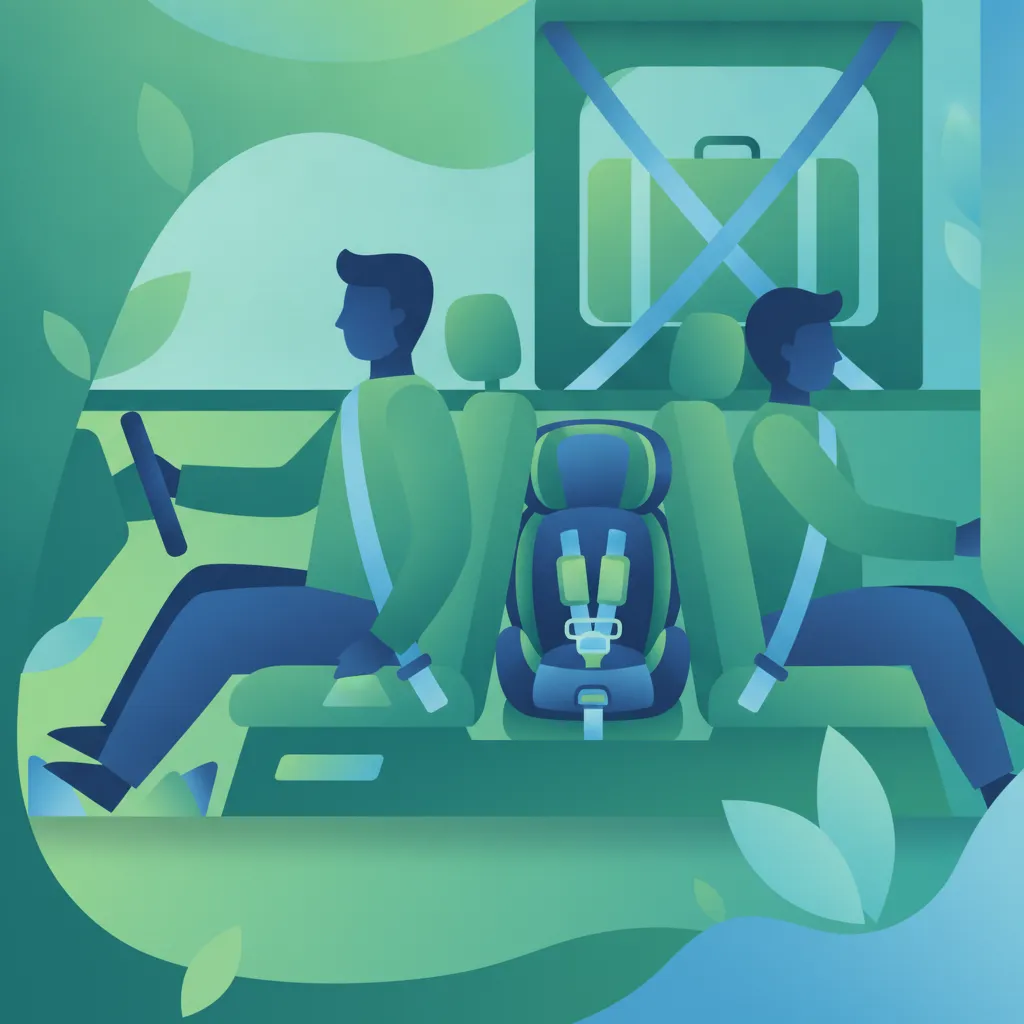
Lesson content overview
Securing passengers, organizing luggage, and ensuring complete accessibility are fundamental responsibilities of every commercial passenger vehicle driver in Ireland. Whether operating a large coach (Category D) or a minibus (Category D1), you hold a legal duty of care to ensure that your vehicle is safely loaded, that passengers are properly restrained, and that those with reduced mobility can travel with dignity and safety.
This lesson explores the physical dynamics of passenger transport, the Irish legal framework governing seatbelts and child safety, the critical procedures for deploying wheelchair ramps, and the mathematical and physical logic behind luggage weight distribution.
Passenger restraint systems are designed to counteract the extreme kinetic forces generated during a collision, sudden emergency braking, or rapid steering maneuvers. Without active restraints, vehicle occupants continue traveling at the vehicle's pre-braking speed until they strike the dashboard, seats, windscreen, or are ejected entirely from the vehicle.
In Ireland, the Road Traffic (Associate Restraint Systems) regulations outline strict mandatory requirements for seatbelt usage in passenger vehicles. As a professional driver, understanding these rules is not merely about avoiding penalties; it is about saving lives.
While drivers of passenger cars are directly responsible for ensuring children wear seatbelts, commercial bus and coach drivers have a unique legal position depending on the vehicle size and service type. For Category D vehicles (buses with more than 9 passenger seats):
In passenger cars and light goods vehicles, the law dictates that children under 150 cm in height or 36 kg in weight must use an appropriate child restraint system (such as an infant seat, rear-facing seat, forward-facing seat, or booster cushion) that meets ECE R44 or R129 safety standards.
However, in commercial passenger vehicles (buses and coaches), the rules adapt to vehicle design:
Never allow a child to travel on an adult's lap. In a 50 km/h collision, a child’s forward momentum increases their effective weight by up to 30 times, making it physically impossible for an adult to hold onto them. Both the adult and the child risk severe injury or death as a result.
Not all seatbelts offer the same level of protection. Understanding how different restraint types perform under stress is key to assessing the overall safety of your vehicle.
| Restraint Type | Design | Primary Protection Area | Safety Efficacy |
|---|---|---|---|
| 2-Point (Lap) Belt | Consists of a single strap wrapping across the pelvis/hips. | Pelvic region. | Prevents complete ejection from the seat, but does not prevent the upper torso from whipping forward, potentially causing head, neck, and abdominal injuries. |
| 3-Point (Lap-and-Diagonal) Belt | Consists of a continuous strap passing across the shoulder, chest, and pelvis. | Pelvis, chest, and shoulders. | Significantly reduces upper body rotation and whipping motions, distributing impact forces across the strongest skeletal structures (the rib cage and pelvis). |
| Specialized Harnesses | Multi-point harnesses designed for passengers with severe physical disabilities or mobility challenges. | Full upper body and pelvic region. | Keeps the torso completely upright and supported, preventing lateral slipping or slouching during transport. |
A seatbelt can only perform its lifesaver function if it is fitted and routed correctly. You must monitor your passengers for common misuse patterns, particularly on long-distance coach routes.
A dangerous phenomenon where a passenger slides underneath the lap portion of a seatbelt during a head-on collision, leading to severe internal abdominal injuries and spinal trauma. This is usually caused by a loose lap belt or an excessively reclined seat back.
Position the Lap Belt: Place the lower strap snugly across the hip bones and pelvis, never across the soft tissue of the abdomen or stomach.
Route the Diagonal Strap: Ensure the shoulder strap runs across the center of the collarbone and chest. It should never rest against the neck, face, or run under the arm or behind the back.
Tension the Belt: Pull upward on the diagonal shoulder strap to remove any slack from the lap section, ensuring the belt is flush against the body.
Adjust the Seatback: Ensure the seatback is in an upright position. Reclining the seat increases the risk of submarining during heavy braking.
The way a passenger vehicle is loaded directly dictates its physical stability, handling characteristics, and braking performance. Coaches and large minibuses have a higher center of gravity than standard passenger cars, making them highly sensitive to weight shifts.
To understand the importance of weight distribution, consider how load placement affects the vehicle's center of gravity (CoG).
When loading luggage, you must adhere to three fundamental rules of physics:
Any luggage placed inside the passenger cabin must be secured. In a crash or sudden swerve, loose items can transform into deadly projectiles.
As a professional driver, ensuring equal and accessible transit for passengers with reduced mobility is a core operational duty. Modern passenger vehicles must comply with accessibility legislation, which mandates the correct maintenance, operation, and security of boarding aids.
Wheelchair access is typically facilitated by either manual fold-out ramps or automated hydraulic/pneumatic lifts.
Securing a wheelchair is a multi-step process that must never be rushed. Failure to secure a wheelchair properly can result in the passenger being thrown from their chair during standard braking maneuvers.
Select a Safe Stopping Location: Align the bus closely with the kerb. Avoid stopping near potholes, drains, uneven surfaces, or steep slopes that could destabilize the ramp.
Deploy the Ramp: Engage the vehicle's kneeling system (if equipped) to lower the step height. Deploy the ramp onto the pavement, ensuring it is fully flush with the surface and locked in place.
Assist the Passenger: Ask the passenger how they prefer to be assisted. If guiding a manual wheelchair up the ramp, push from behind. If the passenger uses a powered wheelchair, guide them visually as they drive up the ramp.
Position in the Designated Bay: Park the wheelchair backward against the padded backrest in the designated wheelchair bay.
Engage Wheelchair Brakes: Instruct the passenger to lock the brakes on their wheelchair (or turn off the power system on electric models).
Apply the 4-Point Tie-Down System (WTORS): Secure the wheelchair frame to the vehicle floor anchors using two front straps and two rear straps. Tighten them to prevent any lateral or forward movement. Do not attach straps to moving parts of the wheelchair (such as wheels or footrests).
Secure the Occupant Restraint: Apply the integrated lap-and-diagonal seatbelt across the wheelchair occupant. Ensure it is routed over their pelvis and collarbone, and not across the wheelchair's armrests or frame.
Real-world driving introduces external variables that demand immediate adaptation of seating, luggage, and accessibility procedures.
When navigating steep hills, ascents, or descents, gravity alters the effective distribution of weight:
To maintain compliance and protect your passengers, be aware of the following high-risk errors often observed in passenger transport operations:
Explore all units and lessons included in this driving theory course.
Lesson content overview
Explore all units and lessons included in this driving theory course.
Explore search topics learners often look for when studying Safe Seating, Seatbelts, Luggage and Accessibility. These topics reflect common questions about road rules, driving situations, safety guidance, and lesson level theory preparation for learners in Ireland.
Browse additional driving theory lessons that cover connected traffic rules, road signs, and common driving situations related to this topic. Improve your understanding of how different rules interact across everyday traffic scenarios.
Understand how passenger vehicle dimensions and weight distribution influence handling, steering response, and braking distances. This lesson covers the physics of center of gravity, load effects on vehicle dynamics, and maintaining stability on Irish roads while operating buses and coaches according to official RSA guidelines.
The physical scale of a coach or bus generates significant momentum that demands extensive space to bring the vehicle to a safe stop. This lesson explains vehicle weight mechanics, the physics of kinetic energy, and how center of gravity affects chassis stability during stops. Drivers will learn to assess braking capacity, accounting for wet road conditions and high passenger counts.
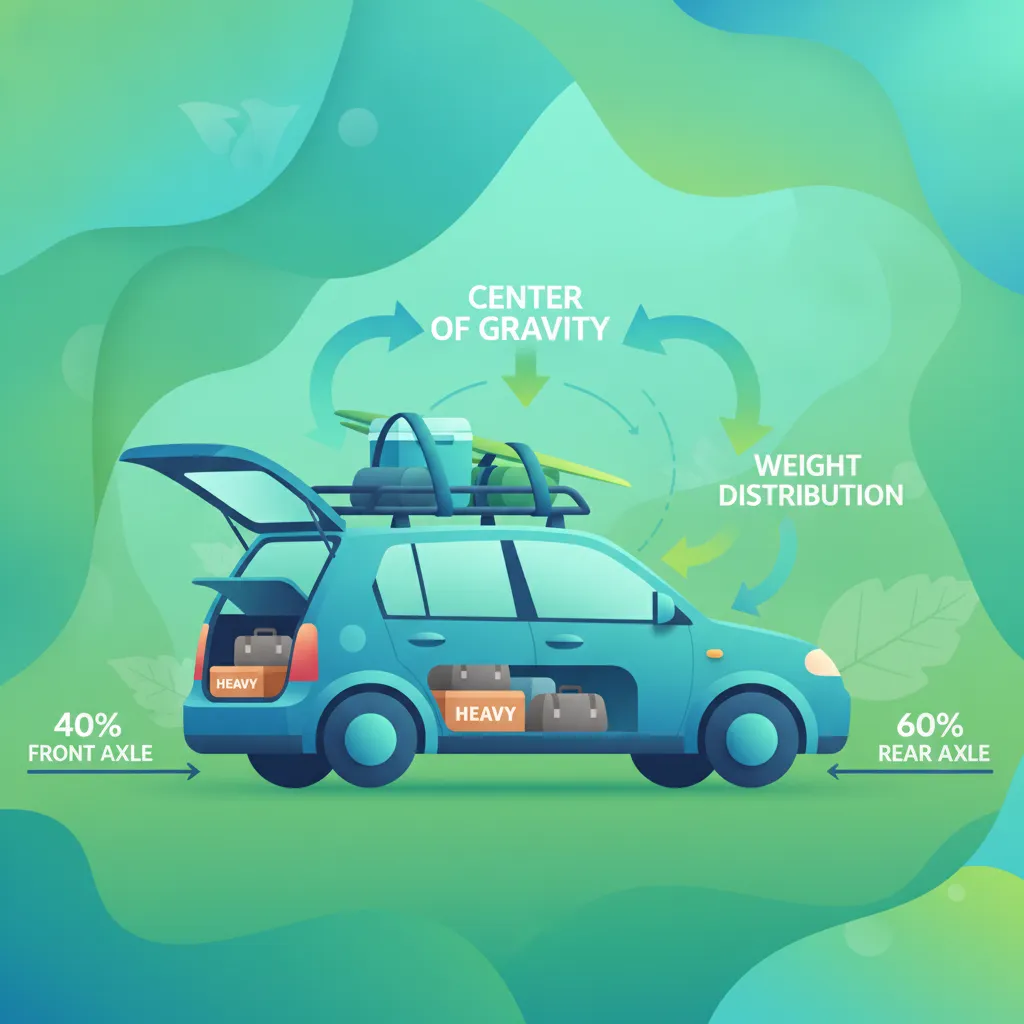
This lesson explains the physical principles of weight distribution and axle overloading on heavy commercial vehicles. It examines how a high centre of gravity increases tipping risks during cornering and alters overall braking effectiveness. Drivers will discover methods for positioning cargo to distribute weight evenly, ensuring optimal steering control and stable vehicle dynamics.
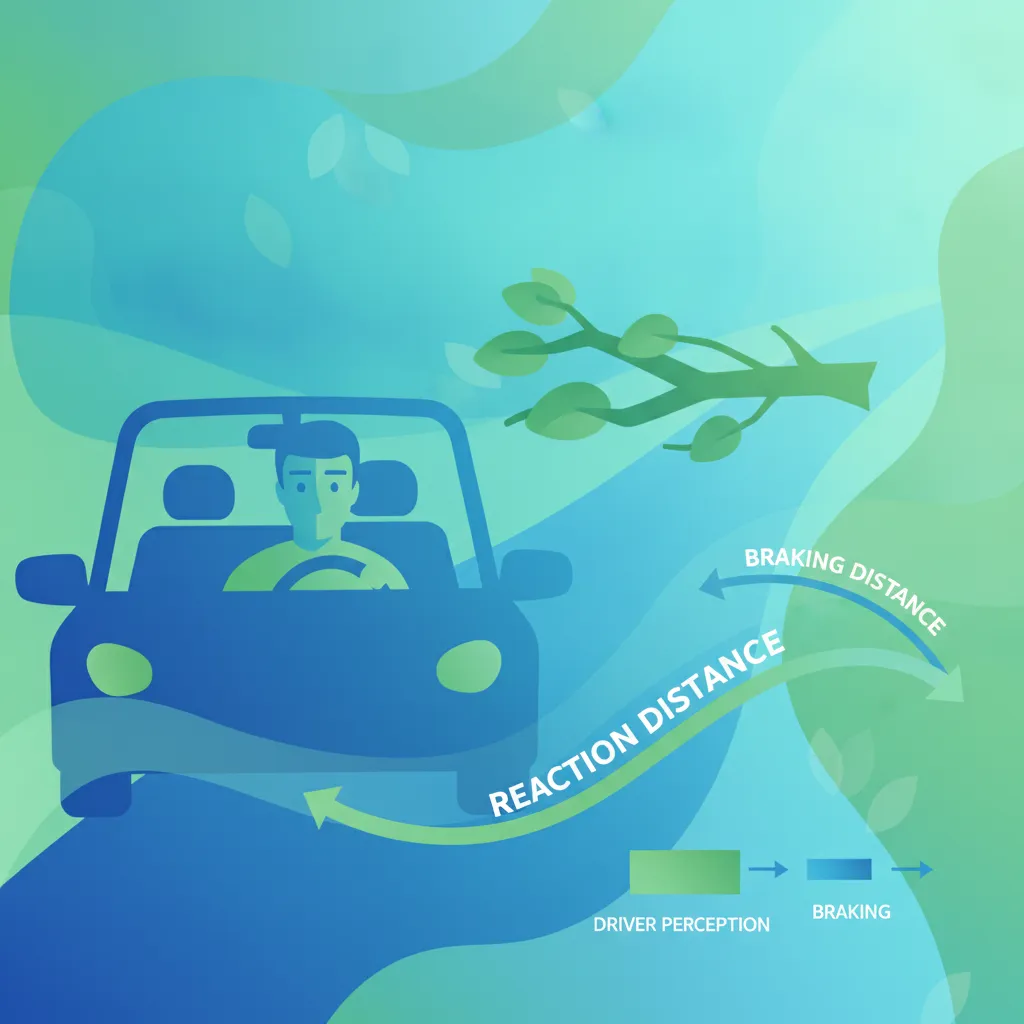
This lesson details how total stopping distance scales with vehicle mass, explaining the critical combination of perception-reaction delay and mechanical braking time. It covers the operation of main air-brake systems, auxiliary engine retarders, and trailer-coupling brake setups. Drivers will learn to maintain safe following distances and apply progressive braking patterns to avoid dangerous brake fade.

As passenger numbers change throughout a service shift, a heavy vehicle suspension, center of gravity, and steering responsiveness adapt dynamically. This lesson covers load balancing, the physical risks of overloading, and how uneven weight distribution compromises stability during turns. Drivers will learn to perform regular axle weight assessments to comply with Irish transport safety rules.
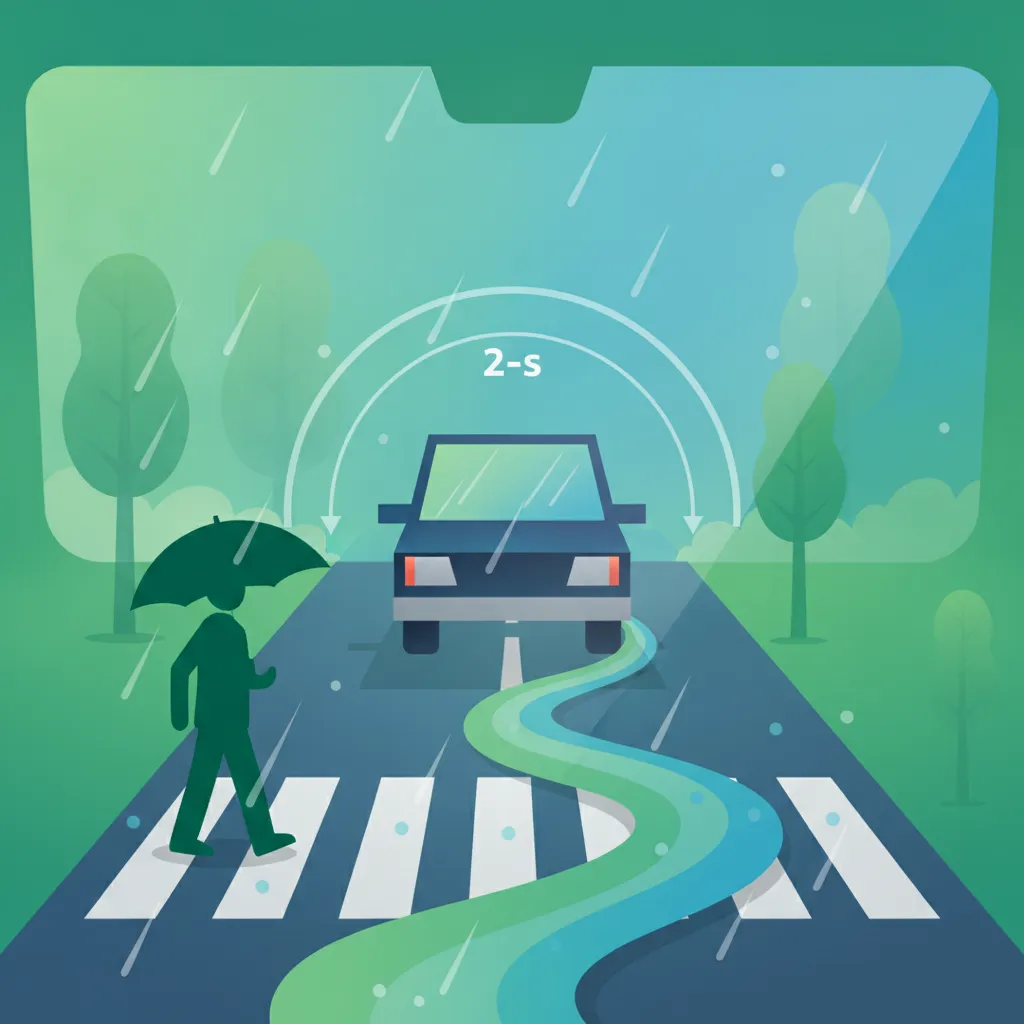
Maintaining an extensive buffer zone ahead of a large passenger vehicle is critical to ensuring enough space for emergency maneuvers. This lesson teaches the time-gap method, detailing how following distances must double on wet roads or increase with full passenger loads. It builds hazard anticipation skills, teaching drivers to read distant traffic cues and react early to hazards.

Sudden or jerky vehicle movements can cause immediate discomfort or direct physical injuries to onboard passengers, particularly standing occupants. This lesson teaches progressive throttle control, gradual gear shifts, and smooth steering inputs that stabilize the heavy vehicle body. Drivers will master the technique of progressive braking to ensure comfortable, safe slowing actions at junctions.
Explore the critical responsibilities of professional drivers when interacting with pedestrians, cyclists, and school children near bus stops. This guide explains how to anticipate hazards, manage blind spots, and reduce conflict in shared urban spaces to ensure safety during passenger boarding and alighting processes.
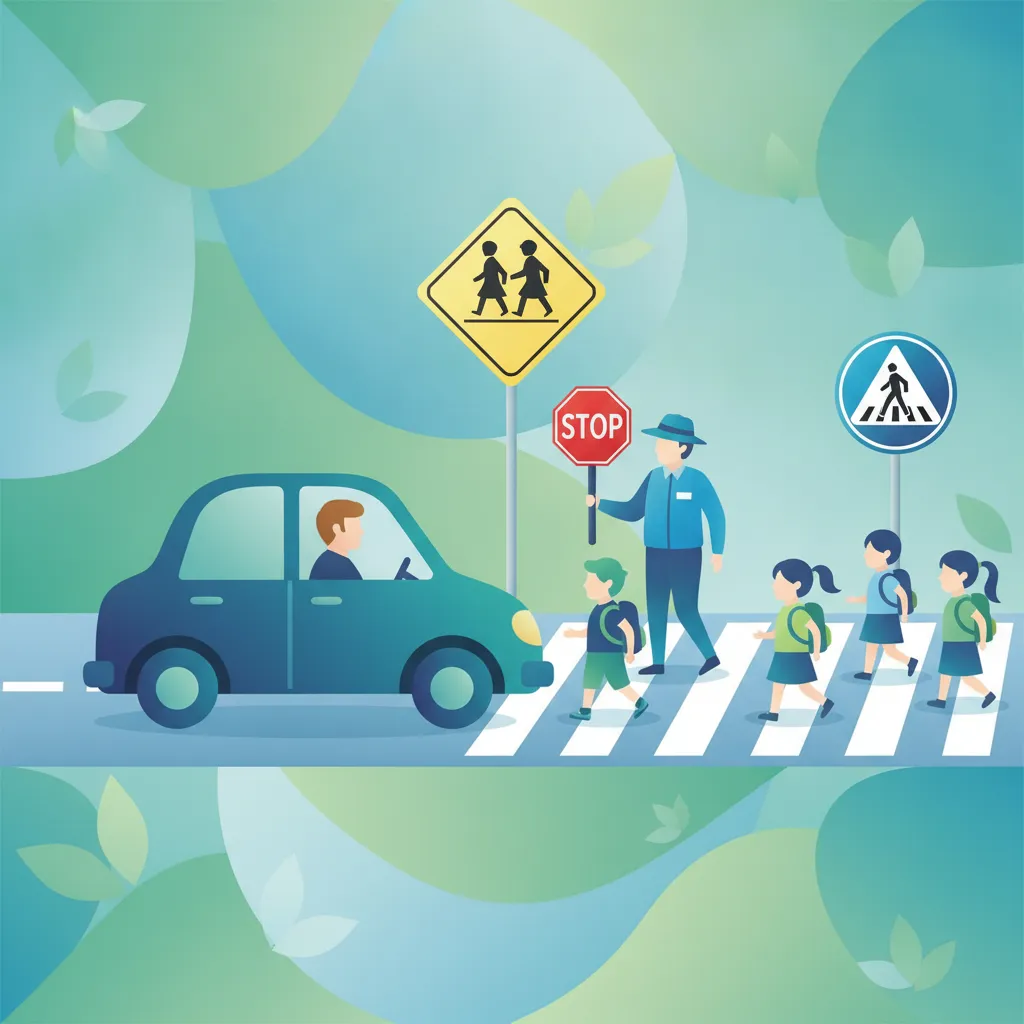
School zones and pedestrian crossings require high driver alertness and strict compliance with local speed limits in Ireland. This lesson details the legal rules of zebra and pelican crossings, explaining driver requirements when amber warning beacons are flashing. Drivers will study safety procedures for dropping off or picking up children, preventing common blind-spot accidents near schools.

Bus stops often intersect with designated bicycle lanes and busy walking pathways, creating high-risk conflict areas for drivers. This lesson trains drivers to check blind spots for oncoming cyclists before pulling into or exiting public stop bays. It emphasizes yielding right-of-way to passengers crossing the road, preventing collision risks in active urban transport hubs.

Motorcycles and bicycles are often hidden from view in the large blind spots of passenger buses and coaches during turns. This lesson covers safe lateral clearances when overtaking cyclists, recognizing advanced stop lines, and sharing narrow lanes. Drivers will understand how to signal clearly, giving riders enough room to navigate safely near busy public transit corridors.
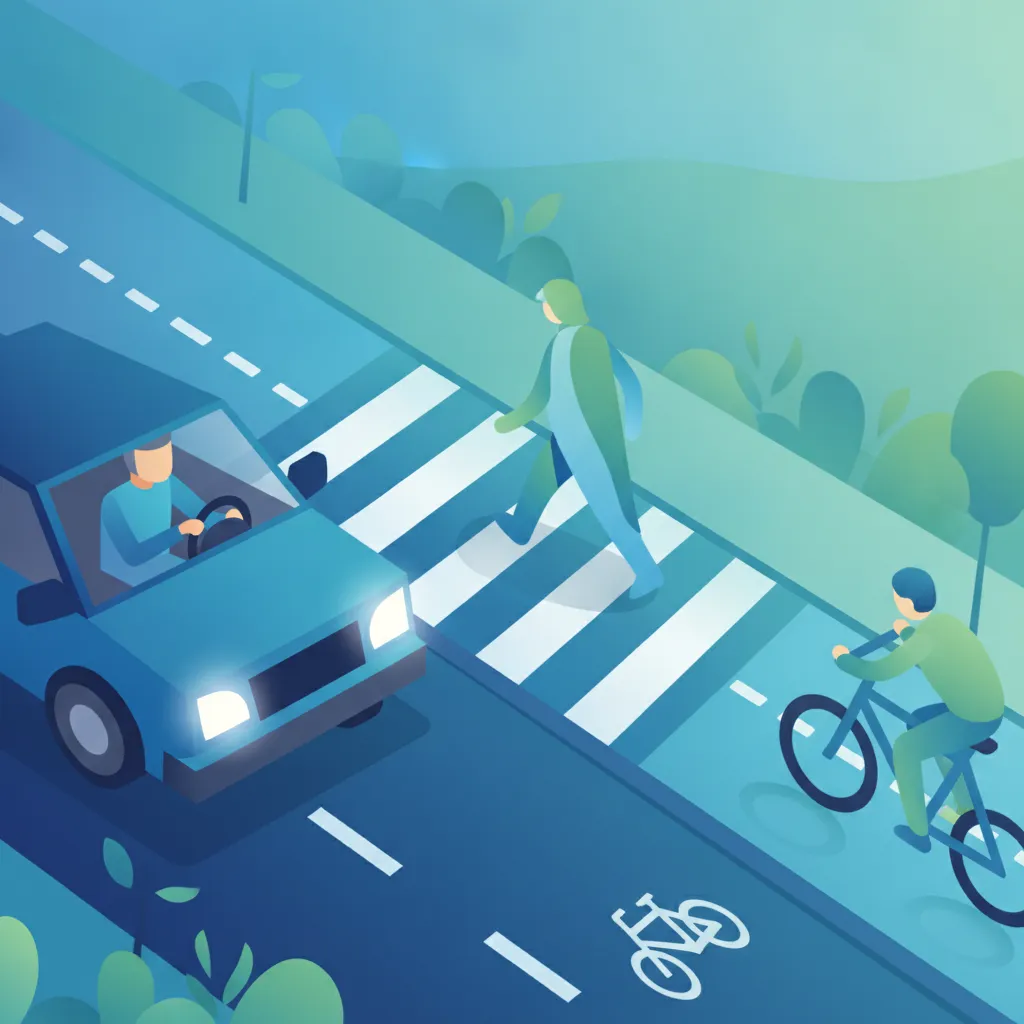
This lesson details how to approach zebra, pelican, and other pedestrian crossings safely, ensuring complete priority is given to walkers. It also covers the safe guidelines for overtaking cyclists and sharing lanes in busy urban centers without causing danger. Respecting these interactions is critical for maintaining overall safety and compliance with Irish road law.

This lesson covers the rules governing zebra, pelican, and toucan pedestrian crossings, focusing on driver obligations and rider safety. It details how to interact safely with cyclists, personal mobility devices, and pedestrians in busy urban sectors. Motorcyclists will learn to scan pavement edges, yield right-of-way, and maintain safe overtaking distances when passing slower road users.
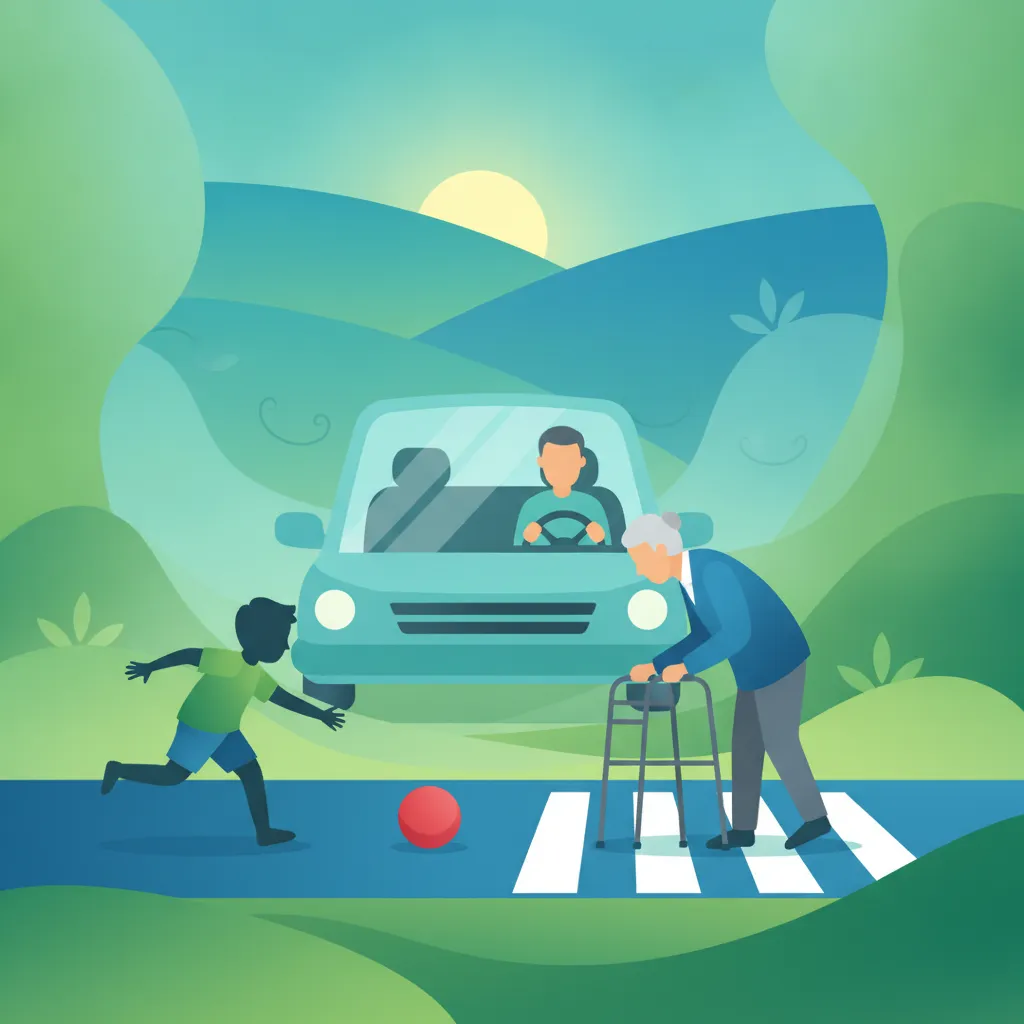
Children often struggle to judge heavy vehicle speeds accurately, while elderly pedestrians may possess limited mobility or hearing impairments. This lesson addresses these unique risks, explaining how to adjust driving patterns in residential neighborhoods and near shopping districts. Drivers will learn to maintain a high safety margin, ensuring they can yield quickly to vulnerable road users.
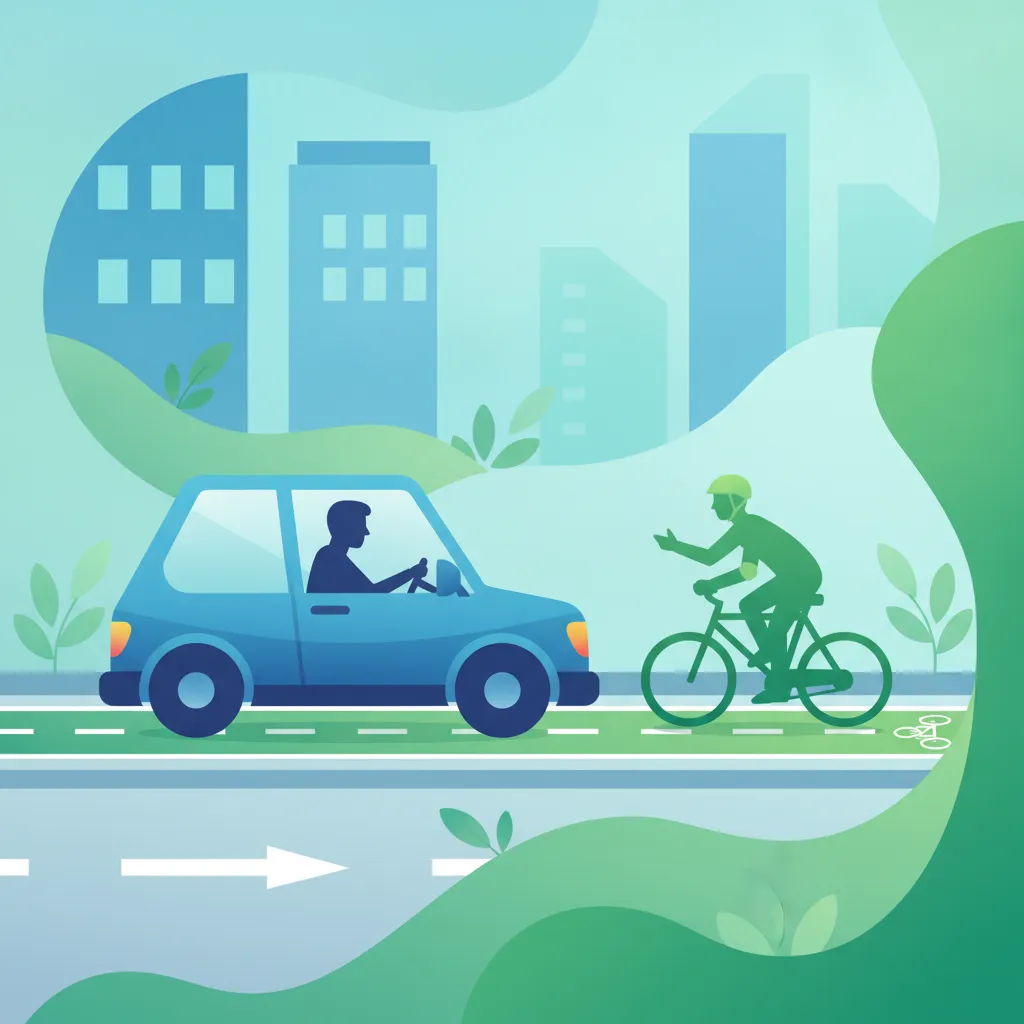
Cyclists share public roads under unique safety constraints, requiring drivers to keep wide clearances and anticipate sudden steering changes. This lesson covers the minimum safe passing distance of 1 to 1.5 metres, rules for driving near cycle tracks, and the danger of the 'dooring' hazard when parking. You will also learn to check your left-side blind spot before turning, preventing dangerous side-swipe collisions.

Pedestrians are the most common vulnerable road users, and drivers must maintain constant vigilance to protect them. This lesson covers pedestrian priority, especially when you are turning into side roads or navigating busy urban centres. You will learn why you must yield to pedestrians already crossing, how to scan blind spots for hidden walkers, and the safety dangers of blocking footpaths or pedestrian zones with your car.

Children, the elderly, and disabled individuals often require extra time and understanding when navigating road networks. This lesson outlines special safety hazards, such as children unexpectedly running into school zones, or senior citizens needing longer times to cross wide junctions. You will learn how to recognise visually impaired pedestrians by their white canes or guide dogs, and the absolute requirement to drive slowly and patiently.
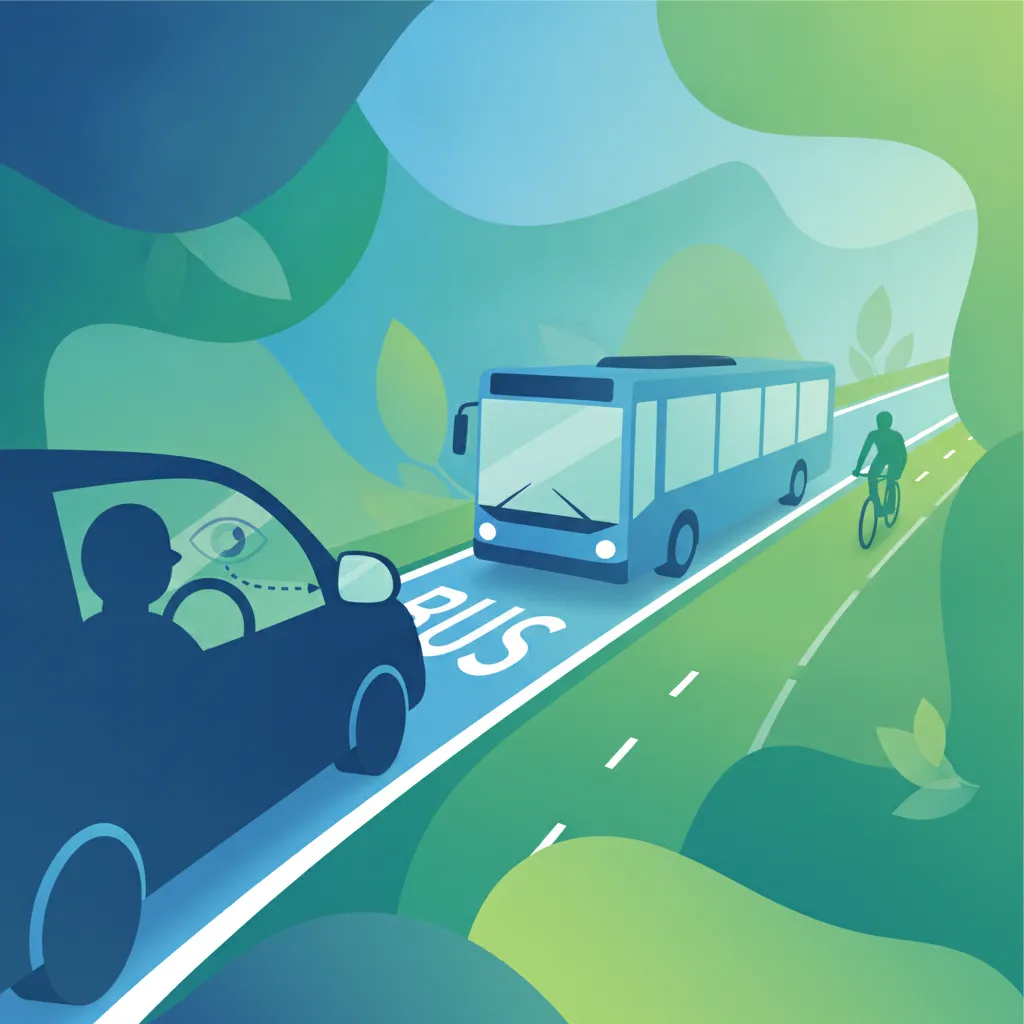
This lesson clarifies the legal regulations surrounding bus lanes and cycle lanes in Ireland, highlighting when motorcycles are permitted to enter them. It outlines how to cross these lanes safely when turning left, and how to scan for cyclists approaching from behind. Riders will learn to respect lane markings, observe signposted operational hours, and avoid blocking designated public transit lanes.
Find clear answers to common questions learners have about Safe Seating, Seatbelts, Luggage and Accessibility. Learn how the lesson is structured, which driving theory objectives it supports, and how it fits into the overall learning path of units and curriculum progression in Ireland. These explanations help you understand key concepts, lesson flow, and exam focused study goals.
Yes, where seatbelts are fitted to a vehicle, all passengers are legally required to use them. As a driver, you must ensure that passengers are aware of the safety requirements and that accessible seating areas are properly managed.
Excessive or incorrectly distributed luggage can shift the centre of gravity of your vehicle, making it prone to instability. You must always follow the manufacturer's load limits to ensure effective braking and handling.
You are responsible for the safe deployment of the ramp and ensuring that the wheelchair or mobility aid is secured using the correct restraint systems provided in the vehicle. Always follow the manufacturer's instructions to ensure passenger safety.
Yes, the theory test covers aspects of passenger safety and accessibility to ensure you can provide a secure service to all passengers, including those with reduced mobility, in line with Irish RSA standards.
Use the practice question search tool to pinpoint specific topics, road signs, or rules you need to master for your official Driver Theory Test. Refine your study strategy and ensure comprehensive preparation for all aspects of the Irish driving exam. Start your focused revision now and build confidence for your learner permit test.