
This lesson focuses on the vital role a driver plays in maintaining a comfortable and safe environment for passengers. You will learn how to manage onboard systems and driving techniques to ensure a pleasant travel experience, which is essential for your Category D or D1 theory exam.

Lesson content overview
Operating a large passenger vehicle, such as a bus or coach, involves far more than simply steering a heavy machine from point A to point B. Under the Irish Road Safety Authority (RSA) guidelines for Category D and D1 licences, a professional driver’s primary duty is to ensure the safety, security, and physical well-being of all passengers.
Passenger comfort directly impacts the safety of the journey. A smooth, well-ventilated, and calm environment reduces passenger anxiety, prevents physical injuries from sudden shifts, and mitigates travel-related illnesses like motion sickness. This lesson details the core principles of passenger well-being, focusing on driving techniques, climate control, noise reduction, and professional communication.
As a professional Category D driver in Ireland, you must practice Proactive Comfort Management. This means anticipating the physical and psychological needs of your passengers and adjusting your driving style and the vehicle's interior environment before discomfort occurs.
Passenger discomfort can manifest as physical strain, anxiety, nausea, or even cooperative deterioration, where passengers become restless or disruptive. By actively managing the vehicle’s motion, temperature, and communication channels, you maintain a safe and professional transit environment.
The holistic state of physical ease, psychological safety, and comfort experienced by passengers throughout a journey, directly influenced by the driver's operational choices.
The physical forces acting on passengers in a large bus or coach are significantly greater than those felt in a standard passenger car. Because passengers may be standing, moving to their seats, or vulnerable due to age or disability, any sudden change in vehicle momentum can cause falls or severe motion sickness.
Sudden acceleration or harsh braking forces passengers to tense their muscles to stay upright, leading to physical fatigue and anxiety. Professional Category D drivers must employ progressive braking and gentle acceleration.
Buses have a high center of gravity, making them susceptible to lateral sway. When a bus enters a turn too quickly, passengers are pushed sideways.
Sudden, erratic steering or harsh braking is considered a major fault during the Irish Category D practical driving test. It demonstrates a lack of anticipation and directly compromises passenger safety.
A poorly regulated cabin environment can lead to passenger drowsiness, headaches, heat stress, or extreme discomfort. Under RSA professional standards, managing the heating, ventilation, and air-conditioning (HVAC) systems is a continuous operational duty.
The ideal cabin temperature for a passenger bus is typically between 18°C and 21°C. However, drivers must adjust this based on the passenger load and external weather conditions.
In wet Irish weather, passenger clothing brings moisture into the vehicle. This moisture quickly condenses on cold glass surfaces, obscuring your mirrors and blocking the passengers' view, which can induce claustrophobia and travel anxiety. Use the air conditioning system (if equipped) to dehumidify the air, and keep the demister fans active on windows.
Excessive noise and vibration contribute to physical fatigue and stress over long journeys. While some road noise is inevitable, a professional driver can control and minimize these factors through careful driving and vehicle checks.
The quality of Irish roads can vary from smooth motorways to uneven, potholed rural R-roads.
A well-maintained vehicle is a quiet vehicle. Loose interior panels, rattling luggage racks, or worn suspension components generate persistent noise that degrades the travel experience.
Motion sickness (kinetosis) is caused by a sensory mismatch in the brain. The inner ear senses motion, but the eyes (often focused on a phone, book, or a seatback) signal that the body is stationary. This sensory conflict triggers nausea, dizziness, and cold sweats.
As a Category D driver, your driving style is the single most important factor in preventing passenger motion sickness.
| Factor | Cause of Discomfort | Driver Mitigation Strategy |
|---|---|---|
| Lateral G-Force | Frequent, sharp cornering causes fluid shifts in the inner ear. | Slow down before turns; take a wide, smooth line through roundabouts and curves. |
| Pitching Motion | Sudden braking and rapid acceleration cause the vehicle to tilt forward and backward. | Maintain a large following distance to allow for smooth, early deceleration. |
| Poor Air Quality | Hot, stuffy, or smelly cabin environments exacerbate feelings of nausea. | Keep fresh air circulating; maintain cabin temperature between 18°C and 21°C. |
| Visual Disorientation | Passengers looking at nearby objects cannot synchronize visual and physical motion. | Advise prone passengers politely to sit near the middle of the bus and look toward the horizon. |
If a passenger becomes visibly ill, pull over safely at the earliest opportunity, assist them if necessary, and ensure they have access to fresh air before continuing.
Passenger comfort is psychological as well as physical. Travel anxiety is common, particularly among passengers navigating unfamiliar routes, connecting to flights, or traveling with children or disabilities. Courteous, timely, and professional communication from the driver is highly effective at reducing this stress.
Passengers want predictability. When unexpected delays, roadworks, or route diversions occur, keep your passengers informed.
This lesson covers the professional responsibilities of Category D drivers in managing passenger comfort through smooth driving techniques and environmental control. Key skills include progressive braking, anticipatory scanning, and gentle steering to minimize physical forces on passengers. Environmental management focuses on maintaining cabin temperature between 18°C and 21°C with continuous fresh air circulation and proper demisting. Drivers must also understand motion sickness causes and mitigation, plus deliver clear PA announcements during delays. These competencies align with RSA guidelines for professional passenger transport and prepare learners for scenario-based theory test questions on driver responsibilities.
A short set of high-value points that capture the most important learning from this lesson.
Proactive comfort management requires anticipating passenger needs before discomfort develops rather than reacting to complaints
Sudden braking, harsh acceleration, and sharp steering create physical forces that can injure standing or vulnerable passengers in large vehicles
The ideal cabin temperature range of 18°C to 21°C should be adjusted based on passenger load and external weather conditions
Motion sickness results from sensory mismatch between inner ear motion detection and visual静止 signals, which drivers can minimize through smooth vehicle control
Professional communication through clear PA announcements reduces travel anxiety and builds passenger trust during delays or route changes
Explore all units and lessons included in this driving theory course.
Progressive braking: apply light pressure first to settle chassis, increase for deceleration, ease off just before stopping to prevent rebound jolt
Scan the road 20 to 30 seconds ahead to anticipate hazards and allow smooth, early deceleration instead of emergency braking
Lateral G-forces from sharp cornering cause inner ear fluid shifts; reduce speed before turns, not during them, and take a wide line
Poor air quality and cabin stuffiness exacerbate motion sickness; maintain continuous fresh air circulation and keep windows clear
Passenger load affects cabin temperature significantly; a crowded bus generates extra body heat requiring proactive thermostat adjustment
Braking late and hard instead of using progressive deceleration, which jolts passengers forward and demonstrates poor anticipation
Adjusting cabin temperature only when passengers complain rather than monitoring and pre-adjusting based on conditions
Taking corners at constant speed and braking mid-turn, which increases lateral G-forces and destabilizes the high center of gravity
Failing to announce delays or route changes, leaving passengers anxious and uninformed about journey progress
Allowing condensation to build up on windows without using demister or climate control, creating visibility and claustrophobia issues
Lesson content overview
A short set of high-value points that capture the most important learning from this lesson.
Proactive comfort management requires anticipating passenger needs before discomfort develops rather than reacting to complaints
Sudden braking, harsh acceleration, and sharp steering create physical forces that can injure standing or vulnerable passengers in large vehicles
The ideal cabin temperature range of 18°C to 21°C should be adjusted based on passenger load and external weather conditions
Motion sickness results from sensory mismatch between inner ear motion detection and visual静止 signals, which drivers can minimize through smooth vehicle control
Professional communication through clear PA announcements reduces travel anxiety and builds passenger trust during delays or route changes
Explore all units and lessons included in this driving theory course.
Progressive braking: apply light pressure first to settle chassis, increase for deceleration, ease off just before stopping to prevent rebound jolt
Scan the road 20 to 30 seconds ahead to anticipate hazards and allow smooth, early deceleration instead of emergency braking
Lateral G-forces from sharp cornering cause inner ear fluid shifts; reduce speed before turns, not during them, and take a wide line
Poor air quality and cabin stuffiness exacerbate motion sickness; maintain continuous fresh air circulation and keep windows clear
Passenger load affects cabin temperature significantly; a crowded bus generates extra body heat requiring proactive thermostat adjustment
Braking late and hard instead of using progressive deceleration, which jolts passengers forward and demonstrates poor anticipation
Adjusting cabin temperature only when passengers complain rather than monitoring and pre-adjusting based on conditions
Taking corners at constant speed and braking mid-turn, which increases lateral G-forces and destabilizes the high center of gravity
Failing to announce delays or route changes, leaving passengers anxious and uninformed about journey progress
Allowing condensation to build up on windows without using demister or climate control, creating visibility and claustrophobia issues
Explore search topics learners often look for when studying Passenger Well-being and Comfort. These topics reflect common questions about road rules, driving situations, safety guidance, and lesson level theory preparation for learners in Ireland.
Browse additional driving theory lessons that cover connected traffic rules, road signs, and common driving situations related to this topic. Improve your understanding of how different rules interact across everyday traffic scenarios.
Learn the professional standards for managing passenger movement at bus stops and terminals. This lesson explains how to safely approach stops, monitor boarding flows, and ensure passengers alight without risk, following Irish Road Safety Authority guidelines for Category D passenger vehicle operations.

Passenger boarding and exiting periods represent a highly critical operational window where slip and fall injuries frequently occur. This lesson outlines safe door opening procedures, the deployment of mechanical boarding steps, and proper handrail holding instructions. Drivers will learn to supervise passenger flow, ensuring passengers clear the immediate exit area before the bus begins moving.

When emergencies strike, a passenger driver must remain perfectly calm and execute structured emergency procedures to protect human life. This lesson outlines safety protocols for roadside breakdowns, engine fire isolation, and handling acute passenger medical emergencies. Drivers will learn how to secure the accident scene and report incidents to emergency services as required by Irish law.

Evacuating a coach or bus requires quick, decisive leadership, structured directions, and full use of onboard emergency exits. This lesson details the exact location and operation of emergency glass-breakers, roof hatches, and manual door release systems. Drivers will study crowd management techniques to prevent panic, ensuring all passengers gather at a safe distance from the vehicle.
The Road Safety Authority establishes clear operational frameworks to ensure maximum safety in the Irish commercial passenger transport sector. This lesson covers critical guidelines regarding daily vehicle walkaround checks, scheduled maintenance records, and ongoing driver CPC compliance. By studying these official recommendations, drivers will understand how to maintain total legal compliance while elevating transport safety.
Motorway transport requires consistent forward planning, strict speed restriction compliance, and clear mirror checks before exiting lanes. This lesson details the rules of joining and leaving motorways, navigating toll plazas safely, and managing breakdowns on the hard shoulder. Drivers will learn to balance high-speed travel with passenger stability, ensuring a comfortable, secure ride.

Standing passengers face heightened safety risks due to sudden changes in bus velocity, turning forces, or abrupt stops. This lesson covers maximum standing capacity regulations, correct passenger distribution, and the importance of active handrail utilization. Drivers will learn how to adjust their braking and acceleration patterns to prevent slips, trips, and falls among standing occupants.

Securing passengers and luggage properly is essential to prevent injury during emergency braking, sudden steering inputs, or traffic collisions. This lesson provides instructions on passenger restraint systems, seatbelt laws in Ireland, and wheelchair ramp deployment processes. Drivers will study weight distribution guidelines for luggage compartments to protect the physical stability of the passenger vehicle.

Entering busy coach terminals and motorway service stations requires slow speeds and close monitoring of passenger walking paths. This lesson addresses safe parking bay entry, utilizing public facilities during breaks, and coordinating with terminal dispatchers. Drivers will learn safety rules for securing the vehicle, ensuring passenger boarding areas remain free of physical hazards.
Reversing a large passenger vehicle is a high-risk maneuver that must be avoided whenever possible or performed with extreme caution. This lesson teaches correct mirror alignment, the use of rear cameras, and establishing clear hand signals with an external spotter. Drivers will study safety protocols for backing into passenger bays, ensuring all blind zones remain completely clear.

Large passenger vehicles must maintain consistent lane positioning to prevent side-swipe incidents and sustain smooth urban traffic patterns. This lesson covers standard lane selection rules, safe overtaking procedures, and how to use designated public transit corridors correctly. Drivers will learn the importance of checking mirrors continuously and planning lane changes well in advance.
Master the principles of proactive driving in large passenger vehicles. Understand how to manage following distances, anticipate road hazards, and maintain vehicle stability on Irish roads to ensure a safe and comfortable environment for all passengers during daily service operations.

Maintaining an extensive buffer zone ahead of a large passenger vehicle is critical to ensuring enough space for emergency maneuvers. This lesson teaches the time-gap method, detailing how following distances must double on wet roads or increase with full passenger loads. It builds hazard anticipation skills, teaching drivers to read distant traffic cues and react early to hazards.
Wet roads, heavy winter fog, and strong lateral winds present major safety challenges for high-sided passenger vehicles in Ireland. This lesson explains how to prevent aquaplaning, double following distances on wet surfaces, and use fog lights correctly to maintain visibility. Drivers will learn handling adjustments to counteract sudden wind gusts when crossing exposed bridges or motorways.

Heavy vehicles require continuous visual scanning to identify small or slow-moving road users who may enter the path of travel. This lesson explores the typical behaviors of young children, elderly pedestrians, and visually impaired road users. Drivers will build strong hazard perception skills to anticipate sudden movements, ensuring they can brake safely and avoid serious accidents.

This lesson explains the extensive blind spots of heavy goods vehicles, buses, and other large trucks on Irish roads. It teaches Category AM riders how to maintain safe following distances and position themselves where truck drivers can see them. Proper space cushion management is emphasized to protect riders from the wind turbulence of passing trucks.

School zones and pedestrian crossings require high driver alertness and strict compliance with local speed limits in Ireland. This lesson details the legal rules of zebra and pelican crossings, explaining driver requirements when amber warning beacons are flashing. Drivers will study safety procedures for dropping off or picking up children, preventing common blind-spot accidents near schools.

Proactive hazard perception involves constantly scanning the road ahead to identify potential dangers before they turn into actual emergencies. This lesson covers active scanning techniques, helping you look far ahead, check mirrors regularly, and identify subtle risk clues such as exhaust smoke from parked cars or children playing near kerbs. Anticipating these developments gives you the time to adjust speed and position safely.

Irish rural routes are often narrow, lacking central markings, and bordered by tall hedges that restrict forward visibility on sharp bends. This lesson teaches drivers how to negotiate blind curves, anticipate slow-moving agricultural machinery, and respond to wandering farm animals. Drivers will learn to regulate vehicle speed proactively, maintaining a safe stopping margin in rural areas.

Children often struggle to judge heavy vehicle speeds accurately, while elderly pedestrians may possess limited mobility or hearing impairments. This lesson addresses these unique risks, explaining how to adjust driving patterns in residential neighborhoods and near shopping districts. Drivers will learn to maintain a high safety margin, ensuring they can yield quickly to vulnerable road users.
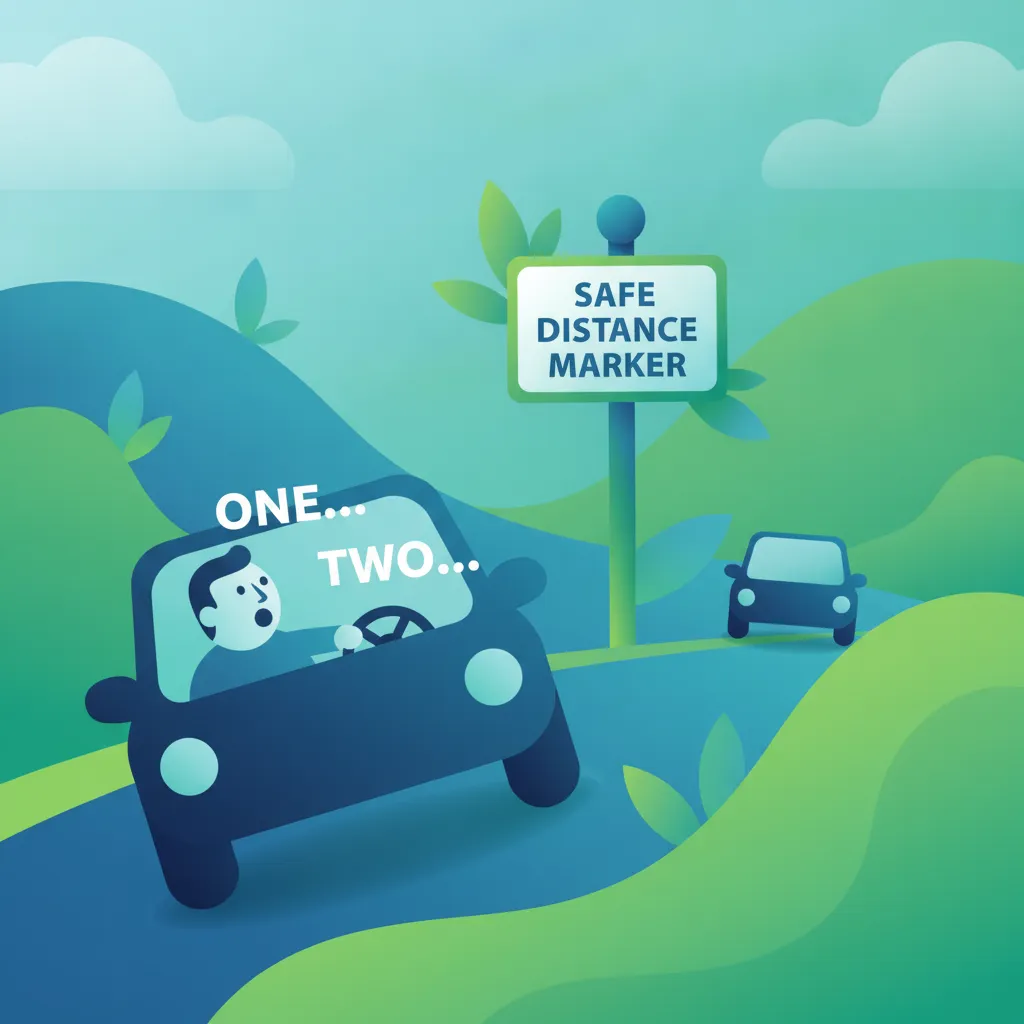
Maintaining an adequate following distance provides you with the crucial time and space needed to react if the leading vehicle stops suddenly. This lesson teaches the 'two-second rule' for dry road conditions, and why you must double this gap to at least four seconds on wet or greasy road surfaces. You will learn how to use stationary roadside markers to calculate this distance and avoid the severe dangers of tailgating.

This lesson explores the safe operation of heavy transport vehicles during severe meteorological hazards typical of the Irish climate. It teaches techniques for adjusting speed and doubling following distances to prevent loss of steering traction and control on waterlogged or icy roadways. Drivers will understand how to manage lateral aerodynamic forces from crosswinds on high-sided goods vehicles.
Find clear answers to common questions learners have about Passenger Well-being and Comfort. Learn how the lesson is structured, which driving theory objectives it supports, and how it fits into the overall learning path of units and curriculum progression in Ireland. These explanations help you understand key concepts, lesson flow, and exam focused study goals.
Professional driving involves more than just vehicle control; it includes ensuring the safety and well-being of passengers. The exam tests your understanding of how driving habits, such as smooth braking and acceleration, directly prevent accidents and improve passenger satisfaction.
To reduce motion sickness, avoid harsh acceleration, sudden braking, and sharp steering. Maintaining a consistent speed and providing smooth transitions when stopping at bus stops are critical, as is ensuring good ventilation inside the vehicle.
An uncomfortable temperature can lead to passenger irritability or drowsiness, which increases the likelihood of conflict or poor behavior on board. A well-regulated environment helps keep passengers calm and alert.
Yes, professional communication is part of your duty of care. Informing passengers about delays in a calm, clear, and professional manner reduces anxiety and helps manage passenger expectations during the service.
Use the practice question search tool to pinpoint specific topics, road signs, or rules you need to master for your official Driver Theory Test. Refine your study strategy and ensure comprehensive preparation for all aspects of the Irish driving exam. Start your focused revision now and build confidence for your learner permit test.