
This lesson focuses on managing the high-risk interactions between large passenger vehicles and vulnerable road users at bus stops. You will learn specific observation techniques and safety protocols necessary to navigate urban transport hubs safely while preparing for your Category D driving theory exam.

Lesson content overview
As a professional driver operating a Category D or D1 passenger vehicle in Ireland, navigating urban transport hubs demands an exceptional level of situational awareness. Bus and coach stops are highly dynamic environments where large commercial vehicles, cyclists, and pedestrians constantly intersect. Because of the sheer size, weight, and blind spots inherent to passenger vehicles, the consequences of a collision are disproportionately severe.
This lesson covers the essential skills, safety procedures, and legal requirements needed to manage these conflict zones safely, ensuring you are fully prepared for both your Irish Driver Theory Test and real-world passenger transport operations.
In busy Irish towns and cities, bus stops are rarely isolated. They are integrated into complex streetscapes that feature dedicated cycle tracks, pedestrian crossings, and heavy commuter foot traffic. The Road Safety Authority (RSA) highlights stops as high-risk zones due to the convergence of multiple road users with differing speeds, visibilities, and priorities.
In modern Irish urban planning, you will encounter various configurations designed to segregate traffic, but these often introduce new conflict points:
Under Irish road traffic law, pedestrians and cyclists are classified as Vulnerable Road Users (VRUs). They do not have the structural protection of a vehicle cabin and are highly susceptible to severe injury or fatality in any impact.
Road users who are at a higher risk of injury or death in a collision, primarily due to the lack of protective shielding. This category includes pedestrians, cyclists, motorcyclists, and persons with reduced mobility.
Operating a Category D vehicle carries a heightened legal and moral duty of care. Due to your professional training, you are expected to anticipate the mistakes of other road users.
When approaching any passenger stop, you must assume that:
A standard double-deck or single-deck coach has extensive blind spots, often referred to as "No-Zones." These areas are physically impossible to see through direct vision or standard flat mirrors.
To safely manage these blind spots when interacting with cyclists and pedestrians, you must strictly adhere to the Mirror-Signal-Manoeuvre (MSM) routine, adapted specifically for large passenger vehicles:
Observe Early: Scan the road ahead for pedestrians waiting at the stop and cyclists riding ahead of or alongside your vehicle.
Check Mirrors: Consult your main flat mirrors and wide-angle convex mirrors on both sides. Pay special attention to the left mirror to detect any cyclists undertaking on your inside.
Signal Intent: Indicate left early and clearly to warn cyclists and following traffic of your intention to pull into the stop bay.
Perform a Physical Blind Spot Check: Before steering left, turn your head to check the passenger door area and the immediate left-side blind zone.
Smooth Deceleration: Apply the brakes progressively. Abrupt braking can cause passengers inside to fall and may surprise cyclists riding closely behind.
Never rely solely on your mirrors. Convex mirrors distort distance and speed. A fast-moving cyclist can quickly enter a blind spot between mirror sweeps. Always perform a physical head check toward the left glazing before turning or pulling in.
Correct vehicle positioning is critical to maintaining a safe environment for both boarding passengers and passing road users.
When pulling into a bus stop, you must position your vehicle parallel to the kerb and fully within the marked stop bay.
The moments immediately before boarding and right after alighting represent the highest-risk windows for pedestrian accidents.
Once passengers step off your bus, they become pedestrians. A common, highly dangerous behaviour is alighting passengers walking directly in front of the stationary bus to cross the road.
Because of the high driving position in a Category D vehicle, a pedestrian standing close to the front bumper is completely invisible to you.
To prevent collisions in this scenario, follow these strict rules:
Keep your doors closed until the vehicle is fully stationary. Never open the passenger doors while the bus is still rolling. This prevents passengers from falling under the wheels or stepping out directly in front of passing cyclists.
Cyclists require significant space and stability. Unlike motor vehicles, a cyclist must balance and may need to swerve suddenly to avoid potholes, road debris, wet leaves, or open car doors.
When passing or overtaking a cyclist, Irish road safety guidelines specify minimum lateral clearance distances that you must maintain. As a professional coach or bus driver, you must adhere strictly to these measurements:
If there is insufficient room to provide this clearance (for example, due to oncoming traffic or narrow lanes), you must remain behind the cyclist until it is safe to overtake. Never attempt to "squeeze" past a cyclist, particularly when approaching a bus stop.
A frequent cause of serious accidents is the "sideswipe" or "left-hook." This occurs when a bus driver overtakes a cyclist just before a bus stop, and then immediately brakes and pulls left into the stop bay, cutting off the cyclist’s path.
This maneuver is extremely dangerous. Always stay behind the cyclist if you plan to stop at an upcoming bus bay.
Your operation of a Category D passenger vehicle is governed by the Irish Road Traffic Acts and the official Rules of the Road. Violations carry severe legal penalties, including heavy fines, penalty points, and potential disqualification from professional driving.
Your safety margins must adapt dynamically to changes in weather, lighting, and vehicle status.
Ireland's frequent rain and fog severely compromise your ability to spot cyclists and pedestrians.
This lesson addresses the critical safety challenges Category D drivers face when managing interactions with vulnerable road users at urban bus stops. It covers the legal duty of care owed to pedestrians and cyclists, the extensive blind spots inherent to large passenger vehicles, and the mandatory Mirror-Signal-Manoeuvre protocol that must be followed when entering or exiting stop bays. Key exam content includes the specific lateral clearance distances required when passing cyclists, the absolute right-of-way pedestrians hold at crossings, and the prohibition on blocking cycle lanes. The lesson also highlights how adverse weather conditions in Ireland increase braking distances and reduce visibility of pedestrians in dark clothing, requiring drivers to slow earlier and increase observation frequency. Practical scenarios demonstrate correct versus dangerous maneuvers, helping learners internalize safe professional driving practices for the Irish Driver Theory Test and real-world operations.
A short set of high-value points that capture the most important learning from this lesson.
Pedestrians and cyclists are classified as Vulnerable Road Users (VRUs) and require heightened caution from Category D drivers due to their lack of vehicle protection
Drivers must perform both mirror checks and physical head checks before pulling into or exiting bus bays, as convex mirrors alone cannot detect fast-moving cyclists in blind spots
When overtaking cyclists in Ireland, maintain a minimum lateral clearance of 1.0 metre in speed zones up to 50 km/h and 1.5 metres in higher speed zones
The Mirror-Signal-Manoeuvre (MSM) routine must be strictly followed at stops: observe early, check mirrors, signal intent, perform blind spot check, then execute smooth deceleration
Pedestrians at zebra and signal-controlled crossings near bus stops have absolute right-of-way and must be yielded to completely before proceeding
Explore all units and lessons included in this driving theory course.
Bus stop configurations vary—inline stops, lay-bys, and floating stops each create different conflict points between buses, cyclists, and pedestrians that require adapted observation techniques
Never rely solely on mirrors: convex mirrors distort distance and speed perception, so a physical head check toward the left glazing is mandatory before steering or pulling in
Leaving the rear of your bus protruding into the road or blocking a cycle lane forces cyclists to swerve into traffic and creates a serious side-swipe collision hazard
Passengers who have just alighted may walk directly in front of your high-cab bus where they are invisible—use the front proximity mirror to check the area directly ahead before moving
In Ireland, careless driving carries 5 penalty points plus a court fine; dangerous driving carries mandatory disqualification—both apply when failing to yield to VRUs
Assuming mirrors provide complete visibility and skipping the physical blind spot head check, particularly on the left side where cyclists commonly undertake
Overtaking a cyclist immediately before a bus stop then cutting across to enter the stop bay, creating a dangerous 'left-hook' sideswipe scenario
Pulling away from a stop without checking the front proximity mirror, risking collision with passengers who have just alighted and walked in front of the bus
Opening passenger doors before the vehicle is fully stationary, which can cause passengers to fall under wheels or step into the path of cyclists
Squeezing past a cyclist when there is insufficient clearance rather than remaining behind them until it is safe to overtake
Lesson content overview
A short set of high-value points that capture the most important learning from this lesson.
Pedestrians and cyclists are classified as Vulnerable Road Users (VRUs) and require heightened caution from Category D drivers due to their lack of vehicle protection
Drivers must perform both mirror checks and physical head checks before pulling into or exiting bus bays, as convex mirrors alone cannot detect fast-moving cyclists in blind spots
When overtaking cyclists in Ireland, maintain a minimum lateral clearance of 1.0 metre in speed zones up to 50 km/h and 1.5 metres in higher speed zones
The Mirror-Signal-Manoeuvre (MSM) routine must be strictly followed at stops: observe early, check mirrors, signal intent, perform blind spot check, then execute smooth deceleration
Pedestrians at zebra and signal-controlled crossings near bus stops have absolute right-of-way and must be yielded to completely before proceeding
Explore all units and lessons included in this driving theory course.
Bus stop configurations vary—inline stops, lay-bys, and floating stops each create different conflict points between buses, cyclists, and pedestrians that require adapted observation techniques
Never rely solely on mirrors: convex mirrors distort distance and speed perception, so a physical head check toward the left glazing is mandatory before steering or pulling in
Leaving the rear of your bus protruding into the road or blocking a cycle lane forces cyclists to swerve into traffic and creates a serious side-swipe collision hazard
Passengers who have just alighted may walk directly in front of your high-cab bus where they are invisible—use the front proximity mirror to check the area directly ahead before moving
In Ireland, careless driving carries 5 penalty points plus a court fine; dangerous driving carries mandatory disqualification—both apply when failing to yield to VRUs
Assuming mirrors provide complete visibility and skipping the physical blind spot head check, particularly on the left side where cyclists commonly undertake
Overtaking a cyclist immediately before a bus stop then cutting across to enter the stop bay, creating a dangerous 'left-hook' sideswipe scenario
Pulling away from a stop without checking the front proximity mirror, risking collision with passengers who have just alighted and walked in front of the bus
Opening passenger doors before the vehicle is fully stationary, which can cause passengers to fall under wheels or step into the path of cyclists
Squeezing past a cyclist when there is insufficient clearance rather than remaining behind them until it is safe to overtake
Explore search topics learners often look for when studying Interaction with Pedestrians and Cyclists at Stops. These topics reflect common questions about road rules, driving situations, safety guidance, and lesson level theory preparation for learners in Ireland.
Browse additional driving theory lessons that cover connected traffic rules, road signs, and common driving situations related to this topic. Improve your understanding of how different rules interact across everyday traffic scenarios.
Learn the specific traffic rules and road positioning required when operating large passenger vehicles in busy urban environments. This lesson covers lane discipline, managing traffic congestion, and navigating complex intersections while maintaining safety for all road users within the Irish road network.
Large passenger vehicles must maintain consistent lane positioning to prevent side-swipe incidents and sustain smooth urban traffic patterns. This lesson covers standard lane selection rules, safe overtaking procedures, and how to use designated public transit corridors correctly. Drivers will learn the importance of checking mirrors continuously and planning lane changes well in advance.
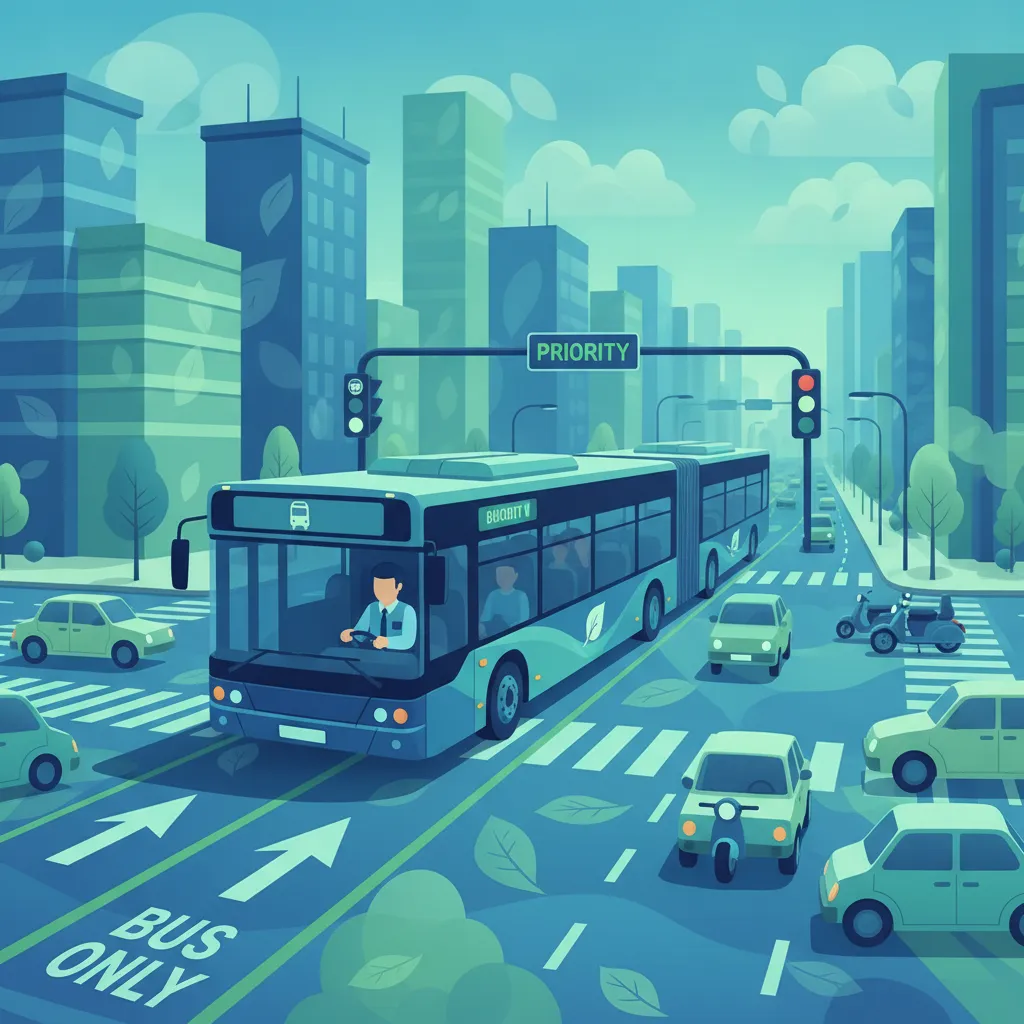
Driving large vehicles through dense city traffic requires outstanding lane discipline, spatial awareness, and consistent patience. This lesson teaches drivers how to utilize public bus corridors, manage tight yellow box intersections, and handle narrow city streets. It focuses on predicting traffic pattern shifts to maintain service timetables while minimizing fuel waste and driver stress.
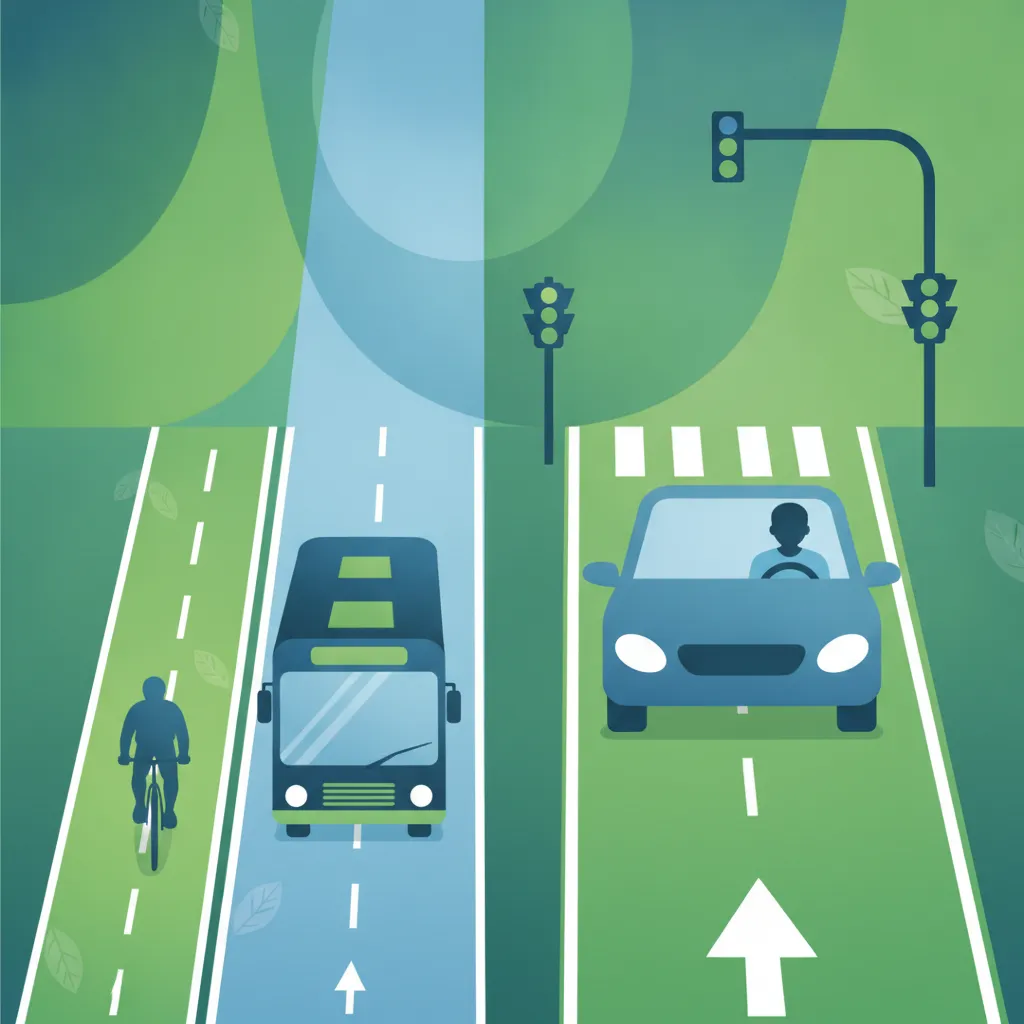
Bus lanes and cycle tracks are designed to encourage public transport and safe active travel in congested urban areas. This lesson explores the differences between with-flow and contra-flow bus lanes, detailing the restricted operating hours during which other vehicles are banned. You will understand when taxi drivers or emergency vehicles can use these lanes, and how to avoid costly traffic violations and safety risks.
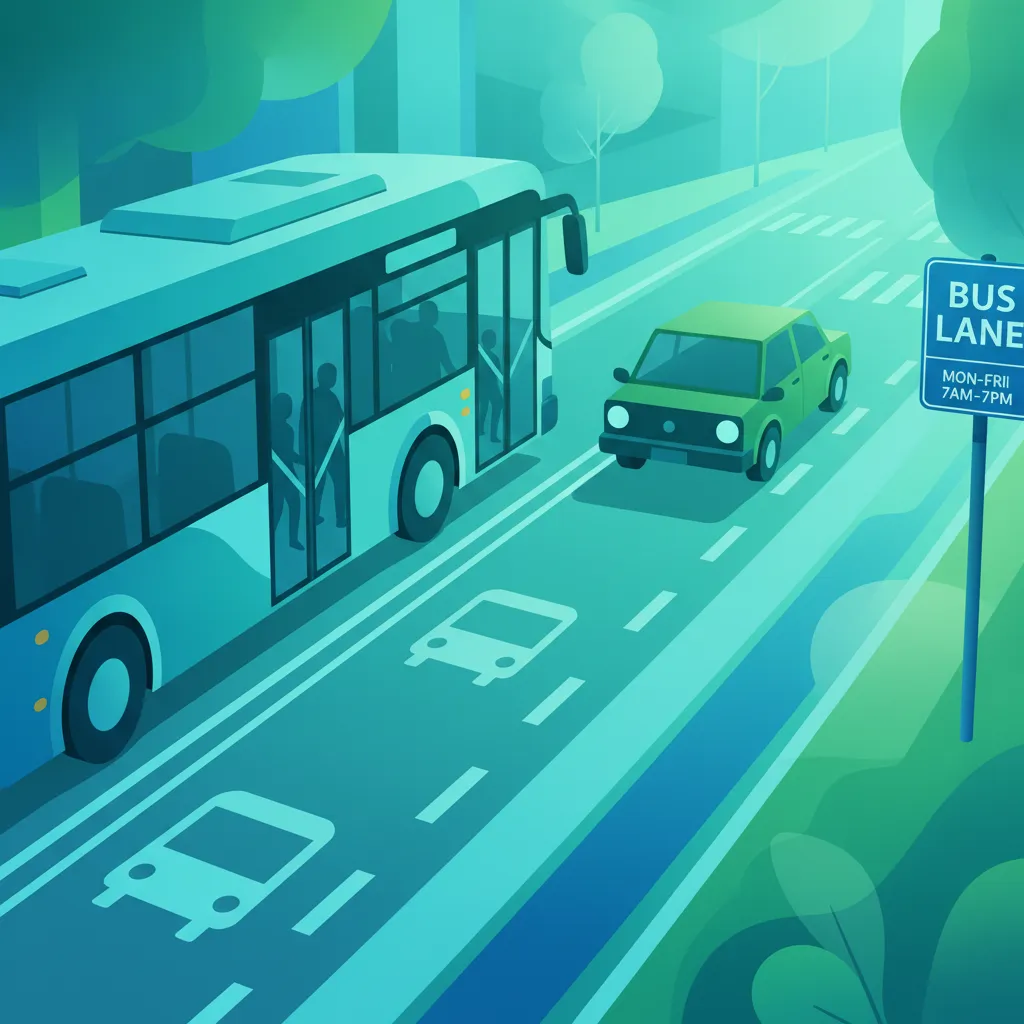
This lesson details the legal operations allowed within Irish bus lanes, including active hours, non-permitted traffic types, and exceptions. Drivers will learn safe approach trajectories for public transport stops, maintaining legal clearance, and navigating curbside hazards safely. The material highlights compliance with local bylaws to guarantee steady, uninterrupted traffic flow and passenger convenience.
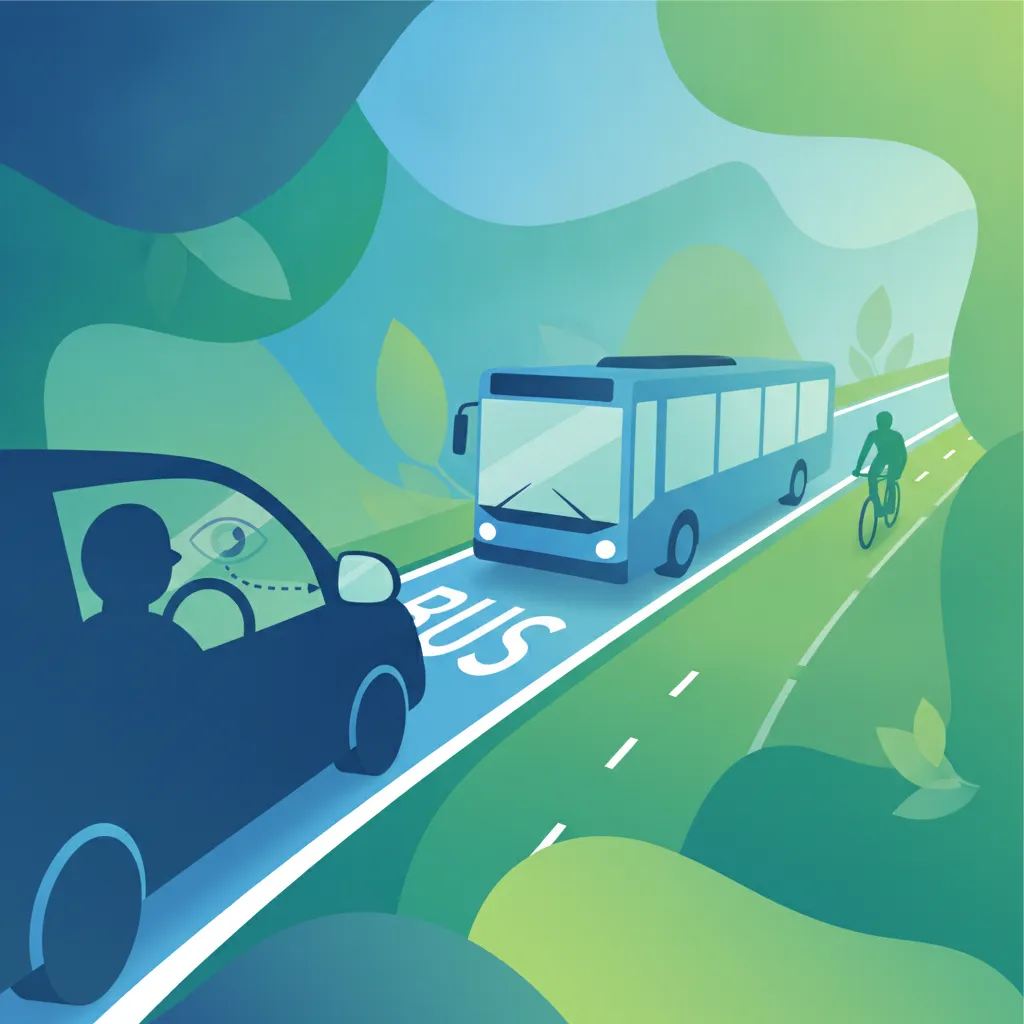
This lesson clarifies the legal regulations surrounding bus lanes and cycle lanes in Ireland, highlighting when motorcycles are permitted to enter them. It outlines how to cross these lanes safely when turning left, and how to scan for cyclists approaching from behind. Riders will learn to respect lane markings, observe signposted operational hours, and avoid blocking designated public transit lanes.
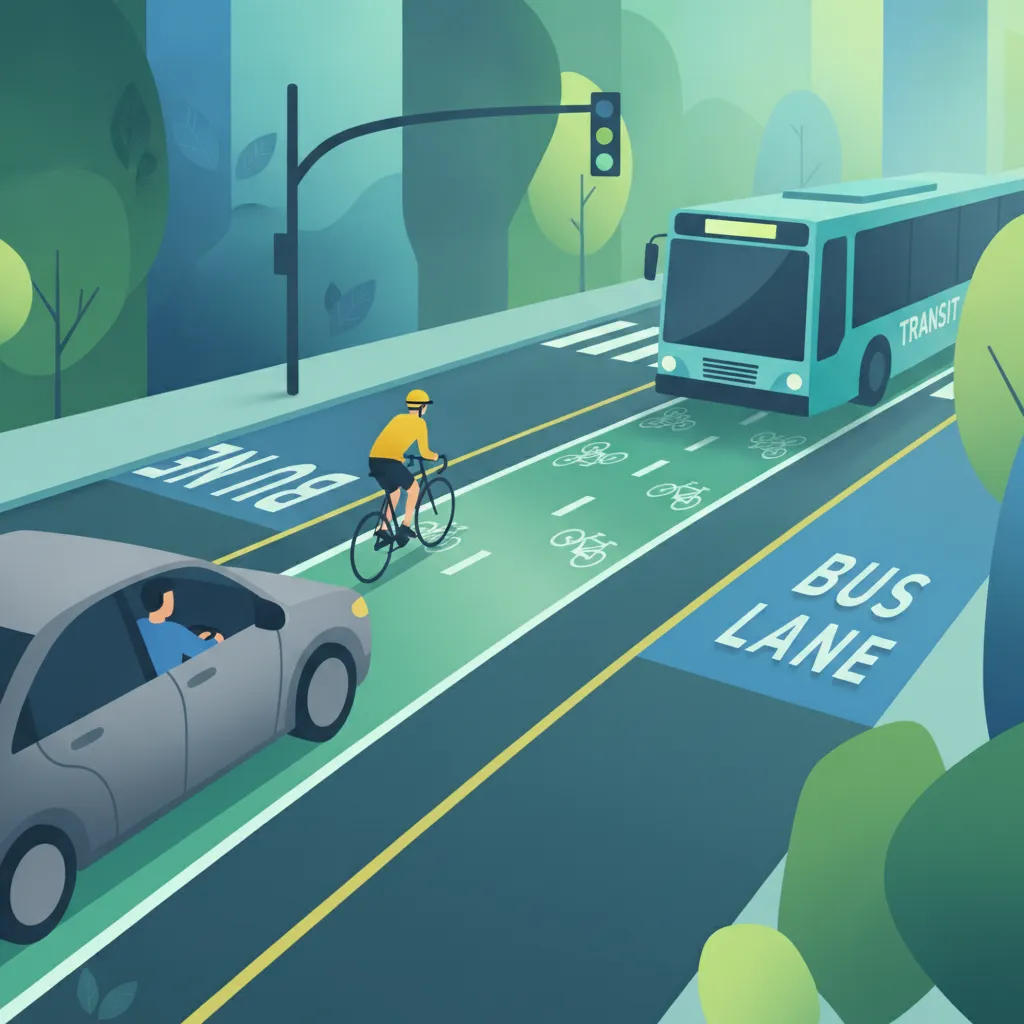
This lesson investigates the specific laws regulating bus and cycle lanes on Irish municipal streets. It clarifies the operational hours of restricted lanes and explains whether Category AM vehicles are allowed access. Understanding these boundaries ensures riders avoid severe penalty fines and share space safely with public transport and cyclists.
Motorway transport requires consistent forward planning, strict speed restriction compliance, and clear mirror checks before exiting lanes. This lesson details the rules of joining and leaving motorways, navigating toll plazas safely, and managing breakdowns on the hard shoulder. Drivers will learn to balance high-speed travel with passenger stability, ensuring a comfortable, secure ride.
Speed management requires adjusting vehicle velocity to suit current weather, passenger load, and the specific limits of Irish roads. This lesson details speed restrictions for buses and minibuses on motorways, national routes, and built-up areas throughout Ireland. It highlights the driver obligation to prioritize passenger safety over schedule delays by maintaining appropriate speeds.

Driving a coach through narrow urban streets or historic Irish town centers demands precise spatial judgment and low speed control. This lesson covers turning radii, rear tail-swing physics, and managing overhangs when navigating around tight, permanent obstacles. Drivers will learn to assess clearance gaps accurately, reducing damage risks to the vehicle exterior and public infrastructure.

Motorcycles and bicycles are often hidden from view in the large blind spots of passenger buses and coaches during turns. This lesson covers safe lateral clearances when overtaking cyclists, recognizing advanced stop lines, and sharing narrow lanes. Drivers will understand how to signal clearly, giving riders enough room to navigate safely near busy public transit corridors.
Understand the legal requirements and safety principles for interacting with pedestrians, cyclists, and motorcyclists. This guide explores the professional driver's duty of care, required clearance distances, and hazard anticipation techniques to prevent collisions with vulnerable road users on Irish public roads.
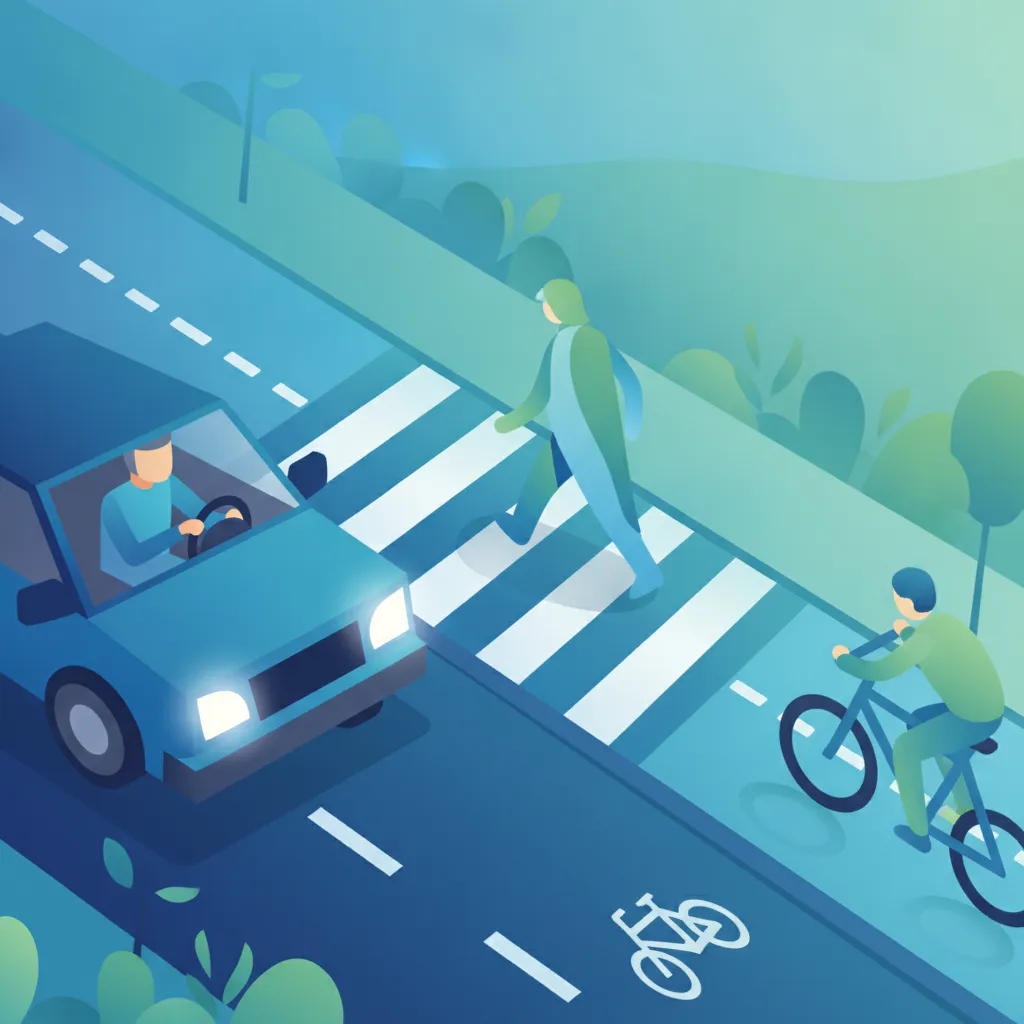
This lesson details how to approach zebra, pelican, and other pedestrian crossings safely, ensuring complete priority is given to walkers. It also covers the safe guidelines for overtaking cyclists and sharing lanes in busy urban centers without causing danger. Respecting these interactions is critical for maintaining overall safety and compliance with Irish road law.
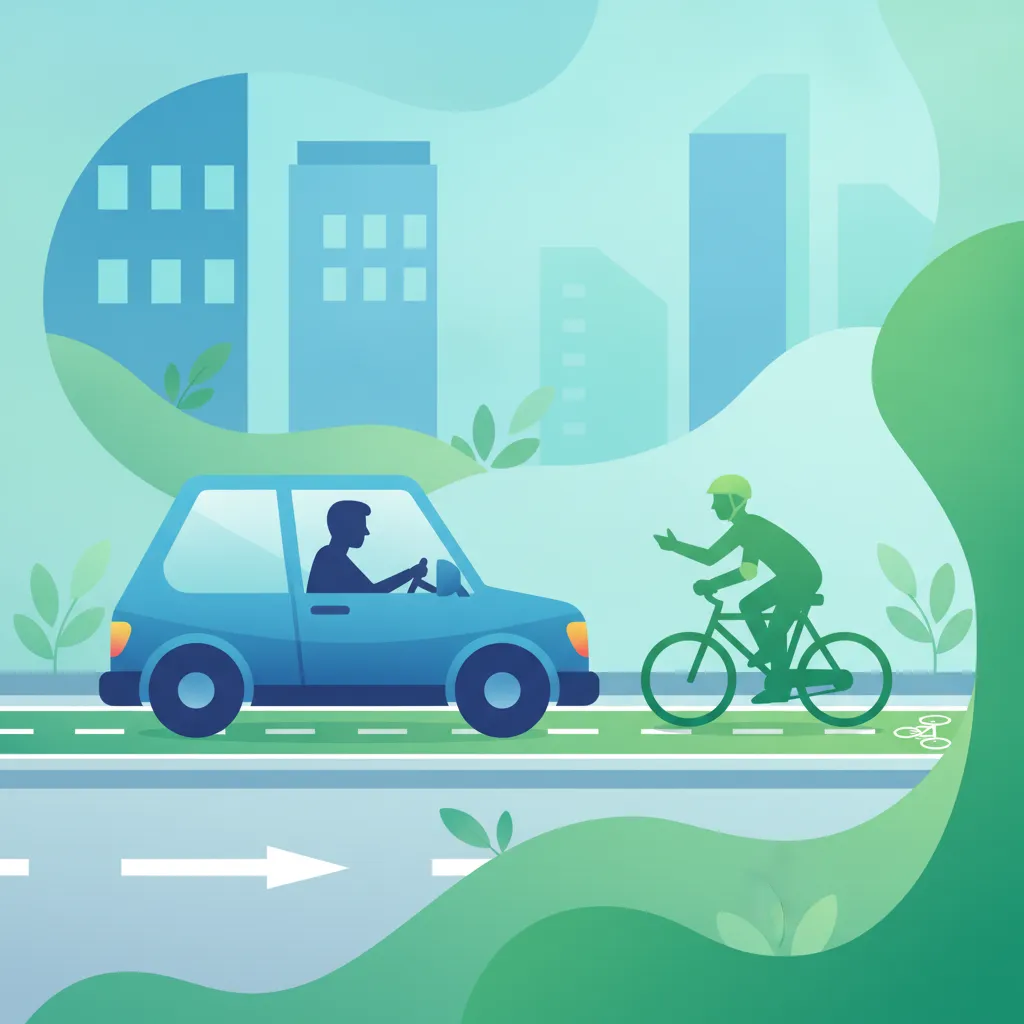
Cyclists share public roads under unique safety constraints, requiring drivers to keep wide clearances and anticipate sudden steering changes. This lesson covers the minimum safe passing distance of 1 to 1.5 metres, rules for driving near cycle tracks, and the danger of the 'dooring' hazard when parking. You will also learn to check your left-side blind spot before turning, preventing dangerous side-swipe collisions.

This lesson covers the rules governing zebra, pelican, and toucan pedestrian crossings, focusing on driver obligations and rider safety. It details how to interact safely with cyclists, personal mobility devices, and pedestrians in busy urban sectors. Motorcyclists will learn to scan pavement edges, yield right-of-way, and maintain safe overtaking distances when passing slower road users.
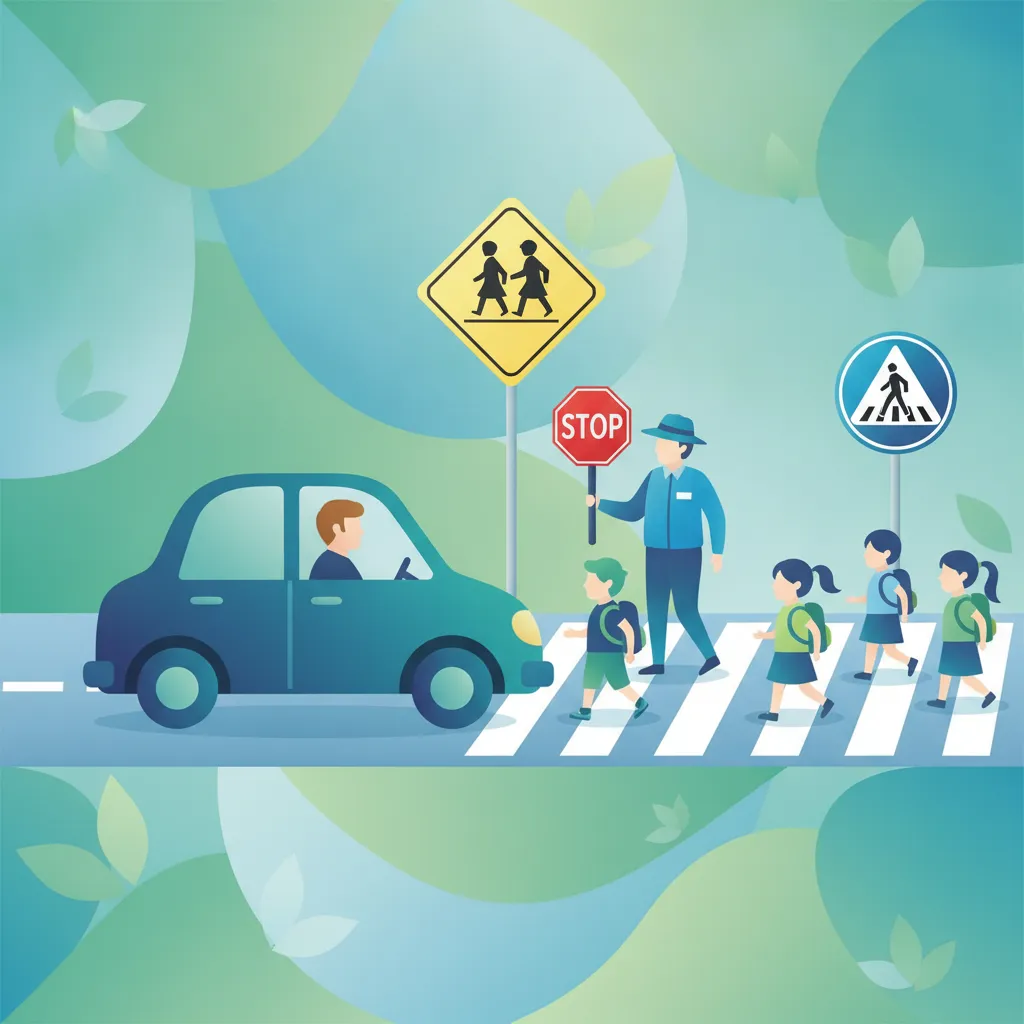
School zones and pedestrian crossings require high driver alertness and strict compliance with local speed limits in Ireland. This lesson details the legal rules of zebra and pelican crossings, explaining driver requirements when amber warning beacons are flashing. Drivers will study safety procedures for dropping off or picking up children, preventing common blind-spot accidents near schools.
Pedestrians are the most common vulnerable road users, and drivers must maintain constant vigilance to protect them. This lesson covers pedestrian priority, especially when you are turning into side roads or navigating busy urban centres. You will learn why you must yield to pedestrians already crossing, how to scan blind spots for hidden walkers, and the safety dangers of blocking footpaths or pedestrian zones with your car.

This lesson focuses on managing the interactions between commercial goods vehicles and non-motorized or lightweight commuters. It outlines defensive driving techniques to utilize when overtaking cyclists, navigating pedestrian crossings, or negotiating shared junctions in Irish cities. Drivers will examine common cyclist behaviors at roundabouts and understand how to maintain massive safety margins to protect lives.
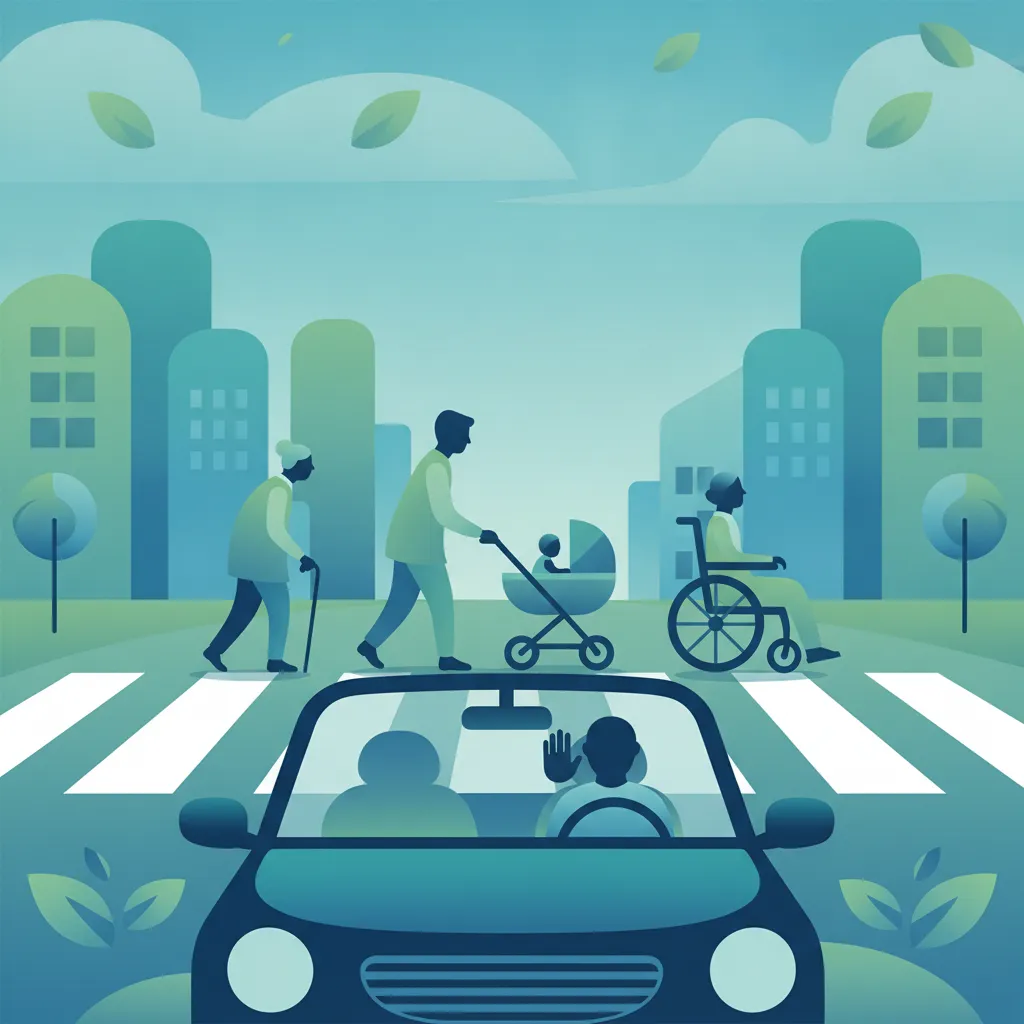
Children, the elderly, and disabled individuals often require extra time and understanding when navigating road networks. This lesson outlines special safety hazards, such as children unexpectedly running into school zones, or senior citizens needing longer times to cross wide junctions. You will learn how to recognise visually impaired pedestrians by their white canes or guide dogs, and the absolute requirement to drive slowly and patiently.
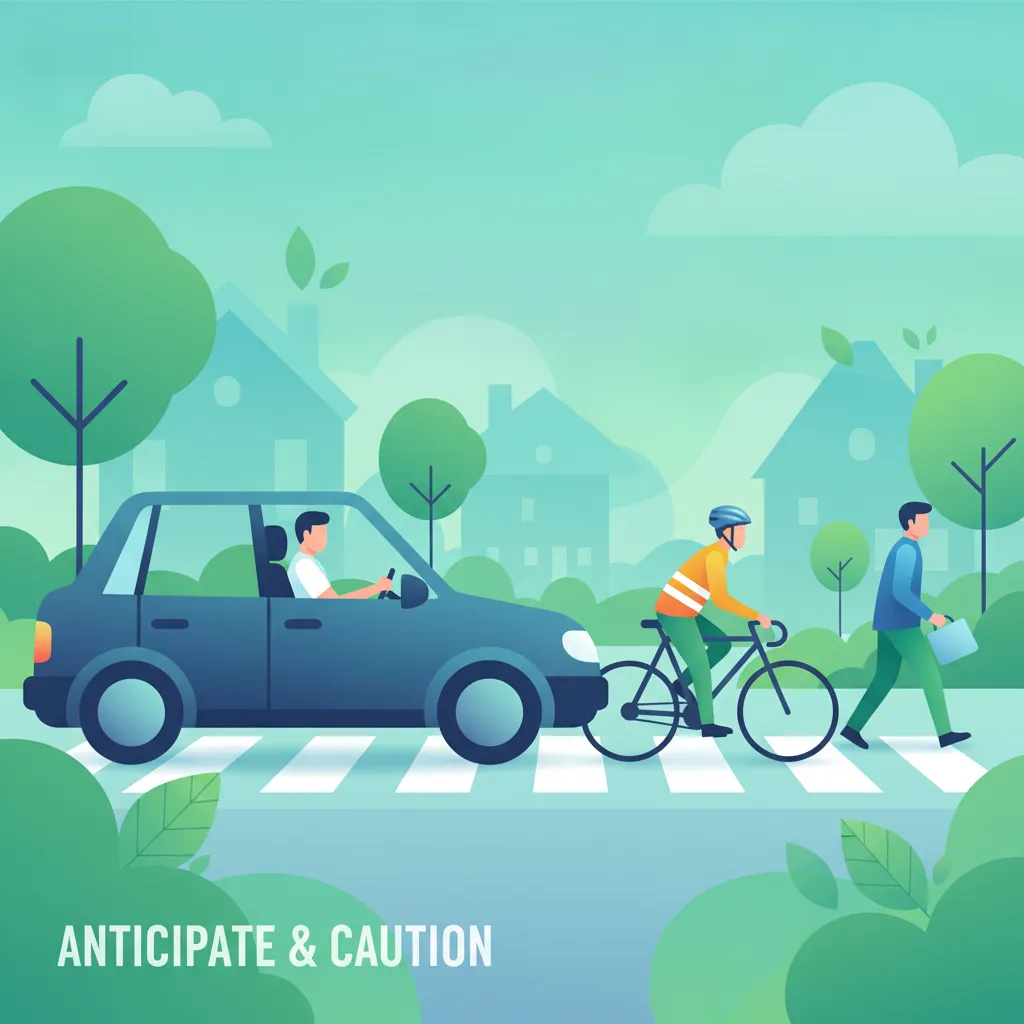
Safeguarding vulnerable road users requires more than simple obedience to traffic signs; it demands a defensive driving mindset. This lesson summarizes safe practices, including scanning far ahead in urban areas, keeping massive safety margins in wet weather, and executing thorough blind spot checks before reversing. By anticipating the unpredictable movements of others, you can prevent accidents and support a safe road culture.
Motorcycles and bicycles are often hidden from view in the large blind spots of passenger buses and coaches during turns. This lesson covers safe lateral clearances when overtaking cyclists, recognizing advanced stop lines, and sharing narrow lanes. Drivers will understand how to signal clearly, giving riders enough room to navigate safely near busy public transit corridors.

Specific road markings are used to create safety zones for pedestrians and cyclists, requiring extra care from motorists. This lesson explains the markings of zebra, pelican, and toucan crossings, with emphasis on the white zigzag lines that prohibit overtaking and parking. You will also learn about cycle lanes, mandatory versus non-mandatory cycle track markings, and the safety benefits of advanced stop lines at traffic lights.
Find clear answers to common questions learners have about Interaction with Pedestrians and Cyclists at Stops. Learn how the lesson is structured, which driving theory objectives it supports, and how it fits into the overall learning path of units and curriculum progression in Ireland. These explanations help you understand key concepts, lesson flow, and exam focused study goals.
You must always yield to pedestrians using a marked crossing near a stop. Even outside of designated crossings, you have a duty of care to anticipate pedestrians moving near your vehicle and should adjust your speed and position to ensure their safety.
You must perform a thorough observation of your nearside mirrors and ensure your blind spot is clear before indicating and turning. Never pull across a cycle lane until you are certain that no cyclists are approaching or alongside your vehicle.
While other road users should facilitate a bus pulling out if it is safe to do so, as a bus driver, you do not have an automatic right-of-way. You must signal clearly and ensure the road is clear of cyclists and pedestrians before moving back into the flow of traffic.
The biggest risk is failing to see a cyclist passing on your nearside or a pedestrian stepping into the road directly in front of or behind the bus. Constant scanning and shoulder checks are essential to mitigate these risks.
Use the practice question search tool to pinpoint specific topics, road signs, or rules you need to master for your official Driver Theory Test. Refine your study strategy and ensure comprehensive preparation for all aspects of the Irish driving exam. Start your focused revision now and build confidence for your learner permit test.