
This unit equips professional bus and coach drivers with the critical skills required to navigate Ireland's diverse road network under challenging conditions. You will explore advanced techniques for motorway and rural driving, while learning how to adapt your vehicle control for rain, wind, and low-visibility weather. These lessons are vital for passing your Category D theory test and ensuring passenger safety during long-distance operations.
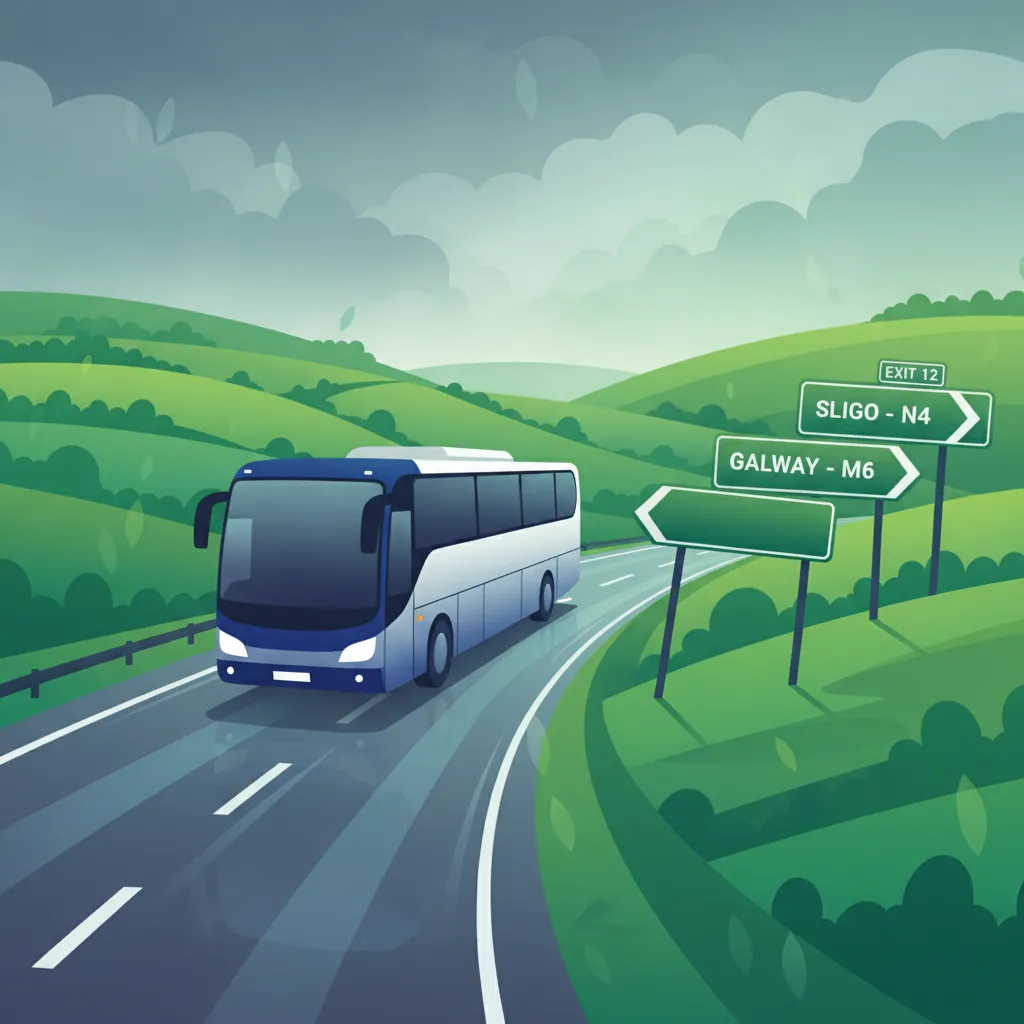
Browse all lessons that make up Weather, Motorways, Rural Routes, Terminals and Long-Distance Service. Each lesson focuses on specific topics, learning objectives, and core concepts, helping you build essential knowledge and follow a clear, structured progression toward your study goals in Ireland.
Wet roads, heavy winter fog, and strong lateral winds present major safety challenges for high-sided passenger vehicles in Ireland. This lesson explains how to prevent aquaplaning, double following distances on wet surfaces, and use fog lights correctly to maintain visibility. Drivers will learn handling adjustments to counteract sudden wind gusts when crossing exposed bridges or motorways.
Motorway transport requires consistent forward planning, strict speed restriction compliance, and clear mirror checks before exiting lanes. This lesson details the rules of joining and leaving motorways, navigating toll plazas safely, and managing breakdowns on the hard shoulder. Drivers will learn to balance high-speed travel with passenger stability, ensuring a comfortable, secure ride.
Irish rural routes are often narrow, lacking central markings, and bordered by tall hedges that restrict forward visibility on sharp bends. This lesson teaches drivers how to negotiate blind curves, anticipate slow-moving agricultural machinery, and respond to wandering farm animals. Drivers will learn to regulate vehicle speed proactively, maintaining a safe stopping margin in rural areas.
Operating long-distance intercity services requires meticulous journey planning to satisfy passenger comfort and comply with driver rest regulations. This lesson covers schedule coordination, planning convenient rest stop locations, and managing driver alertness over extended periods. Drivers will learn to perform intermediate safety checks on passenger comfort systems during journey breaks.
Entering busy coach terminals and motorway service stations requires slow speeds and close monitoring of passenger walking paths. This lesson addresses safe parking bay entry, utilizing public facilities during breaks, and coordinating with terminal dispatchers. Drivers will learn safety rules for securing the vehicle, ensuring passenger boarding areas remain free of physical hazards.
Explore high-intent keywords and long-tail search topics learners use when researching Weather, Motorways, Rural Routes, Terminals and Long-Distance Service. These terms reflect how people search for reliable study materials, structured explanations, and unit-level theory preparation support in Ireland.
Find clear answers to the most common questions learners ask about Weather, Motorways, Rural Routes, Terminals and Long-Distance Service. Understand how the unit is organized, what learning goals it supports, and how it contributes to your study progression with structured explanations and practical guidance tailored for learners in Ireland.
When driving a high-sided vehicle like a bus, high winds can significantly affect your stability. You should reduce your speed, maintain a firm grip on the steering wheel, and be prepared for sudden gusts, especially when emerging from shielded areas like tunnels or behind large buildings.
In adverse weather such as rain, ice, or fog, your total stopping distance increases significantly. You must extend your following distance well beyond the normal limit to allow for the reduced friction and limited visibility, ensuring you have enough time to react to hazards safely.
Yes, passenger vehicles must adhere to specific lane disciplines and speed restrictions on Irish motorways. You must remain in the left-hand lane unless overtaking, and always be mindful of your vehicle's height and weight limitations when navigating service area entrances and exits.
Effective journey planning ensures that you adhere to strict legal requirements regarding driver rest periods and passenger welfare. Proper planning also allows you to anticipate road conditions and service stop accessibility, which is vital for maintaining schedules while ensuring safety.
All included lessons
Lessons in Weather, Motorways, Rural Routes, Terminals and Long-Distance Service
See who benefits most from studying Weather, Motorways, Rural Routes, Terminals and Long-Distance Service. This overview explains how the unit supports different learning needs, what level of knowledge is helpful before starting, and how it fits into the overall study path in Ireland.
This unit is designed for learners preparing for the Category D or D1 passenger vehicle theory test. It is also highly beneficial for existing professional drivers looking to refresh their knowledge of national safety standards and motorway procedures in Ireland.

Begin your Irish Driver Theory Test journey today. Explore our guided curriculum, choose a structured course that fits your learning style, and start mastering every official RSA topic and rule of the road. Our approach ensures comprehensive preparation for your learner permit.
Explore Theory Test CoursesExplore all units and lessons included in this driving theory course.
Begin your Irish Driver Theory Test journey today. Explore our guided curriculum, choose a structured course that fits your learning style, and start mastering every official RSA topic and rule of the road. Our approach ensures comprehensive preparation for your learner permit.
Explore Theory Test Courses