
This lesson focuses on the unique challenges of driving large passenger vehicles on rural Irish roads. You will learn to manage restricted visibility, adapt your speed for narrow lanes, and anticipate hazards like slow agricultural machinery and wandering livestock.
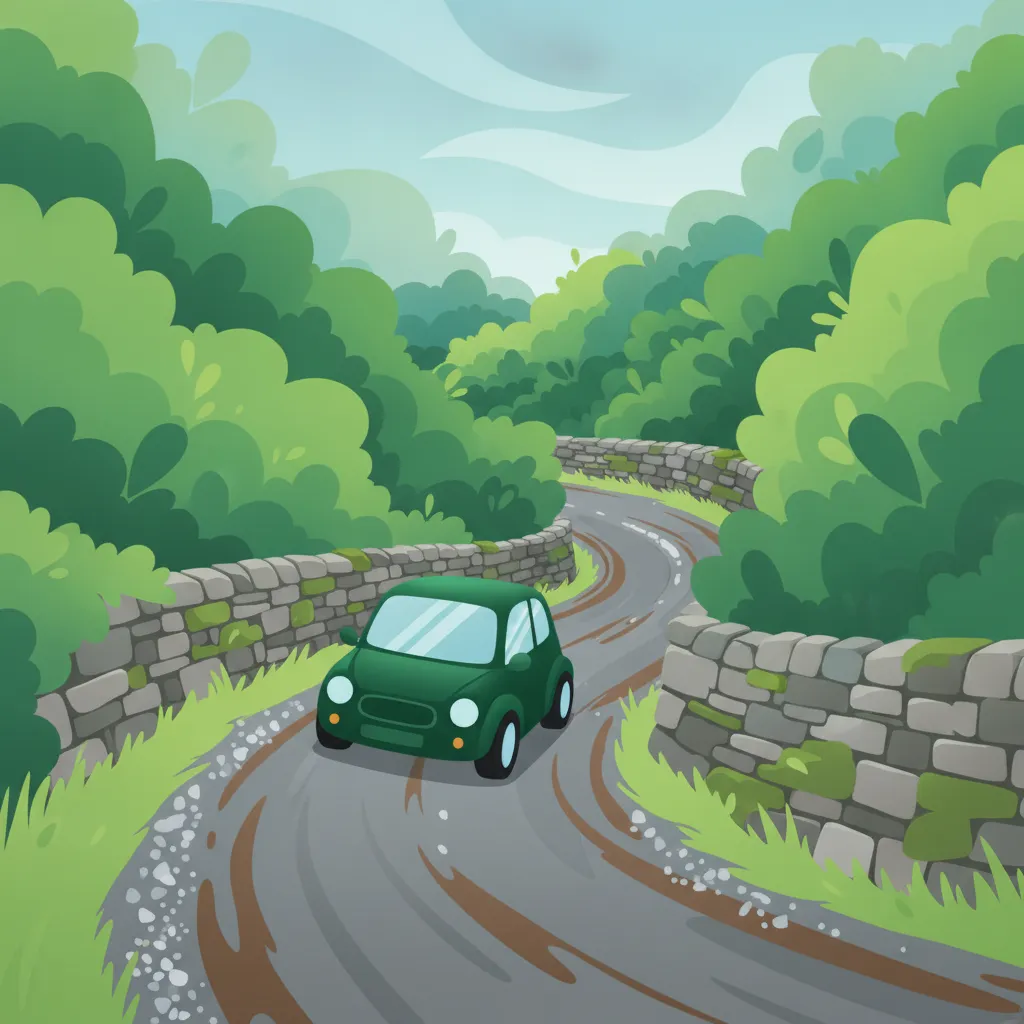
Lesson content overview
For professional passenger vehicle drivers preparing for the Irish Driver Theory Test Category D, mastering the unique challenges of rural routes is a critical safety requirement. Ireland’s rural road network—primarily composed of Regional (R) and Local (L) roads—differs significantly from national roads and motorways.
These routes are frequently narrow, lack central road markings, and are bordered by dense, high hedgerows or dry stone walls. Operating a large, heavy passenger vehicle (such as a coach or a double-decker bus) under these conditions demands exceptional hazard perception, proactive speed management, and a deep understanding of vehicle dynamics. This lesson provides the advanced technical knowledge required to navigate these environments safely while maintaining passenger comfort and vehicle stability.
Irish rural roads are characterized by physical features that present immediate risks to large passenger vehicles. Unlike modern, engineered major roads, rural routes often follow ancient field boundaries, resulting in unpredictable road geometry.
One of the most critical principles of professional driving on rural routes is maintaining a safe stopping margin. The golden rule of road safety states: You must always be able to stop your vehicle safely within the distance you can see to be clear.
A fully laden Category D passenger vehicle can weigh up to 18 to 26 tonnes. The energy required to stop such a massive vehicle increases exponentially with speed. On rural roads, this risk is compounded by variable surface friction (due to mud, damp leaves, loose gravel, or agricultural run-off).
The total distance required to bring a vehicle to a complete standstill, encompassing the driver's reaction time and the physical braking distance of the vehicle on the current road surface.
The Limit is Not a Target: The default national speed limit on non-national rural roads is 80 km/h. However, this is a maximum limit under ideal conditions. Professional drivers must proactively reduce their speed to 50 km/h, 40 km/h, or lower when negotiating narrow lanes, blind curves, or poor road surfaces.
Blind curves are bends where your forward line of sight is obstructed by vegetation, buildings, or topography. Navigating these safely in a large passenger vehicle requires a structured approach to speed, positioning, and gear selection.
To negotiate a blind curve safely, use the official Information - Position - Speed - Gear - Accelerate (IPSGA) system:
Information (Scan & Signal): Scan the road ahead for warning signs, changes in the tree/hedgerow line, or rising dust that indicates oncoming traffic. Check your rear-view mirrors to assess trailing vehicles.
Position: On approach to a sharp bend, adjust your position to maximize your view. For a right-hand bend, position your vehicle towards the left-hand side of your lane (without clipping the verge). For a left-hand bend, keep towards the center of the road (if clear of oncoming traffic) to widen your field of vision around the curve.
Speed: Reduce your speed smoothly using progressive braking before you turn the steering wheel. Never brake heavily while turning, as this can upset the lateral stability of the bus and cause passengers to slide.
Gear: Select the correct gear for your reduced speed before entering the turn. This ensures you have adequate engine braking and direct power response to stabilize the vehicle through the curve.
Accelerate: Gently apply power as you see the road clearing and straightening out, ensuring passenger comfort is maintained.
Large buses have a long wheelbase, meaning the rear wheels do not follow the exact path of the front wheels. When turning, the rear of the bus cuts inward (off-tracking), while the front overhang swings outward.
On narrow rural roads, a driver must account for this by steering slightly wider into the turn to prevent the rear tyres from climbing the soft verge or striking a stone wall, while ensuring they do not swing the front of the bus into oncoming traffic.
Rural Ireland is a working agricultural landscape. Bus drivers must expect to encounter slow-moving agricultural machinery—such as tractors, silage harvesters, slurry tankers, and combine harvesters—at any time of the day, particularly during peak harvesting seasons (spring through autumn).
Overtaking a slow-moving agricultural vehicle in a Category D passenger vehicle requires extreme caution:
Under the Irish Rules of the Road, livestock (such as cattle, sheep, and horses) have a recognized presence on public rural routes. Encounters with animals are highly unpredictable and require immediate, controlled defensive driving actions.
          [ Livestock Detected Ahead ]
                       │
                       ▼
             [ Release Accelerator ]
                       │
                       ▼
            [ Apply Gentle Braking ]
          (Do not brake aggressively)
                       │
                       ▼
         [ Stop and Switch Off Engine ]
    (If animals are blocked or panicking)
                       │
                       ▼
        [ Pass Slowly - Idle Speed Only ]
    (When cleared; do not rev or sound horn)
Understanding the common mistakes made by drivers on rural routes helps professional drivers maintain a high standard of safety and avoid costly regulatory penalties or collisions.
Drivers of large vehicles often overcompensate for oncoming traffic by steering too close to the left boundary. This is a severe error on rural routes.
At night or in low-light conditions, drivers may rely too heavily on high-beam headlights.
Attempting to force a passage between a parked or slow-moving vehicle and a physical boundary is a major cause of minor collisions and vehicle damage on rural routes.
To ensure safety, compliance, and passenger comfort, Category D drivers must integrate these core concepts into their daily operations on Irish rural routes:
| Hazard / Challenge | Core Professional Strategy | Key Safety Rationale |
|---|---|---|
| Blind Curves | Reduce speed before the bend; position to maximize line of sight; use the correct gear to maintain control. | Eliminates the need for emergency braking within the turn, protecting passenger stability. |
| Agricultural Vehicles | Maintain a generous following distance; do not tailgate; overtake only with 100% clear forward visibility. | Farm vehicles have wide turning profiles and may turn unexpectedly into unmarked field entrances. |
| Livestock on Road | Slow down immediately; stop and switch off engine if signaled or if animals are tightly packed; do not sound the horn. | Prevents animal panic, stampedes, and physical damage to the passenger vehicle. |
| Narrow, Unmarked Lanes | Drive at a speed that allows stopping within half the visible distance; avoid soft shoulders and hidden ditches. | Ensures you can stop safely if another large vehicle suddenly appears around a bend. |
| Variable Road Surfaces | Adapt speed to account for mud, wet leaves, and surface water; increase the safe following distance. | Heavy buses require significantly longer stopping distances on compromised rural asphalt. |
To consolidate your understanding of driving Category D passenger vehicles on challenging Irish routes, explore the following resources:
To prepare for the specific questions regarding speed management, road hazards, and vehicle controls on rural roads in the theory exam, access the tailored practice module below:
This lesson covers the unique challenges of driving large Category D passenger vehicles on Irish rural routes, where narrow, unlined roads bordered by hedgerows restrict visibility and require proactive speed management. Drivers must master the IPSGA system for approaching blind curves, account for off-tracking when turning, and maintain safe stopping distances that account for the weight and braking dynamics of a bus. The lesson also details specific procedures for encountering agricultural machinery and livestock, emphasising gentle braking, engine shutdown if animals panic, and never sounding the horn. Common mistakes include driving too close to the soft left-hand verge, braking mid-turn, and attempting risky overtakes on bends or narrow sections.
A short set of high-value points that capture the most important learning from this lesson.
Always maintain a safe stopping margin: you must be able to stop within the distance you can see to be clear, and on single-track roads, within half that distance.
Use the IPSGA system (Information, Position, Speed, Gear, Accelerate) as your systematic approach to negotiating blind curves and hazards.
Large buses off-track during turns—the rear wheels cut inside the front wheels—so steer slightly wider to prevent the rear tyres from climbing the verge.
When encountering livestock, reduce speed gently, stop and switch off the engine if animals are panicking, and never sound the horn or rev the engine.
Overtake slow agricultural vehicles only when you have 100% clear visibility and never near bends, junctions, hills, or narrow bridges.
Explore all units and lessons included in this driving theory course.
On Irish rural roads, drive at a speed that allows you to stop safely—80 km/h is a maximum limit, not a target, and professional drivers should reduce to 50 km/h or lower on narrow lanes.
The left-hand boundary of rural roads often conceals deep ditches and sharp stone walls; maintain a buffer zone and never steer too close to the verge.
Agricultural machinery may have obscured lights, turn unexpectedly wide in the opposite direction before entering a field gate, and deposit mud that dramatically reduces road grip.
IPSGA is the structured hazard-approach system: scan for information, position to maximise view, reduce speed before the wheel turns, select the correct gear, then accelerate smoothly out.
On rural routes, variable surfaces—mud, wet leaves, loose gravel—can double or triple braking distance for a fully laden Category D vehicle.
Steering too close to the left boundary to avoid oncoming traffic, risking tyre damage or sliding into hidden ditches or walls.
Braking heavily while turning, which destabilises a high-sided bus and causes passengers to slide, especially on wet rural surfaces.
Attempting to squeeze past wide vehicles on narrow roads without accounting for high mirrors swinging outward.
Using high-beam headlights in foggy or misty rural conditions, causing backscatter that reduces your own visibility and blinds oncoming drivers around bends.
Tailgating slow agricultural machinery, which limits your forward view and prevents the tractor driver from seeing you in their mirrors.
Lesson content overview
A short set of high-value points that capture the most important learning from this lesson.
Always maintain a safe stopping margin: you must be able to stop within the distance you can see to be clear, and on single-track roads, within half that distance.
Use the IPSGA system (Information, Position, Speed, Gear, Accelerate) as your systematic approach to negotiating blind curves and hazards.
Large buses off-track during turns—the rear wheels cut inside the front wheels—so steer slightly wider to prevent the rear tyres from climbing the verge.
When encountering livestock, reduce speed gently, stop and switch off the engine if animals are panicking, and never sound the horn or rev the engine.
Overtake slow agricultural vehicles only when you have 100% clear visibility and never near bends, junctions, hills, or narrow bridges.
Explore all units and lessons included in this driving theory course.
On Irish rural roads, drive at a speed that allows you to stop safely—80 km/h is a maximum limit, not a target, and professional drivers should reduce to 50 km/h or lower on narrow lanes.
The left-hand boundary of rural roads often conceals deep ditches and sharp stone walls; maintain a buffer zone and never steer too close to the verge.
Agricultural machinery may have obscured lights, turn unexpectedly wide in the opposite direction before entering a field gate, and deposit mud that dramatically reduces road grip.
IPSGA is the structured hazard-approach system: scan for information, position to maximise view, reduce speed before the wheel turns, select the correct gear, then accelerate smoothly out.
On rural routes, variable surfaces—mud, wet leaves, loose gravel—can double or triple braking distance for a fully laden Category D vehicle.
Steering too close to the left boundary to avoid oncoming traffic, risking tyre damage or sliding into hidden ditches or walls.
Braking heavily while turning, which destabilises a high-sided bus and causes passengers to slide, especially on wet rural surfaces.
Attempting to squeeze past wide vehicles on narrow roads without accounting for high mirrors swinging outward.
Using high-beam headlights in foggy or misty rural conditions, causing backscatter that reduces your own visibility and blinds oncoming drivers around bends.
Tailgating slow agricultural machinery, which limits your forward view and prevents the tractor driver from seeing you in their mirrors.
Explore search topics learners often look for when studying Rural Route Challenges and Road Conditions. These topics reflect common questions about road rules, driving situations, safety guidance, and lesson level theory preparation for learners in Ireland.
Browse additional driving theory lessons that cover connected traffic rules, road signs, and common driving situations related to this topic. Improve your understanding of how different rules interact across everyday traffic scenarios.
Learn systematic methods for identifying potential risks on Irish roads. This guide covers defensive driving techniques and how to proactively monitor for vulnerable road users, agricultural vehicles, and emerging obstacles to improve safety and maintain control during your daily driving route.
Proactive hazard perception involves constantly scanning the road ahead to identify potential dangers before they turn into actual emergencies. This lesson covers active scanning techniques, helping you look far ahead, check mirrors regularly, and identify subtle risk clues such as exhaust smoke from parked cars or children playing near kerbs. Anticipating these developments gives you the time to adjust speed and position safely.
Heavy vehicles require continuous visual scanning to identify small or slow-moving road users who may enter the path of travel. This lesson explores the typical behaviors of young children, elderly pedestrians, and visually impaired road users. Drivers will build strong hazard perception skills to anticipate sudden movements, ensuring they can brake safely and avoid serious accidents.
Safeguarding vulnerable road users requires more than simple obedience to traffic signs; it demands a defensive driving mindset. This lesson summarizes safe practices, including scanning far ahead in urban areas, keeping massive safety margins in wet weather, and executing thorough blind spot checks before reversing. By anticipating the unpredictable movements of others, you can prevent accidents and support a safe road culture.
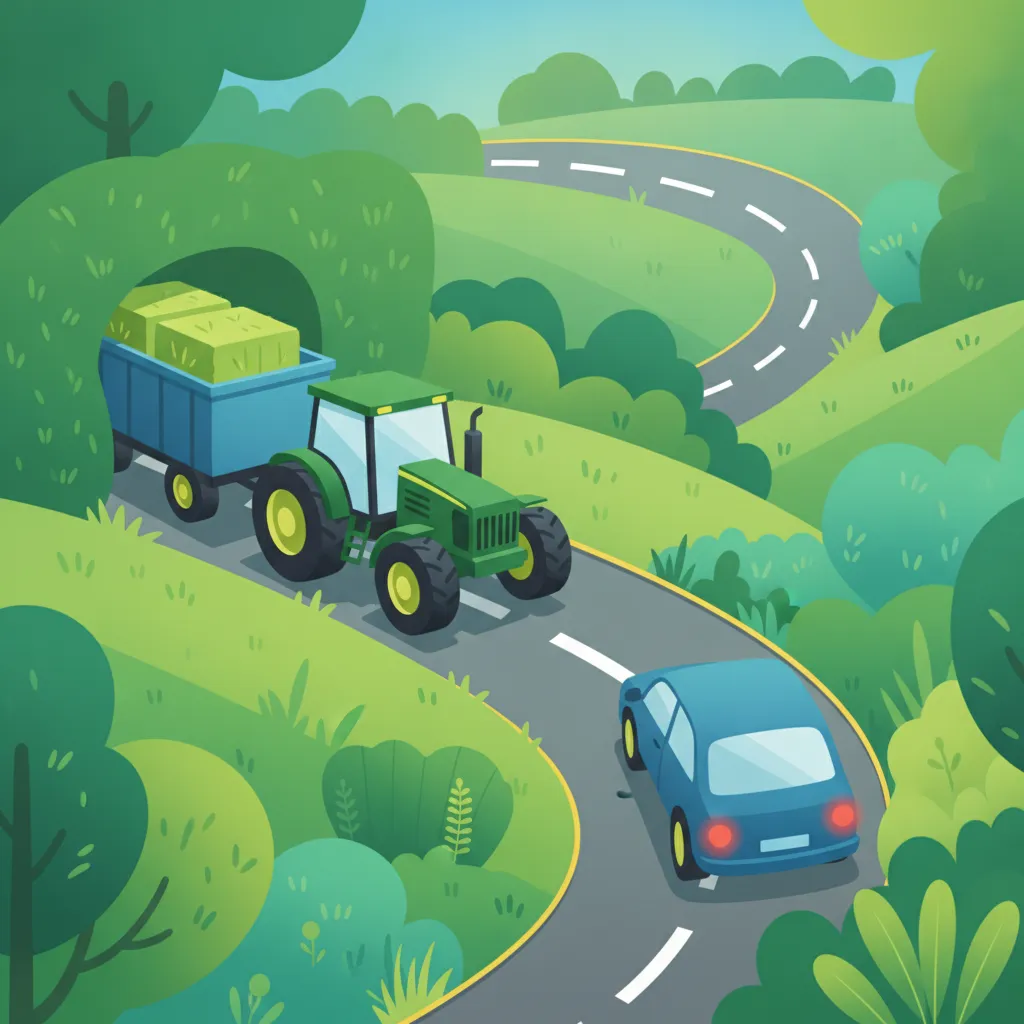
Irish rural roads are often narrow, winding, and bordered by high hedges, presenting unique hazards compared to urban streets. This lesson focuses on scanning for hidden hazards such as slow-moving farm machinery, mud on the road surface, and loose livestock. You will learn how to adjust your speed before entering blind bends, sound your horn at blind crests, and safely share the road with local agricultural traffic.
Defensive driving prepares you to react safely when facing unexpected mechanical failures or immediate road hazards. This lesson explains how to execute an emergency stop using Anti-lock Braking Systems (ABS) and how to recover from front and rear-wheel skids on slippery roads. You will learn the importance of remaining calm, avoiding panic-steering, and applying controlled evasive actions to prevent collisions.

This lesson teaches how to cultivate a proactive defensive riding mindset, focusing on situational awareness and constant hazard scanning. It describes the system of motorcycle control, encouraging riders to anticipate potential mistakes from other drivers, pedestrians, and cyclists. Motorcyclists will learn to position themselves defensively, leaving clear escape routes in all driving environments.
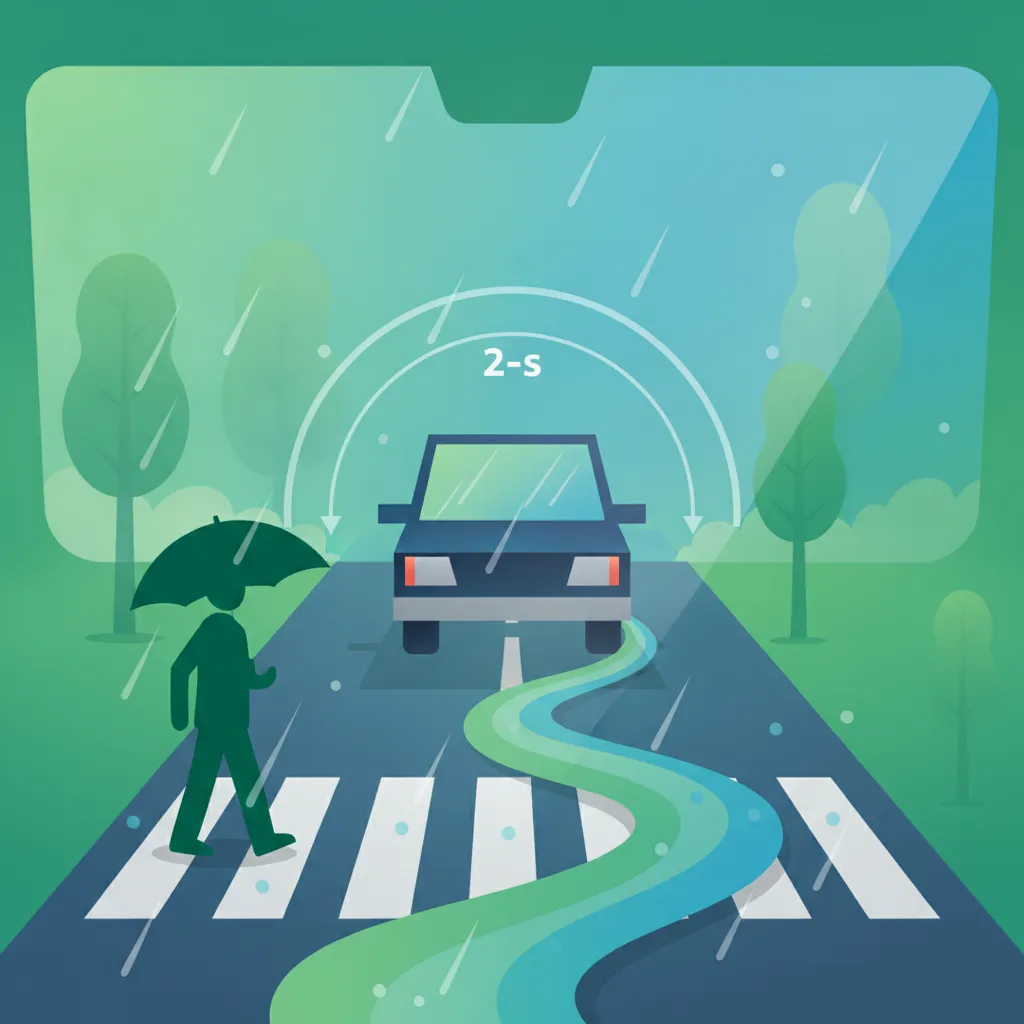
Maintaining an extensive buffer zone ahead of a large passenger vehicle is critical to ensuring enough space for emergency maneuvers. This lesson teaches the time-gap method, detailing how following distances must double on wet roads or increase with full passenger loads. It builds hazard anticipation skills, teaching drivers to read distant traffic cues and react early to hazards.

Children often struggle to judge heavy vehicle speeds accurately, while elderly pedestrians may possess limited mobility or hearing impairments. This lesson addresses these unique risks, explaining how to adjust driving patterns in residential neighborhoods and near shopping districts. Drivers will learn to maintain a high safety margin, ensuring they can yield quickly to vulnerable road users.
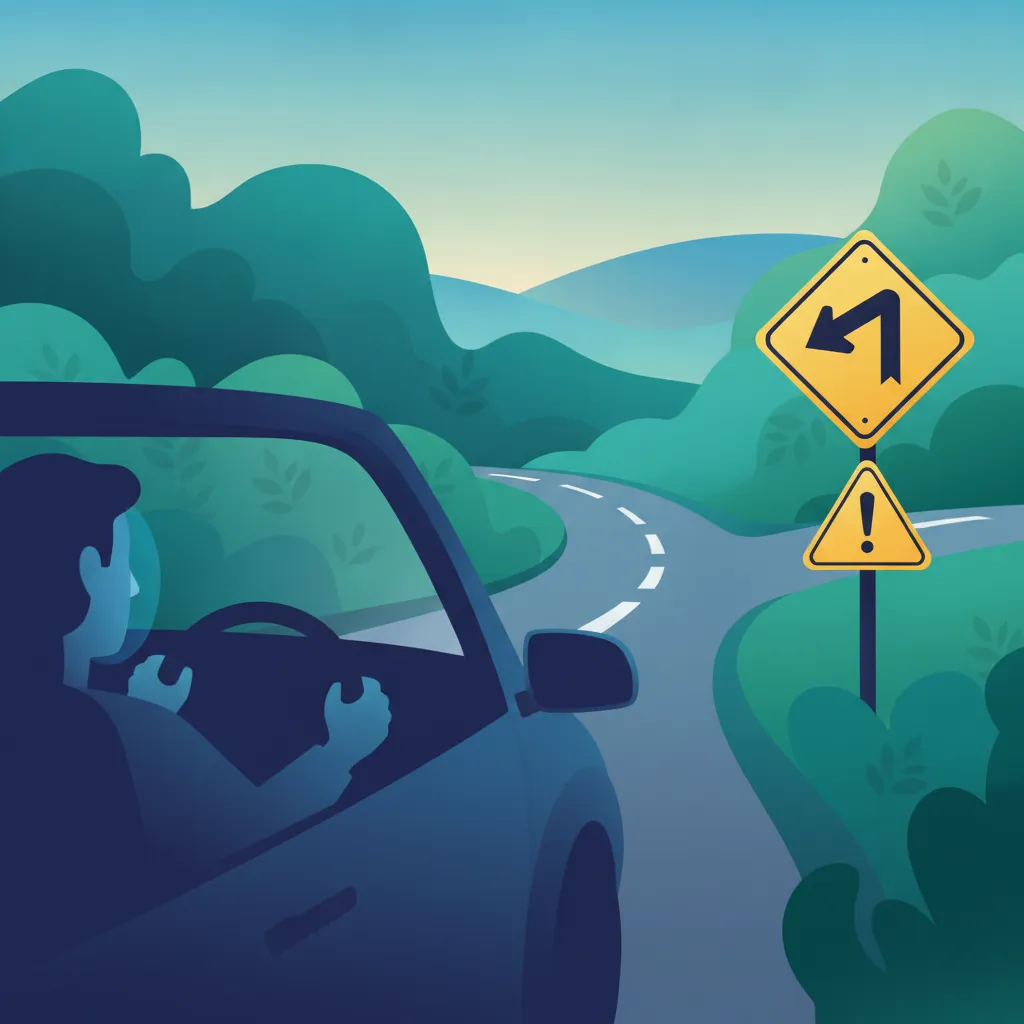
Warning signs in Ireland are typically diamond-shaped with yellow backgrounds and black symbols, indicating potential dangers on the road ahead. This lesson details signs for upcoming sharp bends, narrow roads, steep hills, pedestrian activity, and animal hazards. Learning to spot these warning indicators early allows you to reduce speed safely and adjust your vehicle positioning before encountering the hazard itself.

Driving at night presents severe challenges due to reduced visibility, driver fatigue, and headlight glare from oncoming vehicles. This lesson teaches you how to manage your headlights, use road edge markers to steer through dark curves, and look away from oncoming bright lights. You will learn to drive within the range of your headlights and remain highly alert for pedestrians or cyclists not wearing reflective gear.
Understand the mechanics of driving large passenger vehicles on narrow Irish roads. This lesson explains proper lane positioning, managing vehicle off-tracking on sharp bends, and safe turning techniques to avoid collisions with physical boundaries while maintaining smooth and stable vehicle dynamics.
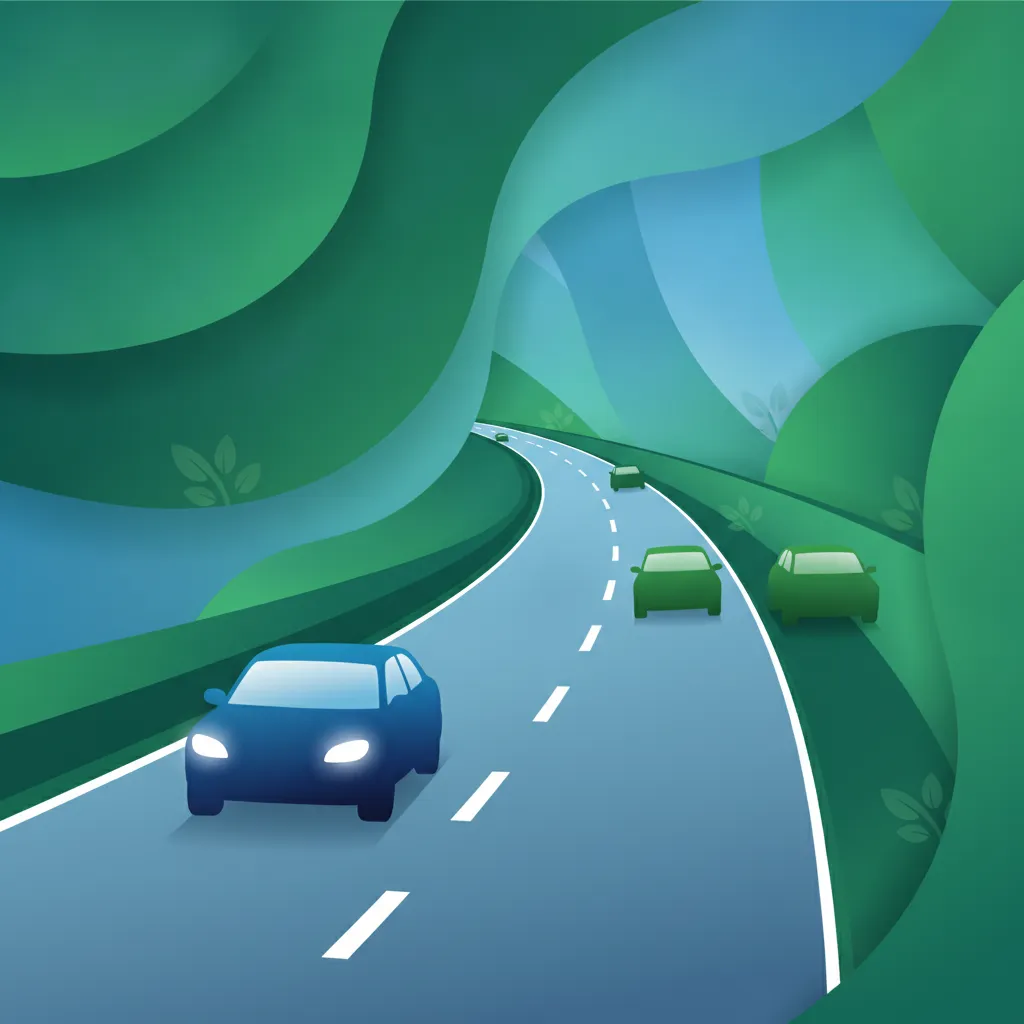
Large passenger vehicles must maintain consistent lane positioning to prevent side-swipe incidents and sustain smooth urban traffic patterns. This lesson covers standard lane selection rules, safe overtaking procedures, and how to use designated public transit corridors correctly. Drivers will learn the importance of checking mirrors continuously and planning lane changes well in advance.

This lesson addresses the mechanical dynamics of turning long-wheelbase and articulated commercial vehicles at intersections, junctions, and roundabouts. It covers the necessity of deep cornering lines, early mirror checks, and correct signaling to warn vulnerable road users of wide turn maneuvers. Drivers will learn how to minimize rear cut-in and ensure the entire vehicle clears urban obstacles safely.

This lesson outlines the legal and safety requirements for maintaining proper lane discipline on multi-lane roads, roundabouts, and motorways in Ireland. It teaches drivers how to account for lane width, manage trailer off-tracking, and position the cab to prevent encroachment on neighboring lanes. Drivers will master safe lane-changing strategies, signaling protocols, and traffic merging techniques.

The length of a commercial passenger vehicle creates a wide rear-wheel track offset, requiring drivers to swing wide during tight turns. This lesson teaches cornering mechanics, mirror adjustment guidelines, and how to check blind spots for cyclists on the inside lane. Drivers will master intersection control, preventing collisions with stationary street furniture or curbs.

Irish driving theory demands that drivers keep to the left-hand side of the road unless overtaking or turning right. This lesson explains how to maintain consistent lane discipline on multi-lane roads, how to perform safe lane changes, and the dangers of drifting. You will learn the safety sequence of checking mirrors, checking blind spots, signalling, and smoothly executing a lane change without disrupting trailing traffic.
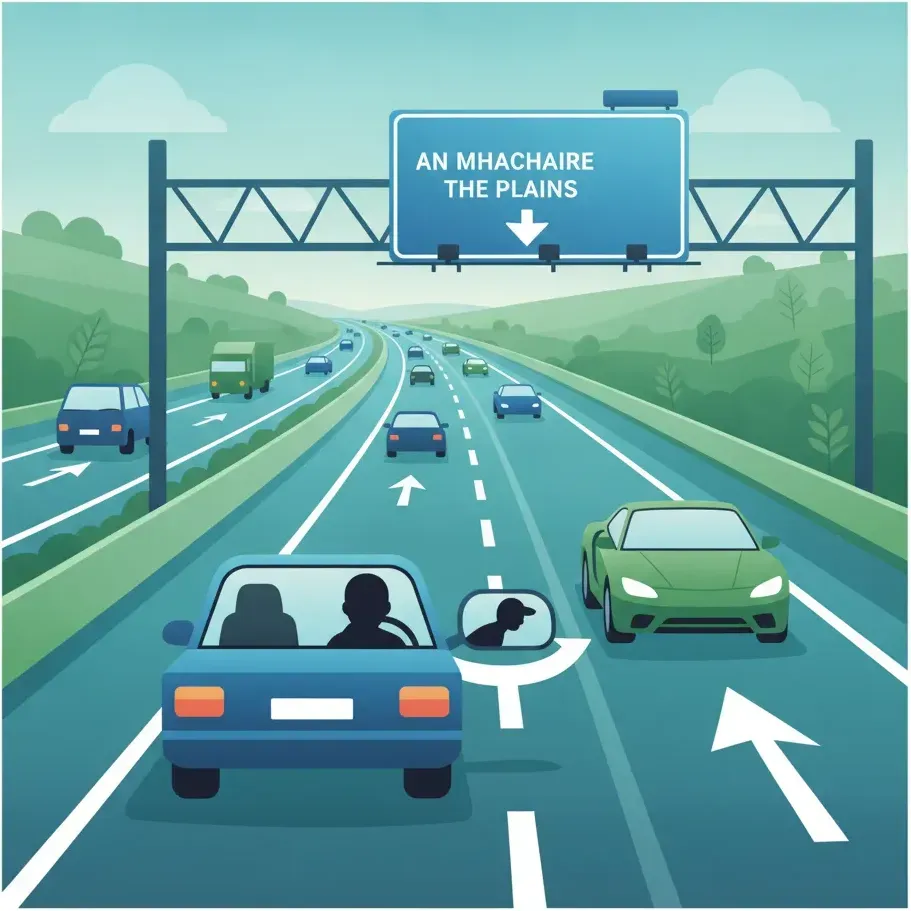
Merging a long, heavy passenger vehicle onto high-speed motorways requires matching the traffic speed within the limited length of slip lanes. This lesson covers signal timing, safe lane-merging gaps, and maintaining control during overtaking maneuvers on national routes. Drivers will learn to prioritize passenger comfort and vehicle stability, preventing sudden weight shifts during lane entries.
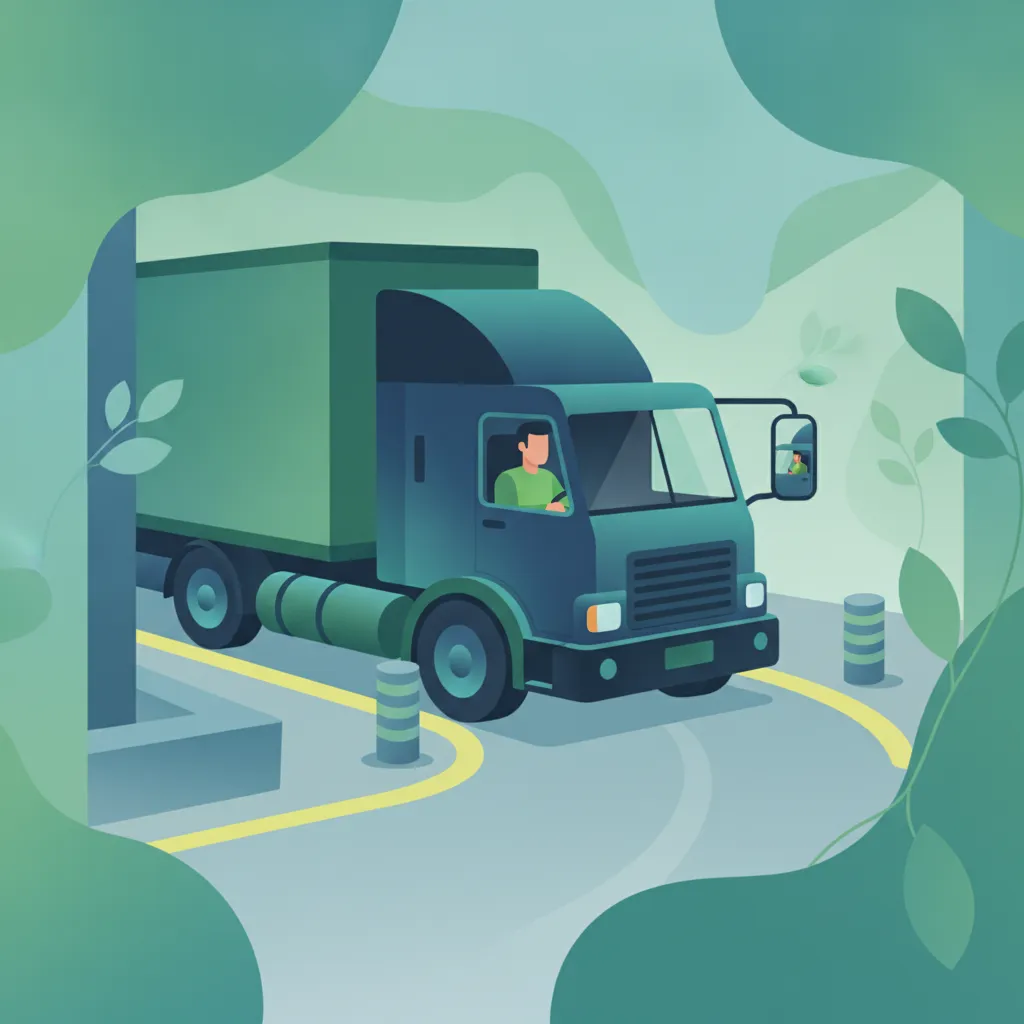
Driving a coach through narrow urban streets or historic Irish town centers demands precise spatial judgment and low speed control. This lesson covers turning radii, rear tail-swing physics, and managing overhangs when navigating around tight, permanent obstacles. Drivers will learn to assess clearance gaps accurately, reducing damage risks to the vehicle exterior and public infrastructure.
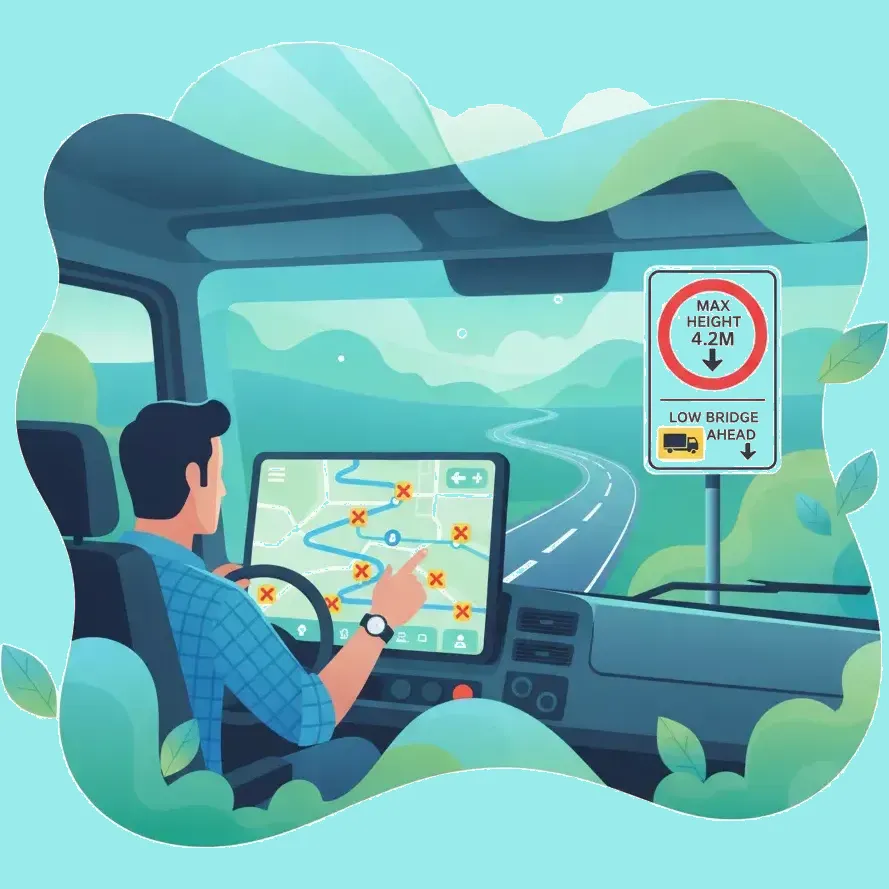
This lesson teaches professional drivers how to systematically map out travel routes that are compatible with heavy vehicle dimensions. It covers the limitations of consumer-grade GPS systems and emphasizes the use of specialized truck navigation systems that account for low bridges and load restrictions. Drivers will also learn to plan for congestion, access timing regulations, and proper entrance paths into commercial zones.
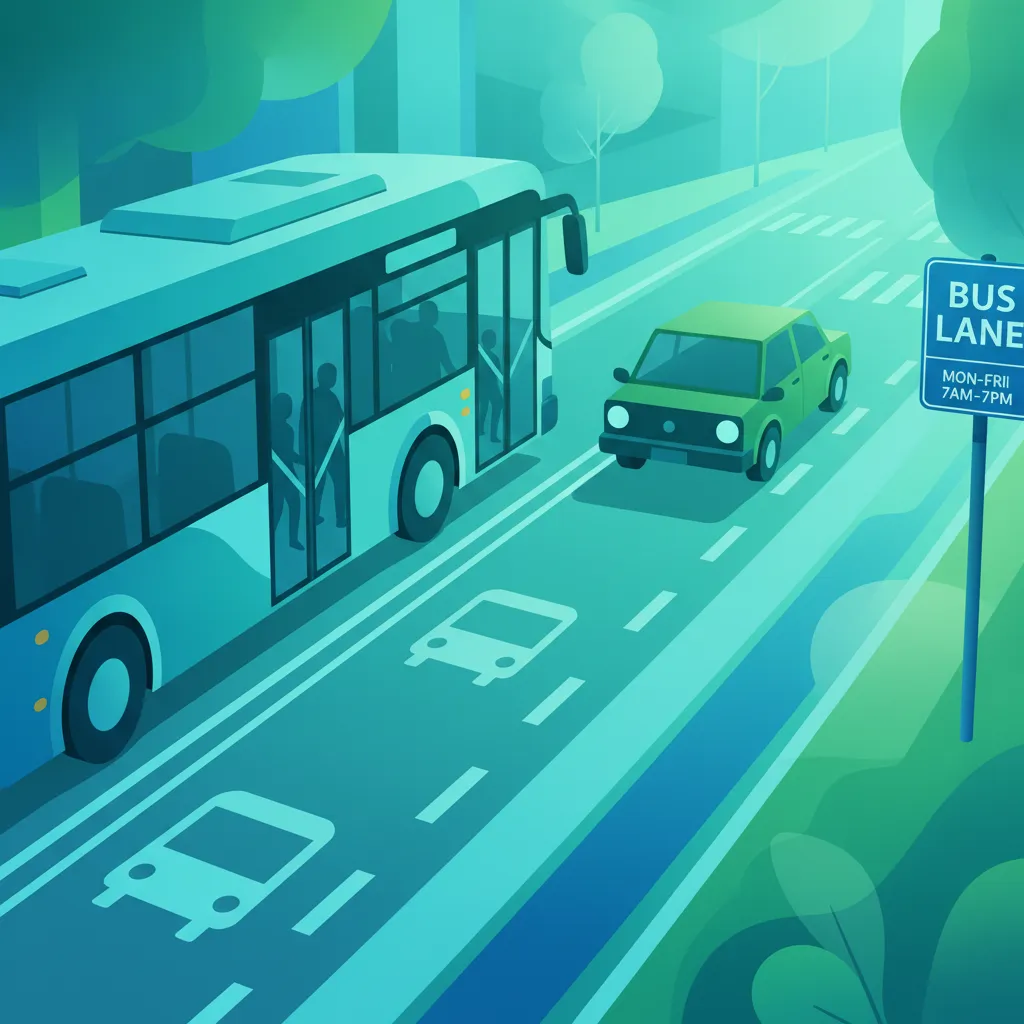
This lesson details the legal operations allowed within Irish bus lanes, including active hours, non-permitted traffic types, and exceptions. Drivers will learn safe approach trajectories for public transport stops, maintaining legal clearance, and navigating curbside hazards safely. The material highlights compliance with local bylaws to guarantee steady, uninterrupted traffic flow and passenger convenience.
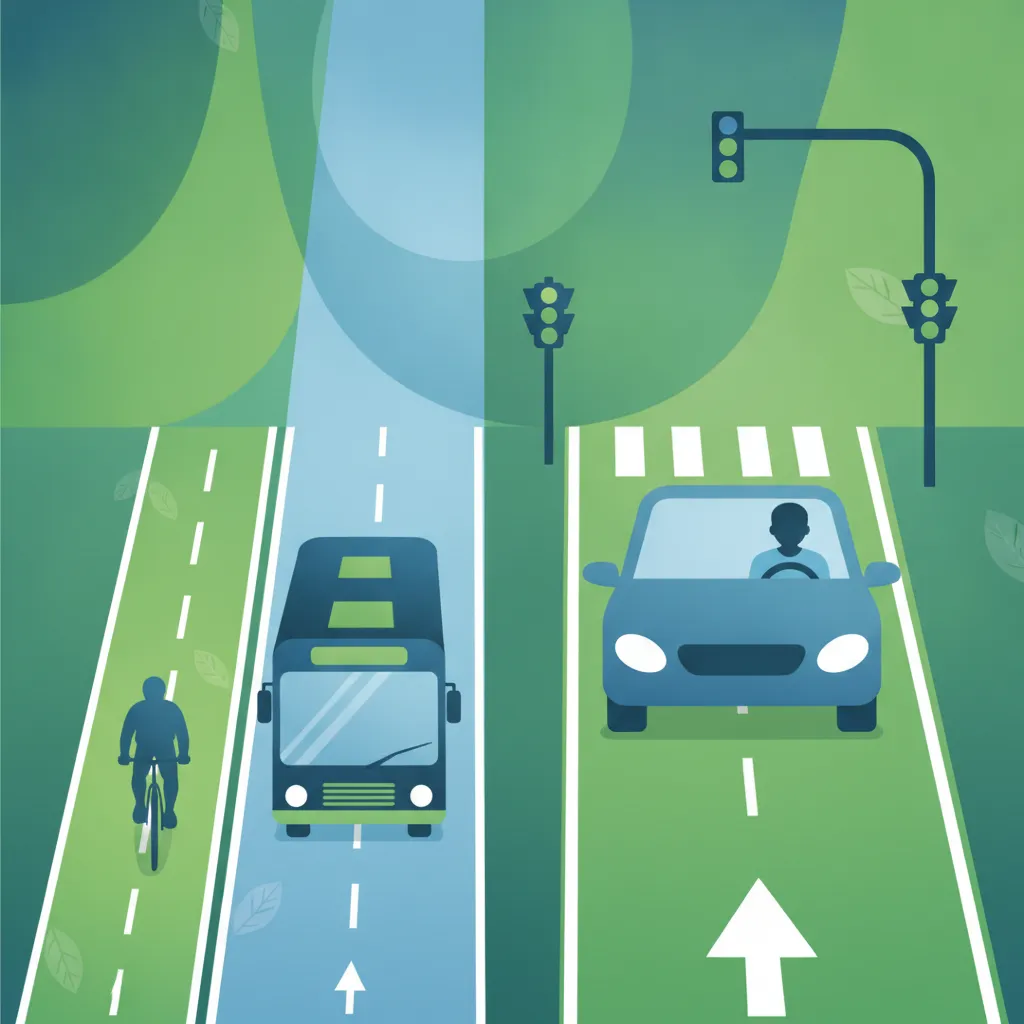
Bus lanes and cycle tracks are designed to encourage public transport and safe active travel in congested urban areas. This lesson explores the differences between with-flow and contra-flow bus lanes, detailing the restricted operating hours during which other vehicles are banned. You will understand when taxi drivers or emergency vehicles can use these lanes, and how to avoid costly traffic violations and safety risks.
Find clear answers to common questions learners have about Rural Route Challenges and Road Conditions. Learn how the lesson is structured, which driving theory objectives it supports, and how it fits into the overall learning path of units and curriculum progression in Ireland. These explanations help you understand key concepts, lesson flow, and exam focused study goals.
You should maintain a position that allows you to see as far ahead as possible while remaining well within your lane. On sharp bends, reduce your speed significantly and be prepared to stop if you encounter an oncoming vehicle, as large passenger vehicles require more width to navigate turns safely.
Be patient and anticipate that tractors and trailers may turn suddenly into hidden field entrances. Never attempt to overtake unless you have a clear, long view of the road ahead, and be aware that large farm machinery often has wide overhangs.
Yes, you must always be prepared to stop for animals. When approaching livestock, reduce your speed, do not sound your horn, and wait for the person in charge of the animals to signal that it is safe to proceed slowly past them.
Rural driving focuses on managing limited visibility, varying road surfaces, and sudden hazards like animals or slow-moving machinery. In contrast, urban driving focuses on heavy traffic, pedestrian crossings, and lane discipline, all of which are tested differently in the Irish theory exam.
Use the practice question search tool to pinpoint specific topics, road signs, or rules you need to master for your official Driver Theory Test. Refine your study strategy and ensure comprehensive preparation for all aspects of the Irish driving exam. Start your focused revision now and build confidence for your learner permit test.