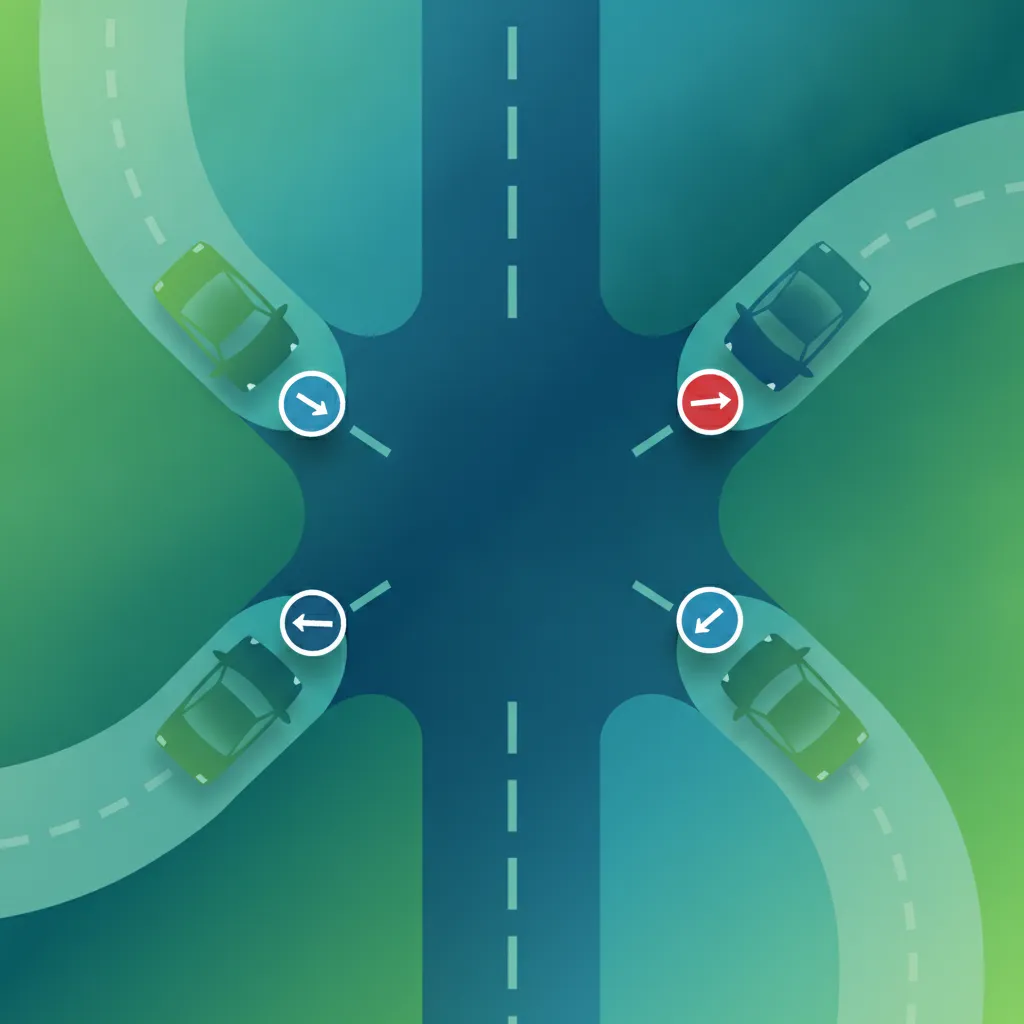
A priority road is designated to have precedence over traffic from connecting roads, ensuring smoother traffic flow. This page explains how to recognise priority roads using specific signs and markings, and the critical rules for yielding or proceeding at junctions. Pay close attention to these rules to avoid common misunderstandings that can lead to collisions or penalty points.
Theory topic content overview
Read the full theory topic guide for Priority Roads Explained with structured, easy-to-scan content built for learners in Ireland. This detailed section explains the exact rule, meaning, traffic context, comparison points, and exam logic behind this Irish driving theory topic so you can study faster, understand the concept more clearly, and avoid common interpretation mistakes on the theory test.
In Irish driving theory, a priority road is a designated route where traffic has precedence over vehicles joining or crossing from connecting roads. Essentially, drivers on a priority road have the right of way at intersections, while drivers on side roads are legally required to yield to them. The primary purpose of priority roads in Ireland is to facilitate smoother, safer traffic flow on main routes by clearly defining who should proceed and who must wait at junctions.
Understanding what constitutes a priority road and how to interact with it is fundamental for safe driving in Ireland and is a frequently tested concept in the official RSA Driver Theory Test.
Identifying a priority road in Ireland relies primarily on specific traffic signs, though the absence of certain signs can also be an indicator.
The most important sign for a driver on a priority road is the:
For drivers approaching a priority road from a side road, the following signs mandate that you must give way:
Additionally, road markings such as a "Give Way" line (two broken white lines across the road) or a "Stop" line (a single solid white line) reinforce the requirement to yield or stop before joining a priority road.
You will also encounter the "End of Priority Road" sign, which is the same yellow diamond with a white border, but with a diagonal black stripe through it, indicating that your priority has ceased and standard junction rules or other signage will now apply.
The concept of priority at Irish junctions dictates the order in which vehicles should proceed.
While signs clearly define priority, a driver's responsibility extends beyond merely obeying the signs. Several factors can influence how you apply priority rules safely:
One of the most critical lessons for learners and a common trap in the Irish Driver Theory Test is the misconception that priority is an absolute right. The RSA (Road Safety Authority) strongly emphasises that "you should never assume that you have priority."
This distinction is vital for passing the Driver Theory Test and for safe driving throughout Ireland.
Let's look at how priority rules play out in common Irish driving situations:
Learners taking the Irish Driver Theory Test and new drivers often make specific errors related to priority roads:
Mastering priority road rules in Ireland boils down to a blend of legal knowledge and defensive driving. Always:
Start with a short, direct summary of Priority Roads Explained before reading the full explanation below.
In Ireland, a priority road is any road where drivers have precedence over vehicles joining or crossing from side roads. These roads are often marked by specific signs, such as the yellow diamond 'Priority Road' sign, or by the absence of 'Give Way' or 'Stop' signs for traffic on the main road. Drivers on a priority road must still remain vigilant, but other road users must yield to them at unmarked junctions or where indicated by signage to ensure safety and maintain traffic flow.
Review the most important terms, rule signals, and traffic concepts linked to Priority Roads Explained.
Explore related theory topic pages connected to Priority Roads Explained and continue with the next useful rule explanation.
See the common search queries learners use when trying to understand Priority Roads Explained in Ireland.

After reviewing core Irish driving theory topics, test your understanding with comprehensive practice questions. Apply your knowledge of road rules, signs, and traffic laws to scenarios mirroring the official Driver Theory Test. Solidify your learning and prepare effectively for your exam.
Irish Driving Theory TopicsTheory topic content overview
Start with a short, direct summary of Priority Roads Explained before reading the full explanation below.
In Ireland, a priority road is any road where drivers have precedence over vehicles joining or crossing from side roads. These roads are often marked by specific signs, such as the yellow diamond 'Priority Road' sign, or by the absence of 'Give Way' or 'Stop' signs for traffic on the main road. Drivers on a priority road must still remain vigilant, but other road users must yield to them at unmarked junctions or where indicated by signage to ensure safety and maintain traffic flow.
Review the most important terms, rule signals, and traffic concepts linked to Priority Roads Explained.
Explore related theory topic pages connected to Priority Roads Explained and continue with the next useful rule explanation.
See the common search queries learners use when trying to understand Priority Roads Explained in Ireland.
After reviewing core Irish driving theory topics, test your understanding with comprehensive practice questions. Apply your knowledge of road rules, signs, and traffic laws to scenarios mirroring the official Driver Theory Test. Solidify your learning and prepare effectively for your exam.
Irish Driving Theory TopicsUse this exam-focused revision tip to understand how Priority Roads Explained is likely to appear in theory questions for learners in Ireland. This section helps you identify the most testable part of the rule, avoid common traps, and remember the concept more effectively during Irish driving theory exam preparation.
Always remember that while you may have priority, it is never an absolute right. The RSA emphasizes caution: even on a priority road, you must be prepared to stop and react to unexpected situations. Don't assume others will yield; always drive defensively, especially at junctions, to avoid test errors and real-world hazards.
Read direct answers to the most common learner questions about Priority Roads Explained in Ireland. This FAQ focuses on rule confusion, practical meaning, comparison with similar concepts, and the exact uncertainties that appear most often in Irish driving theory revision and exam preparation.
A priority road in Ireland is a road where traffic has the right of way over vehicles entering or crossing from intersecting roads, indicated by specific signage like the yellow diamond 'Priority Road' sign.
You can identify a priority road primarily by the distinctive yellow diamond sign. Additionally, side roads joining a priority road will typically have 'Give Way' or 'Stop' signs, or yield markings on the road surface.
No, having priority means other drivers should yield to you, but it is not an absolute right. You must still proceed with caution, be aware of your surroundings, and be prepared to react to other road users, as per the RSA's Rules of the Road.
You must slow down, observe traffic on the priority road, and be prepared to stop. You must yield to all traffic already on the priority road before entering or crossing it, only proceeding when it is safe to do so without causing them to change speed or direction.
Yes, a priority road typically ends with a yellow diamond sign with a black diagonal stripe through it, indicating the end of the priority. You may also encounter signs indicating a new priority rule or junction ahead.
The Irish Driver Theory Test frequently includes questions on identifying priority road signs and correctly applying right-of-way rules at junctions involving priority roads. Understanding these rules is essential for a passing score.
The key difference is the default right-of-way. On a priority road, traffic generally has precedence. On non-priority roads, drivers must determine priority based on general rules like yielding to traffic from the right, or specific signage.
Use the practice question search tool to pinpoint specific topics, road signs, or rules you need to master for your official Driver Theory Test. Refine your study strategy and ensure comprehensive preparation for all aspects of the Irish driving exam. Start your focused revision now and build confidence for your learner permit test.