
Driving under the influence is a serious criminal offence with significant legal consequences in Ireland. This guide explains the mandatory blood alcohol thresholds for learners and the role of An Garda Síochána in enforcing road safety through roadside impairment testing. Mastering these rules is essential for both passing your theory test and maintaining safety on Irish roads.
Article content overview
Driving in Ireland carries a profound responsibility, and understanding the legal standards for road safety is a critical component of your theory test preparation. The Road Safety Authority (RSA) enforces strict regulations concerning alcohol and drug consumption to protect all road users. As a learner driver, you are expected to possess a comprehensive understanding of these limits, as they represent fundamental concepts of the "Rules of the Road."
Ireland maintains some of the most stringent drink-driving laws in Europe. These laws are designed to ensure that the driver is always in full control of their vehicle. The legal threshold for alcohol in your bloodstream is measured in milligrams (mg) of alcohol per 100 milliliters (ml) of blood.
It is a significant mistake to believe that there is a "safe" amount of alcohol that a learner can consume before getting behind the wheel. For learner drivers, newly qualified drivers, and professional drivers, the legal blood alcohol concentration (BAC) limit is 20mg per 100ml of blood. For all other drivers, the standard limit is 50mg per 100ml of blood.
Attempting to drive, or being in charge of a vehicle while over the legal alcohol or drug limit, is a serious criminal offence in Ireland. This can result in immediate arrest, heavy fines, disqualification from driving, and even imprisonment.
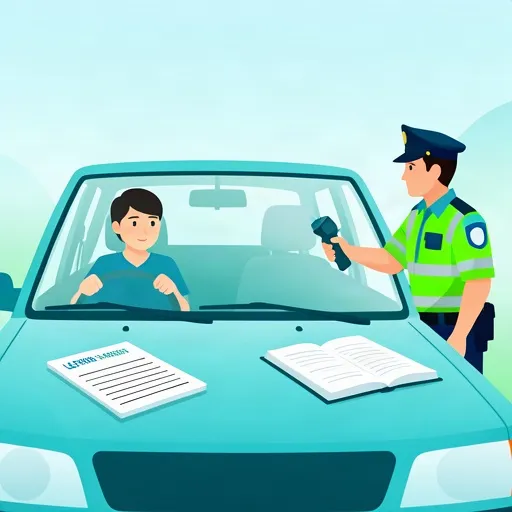
An Garda Síochána is the authority responsible for enforcing road safety and penalizing driving under the influence. Officers are empowered to conduct Mandatory Impairment Testing (MIT) at the roadside, which includes checking for both alcohol and drugs. You might be stopped at an MIT checkpoint simply because the Gardaí are performing routine traffic management or monitoring compliance.
If you are involved in a traffic collision, or if you commit a road traffic offence, An Garda Síochána has the power to test you for alcohol and drugs at the scene. Furthermore, if a driver is injured and removed to a hospital, medical personnel and police may conduct testing to ensure compliance with the law. Always remember that refusing to provide a sample when requested by an officer is, in itself, a serious legal offence.
The core principle behind these laws is that impairment affects your reaction time, judgment, and ability to handle the vehicle safely. Whether you are dealing with prescription medications or illicit drugs, you must ensure that your ability to drive is not compromised.
A procedure used by An Garda Síochána at the roadside to test drivers for the presence of alcohol or drugs, ensuring road safety and compliance with the law.
In the Driver Theory Test, you will likely encounter questions regarding the specific BAC thresholds and the legal implications of testing. It is essential to memorize the 20mg limit for learners and the broad authority of the Gardaí to test any driver suspected of impairment. Always approach these questions with the mindset that safety is the absolute priority on Irish roads.
Ireland applies strict drink-driving limits with learner drivers held to a 20mg BAC per 100ml threshold—half the standard 50mg limit for fully licensed drivers. An Garda Síochána enforces these rules through Mandatory Impairment Testing, which can occur at roadside checkpoints, traffic collisions, or hospitals, and extends to both alcohol and drugs. Refusing to provide a sample when requested is itself a criminal offence. The core principle is that any impairment compromises safety, making complete abstinence the only reliable approach for learner drivers preparing for both road safety and the theory test.
A short set of high-value points that capture the most important ideas from this article.
Learner drivers, newly qualified drivers, and professional drivers face a lower BAC limit of 20mg per 100ml of blood compared to 50mg for standard drivers.
An Garda Síochána can conduct Mandatory Impairment Testing (MIT) at roadside checkpoints, traffic collisions, or when any road traffic offence is committed.
Refusing to provide a breath, blood, or oral fluid sample when lawfully requested is a separate criminal offence in itself.
Impairment from both alcohol and drugs—including prescription medications—affects reaction time, judgment, and vehicle control.
Even trace amounts of alcohol can exceed the learner driver limit, making zero tolerance the safest approach for learner permit holders.
The learner driver BAC limit is 20mg per 100ml—significantly lower than the 50mg standard limit.
MIT can be conducted at the scene of a collision, at a hospital if injured, or at routine Garda checkpoints.
There is no safe or acceptable amount of alcohol for a learner driver before driving.
Both alcohol and drugs (prescription and illicit) can result in impairment testing and prosecution.
The Road Safety Authority (RSA) sets these limits, and An Garda Síochána enforces them.
Believing there is a minimal or 'safe' amount of alcohol a learner can consume before driving.
Assuming prescription medications are exempt from drug driving laws—they can still impair driving ability.
Confusing the 20mg learner limit with the 50mg standard driver limit on theory test questions.
Thinking refusal to provide a sample is an option without serious legal consequences—it is a criminal offence.
Underestimating the Gardaí's authority to test at any road location, not just after an accident.
Article content overview
A short set of high-value points that capture the most important ideas from this article.
Learner drivers, newly qualified drivers, and professional drivers face a lower BAC limit of 20mg per 100ml of blood compared to 50mg for standard drivers.
An Garda Síochána can conduct Mandatory Impairment Testing (MIT) at roadside checkpoints, traffic collisions, or when any road traffic offence is committed.
Refusing to provide a breath, blood, or oral fluid sample when lawfully requested is a separate criminal offence in itself.
Impairment from both alcohol and drugs—including prescription medications—affects reaction time, judgment, and vehicle control.
Even trace amounts of alcohol can exceed the learner driver limit, making zero tolerance the safest approach for learner permit holders.
The learner driver BAC limit is 20mg per 100ml—significantly lower than the 50mg standard limit.
MIT can be conducted at the scene of a collision, at a hospital if injured, or at routine Garda checkpoints.
There is no safe or acceptable amount of alcohol for a learner driver before driving.
Both alcohol and drugs (prescription and illicit) can result in impairment testing and prosecution.
The Road Safety Authority (RSA) sets these limits, and An Garda Síochána enforces them.
Believing there is a minimal or 'safe' amount of alcohol a learner can consume before driving.
Assuming prescription medications are exempt from drug driving laws—they can still impair driving ability.
Confusing the 20mg learner limit with the 50mg standard driver limit on theory test questions.
Thinking refusal to provide a sample is an option without serious legal consequences—it is a criminal offence.
Underestimating the Gardaí's authority to test at any road location, not just after an accident.
Explore related topics, search based questions, and concepts that learners often look up when studying Alcohol and Drug Driving Rules. These themes reflect real search intent and help you understand how this topic connects to wider driving theory knowledge in Ireland.
Find clear and practical answers to common questions learners often have about Alcohol and Drug Driving Rules. This section helps explain difficult points, remove confusion, and reinforce the key driving theory concepts that matter for learners in Ireland.
Learner drivers, newly qualified drivers, and professional drivers must not exceed 20mg of alcohol per 100ml of blood.
Yes, An Garda Síochána has the authority to conduct Mandatory Impairment Testing at the roadside to check for both drugs and alcohol.
Driving, attempting to drive, or being in charge of a vehicle while over the legal limit is a criminal offence that leads to arrest and further testing at a Garda station.
Yes. While learner, newly qualified, and professional drivers have a 20mg limit, all other drivers are subject to a 50mg of alcohol per 100ml of blood limit.
After searching, continue your DTT preparation by exploring related articles, practicing questions, or reviewing specific road sign categories. Deepen your understanding of Irish road rules and ensure you're fully prepared for your Driver Theory Test.