
While passing the National Car Test is a mandatory legal requirement, it only assesses your vehicle's condition at the specific time of the test. As a driver, you have a continuous responsibility under the Rules of the Road to ensure your car remains roadworthy between tests, as ignorance of a developing fault is not a legal defence.
Article content overview
Many learner drivers in Ireland operate under the misconception that a valid National Car Test (NCT) certificate serves as a permanent guarantee of their vehicle’s safety. However, the NCT is strictly a periodic inspection—a snapshot in time that confirms the vehicle met specific safety and environmental standards on the day of the assessment. Once you drive away from the testing centre, you maintain full, ongoing legal responsibility to ensure your vehicle remains in a safe and roadworthy condition every single time you use it.
Under the Rules of the Road in Ireland, the burden of road safety lies squarely with the person behind the wheel. Ignorance of a vehicle fault is never a valid legal defence if you are stopped by An Garda Síochána or encountered during an RSA roadside inspection. If a component—such as a tyre, bulb, or brake system—fails between test cycles, it is your responsibility to identify and rectify the issue immediately. Relying solely on the NCT status to justify the vehicle's roadworthiness can lead to penalty points, heavy fines, or, in the worst-case scenario, a serious collision caused by a preventable mechanical failure.
Possessing a valid NCT disc is a legal requirement for vehicles over four years old, but it does not exempt you from being penalised if your vehicle is found to be in a dangerous or unroadworthy condition during a random check.
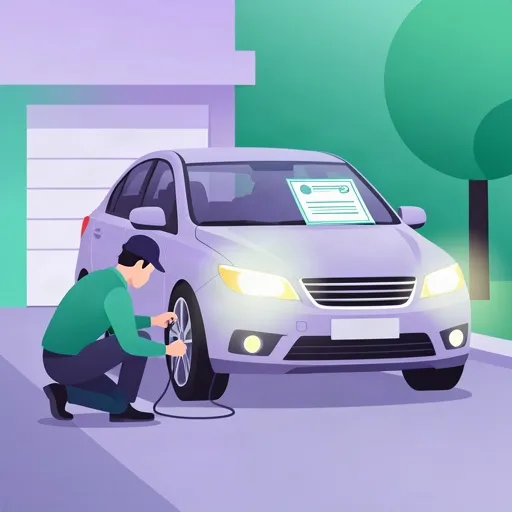
Just as commercial vehicle operators are required to conduct daily walk-around checks, private motorists should adopt a similar mindset to ensure their car is safe before every journey. A vehicle’s condition can deteriorate rapidly due to everyday wear and tear, punctures, or simple electrical failures. By performing brief, routine inspections, you can catch minor issues before they become dangerous defects that might cause an accident or lead to a failed inspection in the future.
To maintain roadworthiness, you should habitually verify the following elements. While these might seem simple, they are critical for ensuring you do not become a hazard to yourself or other road users.
The NCT is designed to identify long-term structural or mechanical issues that might not be obvious to the casual driver. It is not, however, a substitute for the day-to-day oversight required to manage a vehicle's life cycle. While the NCT happens every one or two years depending on the age of your car, your responsibility to check the vehicle is continuous. Treating your vehicle with a proactive maintenance mindset will not only help you pass your NCT with fewer complications but will also ensure that you are consistently compliant with the standards set out by the Road Safety Authority.
The state of a vehicle being in a condition that is safe to be driven on public roads, meaning it is free from significant mechanical or structural defects that could affect control, visibility, or safety.
In the context of your Driver Theory Test, understanding these obligations is crucial. Many exam questions focus on the driver’s duty of care and the importance of vehicle maintenance. Recognising that the NCT is a secondary safety measure rather than a primary maintenance programme is a recurring theme in road safety education. You are expected to know that safety is an active process, not a passive status determined by a piece of paper on your windscreen.
The NCT is a mandatory periodic roadworthiness inspection that provides a snapshot of your vehicle's condition on test day, but it does not replace your ongoing legal duty to ensure the car remains safe every time you drive. Under the Rules of the Road, ignorance of a defect is never a defence, meaning you must perform daily walk-around checks covering tyres, lights, fluids, and documentation. Adopting a proactive maintenance mindset not only keeps you legally compliant and road safe but also prepares you for theory test questions that focus on driver duty of care and the distinction between periodic testing and continuous vehicle responsibility.
A short set of high-value points that capture the most important ideas from this article.
The NCT is a periodic inspection that only confirms your vehicle met safety standards on the specific test day, not an ongoing guarantee of roadworthiness.
As a driver, you bear full legal responsibility for your vehicle's condition every time you drive, regardless of having a valid NCT disc.
Ignorance of a developing fault—such as a tyre issue or failed bulb—is not a valid legal defence if stopped by An Garda Síochána.
Daily walk-around checks catch minor issues before they become dangerous defects that could cause accidents or inspection failures.
Treating vehicle maintenance as a proactive, continuous responsibility helps ensure compliance with RSA standards and reduces NCT complications.
Perform a daily pre-drive check covering tyres (pressure, damage, tread), all lights, windscreen and mirrors, fluid levels, and displayed tax, insurance, and NCT discs.
A valid NCT disc is a legal requirement for vehicles over four years old but does not exempt you from penalties if your vehicle is found unroadworthy during a random check.
Ignorance of a vehicle fault is never a legal defence under the Rules of the Road.
Roadworthiness means the vehicle is free from defects that could affect control, visibility, or safety on public roads.
Your responsibility to check the vehicle is continuous—before every journey, not just before the NCT.
Assuming that a valid NCT disc means the vehicle is automatically safe to drive at all times.
Neglecting daily inspections because the car recently passed the NCT.
Overlooking developing issues like slow punctures, dimming bulbs, or low fluid levels between test cycles.
Failing to check that tax, insurance, and NCT discs are clearly displayed and current.
Believing that only commercial drivers need to perform walk-around checks.
Article content overview
A short set of high-value points that capture the most important ideas from this article.
The NCT is a periodic inspection that only confirms your vehicle met safety standards on the specific test day, not an ongoing guarantee of roadworthiness.
As a driver, you bear full legal responsibility for your vehicle's condition every time you drive, regardless of having a valid NCT disc.
Ignorance of a developing fault—such as a tyre issue or failed bulb—is not a valid legal defence if stopped by An Garda Síochána.
Daily walk-around checks catch minor issues before they become dangerous defects that could cause accidents or inspection failures.
Treating vehicle maintenance as a proactive, continuous responsibility helps ensure compliance with RSA standards and reduces NCT complications.
Perform a daily pre-drive check covering tyres (pressure, damage, tread), all lights, windscreen and mirrors, fluid levels, and displayed tax, insurance, and NCT discs.
A valid NCT disc is a legal requirement for vehicles over four years old but does not exempt you from penalties if your vehicle is found unroadworthy during a random check.
Ignorance of a vehicle fault is never a legal defence under the Rules of the Road.
Roadworthiness means the vehicle is free from defects that could affect control, visibility, or safety on public roads.
Your responsibility to check the vehicle is continuous—before every journey, not just before the NCT.
Assuming that a valid NCT disc means the vehicle is automatically safe to drive at all times.
Neglecting daily inspections because the car recently passed the NCT.
Overlooking developing issues like slow punctures, dimming bulbs, or low fluid levels between test cycles.
Failing to check that tax, insurance, and NCT discs are clearly displayed and current.
Believing that only commercial drivers need to perform walk-around checks.
Explore related topics, search based questions, and concepts that learners often look up when studying Daily Vehicle Checks vs NCT. These themes reflect real search intent and help you understand how this topic connects to wider driving theory knowledge in Ireland.
Find clear and practical answers to common questions learners often have about Daily Vehicle Checks vs NCT. This section helps explain difficult points, remove confusion, and reinforce the key driving theory concepts that matter for learners in Ireland.
No, the NCT only confirms that your vehicle met minimum roadworthiness standards on the day of the test. A fault can develop at any time after the test, and you remain responsible for identifying and fixing it.
You should regularly check items such as your tyre pressure and condition, that all lights and indicators are working correctly, and that fluid levels are adequate. These simple walk-around checks help ensure basic road safety.
Yes. It is your responsibility to ensure the vehicle is in a safe condition before using it on a public road. If you are stopped by the Gardaí or an RSA inspector, not knowing about a fault is not a valid defence.
After searching, continue your DTT preparation by exploring related articles, practicing questions, or reviewing specific road sign categories. Deepen your understanding of Irish road rules and ensure you're fully prepared for your Driver Theory Test.