
Navigating a yellow box junction requires precision and awareness to avoid unnecessary traffic congestion and potential penalty points. This guide explains when you are legally permitted to enter these areas and the specific circumstances where right-hand turns are allowed. Strengthening your knowledge of these road markings is essential for both your practical driving safety and your success in the Driver Theory Test.
Article content overview
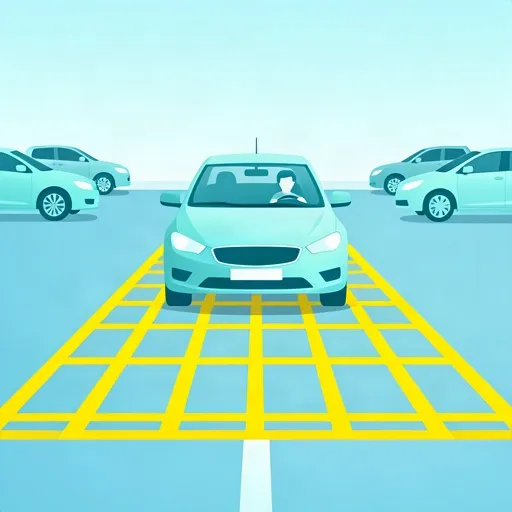
Understanding how to correctly navigate a yellow box junction is a fundamental skill for every learner driver in Ireland. These junctions, characterized by a grid of criss-cross yellow lines painted on the road surface, are designed to prevent traffic congestion by ensuring that intersections remain clear for cross-traffic. Misunderstanding the rules governing these areas is a common cause of failure in the Driver Theory Test and can lead to dangerous situations or penalty points in real-world driving.
The golden rule of yellow box junctions is straightforward but requires constant vigilance: you must not enter the yellow box junction unless you can clear it without stopping. Entering the box when your exit is blocked creates a gridlock effect, potentially obstructing emergency vehicles, cyclists, and cross-traffic that has the right of way. Before you commit to moving into the junction, you must scan the road ahead to ensure there is sufficient space on the other side to accommodate your vehicle entirely.
There is one vital exception to this rule: if you are turning right. If your intended path is to turn right, you are permitted to enter the yellow box junction and wait while you allow oncoming traffic to pass. However, you must exercise extreme caution. You should only move into the box if your exit—the road you intend to turn into—is clear, or if you are waiting for a safe gap in the oncoming traffic. You must never enter the box if doing so would block other traffic that has the right of way, even if you are planning to turn.
Never enter a yellow box junction at railway level crossings or tramway crossings unless you are certain that you can leave the box without stopping. These areas are strictly controlled for public safety, and stopping within them is a significant hazard.
The Driver Theory Test frequently uses scenario-based questions to assess whether a candidate understands the intent behind road markings rather than just memorizing definitions. You might be presented with a diagram of an intersection and asked to choose the safest course of action. The examiners look for your ability to apply the RSA rule: slow down early, observe all relevant road users, and only proceed when your manoeuvre is both lawful and safe.
Common exam traps often involve "pressure" situations, such as being asked what to do when another driver is sounding a horn behind you or when the traffic lights are about to change. Always remember that external pressure does not override the legal requirement to keep the junction clear. Your priority is to observe the legal conventions found in the Rules of the Road, ensuring that your driving remains predictable and safe for all road users.
Yellow box junctions are just one part of the complex language of Irish road markings. Other signs and markings, such as lane arrows and red X signals, work in tandem with these junctions to manage traffic flow efficiently. For instance, when driving on a dual carriageway or in a road tunnel, you might see electronic signals overhead. A green arrow indicates that a lane is open, while a red X acts exactly like a stop sign—you must stop immediately and not pass the signal.
Mastering these rules requires consistent practice. Rather than relying on rote memorization, try to visualize yourself at the junction. Think about the positioning of your vehicle, your observation checks, and the timing of your manoeuvre. By grounding your learning in the official Rules of the Road and applying these concepts during your driving lessons, you will be well-prepared for the theory test and your future life as a fully licensed driver.
Yellow box junctions, marked with criss-cross yellow lines, are placed at busy intersections to keep traffic flowing and prevent gridlock. The fundamental rule is that you must never enter unless your exit is completely clear; the only exception applies to drivers turning right, who may wait in the box while yielding to oncoming traffic. Exam questions often test your ability to resist external pressure and apply the rule correctly. Additional caution is required at railway and tramway crossings, where stopping within the box is a significant safety hazard. Understanding these rules is essential for both passing the Driver Theory Test and safe driving practice in Ireland.
A short set of high-value points that capture the most important ideas from this article.
You must not enter a yellow box junction unless your exit is completely clear and you can drive through without stopping
If turning right, you may enter the box to wait for oncoming traffic, but only if your exit road is clear
Yellow box junctions are designed to keep intersections clear for cross-traffic and emergency vehicles
External pressure such as horn honking or changing traffic lights does not override the legal requirement to keep the junction clear
Always scan for pedestrians and cyclists before committing to enter a yellow box junction
The golden rule: never enter a yellow box unless you can clear it completely
Right-turn exception allows waiting in the box only when your exit is clear and you're yielding to oncoming traffic
Railway level crossings and tramway crossings have strict additional restrictions within yellow boxes
The RSA tests understanding of the intent behind road markings, not just memorisation
Lane discipline and other markings like red X signals work alongside yellow boxes to manage traffic flow
Entering the yellow box when the exit is blocked by stationary traffic, causing gridlock
Assuming the right-turn exception means you can always enter the box when turning right regardless of your exit
Giving in to pressure from other drivers sounding their horn or gesturing
Forgetting that the right-turn exception still requires the exit to be clear before entering
Not checking for pedestrians and cyclists crossing the junction before proceeding
Article content overview
A short set of high-value points that capture the most important ideas from this article.
You must not enter a yellow box junction unless your exit is completely clear and you can drive through without stopping
If turning right, you may enter the box to wait for oncoming traffic, but only if your exit road is clear
Yellow box junctions are designed to keep intersections clear for cross-traffic and emergency vehicles
External pressure such as horn honking or changing traffic lights does not override the legal requirement to keep the junction clear
Always scan for pedestrians and cyclists before committing to enter a yellow box junction
The golden rule: never enter a yellow box unless you can clear it completely
Right-turn exception allows waiting in the box only when your exit is clear and you're yielding to oncoming traffic
Railway level crossings and tramway crossings have strict additional restrictions within yellow boxes
The RSA tests understanding of the intent behind road markings, not just memorisation
Lane discipline and other markings like red X signals work alongside yellow boxes to manage traffic flow
Entering the yellow box when the exit is blocked by stationary traffic, causing gridlock
Assuming the right-turn exception means you can always enter the box when turning right regardless of your exit
Giving in to pressure from other drivers sounding their horn or gesturing
Forgetting that the right-turn exception still requires the exit to be clear before entering
Not checking for pedestrians and cyclists crossing the junction before proceeding
Explore related topics, search based questions, and concepts that learners often look up when studying Yellow Box Junction Rules. These themes reflect real search intent and help you understand how this topic connects to wider driving theory knowledge in Ireland.
Find clear and practical answers to common questions learners often have about Yellow Box Junction Rules. This section helps explain difficult points, remove confusion, and reinforce the key driving theory concepts that matter for learners in Ireland.
You must not enter the yellow box junction unless your exit is clear and you can clear the box without having to stop.
Yes, you may enter the box if you are waiting to turn right, provided you are only prevented from doing so by oncoming traffic or other vehicles waiting to turn right.
No, you should never enter a yellow box if doing so would result in you blocking other traffic that has the right of way.
Yes, you must never enter a yellow box junction at a railway or tramway crossing unless you are certain you can clear it without stopping.
After searching, continue your DTT preparation by exploring related articles, practicing questions, or reviewing specific road sign categories. Deepen your understanding of Irish road rules and ensure you're fully prepared for your Driver Theory Test.