
Understanding road markings and lane signals is a cornerstone of safe driving and a frequent topic in the Driver Theory Test. This article breaks down the practical application of these rules, helping you move safely through junctions and respond correctly to lane control signals in various traffic conditions.
Article content overview
Understanding road markings and lane control is more than a requirement for passing your Driver Theory Test; it is a fundamental aspect of safe driving on Irish roads. The Rules of the Road, as published by the Road Safety Authority (RSA), define these markings to ensure that traffic flows efficiently and safely. Whether you are navigating busy urban streets in Dublin or driving on a motorway, knowing how to interpret the road surface and overhead signals is essential for every learner permit holder.
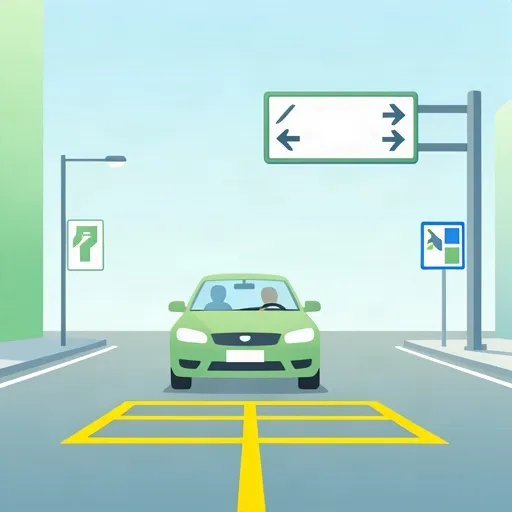
One of the most common topics tested in the Irish theory exam is the yellow box junction. These junctions consist of a pattern of criss-cross yellow lines painted on the road surface at a junction or intersection. Their primary purpose is to prevent traffic congestion by keeping the junction clear for turning vehicles or cross-traffic.
You must not enter the yellow box junction unless you can clear it without stopping. If your exit is blocked by stationary traffic, you must wait behind the line, even if your traffic light is green.
There is a specific, crucial exception to this rule. If you are waiting to turn right, you may enter the yellow box junction when it is safe to do so, provided your exit is clear or you are waiting for a gap in oncoming traffic. However, you should never enter the box if doing so would block other traffic that has the right of way. In cases involving railway or tramway crossings, you must never enter the yellow box unless you can leave it completely without stopping.
When driving on dual carriageways or in tunnels, you will frequently encounter overhead lane control signals. These signals use specific symbols to dictate how you must use the road space. Misinterpreting these is not only a major error in the theory exam but a significant safety hazard in real-world driving.
The following table summarizes the primary lane control signals you should expect to see:
| Signal | Meaning | Action Required |
|---|---|---|
| Green Arrow (Down) | Lane Open | You are allowed to proceed in this lane. |
| Red X | Lane Closed | You must stop; do not pass this sign under any circumstances. |
| Green Arrow (Left/Right) | Lane Change | Move into the indicated lane safely and in good time. |
Always remember that a red X has the same legal weight as a stop sign. If you see this signal, you must treat the lane as closed and move out of it as soon as it is safe to do so.
Learners often make the mistake of treating road markings as simple memory facts for the test, rather than as live indicators of road hazards. The safest approach to any road marking is to apply the RSA rule: slow down early, observe all relevant road users, and only proceed when your intended manoeuvre is both lawful and safe.
To excel in the Driver Theory Test, you must move beyond rote memorisation. When you encounter practice questions, ask yourself not just what the answer is, but why it is the safest option. The exam authority specifically designs questions to test your judgement in complex, real-world scenarios, such as when to enter a junction or how to respond to changing lane indicators.
This guide covers essential Irish road markings and lane control signals as defined by the RSA Rules of the Road. Yellow box junctions use criss-cross yellow lines to keep intersections clear, and you must not enter unless you can exit without stopping—except when turning right with a clear path or waiting for a gap. Overhead lane signals include green arrows for open lanes or directed changes and red X signals that legally require you to stop and vacate the lane immediately. Safe lane changing follows a four-step process: check mirrors, signal, check blind spots, then move only when clear. These rules are directly tested in the Irish Driver Theory Test and are fundamental to safe driving on all Irish roads.
A short set of high-value points that capture the most important ideas from this article.
Yellow box junctions must only be entered if your exit is clear; otherwise you must wait behind the lines even on a green light.
When turning right at a yellow box junction, you may enter only when your exit is clear or you are waiting for a gap in oncoming traffic.
A red X overhead signal has the same legal weight as a stop sign and means you must treat the lane as closed immediately.
Green arrows indicate lanes are open for travel or safe lane changes; always proceed with caution even in open lanes.
Safe lane changes require early mirror checks, timely signalling, blind spot checks, and verification before moving.
Never enter a yellow box unless you can clear it completely without stopping, unless you are turning right with a clear exit or waiting for a gap.
Red X signals are mandatory stop/stay-out instructions with the same legal authority as a stop sign on Irish roads.
Green arrow (down) means lane is open; green arrow (left/right) means change lanes in that direction.
At railway or tramway yellow boxes, you must never enter unless you can leave without stopping.
The lane change procedure follows a specific order: mirrors, signal, blind spot, then move when clear.
Entering a yellow box junction on green light without ensuring the exit is clear, causing junction blockage.
Treating a red X signal as optional or continuing in the lane rather than moving out safely as soon as possible.
Assuming yellow box rules are the same for all vehicles; the right-turn exception only applies when the exit is clear or a gap exists.
Skipping the blind spot check during lane changes, especially dangerous for missing cyclists.
Memorising road marking rules as abstract facts rather than applying them as live safety indicators while driving.
Article content overview
A short set of high-value points that capture the most important ideas from this article.
Yellow box junctions must only be entered if your exit is clear; otherwise you must wait behind the lines even on a green light.
When turning right at a yellow box junction, you may enter only when your exit is clear or you are waiting for a gap in oncoming traffic.
A red X overhead signal has the same legal weight as a stop sign and means you must treat the lane as closed immediately.
Green arrows indicate lanes are open for travel or safe lane changes; always proceed with caution even in open lanes.
Safe lane changes require early mirror checks, timely signalling, blind spot checks, and verification before moving.
Never enter a yellow box unless you can clear it completely without stopping, unless you are turning right with a clear exit or waiting for a gap.
Red X signals are mandatory stop/stay-out instructions with the same legal authority as a stop sign on Irish roads.
Green arrow (down) means lane is open; green arrow (left/right) means change lanes in that direction.
At railway or tramway yellow boxes, you must never enter unless you can leave without stopping.
The lane change procedure follows a specific order: mirrors, signal, blind spot, then move when clear.
Entering a yellow box junction on green light without ensuring the exit is clear, causing junction blockage.
Treating a red X signal as optional or continuing in the lane rather than moving out safely as soon as possible.
Assuming yellow box rules are the same for all vehicles; the right-turn exception only applies when the exit is clear or a gap exists.
Skipping the blind spot check during lane changes, especially dangerous for missing cyclists.
Memorising road marking rules as abstract facts rather than applying them as live safety indicators while driving.
Explore related topics, search based questions, and concepts that learners often look up when studying Road Markings and Lane Control. These themes reflect real search intent and help you understand how this topic connects to wider driving theory knowledge in Ireland.
Find clear and practical answers to common questions learners often have about Road Markings and Lane Control. This section helps explain difficult points, remove confusion, and reinforce the key driving theory concepts that matter for learners in Ireland.
You must not enter a yellow box junction unless you can clear it without stopping. The only exception is when you are turning right and are prevented from doing so only by oncoming traffic or other vehicles waiting to turn right.
A red X indicates that the lane is closed. You must stop and are not allowed to pass this sign, as it has the same legal effect as a stop sign.
A green arrow pointing down means that the lane is open and you are permitted to proceed in that lane.
Always observe the rules for safe lane changing, which include checking your mirrors, signaling your intention early, and ensuring your path is clear before moving into the new lane.
After searching, continue your DTT preparation by exploring related articles, practicing questions, or reviewing specific road sign categories. Deepen your understanding of Irish road rules and ensure you're fully prepared for your Driver Theory Test.