
This lesson guides you through the crucial safety requirements for protective headgear when operating a Category AM moped in Ireland. You will learn the legal standards for helmets and the practical steps to ensure a proper fit for maximum safety on the road.

Lesson content overview
Operating a moped or light quadricycle under a Category AM licence exposes you to unique safety challenges. Unlike drivers enclosed within the steel safety cage of a car, moped riders have no crumple zones or external structures to absorb impact forces. In the event of a collision or a simple fall, your personal protective equipment (PPE)—with your helmet being the single most important component—is your only line of defense against severe trauma or fatality.
Understanding the legal requirements, the physics of head protection, how to evaluate safety certifications, and how to achieve a mathematically and physically correct fit is essential for any responsible rider on Irish roads.
To appreciate why a helmet is mandatory, you must understand the physics of a road traffic collision. When a moving moped stops abruptly due to an impact, the rider's body and head continue moving forward at the pre-collision velocity until they strike an obstacle, such as another vehicle, the road surface, or street furniture.
A motorcycle or moped helmet is engineered to manage and dissipate this kinetic energy through three distinct layers:
The "One-Impact" Rule: The EPS liner does not possess elastic memory. Once it compresses to absorb an impact, it remains permanently deformed at a microscopic level. Even if a helmet looks completely undamaged after a fall or drop, its capacity to absorb subsequent impacts is severely compromised. A helmet must be replaced immediately after any significant impact.
Under Irish road traffic legislation, wearing an approved, securely fastened protective helmet is a strict legal requirement for all drivers and passengers of mopeds, motorcycles, and light three- or four-wheeled vehicles.
Failure to wear a compliant helmet, or riding with a passenger who is not wearing one, is a serious legal offence. It attracts immediate roadside penalties, including fines and penalty points on your driving record. For novice riders and those holding an AM learner permit, accumulating penalty points can lead to an early disqualification from driving.
Beyond legal penalties, riding without a helmet or with an unsecured helmet has severe civil law consequences. If you are involved in an accident caused by another road user, your failure to wear a proper helmet can be ruled as contributory negligence in an Irish court. This can dramatically reduce any compensation or insurance payout you might otherwise be entitled to receive for your injuries.
You must never assume that any headgear styled as a "helmet" is legal or safe for road use. In Ireland and across the wider European Union, road-legal helmets must bear an official certification mark proving they have passed rigorous laboratory testing.
The primary standards recognized under Irish law are the United Nations Economic Commission for Europe (UNECE) regulations: ECE 22.05 and its updated, more stringent successor, ECE 22.06.
To achieve ECE certification, helmet models undergo destructive testing that evaluates:
Every legal helmet features a distinct homologation label sewn onto the chin strap. This label displays:
When preparing for your Category AM theory test, you should understand the physical characteristics and safety trade-offs associated with different helmet designs.
Full-face helmets offer the highest degree of physical protection. They consist of a single, continuous outer shell that fully covers the cranium, temples, base of the skull, and the jaw/chin area. They feature an integrated, moveable visor.
Open-face helmets cover the top, back, and sides of the head but leave the face entirely exposed. Some models include a flip-down plastic visor or a peak to block sunlight.
Modular helmets feature a chin bar that can be unlocked and rotated upwards, transforming the helmet from a full-face configuration into an open-face style.
These helmets cover only the very top of the head down to the ears.
A helmet that is too loose will shift or fly off during an accident, failing to protect your head and potentially causing secondary injuries. Conversely, a helmet that is too tight can cause painful pressure points, headaches, and distraction, which compromises your active safety while riding. Use the following precise fitment procedure:
Measure Your Head Circumference: Use a flexible cloth measuring tape. Wrap it horizontally around your head, approximately 2 to 2.5 centimetres above your eyebrows, keeping it just above your ears. Note the measurement in centimetres. Refer to the manufacturer's specific sizing chart (e.g., Small: 55–56 cm, Medium: 57–58 cm).
Donning the Helmet: Expands the helmet slightly by pulling the chin straps outward. Slip the helmet over your head from back to front. The helmet should feel snug, comparable to a firm, even hug around your entire skull.
Evaluate the Fit and Eyeline: The helmet must sit level on your head. The top edge of the visor aperture should sit approximately 1 to 2 centimetres above your eyebrows, ensuring your peripheral vision is not obstructed.
Check for Pressure Points: Keep the helmet on for 10 to 15 minutes. Pay attention to any localized, sharp pain or hot spots, particularly on your forehead or the crown of your head. If pain develops, the helmet is either too small or the wrong shape for your head.
Perform the Movement and "Cheek" Test: Gently grasp the chin bar or sides of the helmet and try to rotate it side-to-side and up-and-down. Your skin, eyebrows, and cheeks should move with the helmet liner. If the helmet rotates freely without moving the skin of your face, it is too large. Your cheeks should be compressed slightly, often referred to as a "fish-face" fit.
Perform the Roll-Off Test: Fasten the chin strap securely. Bend your head forward, reach behind the base of the helmet shell, and attempt to pull the helmet forward off your head. If the helmet can be rolled off your head or significantly slides forward to cover your eyes, it is unsafe and must not be used.
No matter how perfectly a helmet fits your skull, it is entirely useless if it does not remain on your head during an impact. The retention system (chin strap and buckle) must be fastened every single time you sit on your moped, even for the shortest journeys.
The Two-Finger Rule: The chin strap must be tightened so that you can fit a maximum of one to two fingers flat between the strap and your throat. Any looser, and the helmet can slide backward during a fall, exposing your forehead or allowing the helmet to detach completely.
A safety helmet is subject to environmental degradation from UV radiation, heat, rain, road salt, hair oils, sweat, and cosmetics. To maintain its structural integrity:
Let's look at how helmet safety translates into real-world riding scenarios on Irish roads:
When riding in typical cold or wet Irish conditions, your body heat and breath can cause the visor to fog up rapidly, obscuring your vision.
You see a high-end, premium-brand helmet offered for sale online at a fraction of its retail price. The seller claims it has "never been dropped."
This lesson covers the essential safety requirements for moped helmets under Irish law, explaining the three-layer protection system (outer shell, EPS liner, comfort padding) and why the EPS liner must be replaced after any impact. Learners must understand that legal helmets require ECE 22.05 or 22.06 certification marked on the chin strap with specific codes, and that full-face helmets offer superior protection by covering the chin area which receives a significant proportion of accident impacts. The fitting procedure involves precise measurement, the cheek/skin movement test, and the roll-off test to ensure the helmet cannot detach. Proper chin strap tension follows the two-finger rule, and helmets must be replaced every five years from first use even without visible damage. Critical pitfalls include assuming undamaged appearance means safety, buying used helmets, and using inappropriate cleaning methods on visors.
A short set of high-value points that capture the most important learning from this lesson.
A helmet's EPS liner has no elastic memory and must be replaced immediately after any impact, even if no damage is visible
Legal helmets in Ireland must bear an ECE certification mark on the chin strap, with approval numbers starting with 05 (ECE 22.05) or 06 (ECE 22.06)
Full-face helmets are the safest option as they protect the chin and jaw area, which receives approximately 35% of all impacts in motorcycle accidents
Proper helmet fit requires the helmet to move with your skin during the cheek test and must pass the roll-off test with the chin strap fastened
Never purchase or wear a second-hand helmet because you cannot verify its impact history or material degradation
Explore all units and lessons included in this driving theory course.
The chin strap must allow only one to two fingers of space between it and your throat (the Two-Finger Rule)
ECE E-mark labels include a country code (E1 for Germany, E24 for Ireland) and protection type (P for full-face, J for open-face, P/J for modular)
Replace your helmet every five years from first use or seven years from manufacture date, regardless of visible condition
Modular helmets must show P/J homologation to be legally worn with the chin bar raised while riding
Half-shell helmets do not meet ECE standards and are illegal for road use in Ireland
Assuming a helmet looks undamaged after a fall means it is still safe to use, when in fact the EPS liner is permanently compromised
Buying a second-hand helmet believing the seller's claim that it was never dropped, when impact history cannot be verified
Wearing a modular helmet with the chin bar raised when it only has P (not P/J) homologation, which is illegal and dangerous
Cleaning visor with abrasive materials or chemicals instead of mild soap and microfiber cloth, causing dangerous scratches
Assuming any styled headgear is legally acceptable, when only ECE-approved helmets with proper markings meet Irish road law
Lesson content overview
A short set of high-value points that capture the most important learning from this lesson.
A helmet's EPS liner has no elastic memory and must be replaced immediately after any impact, even if no damage is visible
Legal helmets in Ireland must bear an ECE certification mark on the chin strap, with approval numbers starting with 05 (ECE 22.05) or 06 (ECE 22.06)
Full-face helmets are the safest option as they protect the chin and jaw area, which receives approximately 35% of all impacts in motorcycle accidents
Proper helmet fit requires the helmet to move with your skin during the cheek test and must pass the roll-off test with the chin strap fastened
Never purchase or wear a second-hand helmet because you cannot verify its impact history or material degradation
Explore all units and lessons included in this driving theory course.
The chin strap must allow only one to two fingers of space between it and your throat (the Two-Finger Rule)
ECE E-mark labels include a country code (E1 for Germany, E24 for Ireland) and protection type (P for full-face, J for open-face, P/J for modular)
Replace your helmet every five years from first use or seven years from manufacture date, regardless of visible condition
Modular helmets must show P/J homologation to be legally worn with the chin bar raised while riding
Half-shell helmets do not meet ECE standards and are illegal for road use in Ireland
Assuming a helmet looks undamaged after a fall means it is still safe to use, when in fact the EPS liner is permanently compromised
Buying a second-hand helmet believing the seller's claim that it was never dropped, when impact history cannot be verified
Wearing a modular helmet with the chin bar raised when it only has P (not P/J) homologation, which is illegal and dangerous
Cleaning visor with abrasive materials or chemicals instead of mild soap and microfiber cloth, causing dangerous scratches
Assuming any styled headgear is legally acceptable, when only ECE-approved helmets with proper markings meet Irish road law
Explore search topics learners often look for when studying Importance of Helmet Use and Correct Fitting. These topics reflect common questions about road rules, driving situations, safety guidance, and lesson level theory preparation for learners in Ireland.
Browse additional driving theory lessons that cover connected traffic rules, road signs, and common driving situations related to this topic. Improve your understanding of how different rules interact across everyday traffic scenarios.
Learn the essential rules for choosing protective gear that improves your visibility on Irish roads. This guide explains the importance of high-visibility clothing, auxiliary lighting, and proper safety equipment to ensure you remain seen by other motorists while navigating different traffic environments.
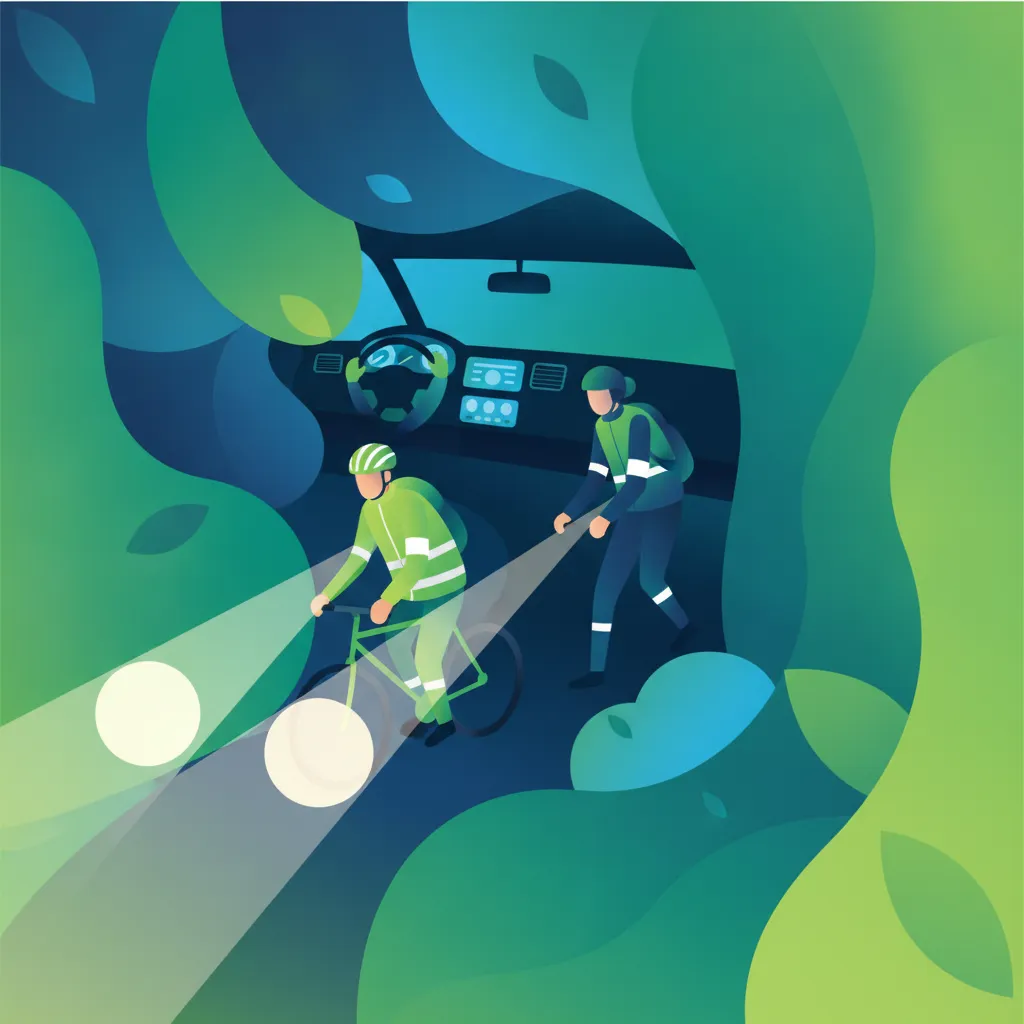
This lesson emphasizes the critical importance of being highly visible to other road users under various lighting conditions. It reviews the legal requirements for front and rear lights on Category AM vehicles and the active use of reflective materials. Proper maintenance of lighting systems is discussed to ensure continuous operation during adverse weather.

This lesson provides actionable strategies for Category AM riders to remain visible, focusing on lane positioning and eye contact. It teaches how to avoid riding in the blind spots of larger vehicles and how to signal early and clearly. Cultivating a proactive attitude toward road visibility helps prevent collisions and builds mutual respect on Irish roads.

This lesson focuses on practical strategies for maximizing a motorcyclist's visibility to other road users in day and night scenarios. It details the effective placement of retro-reflective materials, high-visibility jackets, and the constant use of dipped headlights. Riders will examine how road positioning within their lane dramatically reduces the likelihood of being obscured by other vehicles.
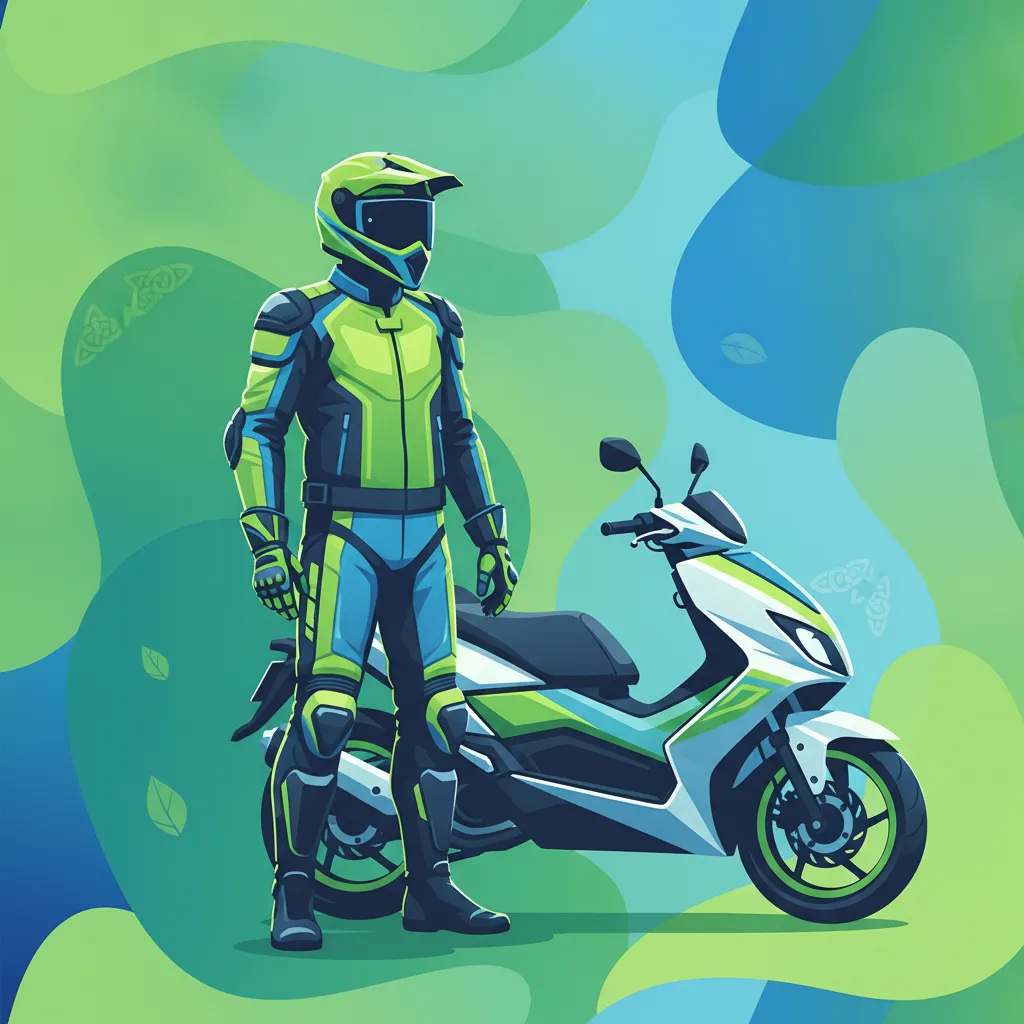
This lesson explores the safety benefits of abrasion-resistant jackets, gloves, trousers, and boots designed for moped riders. It explains how integrated body armour shields critical impact zones, such as shoulders, elbows, and knees, from severe injury. Additionally, it provides guidance on selecting clothing appropriate for the damp and cold Irish weather.
This lesson outlines the European standards and CE markings for motorcycle protective clothing, including jackets, trousers, and boots. It explains the protective performance of high-durability fabrics, leather, and built-in impact armor at joint zones. Riders will understand how appropriate garments minimize serious abrasion injuries and protect against cold or wet Irish weather environments.

This lesson details the use of daytime running lights to raise a rider's profile during daylight hours on Irish roads. It discusses the installation guidelines, legal restrictions, and safety benefits of auxiliary lighting systems on mopeds. Special care must be taken to prevent dazzling oncoming traffic while ensuring the vehicle remains highly recognizable.

This lesson focuses on the critical techniques required to ride safely during severe rain or heavy fog in Ireland. It teaches riders how to handle aquaplaning risks, use headlights correctly, and significantly increase their following distances. Adapting speed to visibility ensures that riders can brake safely when road conditions deteriorate.
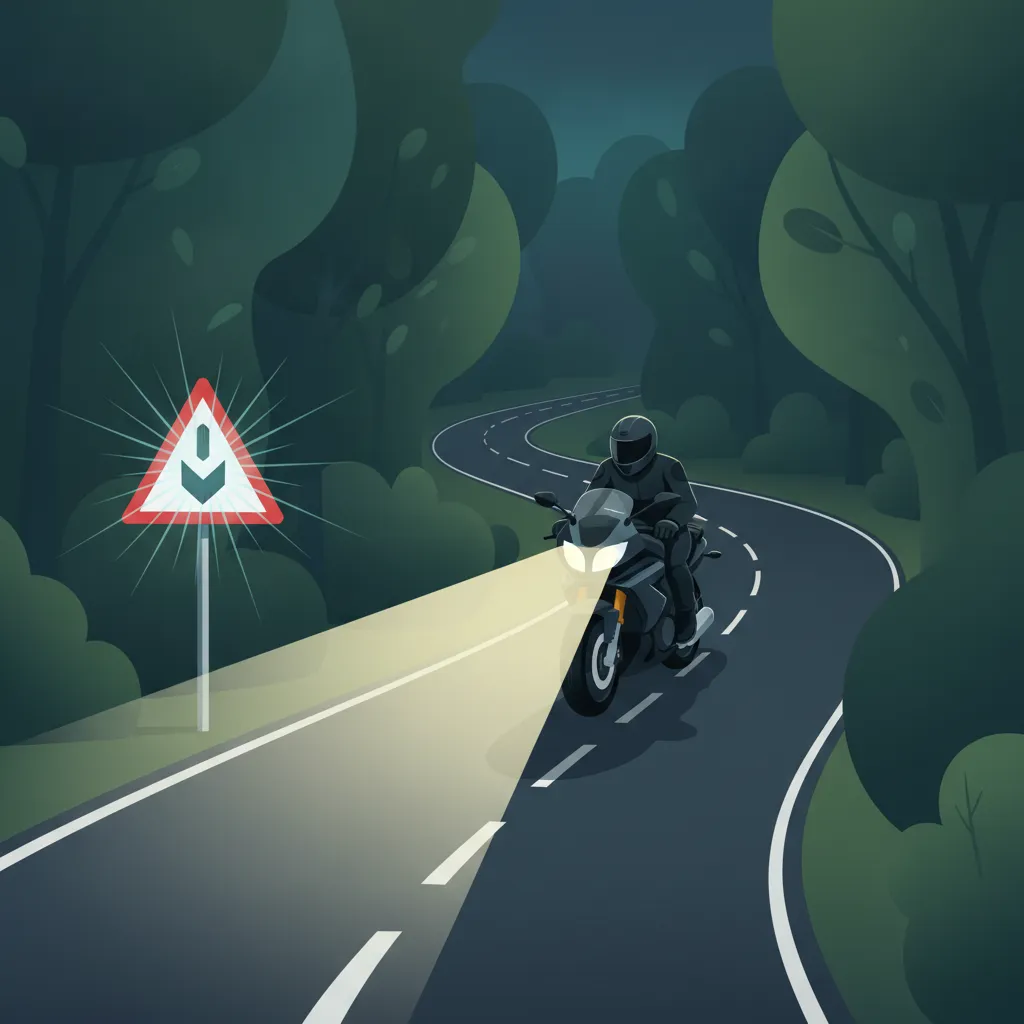
This lesson details safety strategies for riding in dark or poorly illuminated environments, focusing on headlight management and visibility limits. It explains when to use dipped and high beams to avoid blinding other motorists while maximizing your own view of the road. Riders will learn how to scan for reflective markers, manage oncoming glare, and adapt their speed to their headlight range.

This lesson describes the legal obligations regarding motorcycle helmets in Ireland, detailing safety certifications like ECE 22.05 or 22.06. It explains the differences between full-face, modular, and open-face helmets, emphasizing how impact absorption protects the head. Motorcyclists will learn how to verify a secure chin-strap fit and inspect helmets for structural damage after any minor drop.

This lesson covers the rules governing zebra, pelican, and toucan pedestrian crossings, focusing on driver obligations and rider safety. It details how to interact safely with cyclists, personal mobility devices, and pedestrians in busy urban sectors. Motorcyclists will learn to scan pavement edges, yield right-of-way, and maintain safe overtaking distances when passing slower road users.
Understand the impact of adverse weather conditions on moped stability and learn the legal consequences of driving offences. This explanation covers the Irish penalty point system and how to safely manage risks like wet road surfaces and low visibility to keep your licence secure.
This lesson focuses on the critical techniques required to ride safely during severe rain or heavy fog in Ireland. It teaches riders how to handle aquaplaning risks, use headlights correctly, and significantly increase their following distances. Adapting speed to visibility ensures that riders can brake safely when road conditions deteriorate.

This lesson provides a comprehensive overview of the Irish penalty point system and how traffic offences are monitored by An Garda Síochána. It details the accumulation limits that trigger automatic licence suspension, with a focus on special lower thresholds for learner drivers. Learners will explore common traffic violations, such as speeding and reckless riding, which carry statutory point penalties.
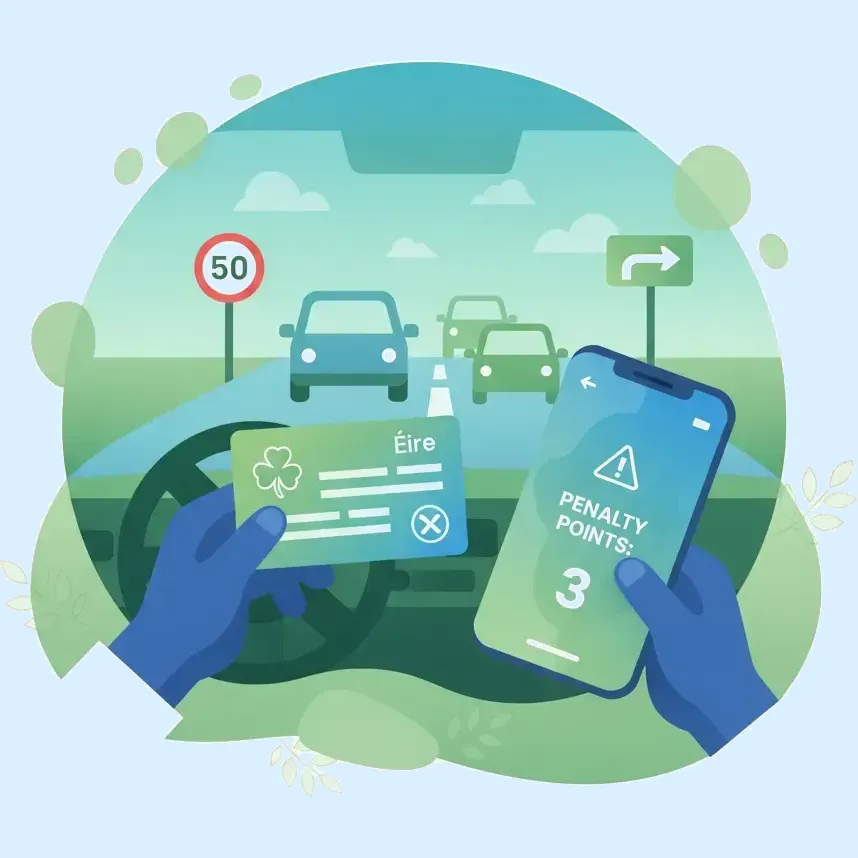
This lesson details the structure of the Irish penalty point system and its implications for novice Category AM riders. It highlights the specific traffic violations that trigger points and the thresholds that result in automatic disqualification. Learners will understand the process of moving from a learner permit to a full driving licence safely.
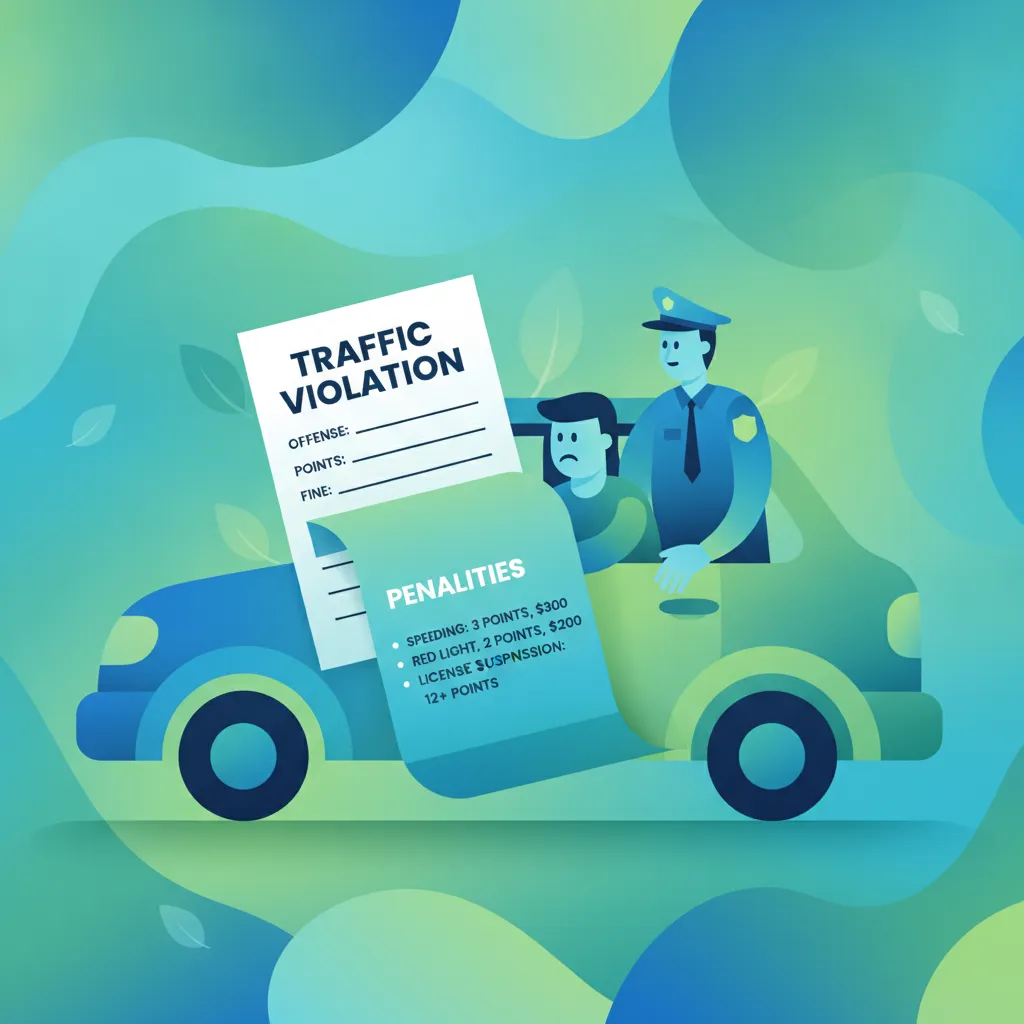
This lesson details the legal consequences of failing to adhere to the Irish Rules of the Road as a Category AM rider. It explains the structure of financial fines, penalty points, and situations that trigger immediate license suspension or disqualification. Understanding these severe penalties emphasizes the importance of consistent compliance and safe road use.

This lesson explains how to modify riding techniques when navigating wet tarmac, focusing on the heightened risk of hydroplaning and reduced tire grip. It details the necessity of increasing following distances, avoiding painted road markings, and executing smoother control inputs. Riders will understand how surface water accumulates in ruts, presenting severe hazards during heavy rainstorms.

This lesson details the legal consequences of non-compliance with Irish road traffic laws, focusing on fixed charge notices, fines, and court prosecutions. It explains how persistent traffic violations can lead to mandatory licence disqualification, vehicle seizure, and soaring insurance premiums. Motorcyclists will learn about the serious long-term impact that a criminal driving record has on employment.
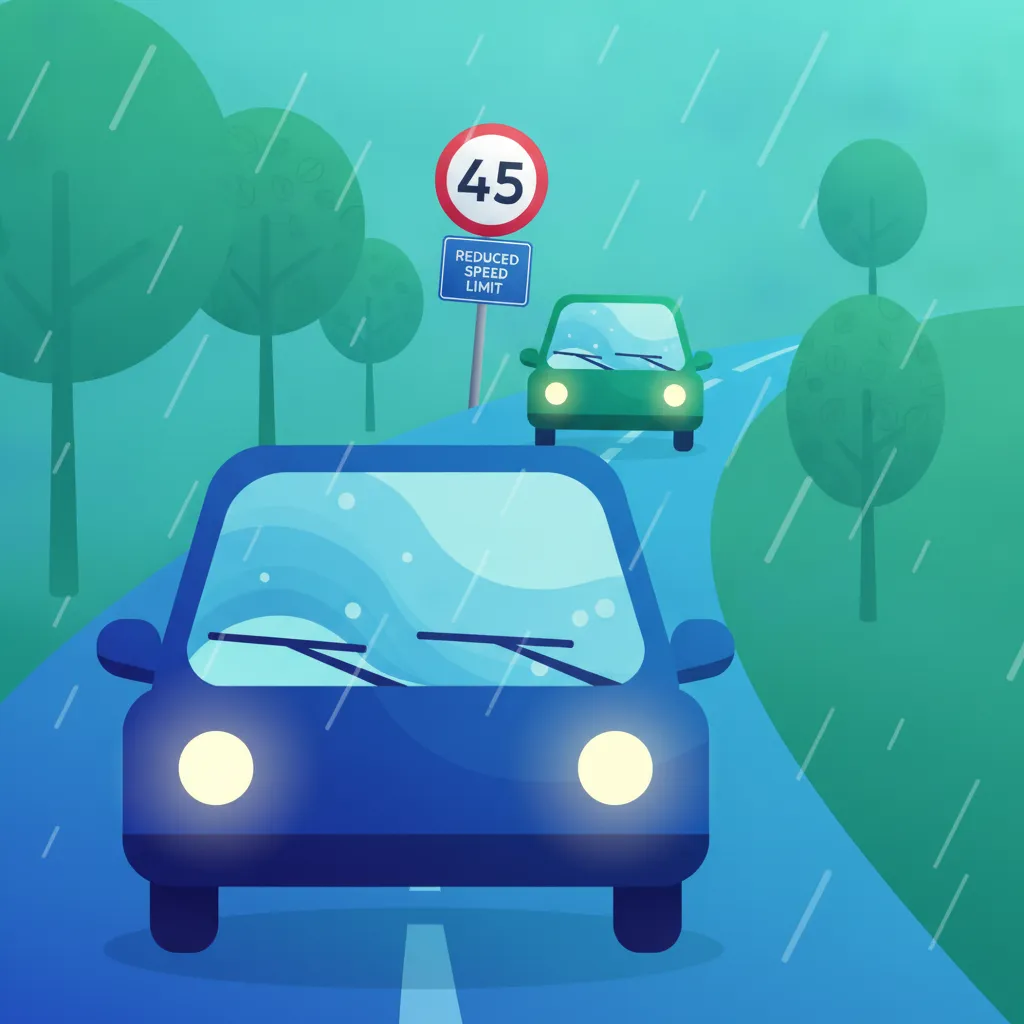
Adverse weather severely compromises tyre traction and forward visibility, demanding immediate speed reductions and extra space. This lesson focuses on the physics of aquaplaning in heavy rain, driving safely on black ice, and navigating thick fog using designated fog lamps. You will learn how to manage your windshield defoggers, adjust wipers, and handle high crosswinds that can destabilise your vehicle.

The Irish penalty points system is designed to deter unsafe driving practices by recording points against a driver's record for specific traffic violations. This lesson explains how points are accumulated, the lower threshold applied to learner and novice drivers, and the consequences of reaching the suspension limit. You will also learn about the role of the Garda Síochána in enforcing these road traffic laws and the financial impact points have on your insurance.
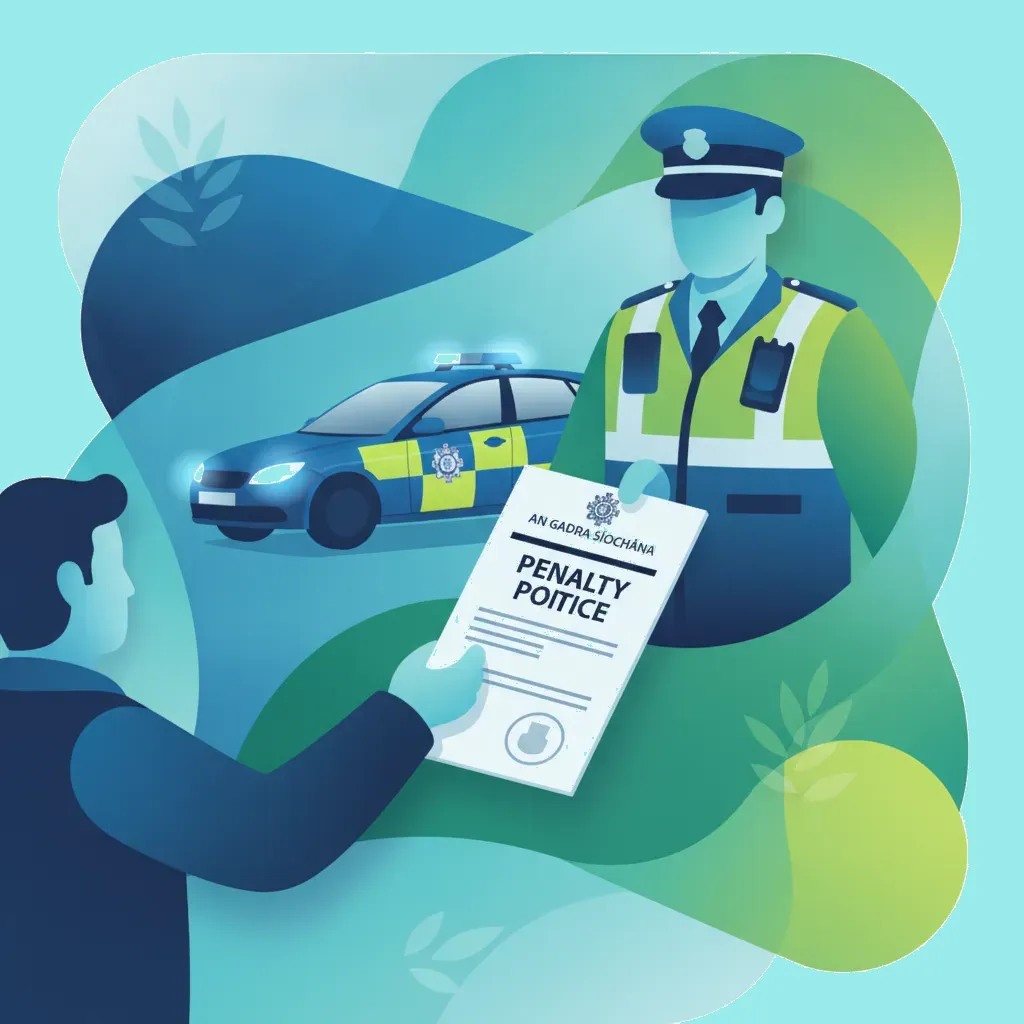
Violating Irish traffic laws triggers a structured enforcement process, starting with fixed charge notices and ending in severe court-ordered bans. This lesson details the roles of the Garda Síochána and the National Car Testing Service in enforcing safety regulations on roads. You will learn how fines are paid, how penalty points are formally added to your NDLS record, and the legal consequences of driving while disqualified.

This lesson focuses on riding techniques suited for gravel, loose surfaces, and rural roads. Learners will understand how to maintain stability, adjust braking and cornering approaches, and anticipate hazards such as potholes and farm vehicles, following RSA guidance for safe riding in the Irish countryside.
Find clear answers to common questions learners have about Importance of Helmet Use and Correct Fitting. Learn how the lesson is structured, which driving theory objectives it supports, and how it fits into the overall learning path of units and curriculum progression in Ireland. These explanations help you understand key concepts, lesson flow, and exam focused study goals.
In Ireland, your helmet must meet established European safety standards, often marked with an E-mark. Always check for the official sticker or marking indicating it is approved for road use.
Even if there is no visible damage, an impact can cause hairline fractures in the outer shell or compress the inner shock-absorbing liner. This compromises the helmet's structural integrity, making it ineffective in a subsequent collision.
Yes, significantly. If the chin strap is not fastened correctly, the helmet can easily be knocked off your head during a collision, leaving you unprotected. It should be snug enough that you can only fit two fingers between the strap and your chin.
While legal if they meet safety standards, full-face helmets offer significantly better protection for your chin and face. The theory test emphasizes choosing the safest available equipment for your riding category.
Use the practice question search tool to pinpoint specific topics, road signs, or rules you need to master for your official Driver Theory Test. Refine your study strategy and ensure comprehensive preparation for all aspects of the Irish driving exam. Start your focused revision now and build confidence for your learner permit test.