
This lesson explores the critical balance between legal speed limits and the physical requirements of operating heavy goods vehicles. You will learn how to adjust your speed based on load weight and road conditions, ensuring you meet the safety standards required for the Category C Irish driving theory test.
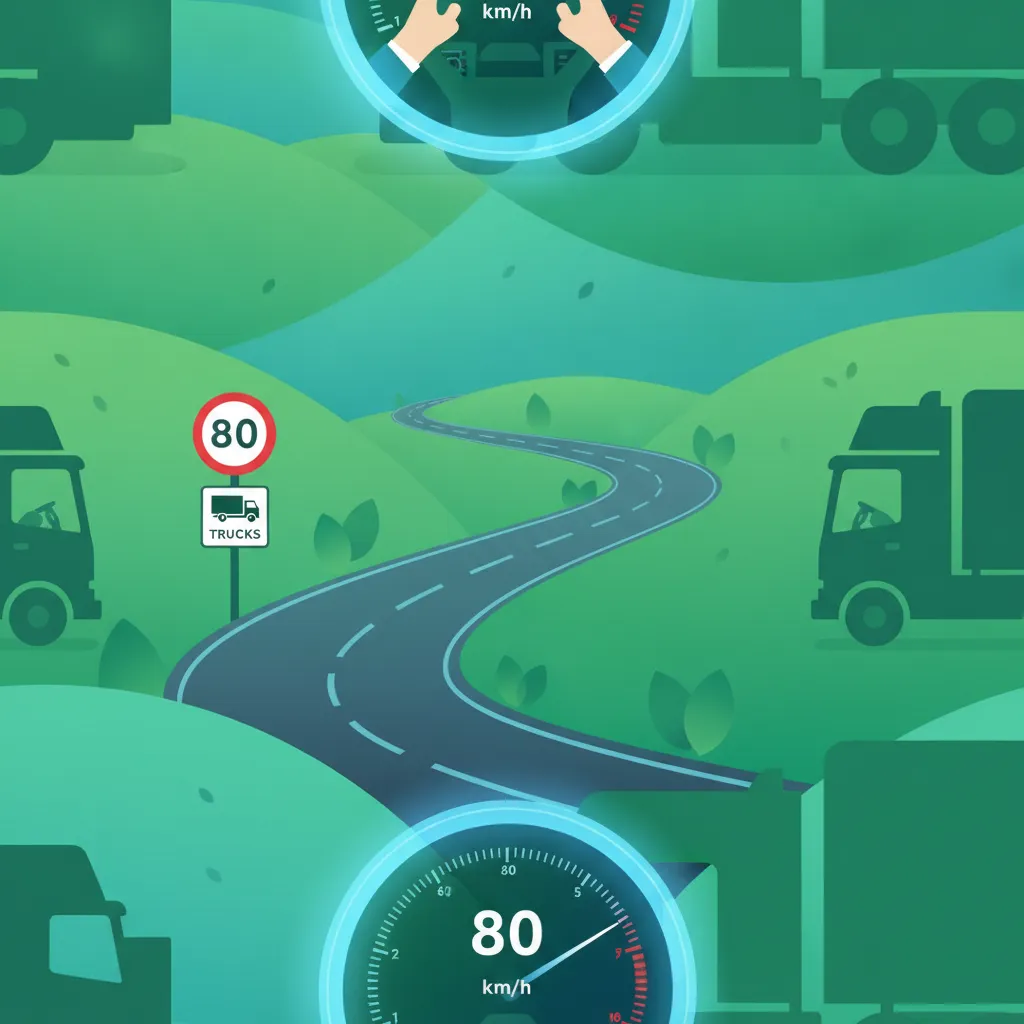
Lesson content overview
Managing the speed of a heavy goods vehicle (HGV) is one of the most critical responsibilities of a professional driver. Unlike passenger cars, HGVs possess immense mass and altered handling dynamics, meaning errors in speed management can carry catastrophic consequences.
This lesson covers the statutory speed limits for goods vehicles across various road networks in Ireland, the physical impact of cargo mass and distribution on vehicle control, and the legal and technical requirements of speed limiter systems. Under the Irish Goods Vehicle Driver Theory Test Course (Category C) framework, mastering these concepts is essential to ensuring safety, maintaining legal compliance, and protecting vulnerable road users.
In Ireland, statutory speed limits are set to reduce collision risks and ensure vehicle stability. However, as a professional driver, you must understand that the general speed limit displayed on road signs is often not the limit that applies to your heavy goods vehicle. Large commercial vehicles are subject to lower, vehicle-specific speed limits on many road types.
The statutory speed limits for goods vehicles in Ireland depend on the vehicle’s Design Gross Vehicle Weight (DGVW) and whether it is towing a trailer.
Remember: The speed limit is a maximum, not a target. You must always reduce your speed below the statutory limit to match prevailing road, weather, traffic, and load conditions.
A vehicle speed limiter is an electronic device designed to prevent commercial vehicles from exceeding a pre-set speed. These systems are critical for maintaining road safety, reducing fuel consumption, and limiting harmful emissions.
The maximum total weight of the vehicle, including its body, payload, fuel, driver, and passengers, for which the vehicle was designed and built by the manufacturer.
Under Irish and European law, speed limiters are mandatory for:
For goods vehicles exceeding 3,500 kg, the speed limiter must be calibrated and sealed so that the vehicle cannot exceed 90 km/h.
Modern speed limiters are integrated directly into the vehicle’s Engine Control Unit (ECU). The process occurs in a continuous feedback loop:
Tampering is a Criminal Offence: Overriding, bypassing, or tampering with a speed limiter or its seal is illegal. Doing so carries severe consequences, including heavy fines, vehicle impoundment, criminal prosecution, and the immediate suspension of your professional driver credentials (CPC).
The total weight of your vehicle and how that weight is distributed across the axles radically alters its handling, stability, and stopping distance. Drivers must adjust their operational speed according to the characteristics of their cargo.
The kinetic energy of a moving vehicle is directly proportional to its mass and the square of its speed ().
When you double the weight of a vehicle, you double its kinetic energy. However, if you double the speed, the kinetic energy increases fourfold. For a fully loaded Category C vehicle, this means the brakes must convert an enormous amount of kinetic energy into heat energy to bring the vehicle to a halt.
Safe cornering speed is heavily influenced by how your cargo is distributed within the vehicle.
Keep the Center of Gravity Low: Heavily concentrated loads should be placed as low as possible in the cargo area. A high center of gravity increases the risk of a vehicle rollover, even at speeds well below the posted limit on roundabouts or sharp bends.
Distribute Weight Evenly Across Axles: Overloading the rear axle reduces traction on the steering axle, making the vehicle prone to understeer. Overloading the front axle makes steering heavy and unresponsive.
Prevent Cargo Shifting: Unsecured cargo can slide during cornering or braking. This sudden shift transfers weight dynamically, which can cause an immediate loss of control or rollover if speed is not reduced beforehand.
Statutory speed limits are calculated for ideal conditions: dry tarmac, clear visibility, and flat terrain. When any of these elements deteriorate, your operational speed must decrease accordingly.
The contact patch between your tyres and the road surface is the only source of grip for braking, steering, and accelerating. Weather hazards severely compromise this grip:
Not all road surfaces offer the same level of adhesion.
Failure to manage speed effectively or comply with regulatory controls can lead to dangerous situations, severe legal penalties, and fatal collisions.
A common violation is driving a goods vehicle (>3,500 kg) at the general traffic limit of 100 km/h on dual carriageways instead of the HGV statutory limit of 80 km/h. This significantly reduces your reaction margins and increases the risk of a rear-end collision with slower-moving or stationary hazards.
Driving at the maximum legal speed on a windy day with a high-sided trailer (such as a curtain-sider) or carrying a fluid load without baffles is highly dangerous.
Relying solely on your service (foot) brakes to manage speed on long descents will cause them to overheat and fail. Professional drivers must use engine braking, exhaust brakes, or electromagnetic/hydraulic retarders to control their descent speed.
Understanding how physical laws and actions interact is key to passing your Category C theory exam and driving safely on the road.
To build a complete understanding of heavy vehicle operation, you should connect the concepts in this lesson to other areas of your training:
This lesson covers the statutory speed limits specific to Category C goods vehicles on Irish roads, including the mandatory 80 km/h limit on national roads and dual carriageways for vehicles over 3,500 kg DGVW. It explains how vehicle speed limiters function legally and technically, restricting maximum speed to 90 km/h through ECU-controlled fuel restriction. The physics of heavy loads emphasises that kinetic energy grows with the square of speed, requiring longer stopping distances and lower speeds when loaded or descending gradients. Critical safety adaptations include reducing speed for wet conditions (doubling stopping distance) and icy roads (up to tenfold increase), while load distribution rules prevent rollover by keeping cargo low and evenly distributed.
A short set of high-value points that capture the most important learning from this lesson.
Goods vehicles over 3,500 kg DGVW have lower statutory speed limits than standard traffic on Irish roads (80 km/h on national roads and dual carriageways versus 100 km/h for cars).
Vehicle speed limiters are legally mandatory for all goods vehicles exceeding 3,500 kg and must be calibrated to prevent exceeding 90 km/h.
Kinetic energy increases with the square of speed, meaning a fully loaded heavy vehicle requires dramatically longer stopping distances than an empty one.
Cargo must be distributed low and evenly to prevent high centre of gravity rollover risks, especially on roundabouts and sharp bends.
You must always reduce speed below the statutory limit to match weather conditions, as wet roads at least double stopping distance and ice can increase it tenfold.
Explore all units and lessons included in this driving theory course.
Urban areas: 50 km/h (or 30/40 km/h where posted); Rural roads: 70 km/h; National/dual carriageways: 80 km/h; Motorways: 80-90 km/h for vehicles over 3,500 kg.
Speed limiters work through ECU feedback, restricting fuel flow rather than applying brakes—they are a legal requirement, not an option.
Fully loaded vehicles need lower speeds and lower gears on descents to prevent brake fade from overheating.
High-sided vehicles are vulnerable to crosswinds, and liquid tankers without baffles risk rollover from liquid surge during braking.
Temporary speed limits at roadworks are legally binding regardless of what the general road signs indicate.
Driving at the general 100 km/h limit on dual carriageways instead of the HGV statutory limit of 80 km/h.
Assuming speed limiter prevents all speeding—limiters only cap motorway speeds; drivers must still observe lower limits on other roads.
Relying solely on service brakes to control speed on long downhill gradients, leading to brake fade and failure.
Failing to reduce speed proactively when weather deteriorates, thinking the posted limit is safe regardless of conditions.
Carrying unsecured or poorly distributed cargo that can shift during cornering or braking, altering the vehicle's centre of gravity.
Lesson content overview
A short set of high-value points that capture the most important learning from this lesson.
Goods vehicles over 3,500 kg DGVW have lower statutory speed limits than standard traffic on Irish roads (80 km/h on national roads and dual carriageways versus 100 km/h for cars).
Vehicle speed limiters are legally mandatory for all goods vehicles exceeding 3,500 kg and must be calibrated to prevent exceeding 90 km/h.
Kinetic energy increases with the square of speed, meaning a fully loaded heavy vehicle requires dramatically longer stopping distances than an empty one.
Cargo must be distributed low and evenly to prevent high centre of gravity rollover risks, especially on roundabouts and sharp bends.
You must always reduce speed below the statutory limit to match weather conditions, as wet roads at least double stopping distance and ice can increase it tenfold.
Explore all units and lessons included in this driving theory course.
Urban areas: 50 km/h (or 30/40 km/h where posted); Rural roads: 70 km/h; National/dual carriageways: 80 km/h; Motorways: 80-90 km/h for vehicles over 3,500 kg.
Speed limiters work through ECU feedback, restricting fuel flow rather than applying brakes—they are a legal requirement, not an option.
Fully loaded vehicles need lower speeds and lower gears on descents to prevent brake fade from overheating.
High-sided vehicles are vulnerable to crosswinds, and liquid tankers without baffles risk rollover from liquid surge during braking.
Temporary speed limits at roadworks are legally binding regardless of what the general road signs indicate.
Driving at the general 100 km/h limit on dual carriageways instead of the HGV statutory limit of 80 km/h.
Assuming speed limiter prevents all speeding—limiters only cap motorway speeds; drivers must still observe lower limits on other roads.
Relying solely on service brakes to control speed on long downhill gradients, leading to brake fade and failure.
Failing to reduce speed proactively when weather deteriorates, thinking the posted limit is safe regardless of conditions.
Carrying unsecured or poorly distributed cargo that can shift during cornering or braking, altering the vehicle's centre of gravity.
Explore search topics learners often look for when studying Speed Management for Goods Vehicles. These topics reflect common questions about road rules, driving situations, safety guidance, and lesson level theory preparation for learners in Ireland.
Browse additional driving theory lessons that cover connected traffic rules, road signs, and common driving situations related to this topic. Improve your understanding of how different rules interact across everyday traffic scenarios.
Learn the physical factors that influence stopping distances for Category C vehicles, including the impact of cargo mass and speed on braking effectiveness. This theory guide explains how auxiliary braking systems work and why heavy vehicles require greater distances to come to a safe, controlled stop on Irish roads.
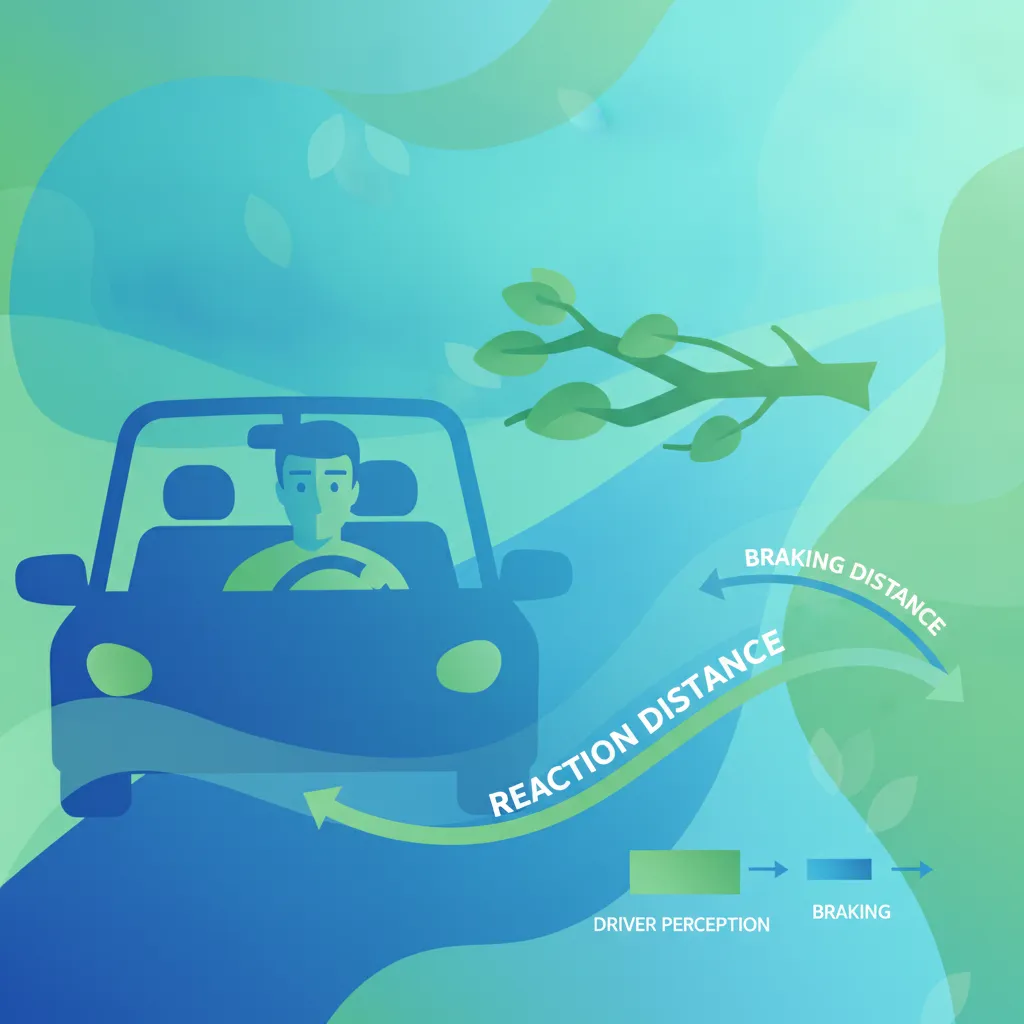
This lesson details how total stopping distance scales with vehicle mass, explaining the critical combination of perception-reaction delay and mechanical braking time. It covers the operation of main air-brake systems, auxiliary engine retarders, and trailer-coupling brake setups. Drivers will learn to maintain safe following distances and apply progressive braking patterns to avoid dangerous brake fade.
The physical scale of a coach or bus generates significant momentum that demands extensive space to bring the vehicle to a safe stop. This lesson explains vehicle weight mechanics, the physics of kinetic energy, and how center of gravity affects chassis stability during stops. Drivers will learn to assess braking capacity, accounting for wet road conditions and high passenger counts.
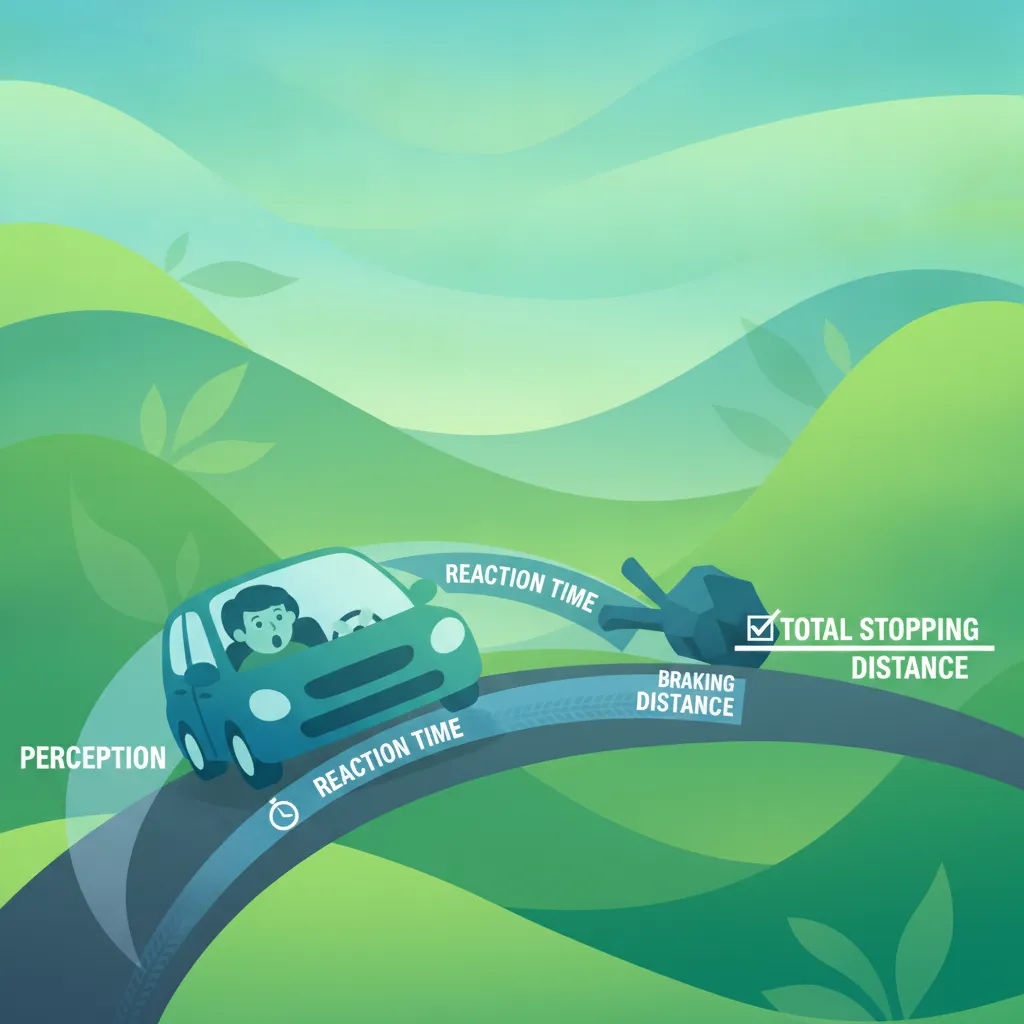
A vehicle's total stopping distance is the sum of your thinking (reaction) distance and the mechanical braking distance. This lesson explains how reaction times are slowed by fatigue, distraction, or health, and how braking distance scales exponentially with your vehicle's speed. You will understand how factors like worn tyres, bad brakes, or slippery asphalt can dramatically increase your overall stopping distance.
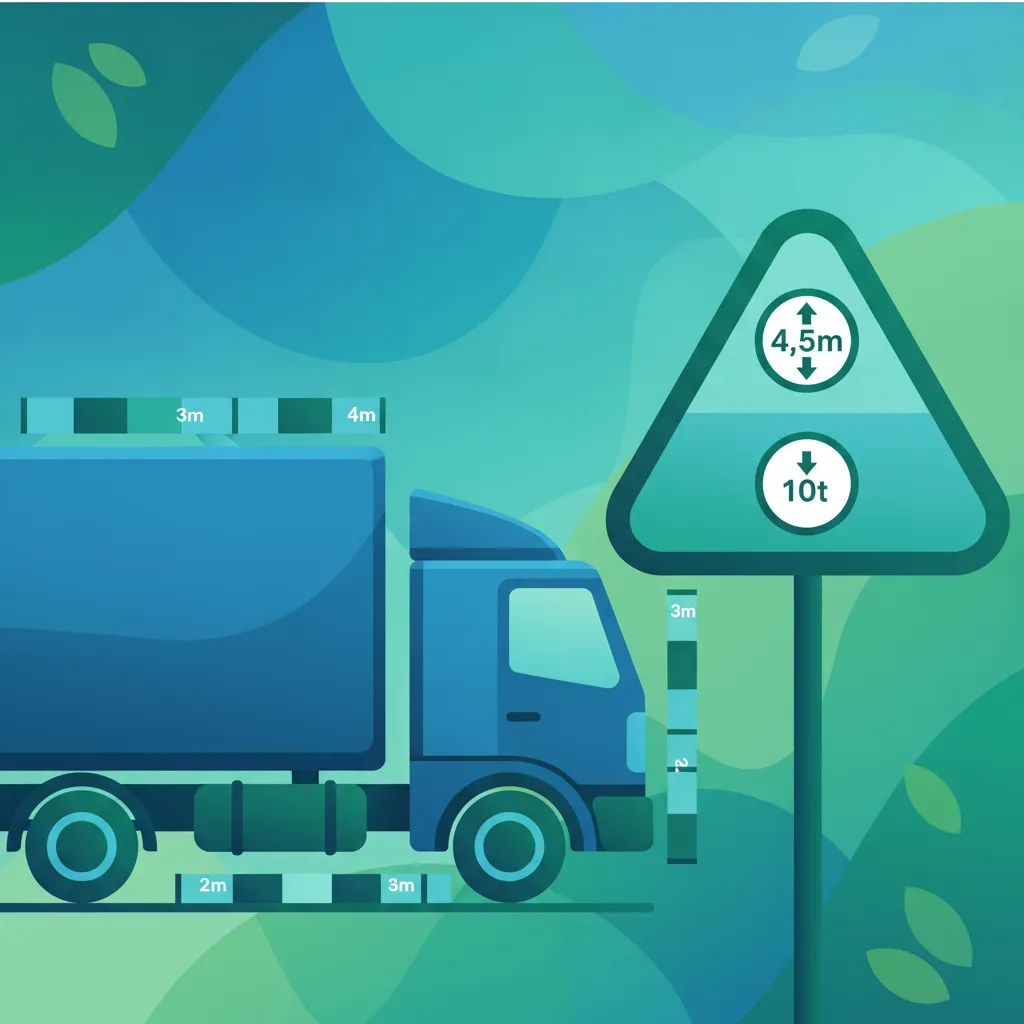
This lesson details the statutory limits on width, height, and length that apply to heavy goods vehicles under Irish transport laws. It explains the mathematical calculation of gross vehicle weight and maximum permissible axle loads to prevent infrastructure damage. Drivers will learn the practical significance of these numbers when passing low bridges or entering height-restricted tunnels.

Maintaining an extensive buffer zone ahead of a large passenger vehicle is critical to ensuring enough space for emergency maneuvers. This lesson teaches the time-gap method, detailing how following distances must double on wet roads or increase with full passenger loads. It builds hazard anticipation skills, teaching drivers to read distant traffic cues and react early to hazards.

This lesson teaches professional drivers how to systematically map out travel routes that are compatible with heavy vehicle dimensions. It covers the limitations of consumer-grade GPS systems and emphasizes the use of specialized truck navigation systems that account for low bridges and load restrictions. Drivers will also learn to plan for congestion, access timing regulations, and proper entrance paths into commercial zones.

This lesson explores the legal frameworks and structural limitations that govern maximum vehicle weights on specific bridges and underground routes. It explains local authority by-laws, city-centre heavy vehicle exclusion zones, and environmental restrictions across major urban centres in Ireland. Drivers will learn to identify safe alternative bypass routes when encountering weight-restrictive public structures.

This lesson investigates the relationship between heavy goods vehicle dimensions and the physical constraints of Irish road networks. It highlights how vehicle length and weight contribute to pavement wear and stress on aging bridges and tunnels. Drivers will analyze specific high-risk zones, such as narrow lanes and gauntlet points, where extreme spatial awareness is mandatory.

This lesson explores the safe operation of heavy transport vehicles during severe meteorological hazards typical of the Irish climate. It teaches techniques for adjusting speed and doubling following distances to prevent loss of steering traction and control on waterlogged or icy roadways. Drivers will understand how to manage lateral aerodynamic forces from crosswinds on high-sided goods vehicles.
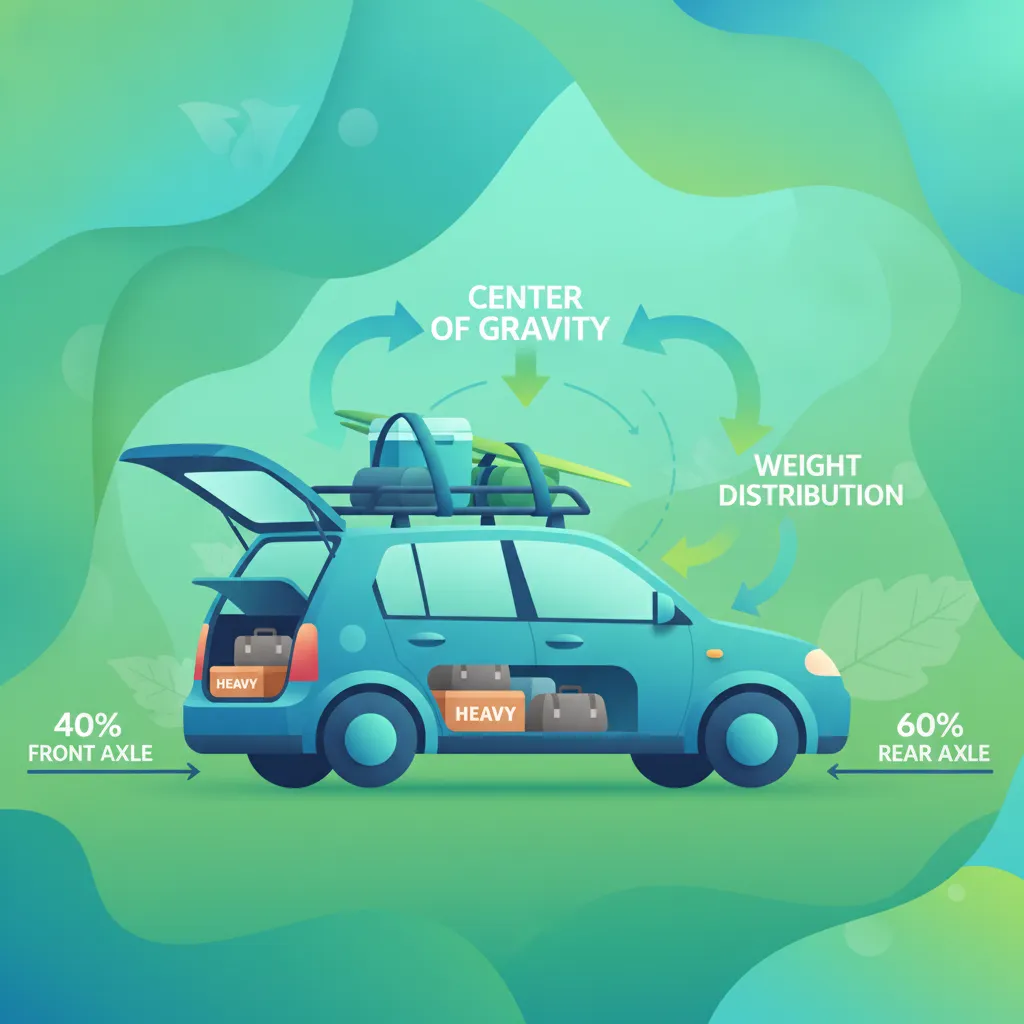
This lesson explains the physical principles of weight distribution and axle overloading on heavy commercial vehicles. It examines how a high centre of gravity increases tipping risks during cornering and alters overall braking effectiveness. Drivers will discover methods for positioning cargo to distribute weight evenly, ensuring optimal steering control and stable vehicle dynamics.
Understand the critical theory behind maintaining speed control on steep descents for large, loaded goods vehicles. This lesson details how to effectively use engine braking, retarders, and proper gear selection to prevent brake fade and maintain vehicle stability when navigating challenging terrain on the Irish road network.
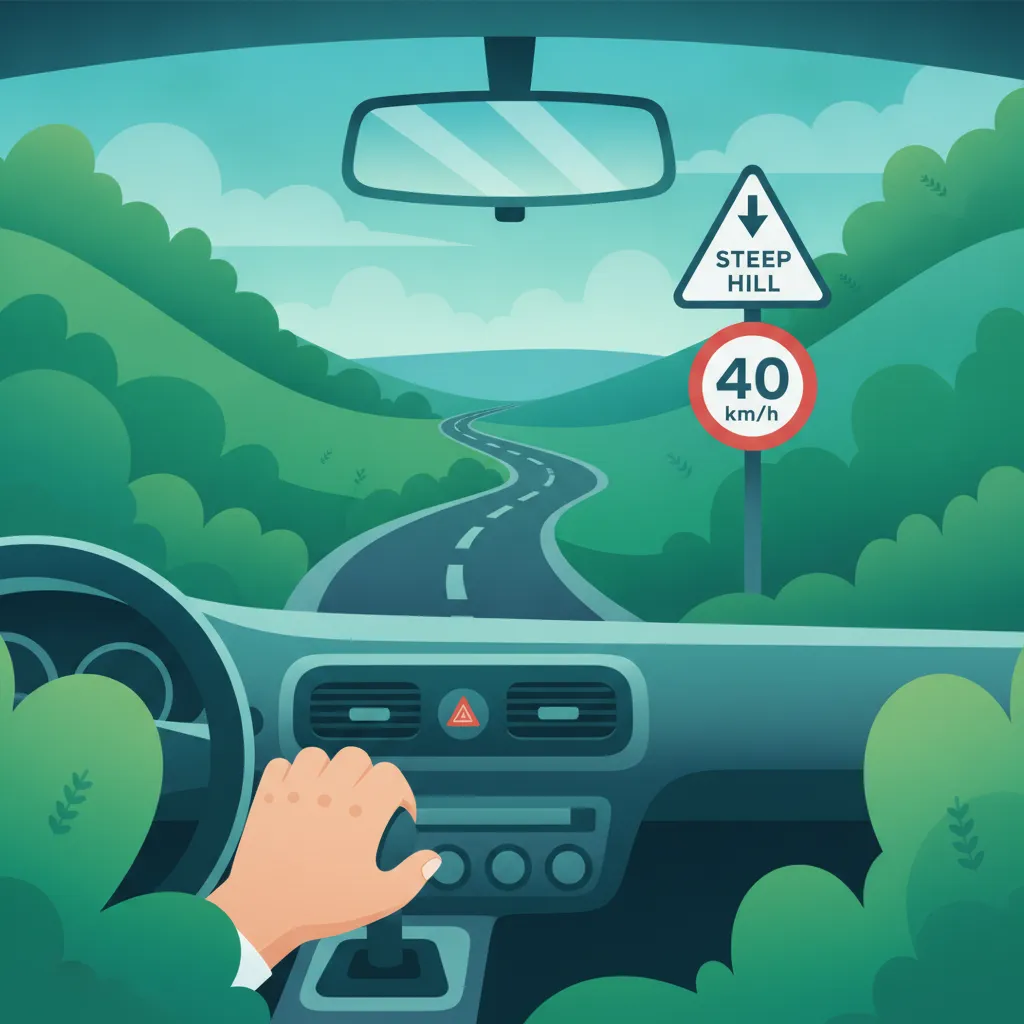
This lesson focuses on the technical skills required to navigate steep hills and prolonged descents without losing vehicle control. It explains the mechanics of engine braking, correct low-gear selection, and how gravity affects heavily loaded vehicles on downward slopes. Drivers will study safety techniques to prevent kinetic runaway situations and learn how to manage vehicle speed defensively.
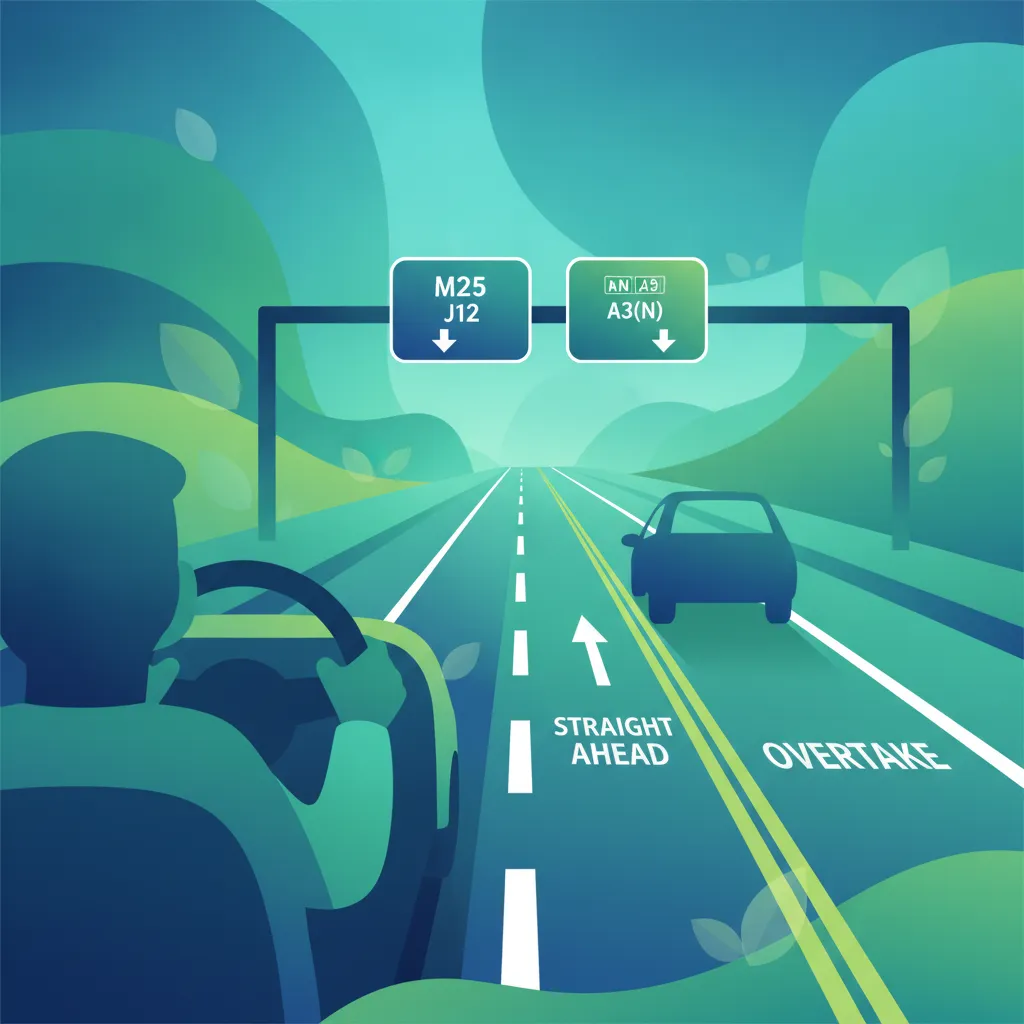
This lesson describes the legal regulations and driving conventions for operating heavy commercial vehicles on motorways and high-speed dual carriageways. It explains specific Irish motorway rules, including bans on heavy goods vehicles occupying the outer overtaking lanes. Drivers will learn to manage high-speed slip-road merging, maintain safe spacing buffers, and anticipate long-range changes in overall traffic flow.
This lesson explores the safe operation of heavy transport vehicles during severe meteorological hazards typical of the Irish climate. It teaches techniques for adjusting speed and doubling following distances to prevent loss of steering traction and control on waterlogged or icy roadways. Drivers will understand how to manage lateral aerodynamic forces from crosswinds on high-sided goods vehicles.

This lesson addresses the mechanical dynamics of turning long-wheelbase and articulated commercial vehicles at intersections, junctions, and roundabouts. It covers the necessity of deep cornering lines, early mirror checks, and correct signaling to warn vulnerable road users of wide turn maneuvers. Drivers will learn how to minimize rear cut-in and ensure the entire vehicle clears urban obstacles safely.
This lesson explains the physical principles of weight distribution and axle overloading on heavy commercial vehicles. It examines how a high centre of gravity increases tipping risks during cornering and alters overall braking effectiveness. Drivers will discover methods for positioning cargo to distribute weight evenly, ensuring optimal steering control and stable vehicle dynamics.

Sudden or jerky vehicle movements can cause immediate discomfort or direct physical injuries to onboard passengers, particularly standing occupants. This lesson teaches progressive throttle control, gradual gear shifts, and smooth steering inputs that stabilize the heavy vehicle body. Drivers will master the technique of progressive braking to ensure comfortable, safe slowing actions at junctions.

This lesson focuses on the physical mechanics of long-wheelbase and articulated vehicles when executing turns in restricted spaces. It explains concepts like swept path, rear overhang, and turning circles, which must be accounted for to prevent side-swiping collisions. Drivers will discover strategic route-planning techniques to avoid congested urban layouts and unsuitable rural corridors.
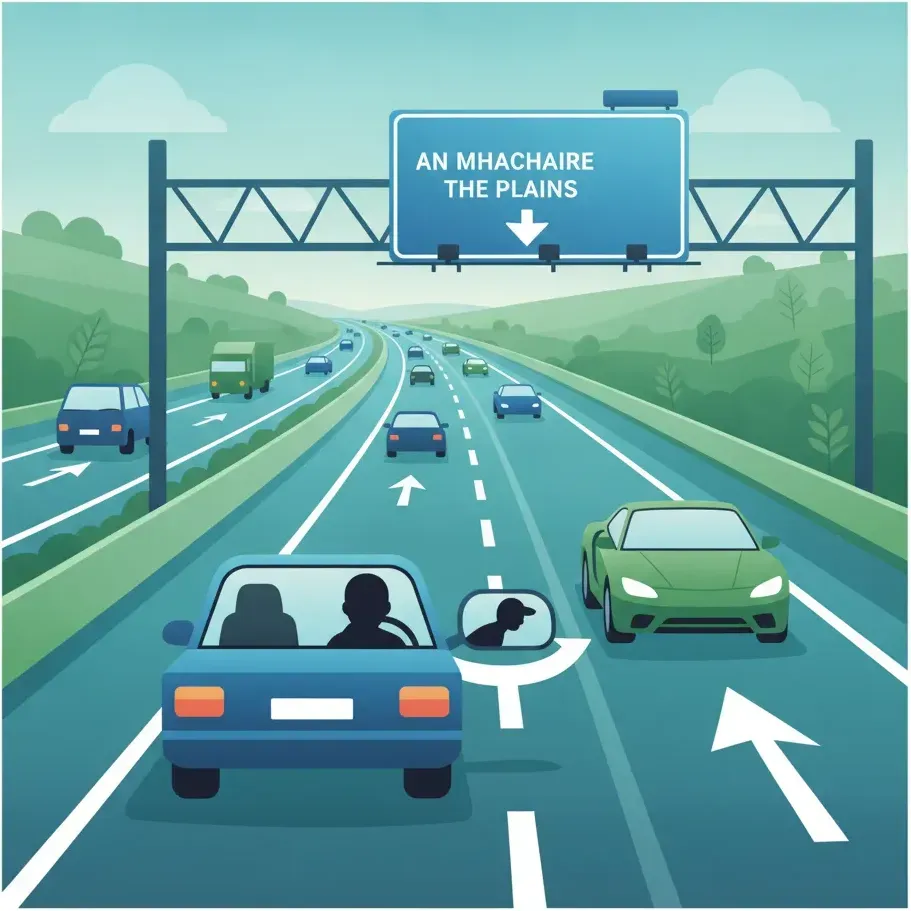
Merging a long, heavy passenger vehicle onto high-speed motorways requires matching the traffic speed within the limited length of slip lanes. This lesson covers signal timing, safe lane-merging gaps, and maintaining control during overtaking maneuvers on national routes. Drivers will learn to prioritize passenger comfort and vehicle stability, preventing sudden weight shifts during lane entries.
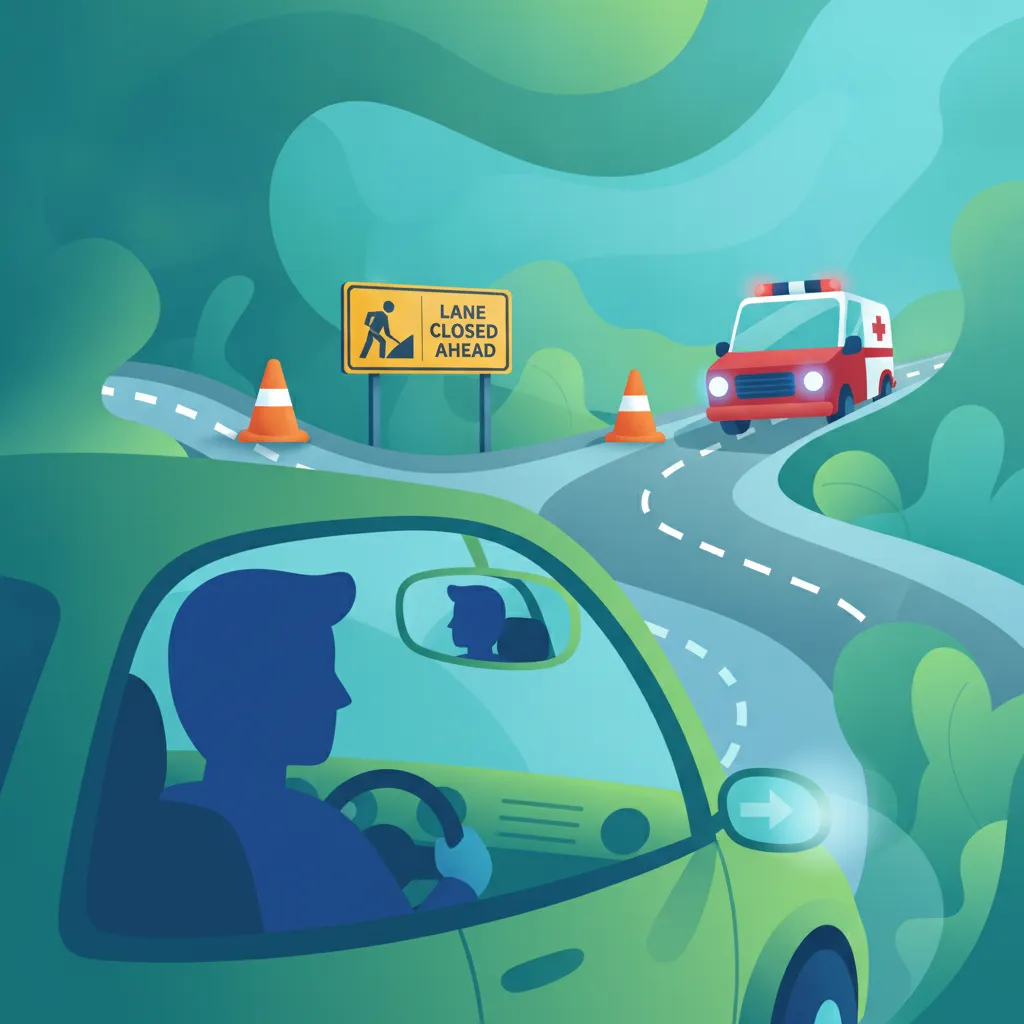
This lesson focuses on the defensive driving skills needed when encountering highway maintenance zones, narrow contraflows, and active roadside workers. It details the precise steps a driver must take when experiencing a major mechanical breakdown, including parking on the hard shoulder and deploying warning triangles. Drivers will learn standard emergency procedures to coordinate with vehicle rescue operations and safety personnel.

This lesson addresses the unique environmental and logistical challenges faced during delivery stops in commercial town and city centers. It covers the legal frameworks governing municipal loading zones, double-parking hazards, and temporary pedestrian-only street restrictions. Drivers will acquire practical skills for managing traffic build-up, utilizing visual spotters, and securing the vehicle while unloading cargo.
Find clear answers to common questions learners have about Speed Management for Goods Vehicles. Learn how the lesson is structured, which driving theory objectives it supports, and how it fits into the overall learning path of units and curriculum progression in Ireland. These explanations help you understand key concepts, lesson flow, and exam focused study goals.
Yes, goods vehicles often have lower statutory speed limits than passenger cars on certain road types. It is vital to check the specific limits assigned to your vehicle category in the Rules of the Road to ensure compliance.
Increased cargo mass significantly increases your vehicle's momentum and stopping distance. Even if a road sign indicates a higher speed, you are legally and professionally obligated to drive at a speed that allows you to stop safely within your field of vision, which is harder with a heavy load.
Speed limiters are a legal requirement for most commercial goods vehicles. Driving with a faulty or tampered limiter is a serious offence that can lead to vehicle impoundment, fines, and failure of safety inspections, as it directly violates transport safety regulations.
Because heavy vehicles have a high centre of gravity and large mass, they are more susceptible to skidding. You must increase your following distance significantly and reduce your speed well below the statutory limit to account for the reduced tyre grip and increased risk of jack-knifing.
Use the practice question search tool to pinpoint specific topics, road signs, or rules you need to master for your official Driver Theory Test. Refine your study strategy and ensure comprehensive preparation for all aspects of the Irish driving exam. Start your focused revision now and build confidence for your learner permit test.