
This lesson details the specific legal requirements and safety conventions for operating heavy goods vehicles on Irish motorways and dual carriageways. It builds on your knowledge of vehicle dimensions to ensure you understand how to navigate high-speed roads safely and legally as a Category C driver.
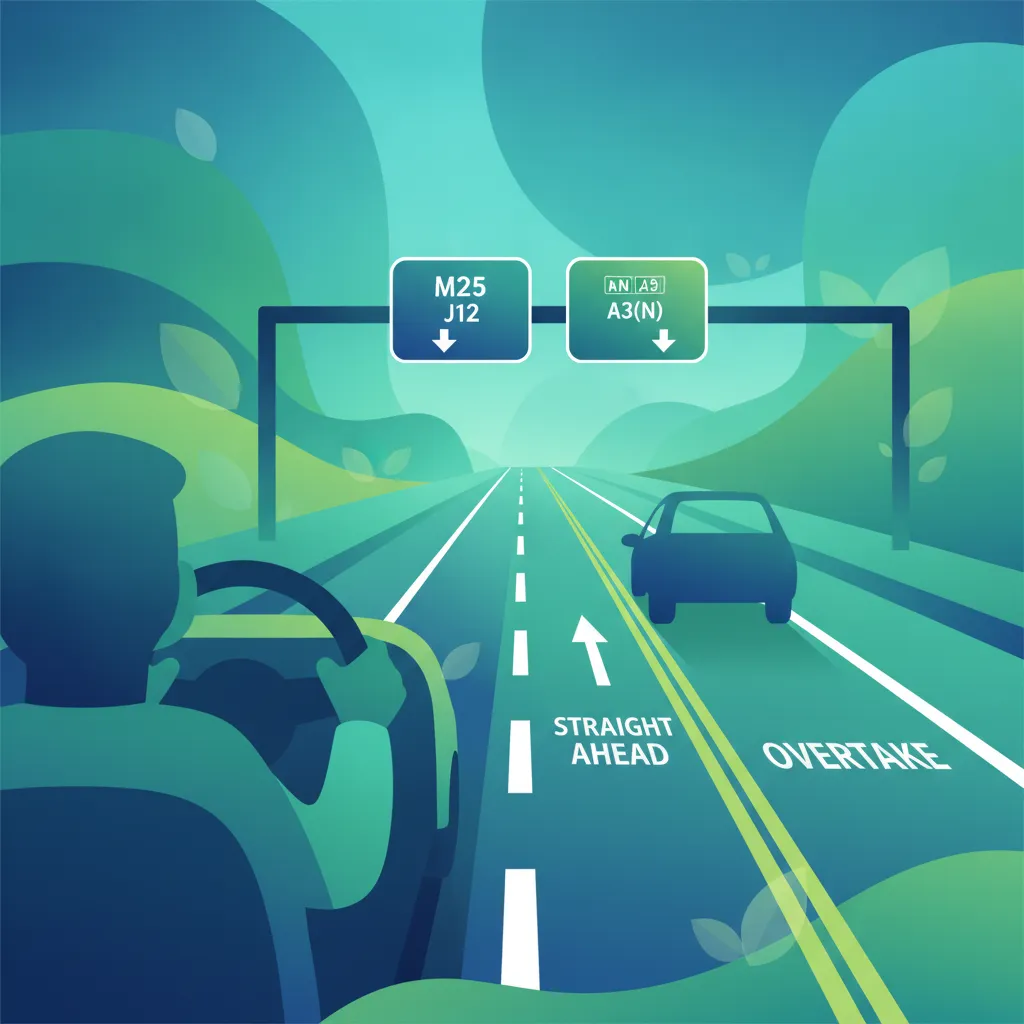
Lesson content overview
Operating heavy commercial vehicles on motorways and high-speed dual carriageways requires a high level of spatial awareness, precise vehicle control, and a thorough understanding of the law. Due to the high speeds and sheer mass of Category C vehicles, errors can have catastrophic consequences.
This lesson covers the legal frameworks, vehicle dynamics, and defensive driving techniques required to operate heavy goods vehicles (HGVs) safely on Ireland's high-speed road networks.
High-speed environments amplify the physical forces acting on an HGV. Understanding how speed, mass, and momentum interact is critical for maintaining vehicle control and ensuring the safety of all road users.
The kinetic energy of a moving vehicle increases with the square of its speed. For a fully loaded Category C rigid truck, this means that even a minor increase in speed results in a massive increase in the energy required to bring the vehicle to a stop.
The distance a vehicle travels from the moment the brakes are fully applied until it comes to a complete stop. This is distinct from thinking distance (reaction time) and is heavily influenced by vehicle weight, speed, and road surface conditions.
At 100 km/h, a fully loaded HGV can require up to twice the braking distance of a standard passenger car under identical dry conditions. When the vehicle is carrying its maximum payload, the brakes must convert a tremendous amount of kinetic energy into heat. Prolonged or sudden hard braking can lead to brake fade—a temporary reduction or complete loss of braking power caused by excessive heat build-up.
Because of their high centre of gravity, HGVs are susceptible to lateral instability. Sudden steering inputs at high speeds can cause the load to shift, potentially leading to a rollover or loss of directional control.
Drivers must make smooth, progressive steering movements. Rapid lane changes or sharp steering adjustments to avoid hazards can destabilise the suspension, causing the vehicle to sway violently or roll over.
Speed limits for heavy goods vehicles are strictly regulated to mitigate the risks associated with high-speed mass momentum. These limits apply even if the general speed limit for passenger cars on the motorway or dual carriageway is higher.
The maximum legal speed limits for commercial goods vehicles on Irish motorways vary depending on the vehicle configuration:
Under European and Irish law, goods vehicles with a maximum authorized mass (MAM) exceeding 3.5 tonnes must be fitted with an approved speed limiting device.
Lane discipline on multi-lane high-speed roads is designed to maintain a smooth, predictable traffic flow and prevent slower, larger vehicles from blocking faster traffic.
One of the most critical regulations governing HGV operations on Irish motorways is the restriction on using the outer (fast) overtaking lane.
On a standard three-lane motorway:
Entering a high-speed motorway from an slip road (on-ramp) is one of the most demanding manoeuvres for an HGV driver. Because of the vehicle's weight, acceleration is slow, requiring strategic planning and spatial awareness.
The slip road is designed to allow entering vehicles to match the speed of the traffic already on the motorway. HGV drivers must use the entire length of the acceleration lane to build up speed. Attempting to merge onto a motorway at a low speed forces oncoming vehicles to brake sharply, creating a highly dangerous speed differential.
Assess the Slip Road: As you enter the slip road, look ahead to check for any slow-moving vehicles, roadworks, or sharp bends.
Check Mirrors and Blind Spots: Monitor your right-hand mirrors and blind-spot mirrors early to evaluate the density and speed of the traffic in Lane 1.
Signal Early: Apply your right turn indicator well in advance to signal your intention to merge, giving mainline drivers time to adjust their positions.
Match Traffic Speed: Accelerate firmly along the acceleration lane, aiming to match the speed of the vehicles in Lane 1 as closely as possible.
Identify and Target a Gap: Select a safe gap in the traffic. Avoid forcing your way in; mainline traffic should not have to brake or change lanes to accommodate you.
Merge Smoothly: Steer gently into Lane 1 once a safe gap is secured, cancel your signal, and immediately re-assess your following distance.
Never stop at the end of an acceleration lane unless traffic is completely stationary. Stopping makes it virtually impossible for a heavy commercial vehicle to accelerate from 0 km/h to motorway speeds safely, creating an extreme hazard for vehicles behind you.
At high speeds, a heavy vehicle requires a substantial spatial buffer to react and stop safely. Failing to maintain this buffer is a leading cause of multi-vehicle collisions on dual carriageways.
Under normal, dry road conditions, professional drivers must maintain a minimum following distance of at least two seconds behind the vehicle ahead.
To measure this, select a stationary object on the roadside (such as a gantry, sign, or bridge). When the rear of the vehicle ahead passes that object, count: "One thousand and one, one thousand and two." If the front of your HGV passes the object before you finish counting, you are tailgating and must drop back.
The two-second rule is a minimum standard for ideal conditions. In practice, professional drivers must scale this distance based on several key factors:
Because of the speed of travel on motorways (approx. 25–28 metres per second), drivers must scan the road far ahead to anticipate changes in traffic flow before they require emergency action.
While car drivers often focus only on the immediate vehicle in front of them, professional HGV drivers must scan up to 30 seconds ahead (approximately 750 to 800 metres at motorway speeds).
Look for early indicators of potential hazards, including:
A professional driver actively manages the space around their vehicle, not just the space in front. This is often referred to as maintaining a "space bubble."
Failure to adhere to motorway regulations is not only illegal but also introduces extreme safety risks. The table below outlines common violations, their consequences, and how to avoid them.
| Common Violation | Immediate Consequence | Safe Professional Practice |
|---|---|---|
| Prolonged Outer-Lane Driving | Blocks faster traffic, causes congestion, and risks a fine/penalty points. | Use only the inner lanes (Lanes 1 & 2) unless overtaking with a permitted vehicle. |
| Low-Speed Merging | Forces mainline traffic to brake abruptly, risking rear-end collisions. | Use the full length of the acceleration lane to match the speed of Lane 1 traffic. |
| Tailgating (Insufficent Gap) | Eradicates reaction time, leading to severe under-run collisions if the lead vehicle stops. | Maintain a minimum 2-second gap in dry weather; increase in wet weather or when fully loaded. |
| Improper Lane Changes | Side-swipes or forces adjacent vehicles off the road due to blind spots. | Always signal early, use all mirrors, and change lanes gradually and smoothly. |
| Failure to Anticipate Merges | Causes conflicts at slip roads, forcing entering drivers onto the hard shoulder. | Scan slip roads ahead and proactively adjust speed or change lanes to facilitate merging. |
To safely and legally operate Category C vehicles on motorways and dual carriageways:
This lesson covers the essential regulations and safety practices for operating Category C heavy goods vehicles on Irish motorways and dual carriageways. Key legal restrictions include the outer lane ban for vehicles exceeding 14.5 metres and mandatory speed limiters calibrated to 90 km/h for most HGVs. Safe operation requires understanding amplified braking distances at high speeds, maintaining minimum two-second gaps (extended for load and weather conditions), and scanning up to 30 seconds ahead to anticipate hazards. The lesson also details proper slip road merging technique—using the full acceleration lane to match traffic speed—and emphasises the critical importance of smooth steering to prevent load shift and rollover on high-centre-of-gravity vehicles.
A short set of high-value points that capture the most important learning from this lesson.
HGVs exceeding 14.5 metres are prohibited from occupying the outer overtaking lane during free-flowing traffic to prevent 'elephant racing' and congestion.
Category C rigid vehicles are speed-limited to 90 km/h by mandatory speed limiters (with nominal 100 km/h motorway limit), while Category CE articulated combinations are restricted to 80 km/h.
High-speed environments amplify braking distance exponentially—a fully loaded HGV requires up to twice the braking distance of a standard car at identical speeds.
Long-range scanning up to 30 seconds ahead (approximately 750–800 metres) is essential for HGV drivers to anticipate traffic changes and manage vehicle momentum safely.
Drivers must manage a 'space bubble' around their vehicle, actively preventing pack driving and monitoring significant blind spots on both sides.
Explore all units and lessons included in this driving theory course.
The two-second following distance rule is a minimum—extend to three seconds when fully loaded and at least four seconds in wet conditions.
Never stop at the end of an acceleration lane; use its full length to match motorway speed before merging.
Smooth, progressive steering is critical for HGVs due to their high centre of gravity—sudden inputs can cause load shift and rollover.
On three-lane motorways: Lane 1 is default for HGVs, Lane 2 is for overtaking only, Lane 3 is prohibited for vehicles over 14.5m.
Brake fade is a real risk during prolonged hard braking, as excessive heat build-up temporarily reduces or eliminates braking power.
Believing the nominal 100 km/h motorway limit applies without considering speed limiter calibration—most HGVs are mechanically restricted to 90 km/h.
Assuming all HGVs can use the outer lane—only vehicles under 14.5 metres may legally occupy Lane 3 for overtaking.
Using only the two-second gap in wet or heavy-load conditions, when the rules require doubled distances in these scenarios.
Merging onto the motorway at low speed from slip roads, forcing mainline traffic to brake sharply and creating dangerous speed differentials.
Focusing only on the vehicle directly ahead instead of scanning 30 seconds ahead for early hazard indicators like distant brake lights or lane closures.
Lesson content overview
A short set of high-value points that capture the most important learning from this lesson.
HGVs exceeding 14.5 metres are prohibited from occupying the outer overtaking lane during free-flowing traffic to prevent 'elephant racing' and congestion.
Category C rigid vehicles are speed-limited to 90 km/h by mandatory speed limiters (with nominal 100 km/h motorway limit), while Category CE articulated combinations are restricted to 80 km/h.
High-speed environments amplify braking distance exponentially—a fully loaded HGV requires up to twice the braking distance of a standard car at identical speeds.
Long-range scanning up to 30 seconds ahead (approximately 750–800 metres) is essential for HGV drivers to anticipate traffic changes and manage vehicle momentum safely.
Drivers must manage a 'space bubble' around their vehicle, actively preventing pack driving and monitoring significant blind spots on both sides.
Explore all units and lessons included in this driving theory course.
The two-second following distance rule is a minimum—extend to three seconds when fully loaded and at least four seconds in wet conditions.
Never stop at the end of an acceleration lane; use its full length to match motorway speed before merging.
Smooth, progressive steering is critical for HGVs due to their high centre of gravity—sudden inputs can cause load shift and rollover.
On three-lane motorways: Lane 1 is default for HGVs, Lane 2 is for overtaking only, Lane 3 is prohibited for vehicles over 14.5m.
Brake fade is a real risk during prolonged hard braking, as excessive heat build-up temporarily reduces or eliminates braking power.
Believing the nominal 100 km/h motorway limit applies without considering speed limiter calibration—most HGVs are mechanically restricted to 90 km/h.
Assuming all HGVs can use the outer lane—only vehicles under 14.5 metres may legally occupy Lane 3 for overtaking.
Using only the two-second gap in wet or heavy-load conditions, when the rules require doubled distances in these scenarios.
Merging onto the motorway at low speed from slip roads, forcing mainline traffic to brake sharply and creating dangerous speed differentials.
Focusing only on the vehicle directly ahead instead of scanning 30 seconds ahead for early hazard indicators like distant brake lights or lane closures.
Explore search topics learners often look for when studying Operating Safely on Motorways and Dual Carriageways. These topics reflect common questions about road rules, driving situations, safety guidance, and lesson level theory preparation for learners in Ireland.
Browse additional driving theory lessons that cover connected traffic rules, road signs, and common driving situations related to this topic. Improve your understanding of how different rules interact across everyday traffic scenarios.
Learn the specific safety protocols for managing heavy goods vehicles in dense urban environments. This guide explains how to mitigate risks associated with cyclists, pedestrians, and tight street spaces when making professional commercial deliveries in Irish city traffic.

This lesson addresses the unique environmental and logistical challenges faced during delivery stops in commercial town and city centers. It covers the legal frameworks governing municipal loading zones, double-parking hazards, and temporary pedestrian-only street restrictions. Drivers will acquire practical skills for managing traffic build-up, utilizing visual spotters, and securing the vehicle while unloading cargo.

Driving large vehicles through dense city traffic requires outstanding lane discipline, spatial awareness, and consistent patience. This lesson teaches drivers how to utilize public bus corridors, manage tight yellow box intersections, and handle narrow city streets. It focuses on predicting traffic pattern shifts to maintain service timetables while minimizing fuel waste and driver stress.
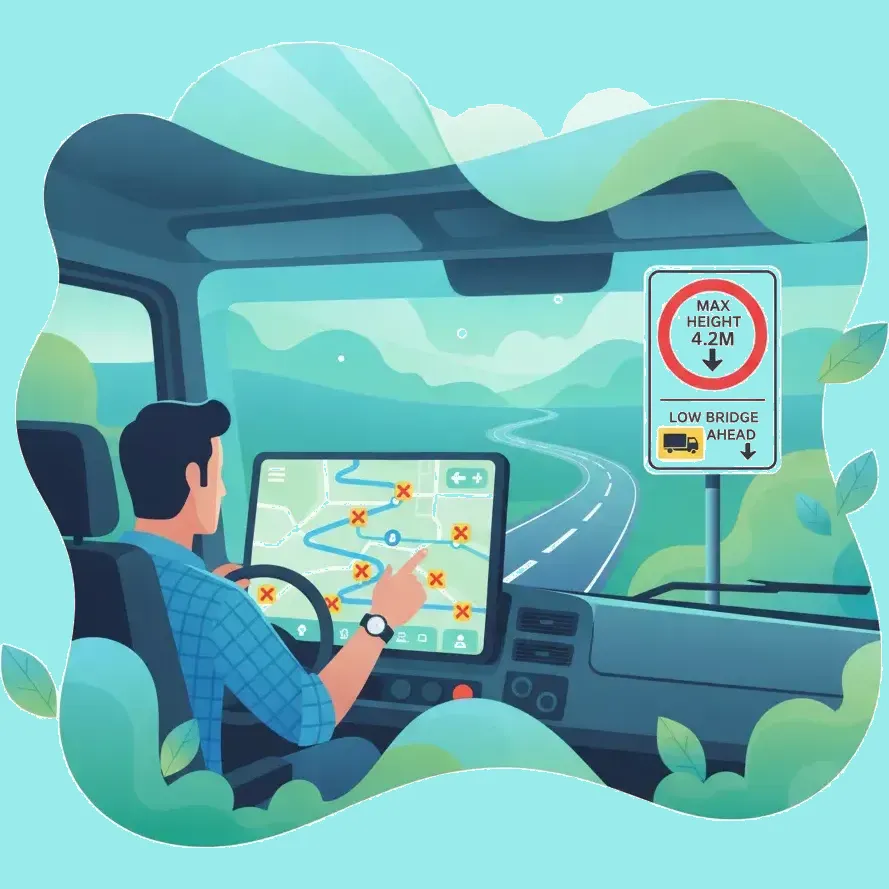
This lesson teaches professional drivers how to systematically map out travel routes that are compatible with heavy vehicle dimensions. It covers the limitations of consumer-grade GPS systems and emphasizes the use of specialized truck navigation systems that account for low bridges and load restrictions. Drivers will also learn to plan for congestion, access timing regulations, and proper entrance paths into commercial zones.

This lesson addresses the mechanical dynamics of turning long-wheelbase and articulated commercial vehicles at intersections, junctions, and roundabouts. It covers the necessity of deep cornering lines, early mirror checks, and correct signaling to warn vulnerable road users of wide turn maneuvers. Drivers will learn how to minimize rear cut-in and ensure the entire vehicle clears urban obstacles safely.

This lesson focuses on managing the interactions between commercial goods vehicles and non-motorized or lightweight commuters. It outlines defensive driving techniques to utilize when overtaking cyclists, navigating pedestrian crossings, or negotiating shared junctions in Irish cities. Drivers will examine common cyclist behaviors at roundabouts and understand how to maintain massive safety margins to protect lives.

This lesson explains the location, depth, and angle of the severe blind spots surrounding a standard heavy goods vehicle. It provides step-by-step guidance on setting up primary side mirrors, wide-angle lenses, and close-proximity front-view mirrors to eliminate blind areas. Drivers will learn systematic visual checking routines to ensure complete situational awareness before initiating any maneuver, lane shift, or turn.

Driving a coach through narrow urban streets or historic Irish town centers demands precise spatial judgment and low speed control. This lesson covers turning radii, rear tail-swing physics, and managing overhangs when navigating around tight, permanent obstacles. Drivers will learn to assess clearance gaps accurately, reducing damage risks to the vehicle exterior and public infrastructure.

This lesson explains the extensive blind spots of heavy goods vehicles, buses, and other large trucks on Irish roads. It teaches Category AM riders how to maintain safe following distances and position themselves where truck drivers can see them. Proper space cushion management is emphasized to protect riders from the wind turbulence of passing trucks.

This lesson explores the safe operation of heavy transport vehicles during severe meteorological hazards typical of the Irish climate. It teaches techniques for adjusting speed and doubling following distances to prevent loss of steering traction and control on waterlogged or icy roadways. Drivers will understand how to manage lateral aerodynamic forces from crosswinds on high-sided goods vehicles.

This lesson investigates the relationship between heavy goods vehicle dimensions and the physical constraints of Irish road networks. It highlights how vehicle length and weight contribute to pavement wear and stress on aging bridges and tunnels. Drivers will analyze specific high-risk zones, such as narrow lanes and gauntlet points, where extreme spatial awareness is mandatory.
Understand the critical relationship between load distribution, centre of gravity, and vehicle handling. This lesson covers the physical forces affecting articulated and rigid heavy goods vehicles on high-speed roads, focusing on preventing load shift and ensuring directional control during manoeuvres.
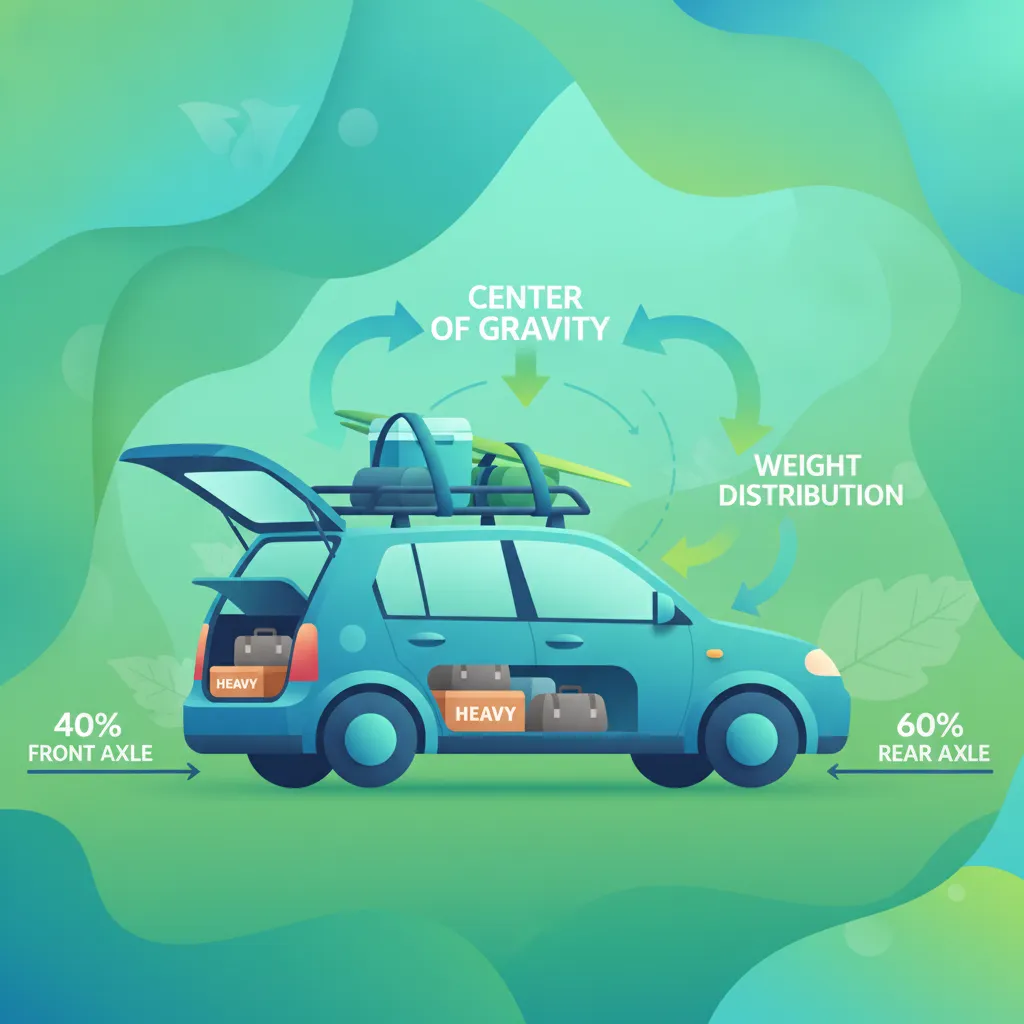
This lesson explains the physical principles of weight distribution and axle overloading on heavy commercial vehicles. It examines how a high centre of gravity increases tipping risks during cornering and alters overall braking effectiveness. Drivers will discover methods for positioning cargo to distribute weight evenly, ensuring optimal steering control and stable vehicle dynamics.

As passenger numbers change throughout a service shift, a heavy vehicle suspension, center of gravity, and steering responsiveness adapt dynamically. This lesson covers load balancing, the physical risks of overloading, and how uneven weight distribution compromises stability during turns. Drivers will learn to perform regular axle weight assessments to comply with Irish transport safety rules.
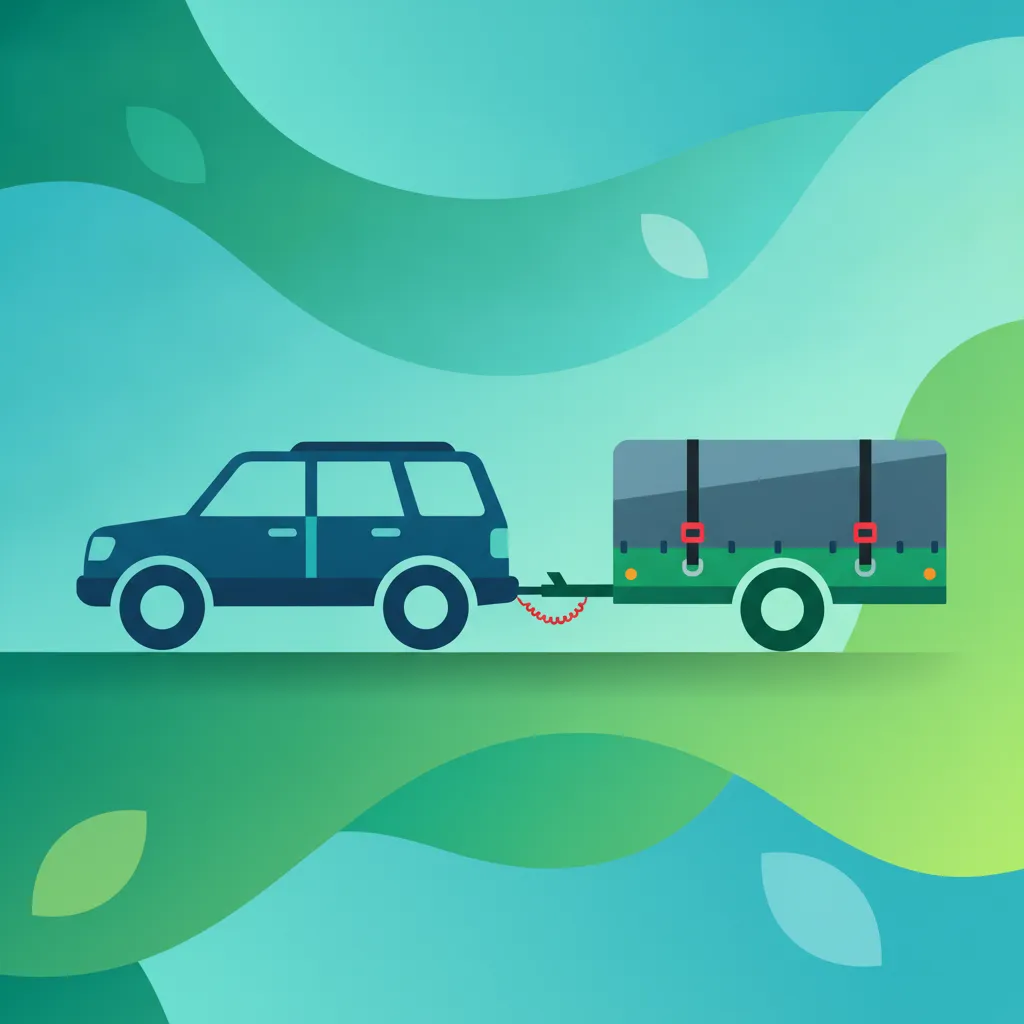
Carrying heavy loads or towing trailers significantly alters a car's handling, acceleration, and braking characteristics. This lesson outlines the physics of load distribution, explaining why you must secure cargo to prevent shifting and keep the vehicle's centre of gravity low. You will learn about legal roof rack weight limits, safe trailer coupling practices, and how to adjust your driving style when towing.
Find clear answers to common questions learners have about Operating Safely on Motorways and Dual Carriageways. Learn how the lesson is structured, which driving theory objectives it supports, and how it fits into the overall learning path of units and curriculum progression in Ireland. These explanations help you understand key concepts, lesson flow, and exam focused study goals.
No, heavy goods vehicles are generally prohibited from using the outside overtaking lane on three-lane motorways. They must remain in the left or middle lanes to ensure safe traffic flow.
The primary danger is the reduced acceleration capacity of a heavy vehicle. You must use the full length of the slip road to match the speed of motorway traffic and ensure you have a safe gap before merging.
Heavy goods vehicles have significantly longer stopping distances compared to cars due to their mass. You must maintain a larger 'time gap'—at least two seconds—from the vehicle in front, which should be increased in poor weather or when carrying a heavy load.
Move as far to the left as possible, preferably onto the hard shoulder. Switch on your hazard lights, exit the vehicle via the left-hand doors, move to a safe position behind the crash barrier, and use an emergency phone or mobile to call for assistance.
Use the practice question search tool to pinpoint specific topics, road signs, or rules you need to master for your official Driver Theory Test. Refine your study strategy and ensure comprehensive preparation for all aspects of the Irish driving exam. Start your focused revision now and build confidence for your learner permit test.