
Learning how to interpret traffic light transitions is essential for both your safety and your success on the Portuguese theory exam. This guide clarifies the correct behavior when encountering a steady yellow light, explaining when you must stop and the limited safety exceptions provided by law. Understanding these rules helps you avoid common exam traps and ensures you navigate urban and rural intersections with confidence and legal compliance.
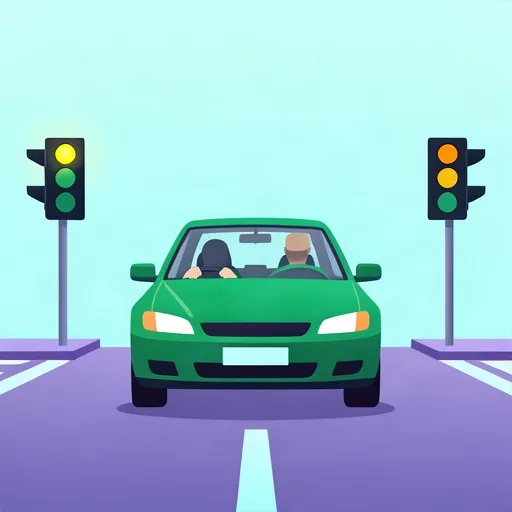
Article content overview
Navigating traffic lights in Portugal is a fundamental skill for any driver, yet the rules regarding the steady yellow light remain one of the most misunderstood areas of the Código da Estrada. Many learner drivers incorrectly interpret the yellow light as a signal to accelerate to "beat" the red light. In reality, the Código da Estrada defines the yellow light as a transition phase designed to prepare the driver for a mandatory stop, not as an opportunity to maintain or increase speed.
Understanding the legal and safety requirements for this signal is critical not only for your daily driving safety but also for your performance on the Instituto da Mobilidade e dos Transportes (IMT) theory examination. Misinterpreting this signal is a frequent cause of both road accidents and test failures.
According to the Regulamento de Sinalização do Trânsito (RST) and Article 69.º of the Portuguese traffic code, the traffic light system is composed of three steady colors: red, yellow, and green. The yellow light serves as a transitional signal indicating that the green light is ending and a red light is imminent.
The law is explicit: you must treat the steady yellow light as a prohibition to enter the intersection or the area regulated by the signal. However, the law provides a specific safety exception. You are only permitted to cross the stop line if you are already so close to the intersection at the moment the light turns yellow that performing a sudden or emergency stop would compromise the safety of your vehicle or others on the road.
The legal permission to proceed through a yellow light is restricted to situations where the distance to the intersection is so short that stopping would require a violent or dangerous braking maneuver, potentially causing a collision or loss of vehicle control.
In the context of the IMT theory exam, questions regarding yellow lights are designed to test your hazard perception and your ability to prioritize safety over convenience. You will often encounter questions that suggest accelerating to clear the intersection before the light turns red; these are designed to trap students into choosing an illegal and dangerous action.
A common pattern in exam questions involves describing a scenario where a driver is at a certain distance from the intersection and the light turns yellow. The correct reasoning you should apply is: if you can stop safely, you must stop. If you accelerate, you are performing an illegal maneuver, which can lead to fines ranging from €60 to €300, depending on the circumstances and any potential traffic obstruction.
Distinguishing between the legal consequences of different signals is essential for your theoretical knowledge. Ignoring a yellow light when it was possible to stop safely is considered a traffic offense. However, failing to stop at a red light is classified as a "very serious" offense. The penalties for running a red light are significantly more severe, including higher fines ranging from €120 to €600, a potential period of license suspension (inibição de conduzir), and the deduction of points from your driving license.
To avoid common mistakes, always maintain a safe following distance from the vehicle in front of you. If the driver ahead decides to stop at a yellow light and you are following too closely, you risk a rear-end collision. Defensive driving requires that you always prepare to stop whenever you see a green light that has been active for a long time, as it is likely to change.
Never accelerate when you see a green light turning yellow. This is a common behavioral error that leads to "running the red," which is a major traffic safety violation in Portugal. Always prioritize a controlled stop.
| Signal | Meaning | Required Action |
|---|---|---|
| Steady Green | Passage allowed | Proceed with caution |
| Steady Yellow | Transition to Red | Stop, unless unsafe to do so |
| Steady Red | Passage prohibited | Stop before the regulated zone |
In Portugal, the steady yellow traffic light is a mandatory stop signal under the Código da Estrada, requiring drivers to prepare to halt before the stop line unless they are already too close to stop safely without danger. The IMT theory exam frequently tests this distinction, using trap options that suggest accelerating through the yellow phase. Penalties for ignoring a yellow light (€60–€300) are less severe than those for running a red light (€120–€600 plus possible license suspension), but both are preventable violations. Learner drivers should maintain safe following distances, anticipate signal changes when a green light has been active long enough, and apply the key rule: if you can stop comfortably, you must stop.
A short set of high-value points that capture the most important ideas from this article.
The steady yellow light is a mandatory preparation-to-stop signal, not a signal to accelerate or 'beat' the red.
You may only proceed through a yellow light if you are already so close that an emergency stop would endanger yourself or others.
Running a yellow light when a safe stop was possible is a traffic offense; running a red light is classified as a very serious offense with heavier penalties.
In the IMT theory exam, any option suggesting acceleration through a yellow light is designed as a trap answer.
Always anticipate the yellow phase when a long-active green light is ahead and adjust your following distance accordingly.
The legal basis is Article 69.º of the Código da Estrada and the Regulamento de Sinalização do Trânsito.
The safety exception is narrowly defined: only when stopping would require violent or dangerous braking that risks collision or loss of control.
Yellow light fines range from €60 to €300; red light violations carry fines of €120 to €600 plus potential license suspension.
Maintain a safe following distance to avoid rear-end collisions when the vehicle ahead brakes at a yellow light.
Defensive driving means treating an aging green light as likely to change and preparing to stop.
Treating the yellow light as a cue to speed up and clear the intersection before red.
Following too closely to the vehicle ahead, leaving no room to stop safely at a yellow light.
Confusing the legal consequences of a yellow light violation with those of a red light violation.
Failing to monitor traffic light changes from a distance and being unprepared when yellow appears.
Choosing exam answers that describe accelerating or rushing through an intersection as the correct response.
Article content overview
A short set of high-value points that capture the most important ideas from this article.
The steady yellow light is a mandatory preparation-to-stop signal, not a signal to accelerate or 'beat' the red.
You may only proceed through a yellow light if you are already so close that an emergency stop would endanger yourself or others.
Running a yellow light when a safe stop was possible is a traffic offense; running a red light is classified as a very serious offense with heavier penalties.
In the IMT theory exam, any option suggesting acceleration through a yellow light is designed as a trap answer.
Always anticipate the yellow phase when a long-active green light is ahead and adjust your following distance accordingly.
The legal basis is Article 69.º of the Código da Estrada and the Regulamento de Sinalização do Trânsito.
The safety exception is narrowly defined: only when stopping would require violent or dangerous braking that risks collision or loss of control.
Yellow light fines range from €60 to €300; red light violations carry fines of €120 to €600 plus potential license suspension.
Maintain a safe following distance to avoid rear-end collisions when the vehicle ahead brakes at a yellow light.
Defensive driving means treating an aging green light as likely to change and preparing to stop.
Treating the yellow light as a cue to speed up and clear the intersection before red.
Following too closely to the vehicle ahead, leaving no room to stop safely at a yellow light.
Confusing the legal consequences of a yellow light violation with those of a red light violation.
Failing to monitor traffic light changes from a distance and being unprepared when yellow appears.
Choosing exam answers that describe accelerating or rushing through an intersection as the correct response.
Explore related topics, search based questions, and concepts that learners often look up when studying Portugal Yellow Light Rules. These themes reflect real search intent and help you understand how this topic connects to wider driving theory knowledge in Portugal.
Find clear and practical answers to common questions learners often have about Portugal Yellow Light Rules. This section helps explain difficult points, remove confusion, and reinforce the key driving theory concepts that matter for learners in Portugal.
No. According to Article 69.º of the Código da Estrada, the yellow light acts as a transition phase and prohibits entry into the regulated zone. It is not an invitation to speed up.
Yes. You may continue if you are already so close to the intersection when the light changes that stopping would be unsafe or impossible to perform without creating a hazard.
Ignoring a yellow light when it is possible to stop safely is considered a traffic offense, typically resulting in a fine. However, failing to stop for a red light is classified as a very serious offense, carrying higher fines, point deductions, and potential driving bans.
A steady yellow light indicates a transition to red and requires you to prepare to stop. A flashing yellow light serves as a warning to proceed with caution, often because the traffic light system is temporarily out of service or warning of a specific hazard.
If you haven't found what you're looking for, use our powerful article search to explore related topics, refine your understanding of Portuguese road rules, or discover new insights for your IMT driving exam preparation. Continue building your knowledge effectively.