
Learn how to correctly interpret danger signs, known in Portugal as sinais de perigo, to ensure your safety and success in the official theory exam. This article details how to identify key hazard categories, understand the role of supplemental panels, and apply appropriate defensive maneuvers to avoid common pitfalls on the test.
Article content overview
In the Portuguese road network, safety relies on the ability of drivers to interpret the environment before a potential incident occurs. Warning signs, known as sinais de perigo, serve as the primary communication tool for alerting road users to upcoming hazards. Unlike regulatory signs, which dictate specific actions like stopping or turning, warning signs exist to inform you of a changing road condition that necessitates a change in driving behavior. Mastering these signs is a critical component of the IMT theory exam, as it reflects your ability to process information and proactively manage risk.
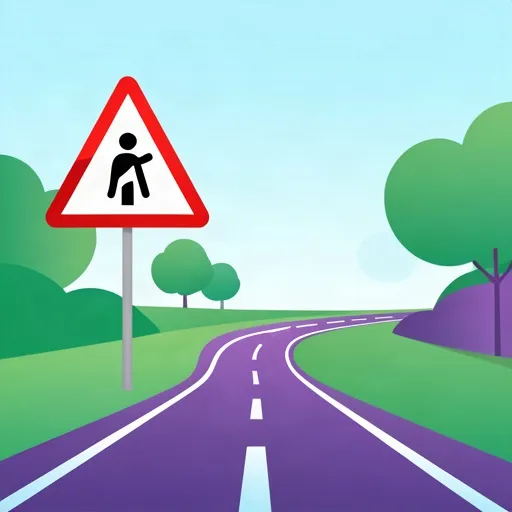
According to the Código da Estrada, warning signs in Portugal are characterized by an equilateral triangle with a red border and a white background. Inside this frame, a black pictogram illustrates the nature of the hazard. While the visual representation is intuitive—such as a curve or a pedestrian—the legal significance lies in your reaction to them. These signs do not set a numerical speed limit, but they do require you to adapt your speed to the specific situation identified.
A common area where learners lose marks in the theory exam involves the relationship between warning signs and supplemental panels. Rarely do warning signs stand entirely alone; they are frequently paired with rectangular white plates underneath. These panels provide critical context regarding the distance to the hazard or the length of the road section over which the hazard persists.
Ignoring these panels is a frequent mistake. For instance, a "slippery road" sign might be accompanied by a distance panel; failing to account for this means you might start braking too early or, more dangerously, too late. Always look for these panels to understand the scope of the potential danger.
The core requirement when encountering sinais de perigo is to moderate your speed and heighten your level of attention. Simply knowing the name of the sign is insufficient for the exam; you must demonstrate an understanding of what that sign implies for your vehicle. For example, when you see a sign warning of a "steep hill downwards," the theory exam will expect you to confirm that you must use your engine braking and avoid excessive use of the service brakes to prevent overheating.
One major trap in the Portuguese driving theory exam is the confusion between warning signs and priority signs. Some students mistakenly believe that a warning sign, such as "crossroad without priority," somehow gives them an automatic right of way or revokes existing rules. You must remember that warning signs do not change the fundamental rules of priority; they only alert you that the conditions ahead require caution.
Another error is the assumption that because you are driving at the legal speed limit, you do not need to slow down further. In the eyes of the IMT, if you encounter a "dangerous curve" sign or a "loose chippings" sign, your duty is to adjust your speed to be commensurate with the hazard, regardless of the general speed limit of that road type.
Portuguese warning signs (sinais de perigo) are triangular red-bordered signs that alert drivers to upcoming hazards and require you to adapt your speed and increase attention, but they do not grant priority or change existing road rules. Supplemental panels below these signs provide essential information about the distance to and length of the hazard, and learners must always check for these panels to determine the correct response. The standard procedure involves identifying the hazard, checking for supplemental panels, reducing speed proactively, scanning the environment, and maintaining safe following distance. Common exam mistakes include confusing warning signs with priority signs, ignoring supplemental panels, and assuming that legal speed limits eliminate the need for hazard-based speed adjustment.
A short set of high-value points that capture the most important ideas from this article.
Warning signs in Portugal are red-bordered equilateral triangles with black pictograms that require speed adaptation, not automatic priority changes
Supplemental panels below warning signs provide critical information about hazard distance and duration
The pictogram inside a warning sign indicates the hazard type, but the legal duty is to moderate speed and heighten attention
Encountering a warning sign requires proactive speed reduction before reaching the hazard, not just at the moment of the hazard
Engine braking is the preferred method on descents to prevent service brake overheating when signs indicate steep hills
Warning signs never grant or revoke priority—always follow the Código da Estrada and priority signs
A supplemental panel with a distance value means the hazard begins at that specific distance from the sign
Signs with two arrows pointing sideways indicate the warning applies over the length of road shown
The IMT exam expects you to know both the sign meaning and the correct reaction procedure
Black-on-red triangle = danger; the pictogram tells you what kind, but your duty is the same: adapt speed
Confusing warning signs with priority signs and assuming they change right-of-way rules
Ignoring supplemental panels entirely, leading to braking too early or too late
Believing that driving at the legal speed limit means no further speed adjustment is needed
Focusing only on memorizing sign names without understanding the required reaction
Overlooking that warning signs often appear together with temporary or changed road conditions
Article content overview
A short set of high-value points that capture the most important ideas from this article.
Warning signs in Portugal are red-bordered equilateral triangles with black pictograms that require speed adaptation, not automatic priority changes
Supplemental panels below warning signs provide critical information about hazard distance and duration
The pictogram inside a warning sign indicates the hazard type, but the legal duty is to moderate speed and heighten attention
Encountering a warning sign requires proactive speed reduction before reaching the hazard, not just at the moment of the hazard
Engine braking is the preferred method on descents to prevent service brake overheating when signs indicate steep hills
Warning signs never grant or revoke priority—always follow the Código da Estrada and priority signs
A supplemental panel with a distance value means the hazard begins at that specific distance from the sign
Signs with two arrows pointing sideways indicate the warning applies over the length of road shown
The IMT exam expects you to know both the sign meaning and the correct reaction procedure
Black-on-red triangle = danger; the pictogram tells you what kind, but your duty is the same: adapt speed
Confusing warning signs with priority signs and assuming they change right-of-way rules
Ignoring supplemental panels entirely, leading to braking too early or too late
Believing that driving at the legal speed limit means no further speed adjustment is needed
Focusing only on memorizing sign names without understanding the required reaction
Overlooking that warning signs often appear together with temporary or changed road conditions
Explore related topics, search based questions, and concepts that learners often look up when studying Guide to Portuguese Warning Signs. These themes reflect real search intent and help you understand how this topic connects to wider driving theory knowledge in Portugal.
Find clear and practical answers to common questions learners often have about Guide to Portuguese Warning Signs. This section helps explain difficult points, remove confusion, and reinforce the key driving theory concepts that matter for learners in Portugal.
No, warning signs do not set a specific speed limit. However, the Código da Estrada requires that you adapt your speed to the hazardous condition indicated by the sign to ensure safe transit.
Portuguese warning signs are defined by an equilateral triangle with a red border and a white background, often containing a black pictogram to illustrate the specific hazard.
Some learners mistakenly assume that because they see a warning sign, other traffic will yield to them. Warning signs strictly serve to inform you of potential danger and mandate increased alertness, not to override standard priority rules.
Supplemental panels are used to define the exact distance to the hazard, the length of the road section affected by the hazard, or to clarify when the hazard specifically begins or ends.
If you haven't found what you're looking for, use our powerful article search to explore related topics, refine your understanding of Portuguese road rules, or discover new insights for your IMT driving exam preparation. Continue building your knowledge effectively.