
The C13 sign, officially 'Proibição de exceder a velocidade máxima de .. km/h', is a crucial prohibitory traffic sign in Portugal. It clearly indicates that you must not exceed the specific speed limit shown on the sign. When you encounter this sign, it's vital to reduce your speed immediately to comply with the new limit and maintain it until you see a sign indicating the restriction ends or changes. Understanding and adhering to these speed limits is essential for safe driving and passing your theory test.
Master the C13 sign for your theory test revision; this prohibitory traffic sign dictates a strict maximum speed limit in Portugal, requiring immediate driver action to ensure compliance and safety on the road. Understanding its specific meaning is crucial for correct road sign interpretation and passing your driving theory exam.
C13 - Proibição de exceder a velocidade máxima de .. km/h (Proibição de exceder a velocidade máxima de .. km/h) belongs to the Portuguese prohibitory signs category in the Regulamento de Sinalização do Trânsito. It normally uses the red-bordered regulatory style associated with restrictions, limits, bans, or cancellation of a previous restriction. The official wording is: proibição de exceder a velocidade máxima de .. km/h: indicação da proibição de circular a velocidade superior à indicada no sinal. It creates a binding restriction from the point where it applies and normally continues until it is ended, replaced, or limited. For theory preparation, connect the sign to a concrete driving decision: where to look, when to slow, whether to stop or yield, which route or lane to choose, and whether any panel changes the scope of the rule. On the road, interpret it together with markings, traffic lights, police directions, temporary works signs, and any additional panel placed with it. A strong exam answer explains both recognition and behaviour: not only what the sign is called, but what a safe and lawful driver must do next.
C13 - Proibição de exceder a velocidade máxima de .. km/h (Proibição de exceder a velocidade máxima de .. km/h) means that the driver must understand and apply this official Portuguese instruction: proibição de exceder a velocidade máxima de .. km/h: indicação da proibição de circular a velocidade superior à indicada no sinal. In practical terms, you should adjust speed immediately and keep within the signed limit until the restriction is changed or ended.
Get clear, practical answers to the most common questions about the C13 - C13 - Proibição de exceder a velocidade máxima de .. km/h (Proibição de exceder a velocidade máxima de .. km/h) road sign. Learn how the sign works, what rules it represents, and how it affects real driving situations. This FAQ strengthens your understanding and supports accurate decision making for the Portuguese driving theory exam in Portugal.
The C13 sign means you must not drive faster than the speed indicated on the sign itself, for example, 50 km/h. This is a mandatory instruction from Portuguese traffic law, and you must adjust your speed accordingly.
As soon as you see the C13 sign, you must reduce your speed to the limit shown on the sign. You must then maintain this speed or lower, and continue driving within that limit until you pass a sign that cancels this restriction or sets a new one.
The restriction imposed by the C13 sign typically ends when you see a sign indicating the end of the prohibition (often a circular sign with a black bar across it) or when a new speed limit sign is displayed. Always be vigilant for subsequent signs.
A common trap is assuming the speed limit only applies to certain road conditions. The C13 sign is a direct prohibition; you must obey it immediately regardless of traffic flow or road type unless other overriding instructions (like police direction) are present. Also, remember that this is just one of many speed limit signs you might encounter.
Generally, the C13 sign applies to all vehicles unless there is an additional panel below it specifying that the restriction applies only to certain types of vehicles (e.g., trucks or motorcycles) or specific manoeuvres. Always check for any supplementary information accompanying the sign.
A clear reference image of the C13 - C13 - Proibição de exceder a velocidade máxima de .. km/h (Proibição de exceder a velocidade máxima de .. km/h) road sign used in Portugal.

The C13 - C13 - Proibição de exceder a velocidade máxima de .. km/h (Proibição de exceder a velocidade máxima de .. km/h) road sign may also be known by these alternative names or terms.
The C13 - C13 - Proibição de exceder a velocidade máxima de .. km/h (Proibição de exceder a velocidade máxima de .. km/h) road sign is part of the Prohibitory Signs category, which groups together signs with similar rules and functions.
Reviewing signs like the C13 'Maximum Speed Limit' alongside similar prohibitory signs helps cement your understanding for the Portuguese theory test. This traffic sign comparison aids recognition and reduces errors, crucial for effective exam preparation and safe driving.

Understand the C1 'Sentido Proibido' (No Entry) Road Sign

C10: Maintain Minimum Distance from Vehicle Ahead

No Right Turn Ahead: Understanding Portugal's C11a Prohibition Sign

Understand the C11b 'No Left Turn' Road Sign in Portugal

C12 Sign: No U-Turns Allowed Ahead

The C14a 'No Overtaking' Sign Means You Must Not Overtake Most Vehicles
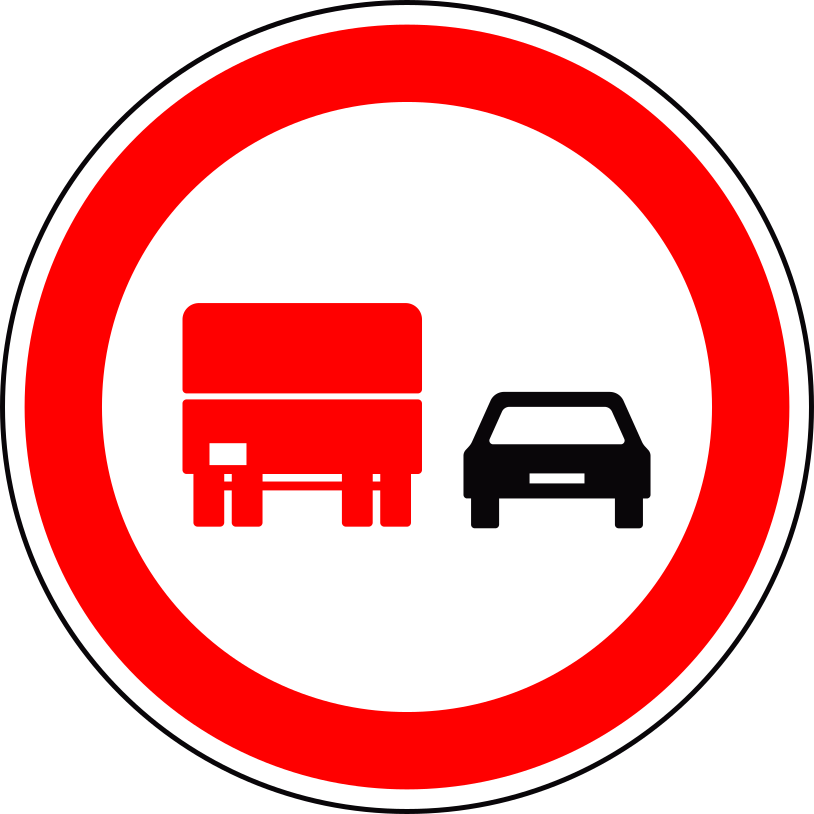
Learn the C14b Road Sign: No Overtaking for Heavy Vehicles

C14c Sign: No Overtaking for Motorcycles and Mopeds
Deepen your understanding of these specific signals through curated theory topics and official IMT exam practice sets. Mastering these road signs ensures you can confidently navigate real-world traffic scenarios and pass your Portuguese theory test.
Know the essentials to provide initial aid and potentially save a life at a roadside emergency.
Renting a car in Portugal requires more than just a valid driver's license; you must understand the specific insurance obligations and local road rules to avoid unexpected liabilities. This guide clarifies the distinction between mandatory and optional coverage, the administrative costs associated with electronic tolls, and the legal responsibilities every foreign driver assumes on Portuguese roads. Mastering these basics will prepare you for a smooth journey while keeping your travel within the bounds of the Código da Estrada.
Following a road accident in Portugal, understanding and acting upon the signs of shock in a victim is paramount. This article details the key symptoms to look for and the essential steps for providing immediate care as required by Portuguese traffic law. Mastering this knowledge is vital for both safe driving practice and passing your IMT theory exam.
Master Pedestrian Crossing Rules for a Safer Drive and Exam Success in Portugal
C21 - Fim da paragem ou estacionamento proibidos (Fim da paragem ou estacionamento proibidos) belongs to the Portuguese prohibitory signs category in the Regulamento de Sinalização do Trânsito. It normally uses the red-bordered regulatory style associated with restrictions, limits, bans, or cancellation of a previous restriction. The official wording is: fim da paragem ou estacionamento proibidos: indicação do local a partir do qual termina a proibição imposta pelos sinais. It creates a binding restriction from the point where it applies and normally continues until it is ended, replaced, or limited. For theory preparation, connect the sign to a concrete driving decision: where to look, when to slow, whether to stop or yield, which route or lane to choose, and whether any panel changes the scope of the rule. On the road, interpret it together with markings, traffic lights, police directions, temporary works signs, and any additional panel placed with it. A strong exam answer explains both recognition and behaviour: not only what the sign is called, but what a safe and lawful driver must do next.
C15 - Estacionamento proibido (Estacionamento proibido) belongs to the Portuguese prohibitory signs category in the Regulamento de Sinalização do Trânsito. It normally uses the red-bordered regulatory style associated with restrictions, limits, bans, or cancellation of a previous restriction. The official wording is: estacionamento proibido: indicação da proibição permanente de estacionar quaisquer veículos. It creates a binding restriction from the point where it applies and normally continues until it is ended, replaced, or limited. For theory preparation, connect the sign to a concrete driving decision: where to look, when to slow, whether to stop or yield, which route or lane to choose, and whether any panel changes the scope of the rule. On the road, interpret it together with markings, traffic lights, police directions, temporary works signs, and any additional panel placed with it. A strong exam answer explains both recognition and behaviour: not only what the sign is called, but what a safe and lawful driver must do next.
After reviewing the full list, explore signs by specific categories such as warning, regulatory, or informational to deepen your understanding. Practise recognizing signs in context and prepare effectively for your Portuguese driving licence theory test.
All Portuguese Road Signs List