
The C21 road sign signals the end of a previously indicated prohibition on stopping or parking. As part of Portugal's regulatory signs, it typically features a red border and indicates that the restrictions imposed by earlier signs no longer apply from this point onwards. Always check for any additional panels that might have specified the duration, days, or vehicle types affected by the original prohibition. Understanding this sign means you can now legally stop or park, provided no other regulations prevent it.
This sign marks the end of a restriction on stopping and parking. Understanding its meaning is crucial for correct interpretation during your theory test revision and on the road.
C21 - Fim da paragem ou estacionamento proibidos (Fim da paragem ou estacionamento proibidos) belongs to the Portuguese prohibitory signs category in the Regulamento de Sinalização do Trânsito. It normally uses the red-bordered regulatory style associated with restrictions, limits, bans, or cancellation of a previous restriction. The official wording is: fim da paragem ou estacionamento proibidos: indicação do local a partir do qual termina a proibição imposta pelos sinais. It creates a binding restriction from the point where it applies and normally continues until it is ended, replaced, or limited. For theory preparation, connect the sign to a concrete driving decision: where to look, when to slow, whether to stop or yield, which route or lane to choose, and whether any panel changes the scope of the rule. On the road, interpret it together with markings, traffic lights, police directions, temporary works signs, and any additional panel placed with it. A strong exam answer explains both recognition and behaviour: not only what the sign is called, but what a safe and lawful driver must do next.
C21 - Fim da paragem ou estacionamento proibidos (Fim da paragem ou estacionamento proibidos) means that the driver must understand and apply this official Portuguese instruction: fim da paragem ou estacionamento proibidos: indicação do local a partir do qual termina a proibição imposta pelos sinais. In practical terms, you should avoid parking in the signed area and check any additional panel for days, hours, vehicle classes, or the length of the restriction.
Get clear, practical answers to the most common questions about the C21 - C21 - Fim da paragem ou estacionamento proibidos (Fim da paragem ou estacionamento proibidos) road sign. Learn how the sign works, what rules it represents, and how it affects real driving situations. This FAQ strengthens your understanding and supports accurate decision making for the Portuguese driving theory exam in Portugal.
The C21 sign, officially 'Fim da paragem ou estacionamento proibidos', means that the restriction on stopping or parking that was in place before this sign has now ended. You are free to stop or park in this location, assuming no other rules or signs prohibit it.
When you see the C21 sign, you can proceed with stopping or parking, as the prohibition has ended. However, always remain observant. Check for other traffic signs, road markings, or temporary restrictions that might still apply to the area.
The C21 sign itself signifies the *end* of a prohibition. However, the original prohibition might have been modified by an additional panel indicating specific days, hours, or vehicle classes. If no such panel was present, the restriction applied generally and is now fully lifted.
A common exam trap is confusing the C21 sign (end of prohibition) with prohibition signs themselves (like C20). Learners might incorrectly assume the C21 sign *imposes* a new rule, rather than removing an old one. Always remember C21 means the restriction is over.
You would typically see the C21 sign placed at the end of a road section, street, or zone where stopping or parking was previously prohibited by signs like C20. It marks the point where you can legally resume these actions.
A clear reference image of the C21 - C21 - Fim da paragem ou estacionamento proibidos (Fim da paragem ou estacionamento proibidos) road sign used in Portugal.

The C21 - C21 - Fim da paragem ou estacionamento proibidos (Fim da paragem ou estacionamento proibidos) road sign may also be known by these alternative names or terms.
The C21 - C21 - Fim da paragem ou estacionamento proibidos (Fim da paragem ou estacionamento proibidos) road sign is part of the Prohibitory Signs category, which groups together signs with similar rules and functions.
Reviewing related road signs like C21 helps solidify your understanding and improve sign recognition. Compare this 'End of No Stopping or Parking' sign with others to avoid confusion and master traffic sign comparison for your theory test revision.

Understand the C1 'Sentido Proibido' (No Entry) Road Sign

C10: Maintain Minimum Distance from Vehicle Ahead

No Right Turn Ahead: Understanding Portugal's C11a Prohibition Sign

Understand the C11b 'No Left Turn' Road Sign in Portugal

C12 Sign: No U-Turns Allowed Ahead

Obey the Maximum Speed Limit Indicated by the C13 Sign

The C14a 'No Overtaking' Sign Means You Must Not Overtake Most Vehicles
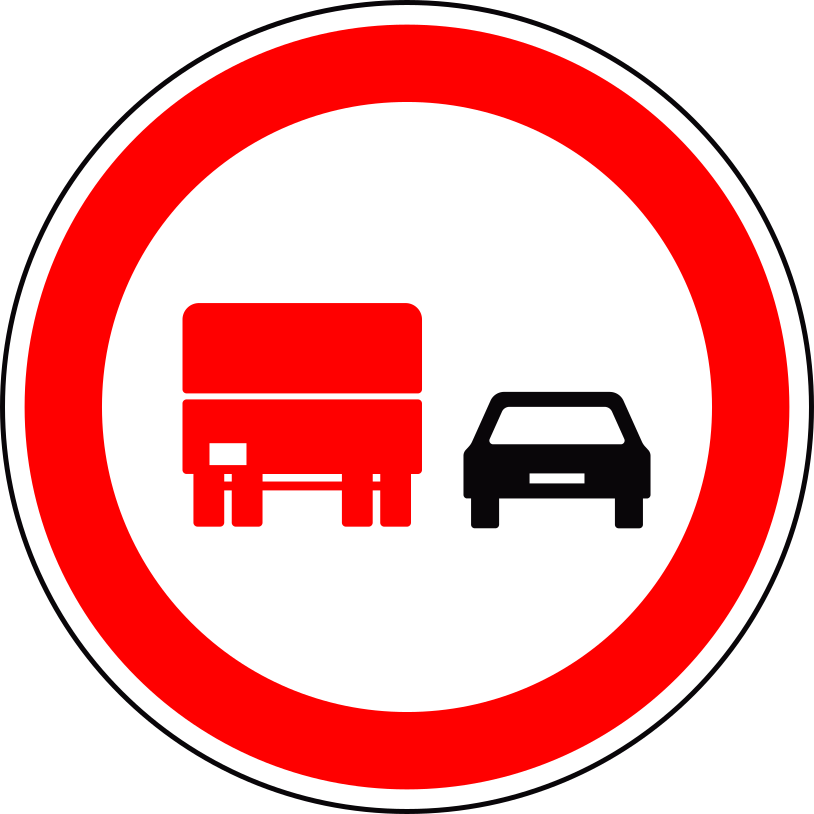
Learn the C14b Road Sign: No Overtaking for Heavy Vehicles
Deepen your understanding of these specific signals through curated theory topics and official IMT exam practice sets. Mastering these road signs ensures you can confidently navigate real-world traffic scenarios and pass your Portuguese theory test.
Renting a car in Portugal requires more than just a valid driver's license; you must understand the specific insurance obligations and local road rules to avoid unexpected liabilities. This guide clarifies the distinction between mandatory and optional coverage, the administrative costs associated with electronic tolls, and the legal responsibilities every foreign driver assumes on Portuguese roads. Mastering these basics will prepare you for a smooth journey while keeping your travel within the bounds of the Código da Estrada.
Avoid Common Mistakes and Costly Fines: Know the Portuguese Rules for Stopping and Parking!
Master Portuguese Priority Signs to Avoid Fines and Drive Confidently!
Learn how to correctly interpret danger signs, known in Portugal as sinais de perigo, to ensure your safety and success in the official theory exam. This article details how to identify key hazard categories, understand the role of supplemental panels, and apply appropriate defensive maneuvers to avoid common pitfalls on the test.
C15 - Estacionamento proibido (Estacionamento proibido) belongs to the Portuguese prohibitory signs category in the Regulamento de Sinalização do Trânsito. It normally uses the red-bordered regulatory style associated with restrictions, limits, bans, or cancellation of a previous restriction. The official wording is: estacionamento proibido: indicação da proibição permanente de estacionar quaisquer veículos. It creates a binding restriction from the point where it applies and normally continues until it is ended, replaced, or limited. For theory preparation, connect the sign to a concrete driving decision: where to look, when to slow, whether to stop or yield, which route or lane to choose, and whether any panel changes the scope of the rule. On the road, interpret it together with markings, traffic lights, police directions, temporary works signs, and any additional panel placed with it. A strong exam answer explains both recognition and behaviour: not only what the sign is called, but what a safe and lawful driver must do next.
C16 - Paragem e estacionamento proibidos (Paragem e estacionamento proibidos) belongs to the Portuguese prohibitory signs category in the Regulamento de Sinalização do Trânsito. It normally uses the red-bordered regulatory style associated with restrictions, limits, bans, or cancellation of a previous restriction. The official wording is: paragem e estacionamento proibidos: indicação da proibição permanente de parar ou estacionar quaisquer veículos. It creates a binding restriction from the point where it applies and normally continues until it is ended, replaced, or limited. For theory preparation, connect the sign to a concrete driving decision: where to look, when to slow, whether to stop or yield, which route or lane to choose, and whether any panel changes the scope of the rule. On the road, interpret it together with markings, traffic lights, police directions, temporary works signs, and any additional panel placed with it. A strong exam answer explains both recognition and behaviour: not only what the sign is called, but what a safe and lawful driver must do next.
After reviewing the full list, explore signs by specific categories such as warning, regulatory, or informational to deepen your understanding. Practise recognizing signs in context and prepare effectively for your Portuguese driving licence theory test.
All Portuguese Road Signs List