
The C22 'End of Sound Signal Prohibition' traffic sign in Portugal indicates that the restriction on using your horn, previously imposed by sign C17, no longer applies from this point. While you are now permitted to use your horn again, it's crucial to do so only when necessary and safe according to general traffic rules, as this sign simply lifts the previous ban. Always remain aware of your surroundings, including road markings and other traffic, before deciding to use your horn.
This sign marks the end of the restriction previously indicated by sign C17, allowing drivers to use their horns again. Understanding this road sign meaning is crucial for your Portuguese driving theory exam preparation, as it signifies a change in permissible actions on the road.
C22 - Fim da proibição de sinais sonoros (Fim da proibição de sinais sonoros) belongs to the Portuguese prohibitory signs category in the Regulamento de Sinalização do Trânsito. It normally uses the red-bordered regulatory style associated with restrictions, limits, bans, or cancellation of a previous restriction. The official wording is: fim da proibição de sinais sonoros: indicação do local a partir do qual termina a proibição imposta pelo sinal C17. Alterações Alterado pelo/a Artigo 3.º do/a Lei n.º 66/2021 - Diário da República n.º 164/2021, Série I de 2021-08-24, em vigor a partir de 2021-08-25. It creates a binding restriction from the point where it applies and normally continues until it is ended, replaced, or limited. For theory preparation, connect the sign to a concrete driving decision: where to look, when to slow, whether to stop or yield, which route or lane to choose, and whether any panel changes the scope of the rule. On the road, interpret it together with markings, traffic lights, police directions, temporary works signs, and any additional panel placed with it. A strong exam answer explains both recognition and behaviour: not only what the sign is called, but what a safe and lawful driver must do next.
C22 - Fim da proibição de sinais sonoros (Fim da proibição de sinais sonoros) means that the driver must understand and apply this official Portuguese instruction: fim da proibição de sinais sonoros: indicação do local a partir do qual termina a proibição imposta pelo sinal C17. Alterações Alterado pelo/a Artigo 3.º do/a Lei n.º 66/2021 - Diário da República n.º 164/2021, Série I de 2021-08-24, em vigor a partir de 2021-08-25. In practical terms, you should recognise that the earlier prohibition ends at this point, but only perform the manoeuvre if general traffic rules, visibility, markings, and safety conditions allow it.
Get clear, practical answers to the most common questions about the C22 - C22 - Fim da proibição de sinais sonoros (Fim da proibição de sinais sonoros) road sign. Learn how the sign works, what rules it represents, and how it affects real driving situations. This FAQ strengthens your understanding and supports accurate decision making for the Portuguese driving theory exam in Portugal.
The C22 sign means that the prohibition on using audible warning devices (your horn) that was in effect before this sign, is now lifted. You are permitted to use your horn again, but always consider if it's actually necessary and safe to do so.
No, the C22 sign does not require you to sound your horn. It only indicates that the previous restriction preventing you from doing so has ended. You should still only use your horn when there is a genuine need for a warning, such as to alert other road users to your presence in hazardous situations.
You can use your horn again immediately after passing the C22 sign. However, you must still adhere to general traffic regulations regarding the appropriate use of audible warnings. This means using it only when necessary to prevent an accident, and not for signalling greetings or impatience.
Yes, even though the prohibition ends, general safety rules still apply. Avoid unnecessary horn use in built-up areas, near hospitals or schools, or when it could startle other road users like cyclists or pedestrians, especially if visibility or traffic conditions are unclear and using the horn might cause more danger than it prevents.
The C17 sign imposes a prohibition on using sound signals, meaning you must not use your horn. The C22 sign signifies the end of that prohibition, allowing you to use your horn again, provided it's done safely and according to general rules.
A clear reference image of the C22 - C22 - Fim da proibição de sinais sonoros (Fim da proibição de sinais sonoros) road sign used in Portugal.

The C22 - C22 - Fim da proibição de sinais sonoros (Fim da proibição de sinais sonoros) road sign may also be known by these alternative names or terms.
The C22 - C22 - Fim da proibição de sinais sonoros (Fim da proibição de sinais sonoros) road sign is part of the Prohibitory Signs category, which groups together signs with similar rules and functions.
Master Portuguese traffic signs by comparing similar road signs and understanding their distinctions. This focused review helps solidify your recognition and reduces errors for your theory test revision.

Understand the C1 'Sentido Proibido' (No Entry) Road Sign

C10: Maintain Minimum Distance from Vehicle Ahead

No Right Turn Ahead: Understanding Portugal's C11a Prohibition Sign

Understand the C11b 'No Left Turn' Road Sign in Portugal

C12 Sign: No U-Turns Allowed Ahead

Obey the Maximum Speed Limit Indicated by the C13 Sign

The C14a 'No Overtaking' Sign Means You Must Not Overtake Most Vehicles
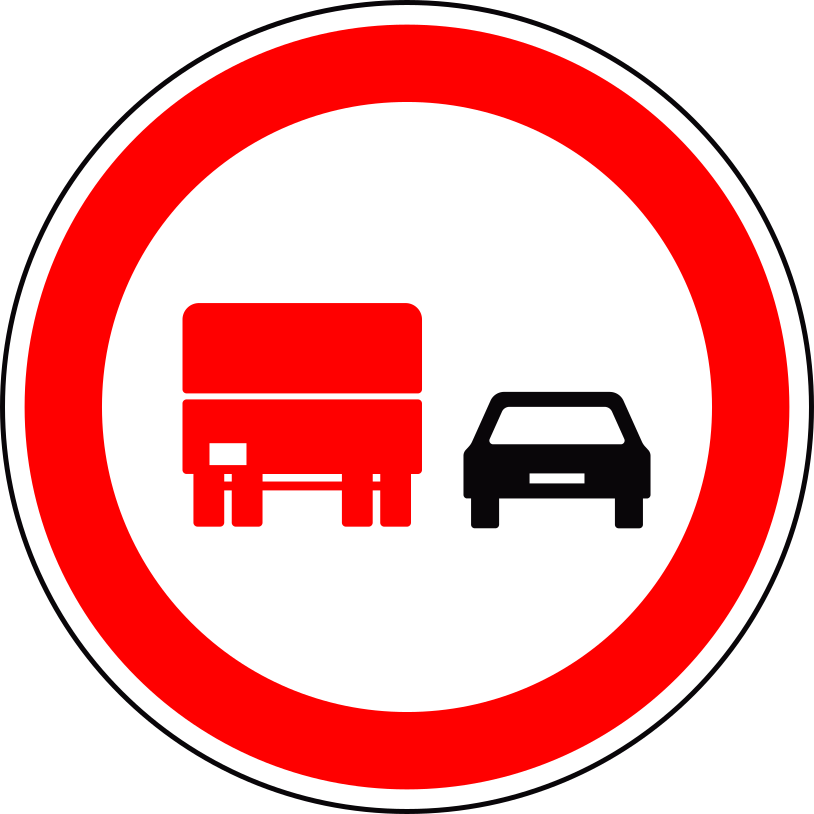
Learn the C14b Road Sign: No Overtaking for Heavy Vehicles
Deepen your understanding of these specific signals through curated theory topics and official IMT exam practice sets. Mastering these road signs ensures you can confidently navigate real-world traffic scenarios and pass your Portuguese theory test.
After being involved in a road accident in Portugal, knowing the correct sequence of actions is paramount for safety and legal compliance. This article guides you through the Proteger, Alertar, Socorrer (P-A-S) protocol, emphasizing the importance of securing the scene, making the correct emergency calls, and providing appropriate assistance. Understanding these steps is vital for passing your IMT theory exam and ensuring you act responsibly in critical situations.
Following a road accident in Portugal, understanding and acting upon the signs of shock in a victim is paramount. This article details the key symptoms to look for and the essential steps for providing immediate care as required by Portuguese traffic law. Mastering this knowledge is vital for both safe driving practice and passing your IMT theory exam.
Know the essentials to provide initial aid and potentially save a life at a roadside emergency.
Master the critical first steps after an accident to ensure safety and comply with Portuguese law.
H41 - Fim de túnel (Fim de túnel) belongs to the Portuguese information signs category in the Regulamento de Sinalização do Trânsito. It uses the official information-sign format for its function, often a rectangular or square panel with a symbol, word, route, or facility indication. The official wording is: fim de túnel: indicação de que terminou o túnel. Alterações Alterado pelo/a Artigo 3.º do/a Lei n.º 66/2021 - Diário da República n.º 164/2021, Série I de 2021-08-24, em vigor a partir de 2021-08-25. It gives official information about the road environment, services, restrictions, facilities, or conditions that should influence safe planning. For theory preparation, connect the sign to a concrete driving decision: where to look, when to slow, whether to stop or yield, which route or lane to choose, and whether any panel changes the scope of the rule. On the road, interpret it together with markings, traffic lights, police directions, temporary works signs, and any additional panel placed with it. A strong exam answer explains both recognition and behaviour: not only what the sign is called, but what a safe and lawful driver must do next.
H30 - Praticabilidade da via (Praticabilidade da via) belongs to the Portuguese information signs category in the Regulamento de Sinalização do Trânsito. It uses the official information-sign format for its function, often a rectangular or square panel with a symbol, word, route, or facility indication. The official wording is: praticabilidade da via: informação da transitabilidade da via de montanha ou sujeita a inundações temporárias; o painel n.º 1 indica se a via está «aberta» ou «fechada», o painel n.º 3 indica, no caso de a passagem estar fechada, até onde é possível transitar, devendo, neste caso, o painel n.º 2 ter a indicação «aberta até ..». Em via de montanha o painel n.º 2 pode ainda indicar se é obrigatório ou aconselhado o uso de correntes de neve. It gives official information about the road environment, services, restrictions, facilities, or conditions that should influence safe planning. For theory preparation, connect the sign to a concrete driving decision: where to look, when to slow, whether to stop or yield, which route or lane to choose, and whether any panel changes the scope of the rule. On the road, interpret it together with markings, traffic lights, police directions, temporary works signs, and any additional panel placed with it. A strong exam answer explains both recognition and behaviour: not only what the sign is called, but what a safe and lawful driver must do next.
After reviewing the full list, explore signs by specific categories such as warning, regulatory, or informational to deepen your understanding. Practise recognizing signs in context and prepare effectively for your Portuguese driving licence theory test.
All Portuguese Road Signs List