This lesson teaches you the critical steps for safely approaching and exiting junctions on your moped. It builds on your foundational knowledge of road signs and markings, ensuring you can manage complex traffic scenarios with confidence and safety.

Lesson content overview
Navigating junctions safely is one of the most critical skills you must master to pass your Category AM Irish driving theory test and ride safely on public roads. According to Irish road safety statistics, a high percentage of collisions involving mopeds, light motorcycles, and light quadricycles occur at junctions. Because of your vehicle’s small profile and lower power output, other road users may fail to see you, misjudge your speed, or underestimate how quickly you can clear an intersection.
To prevent collisions, you must approach and depart every junction systematically. This lesson covers the core principles of road positioning, timing your signals, managing your speed, and performing effective observation scans using the official Irish road regulations.
Junctions are primary "conflict points" where paths of different vehicles cross. When riding a Category AM vehicle (which is restricted to a maximum design speed of 45 km/h), you face specific physical and psychological challenges:
Understanding these factors explains why defensive riding at junctions is not just a theoretical recommendation, but an absolute necessity for survival on Irish roads.
The Road Safety Authority (RSA) teaches a structured routine for handling any change of speed or direction. This is known as the MSM (Mirror, Signal, Manoeuvre) routine.
When approaching a junction, the "Manoeuvre" phase is further broken down into the PSL (Position, Speed, Look) sequence. You must apply this combined MSM-PSL routine systematically, well in advance of every junction.
Mirror: Check your mirrors early to assess the speed, position, and behavior of traffic behind you. Check your center or handlebar-mounted mirrors, and follow up with a quick side mirror check.
Signal: Apply your turn indicators clearly and early enough to warn others, but not so early that it causes confusion at preceding turnings.
Position: Take up the correct road position for your intended route. This must be done smoothly without cutting off other road users.
Speed: Decelerate smoothly by releasing the throttle and applying both brakes evenly. If riding a manual vehicle, select the appropriate gear for the speed and junction type.
Look: Observe the junction continuously. Scan left, right, and left again. Look for pedestrians, cyclists, and oncoming vehicles, and perform your final blind-spot "lifesaver" check before committing to the turn.
Choosing your position on the road early tells other road users where you intend to go, even before you turn. It also prevents vehicles from squeezing past you in a dangerous manner.
When turning left at a junction, maintain a safe position approximately 1 metre from the kerb or left-hand road edge.
Do not hug the kerb too closely. Debris, broken glass, leaves, and drainage grates collect near the kerb, which can cause your moped to lose traction. Furthermore, riding too close to the kerb may tempt drivers behind you to try and squeeze past you within the same lane. Maintain your "lane dominance" by occupying the center-left of your lane.
When turning right, check your mirrors and blind spot, signal right, and position your vehicle just to the left of the center line (on a two-way road) or in the designated right-turn lane (on a multi-lane road).
This prevents traffic from overtaking you on the right while leaving enough room on your left for other vehicles to pass safely if the road width allows. Never position your vehicle over the center line into oncoming traffic.
If you are passing straight through a junction, maintain your normal riding position, which is typically in the center of the left-hand lane. This keeps you visible in the mirrors of the vehicle ahead and prevents others from sharing your lane space.
Signals are your primary tool for communicating your intentions to other road users. A late signal is almost as dangerous as no signal at all.
Early Signaling Rule: Under the Irish Rules of the Road, you must signal your intentions early enough to give clear warning to other traffic. On open, faster roads, this is ideally done at least 100 metres before the junction. However, you must ensure your signal does not mislead drivers emerging from side roads before your intended turn.
If there is a side road or commercial entrance immediately before the junction you want to take, delay your signal until you have passed that entrance. Signaling too early in this scenario might cause a driver waiting at the first side road to pull out directly into your path, mistakenly believing you are turning into their road.
Always ensure your indicators are cancelled immediately after completing the turn. Many mopeds do not have self-cancelling indicators. Riding with a flashing signal after a junction is highly dangerous, as drivers ahead will assume you are about to turn at the next intersection and may pull out in front of you.
Your mirrors provide a valuable, but limited, view of the road behind you. Moped mirrors are often small and prone to vibration, which can distort your view. Most importantly, all mirrors leave "blind spots"—areas immediately behind your shoulders that you cannot see without turning your head.
Before you alter your position, change lanes, or make a turn at a junction, you must perform a physical head check over your shoulder. In Irish riding instruction, this is known as the "Lifesaver" look. It is a quick, deep glance over your shoulder into the blind spot on the side you are turning toward.
As you approach a junction, your speed must decrease to a level that gives you time to observe, process information, and stop safely if necessary.
A structured, systematic method of scanning the road environment before and during a junction manoeuvre. The standard sequence involves checking the rear-view mirror, looking ahead, scanning left and right, checking your side mirrors, and performing a final blind-spot shoulder check.
Reducing your speed increases your "time buffer." Human reaction time is approximately 1.5 seconds. If you approach a junction at 45 km/h, you travel roughly 18.7 metres during your reaction time before your brakes even begin to slow the vehicle. By reducing your speed to 20 or 30 km/h, you drastically shorten both your reaction distance and your overall braking distance.
Furthermore, the kinetic energy of your vehicle is proportional to the square of its speed. Halving your speed reduces your kinetic energy to one-quarter, which makes it significantly easier to control and stop your moped if a sudden hazard emerges.
Do not simply stare at the road directly in front of you (often called "tunnel vision"). Use a structured scanning pattern:
To pass your theory test and ride legally in Ireland, you must understand the statutory regulations governing junctions.
Safely exiting a junction is just as important as the approach. Once you have made your decision to turn or proceed, execute the move smoothly:
Because Category AM vehicles have limited power, you must select larger gaps in traffic than you would when driving a car. Never attempt to "dash" across a busy junction or pull out closely in front of oncoming vehicles, as your moped cannot accelerate quickly enough to clear the conflict point safely.
Your approach and departure strategy must adapt to changing road conditions, weather, and other road users.
Rain, fog, and darkness significantly increase your risks.
If a large truck or bus is turning at a junction, give it a wide berth.
Always be prepared for pedestrians crossing at junctions. Children, older pedestrians, and visually impaired individuals may not see your approach or may take longer to cross. Under Irish rules, if a pedestrian has already stepped onto the road to cross, they have priority, and you must stop to let them pass.
To ensure you are fully prepared for both your theory test and practical riding, memorize this essential checklist:
Explore all units and lessons included in this driving theory course.
Lesson content overview
Explore all units and lessons included in this driving theory course.
Explore search topics learners often look for when studying Safe Approaches and Departures at Junctions. These topics reflect common questions about road rules, driving situations, safety guidance, and lesson level theory preparation for learners in Ireland.
Browse additional driving theory lessons that cover connected traffic rules, road signs, and common driving situations related to this topic. Improve your understanding of how different rules interact across everyday traffic scenarios.
Understand the legal right-of-way hierarchy for navigating complex Irish intersections, including how to handle yellow box junctions, multi-lane roundabouts, and priority at uncontrolled junctions. This guide explains how to apply the Rules of the Road to keep traffic moving safely while observing statutory obligations at stop and yield signs.

Uncontrolled junctions represent a high-risk scenario because they lack physical signs, lines, or lights to dictate priority. This lesson covers the crucial 'priority to the right' principle, where you must yield to any traffic approaching from your right-hand side. You will learn the importance of reducing your speed, preparing to stop, and verifying the intentions of other drivers at these equal-status crossings.
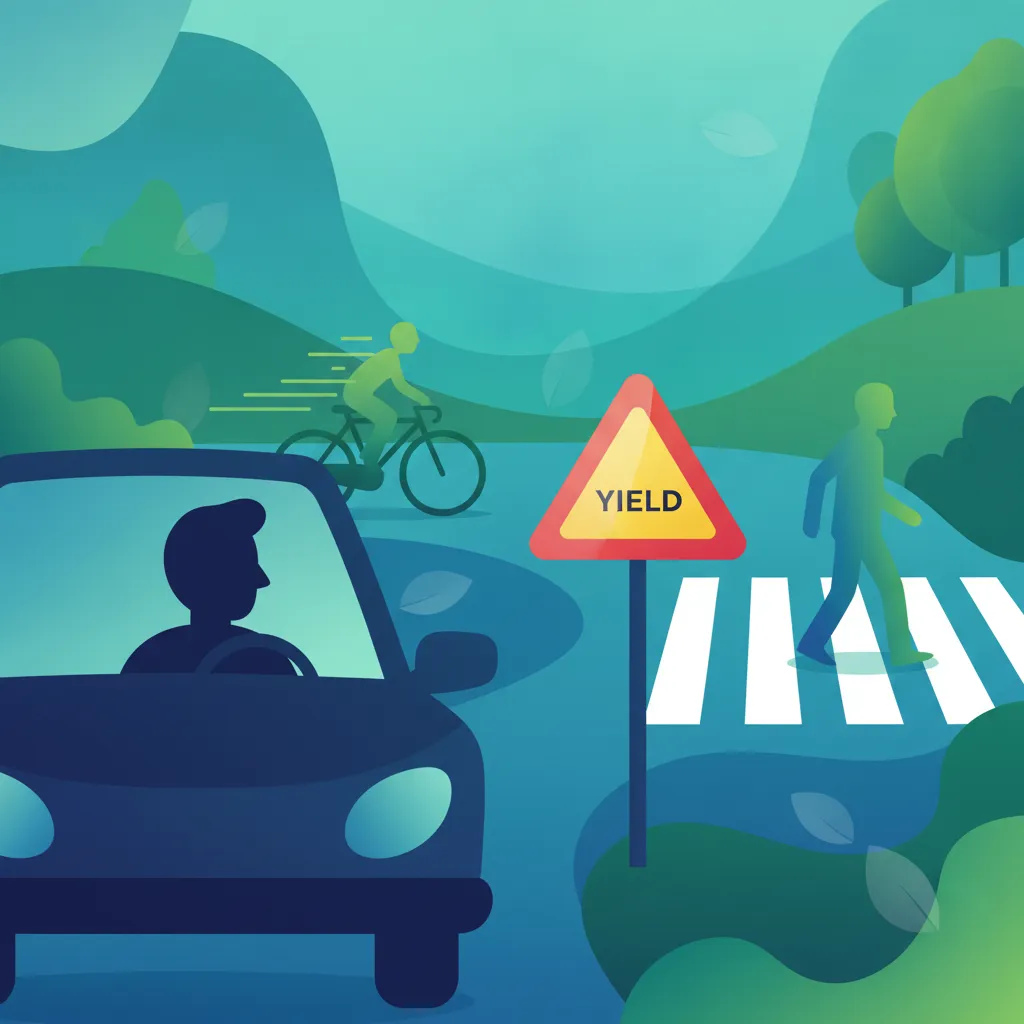
This lesson covers the absolute rules of priority that regulate junctions, roundabouts, and pedestrian crossings in Ireland. It teaches riders when they must yield, who has right-of-way, and how to read Stop and Yield signs correctly. Understanding these priority hierarchies prevents collisions and maintains orderly, predictable movement at busy junctions.
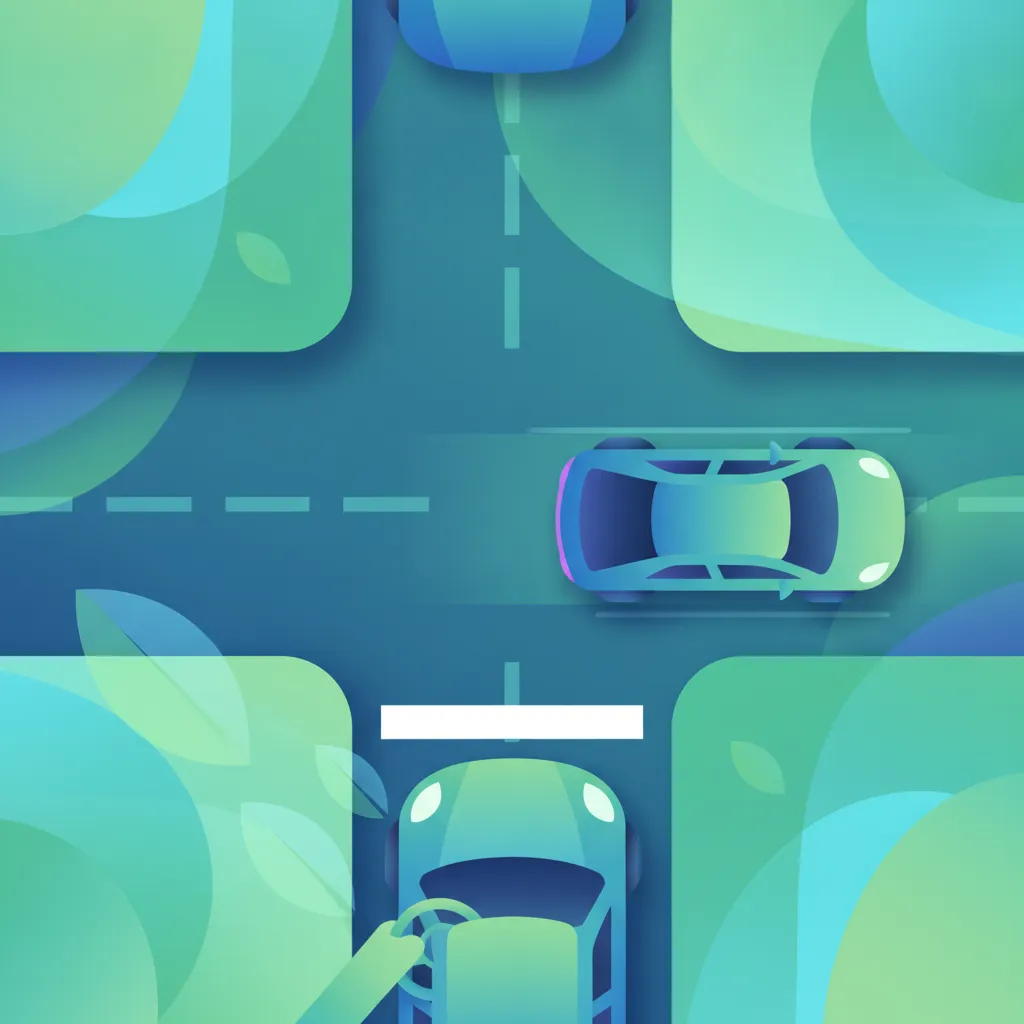
Right-of-way rules establish a clear order of precedence when the paths of two or more vehicles cross. This lesson explains how traffic on a major road has priority over traffic emerging from a minor road, and the general rule of yielding to oncoming vehicles when turning right. You will develop a solid understanding of how to approach intersections defensively, assessing speed and distance to make safe decisions.
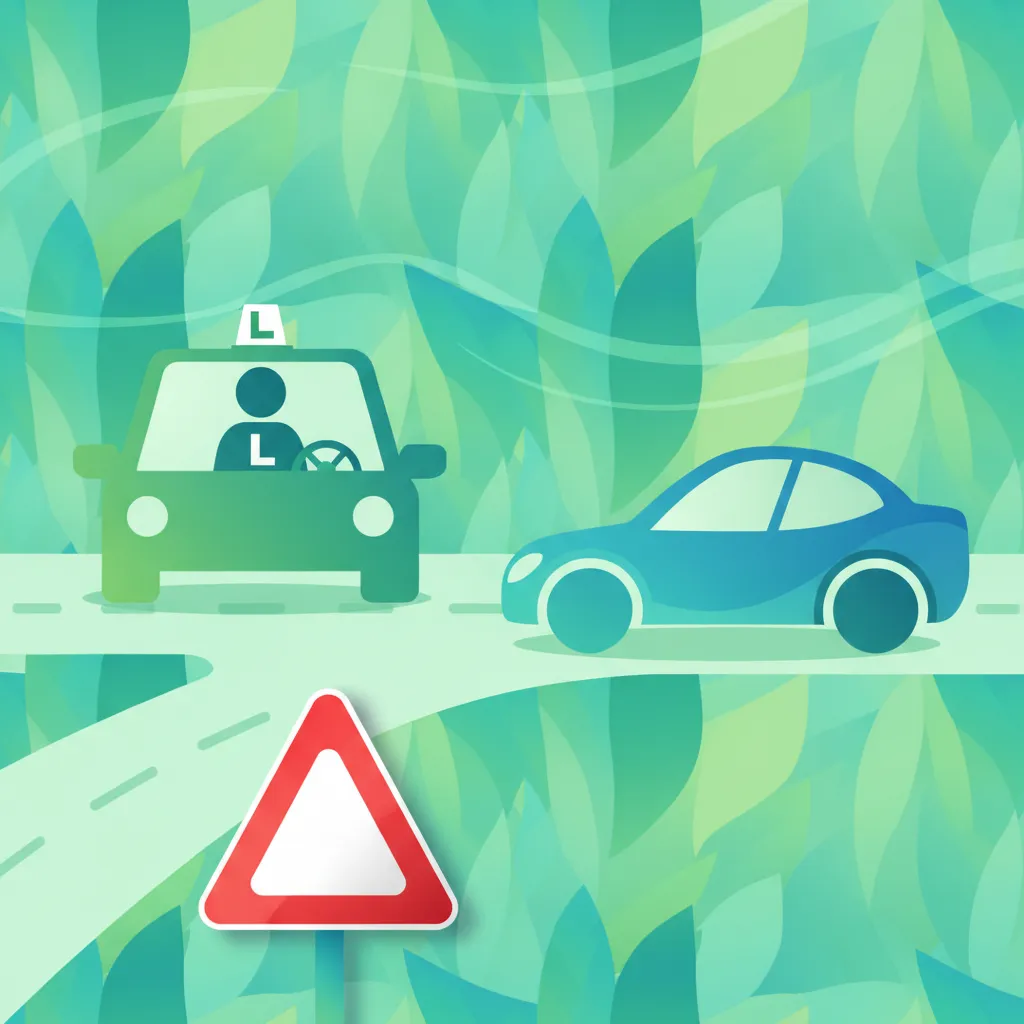
This lesson teaches the fundamental principles of priority and right-of-way at controlled and uncontrolled intersections across Ireland. It explains the legal obligations at yield signs, stop lines, and when meeting oncoming traffic turning across your lane. Motorcyclists will learn to carefully verify other drivers' intentions rather than assuming they will yield the correct right-of-way.

Navigating multi-lane roundabouts requires precise lane selection, continuous scanning, and timely signaling. This lesson teaches you the 'clock rule' for determining which lane to enter, how to yield to traffic already on the roundabout from your right, and when to activate your left indicator to exit. Mastering these procedures minimizes lane-drift accidents and ensures a seamless flow of traffic on busy roundabouts.
Learn how to effectively scan for vulnerable road users such as pedestrians and cyclists in busy urban environments. This theory guide covers the mechanics of spatial awareness, managing blind spots while riding, and anticipating the behavior of larger vehicles to avoid common collision scenarios on public roads.
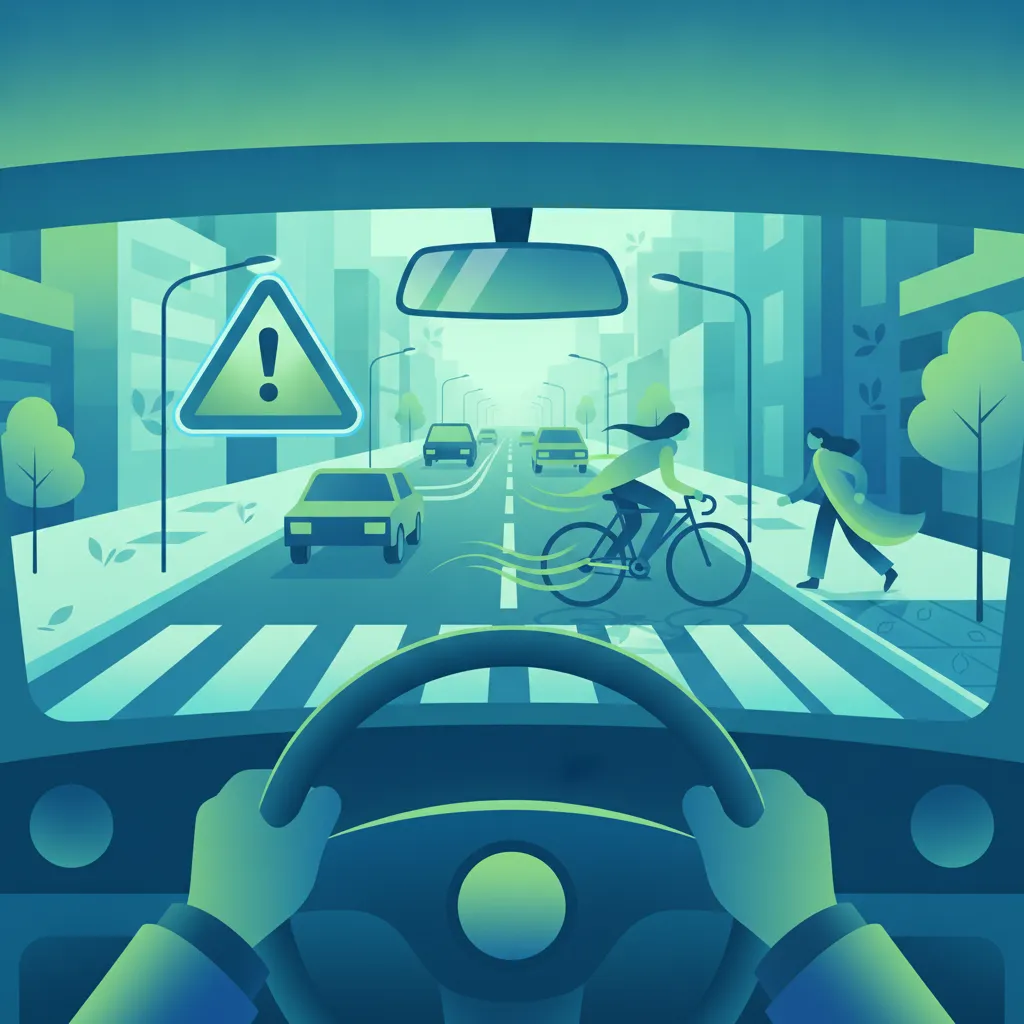
Proactive hazard perception involves constantly scanning the road ahead to identify potential dangers before they turn into actual emergencies. This lesson covers active scanning techniques, helping you look far ahead, check mirrors regularly, and identify subtle risk clues such as exhaust smoke from parked cars or children playing near kerbs. Anticipating these developments gives you the time to adjust speed and position safely.
Find clear answers to common questions learners have about Safe Approaches and Departures at Junctions. Learn how the lesson is structured, which driving theory objectives it supports, and how it fits into the overall learning path of units and curriculum progression in Ireland. These explanations help you understand key concepts, lesson flow, and exam focused study goals.
Observation is paramount. You must check your mirrors early and perform a shoulder check if necessary to ensure it is safe to signal and adjust your speed before making the turn.
Yes, you should always aim to be in a position where you are most visible to other road users, while still remaining within your lane and leaving space for safety.
The test often presents visual scenarios where you must identify the correct order of checks or the right-of-way at a junction. Understanding the sequence helps you pick the right answer every time.
Yes, always signal to show your intentions to all other potential road users, including pedestrians and cyclists who may be hidden from your immediate view.
Use the practice question search tool to pinpoint specific topics, road signs, or rules you need to master for your official Driver Theory Test. Refine your study strategy and ensure comprehensive preparation for all aspects of the Irish driving exam. Start your focused revision now and build confidence for your learner permit test.