
This lesson guides you through the complexities of navigating uncontrolled junctions where no formal signage or road markings dictate the right of way. As part of our Category B preparation, you will learn to apply the fundamental priority to the right rule required by the Rules of the Road in Ireland. Mastering these scenarios is essential for your theory exam success and for maintaining safety at intersections in real-world traffic.

Lesson content overview
Uncontrolled junctions represent some of the most demanding road layouts a driver will encounter. Because they lack physical traffic lights, regulatory signs, or painted road markings to dictate who should proceed first, they rely entirely on the knowledge, cooperation, and alertness of road users.
For candidates preparing for the Official Irish Driver Theory Test (Category B), mastering these rules is not just a requirement for passing the exam—it is a vital skill for safe everyday driving on Irish roads.
In this lesson, you will learn how to identify uncontrolled junctions, apply the fundamental "priority to the right" rule, handle equal-priority standoffs, and protect vulnerable road users in these high-risk areas.
An uncontrolled junction is any intersection where there are no traffic signals, stop signs, yield signs, or road markings (such as double broken white lines or solid stop lines) to govern the flow of traffic. These are sometimes referred to as "equal-status crossings."
An intersection of two or more roads that completely lacks traffic lights, signs (like Stop or Yield), or road markings to determine right of way. Drivers must rely on default traffic laws to negotiate the junction safely.
While many modern roads in Ireland use clear roundabouts, traffic lights, and signed junctions, uncontrolled junctions remain common in:
Because there are no visual cues like a red light or a bold red "STOP" sign, these junctions require drivers to actively scan the environment, anticipate hazards, and understand the default legal priority rules.
In Ireland, when approaching an uncontrolled junction, the foundational legal principle is priority to the right (sometimes phrased as "yielding to the right"). This rule acts as the default system to prevent collisions and maintain an orderly flow of traffic when infrastructure does not dictate otherwise.
The legal requirement at an uncontrolled junction to yield (give way) to any vehicle approaching the intersection from your right-hand side.
Imagine you are driving your Category B passenger car and approaching an intersection. As you look ahead, you notice there are no markings on the road surface and no signs on the corners.
Do not assume priority based on vehicle size or speed. Some drivers mistakenly believe that because they are driving a larger vehicle, or traveling on a straight path, they have priority over a vehicle coming from a side road. Under Irish road law, at an uncontrolled junction, all intersecting roads have equal status, and "priority to the right" applies regardless of the physical size of the vehicle.
Approaching an uncontrolled junction requires a systematic method of observation to ensure you do not pull out in front of an oncoming hazard. You must use the Four-Point Observation Check before deciding to enter the intersection.
Look Ahead: Check the road directly opposite you. Assess if there are oncoming vehicles that intend to turn across your path.
Look to the Right: This is your primary hazard zone. Scan thoroughly for cars, motorcycles, and cyclists approaching from your right. You must yield to these road users.
Look to the Left: Check for vehicles approaching from your left. Although they should yield to you, verify that they are actually slowing down and preparing to stop.
Check Your Rear Mirror: Assess the traffic behind you. If you need to come to a complete stop to yield to the right, ensure the driver behind you has noticed your deceleration.
By executing this systematic check early, you give yourself the time and space to react to hidden hazards, such as a cyclist obscured by a garden hedge or a speeding car ignoring the junction rules.
What happens if two vehicles arrive at an uncontrolled junction at the exact same time from opposite directions, or in a configuration where the "priority to the right" rule creates a deadlock?
When two vehicles arrive simultaneously from opposite roads, neither vehicle has an automatic, legally defined right-of-way over the other. In these scenarios, drivers must apply equal priority principles.
In situations of equal priority, you must use communication, patience, and defensive driving techniques to negotiate passage:
While vehicle-to-vehicle priority is clear under the law, the presence of vulnerable road users (VRUs) alters the priority dynamic. Pedestrians, cyclists, motorcyclists, and horse riders do not have the protective metal shell of a car, making them highly susceptible to severe injury in a collision.
Your approach to an uncontrolled junction must adapt fluidly to environmental conditions. A rule applied mechanically without considering weather or road conditions can lead to serious accidents.
In adverse weather conditions like rain, fog, ice, or snow, your stopping distance increases significantly.
To prepare for your Category B Driver Theory Test, you must be able to identify incorrect behaviors at uncontrolled junctions. Here are the most common mistakes candidates make during testing and real-world driving:
To fully appreciate the rules of uncontrolled junctions, you should be familiar with several related driving concepts:
When sitting your Category B theory exam, keep these vital points in mind regarding uncontrolled junctions:
Uncontrolled junctions are equal-status intersections lacking traffic lights, signs, or road markings that require drivers to apply the fundamental 'priority to the right' rule. When you approach such a junction, you must yield to any traffic coming from your right while vehicles from your left must yield to you - though you should never assume they will. A systematic four-point observation check (ahead, right, left, mirrors) is essential before entering, and equal-priority standoffs require eye contact, observation of wheel positioning, and cautious negotiation rather than hand gestures. Vulnerable road users including pedestrians, cyclists, and motorcyclists retain full priority rights at these junctions, and adverse weather or blind approaches demand significantly earlier speed reduction to account for increased stopping distances.
A short set of high-value points that capture the most important learning from this lesson.
At uncontrolled junctions with no signs, markings, or signals, the 'priority to the right' rule applies - you must yield to any traffic approaching from your right-hand side
Both roads at an uncontrolled junction have equal legal status regardless of width, surface, or appearance - size does not confer priority
Execute a systematic four-point observation check (ahead, right, left, mirrors) before entering any uncontrolled junction
Vulnerable road users including pedestrians, cyclists, and motorcyclists retain full priority rights at uncontrolled junctions
Environmental conditions require adjusted approach - reduce speed earlier in rain, fog, ice, or when visibility is restricted
Explore all units and lessons included in this driving theory course.
Uncontrolled junction = no traffic lights, no stop/yield signs, no road markings - apply default priority rules
Priority to the right: yield to vehicles on your right, vehicles from your left must yield to you (but don't assume they will)
At equal-priority standoffs, establish eye contact, observe wheel direction, and proceed with caution while covering the brake
Pedestrians already on a crossing or who have stepped off the kerb have absolute priority over turning vehicles
At blind junctions, use the 'creep and peep' method - stop fully, then inch forward until you can see clearly before proceeding
Assuming a wider, straighter, or busier road has automatic priority - without signs or markings, both roads are equal status
Making rolling stops without sufficient deceleration to perform a proper four-point visual observation
Attempting to overtake or squeeze past a right-turning vehicle on your right that still holds priority over you
Focusing only on vehicle traffic from the right while ignoring pedestrians already crossing in your path
Failing to adjust speed for conditions - many drivers approach junctions at the same speed regardless of weather or visibility
Lesson content overview
A short set of high-value points that capture the most important learning from this lesson.
At uncontrolled junctions with no signs, markings, or signals, the 'priority to the right' rule applies - you must yield to any traffic approaching from your right-hand side
Both roads at an uncontrolled junction have equal legal status regardless of width, surface, or appearance - size does not confer priority
Execute a systematic four-point observation check (ahead, right, left, mirrors) before entering any uncontrolled junction
Vulnerable road users including pedestrians, cyclists, and motorcyclists retain full priority rights at uncontrolled junctions
Environmental conditions require adjusted approach - reduce speed earlier in rain, fog, ice, or when visibility is restricted
Explore all units and lessons included in this driving theory course.
Uncontrolled junction = no traffic lights, no stop/yield signs, no road markings - apply default priority rules
Priority to the right: yield to vehicles on your right, vehicles from your left must yield to you (but don't assume they will)
At equal-priority standoffs, establish eye contact, observe wheel direction, and proceed with caution while covering the brake
Pedestrians already on a crossing or who have stepped off the kerb have absolute priority over turning vehicles
At blind junctions, use the 'creep and peep' method - stop fully, then inch forward until you can see clearly before proceeding
Assuming a wider, straighter, or busier road has automatic priority - without signs or markings, both roads are equal status
Making rolling stops without sufficient deceleration to perform a proper four-point visual observation
Attempting to overtake or squeeze past a right-turning vehicle on your right that still holds priority over you
Focusing only on vehicle traffic from the right while ignoring pedestrians already crossing in your path
Failing to adjust speed for conditions - many drivers approach junctions at the same speed regardless of weather or visibility
Explore search topics learners often look for when studying Priority at Uncontrolled Junctions. These topics reflect common questions about road rules, driving situations, safety guidance, and lesson level theory preparation for learners in Ireland.
Browse additional driving theory lessons that cover connected traffic rules, road signs, and common driving situations related to this topic. Improve your understanding of how different rules interact across everyday traffic scenarios.
Learn the official rules for navigating roundabouts and managing lane discipline. Understand how to identify priority for traffic already on the roundabout and how to safely exit while following correct lane positioning and signalling requirements under Irish road traffic law.
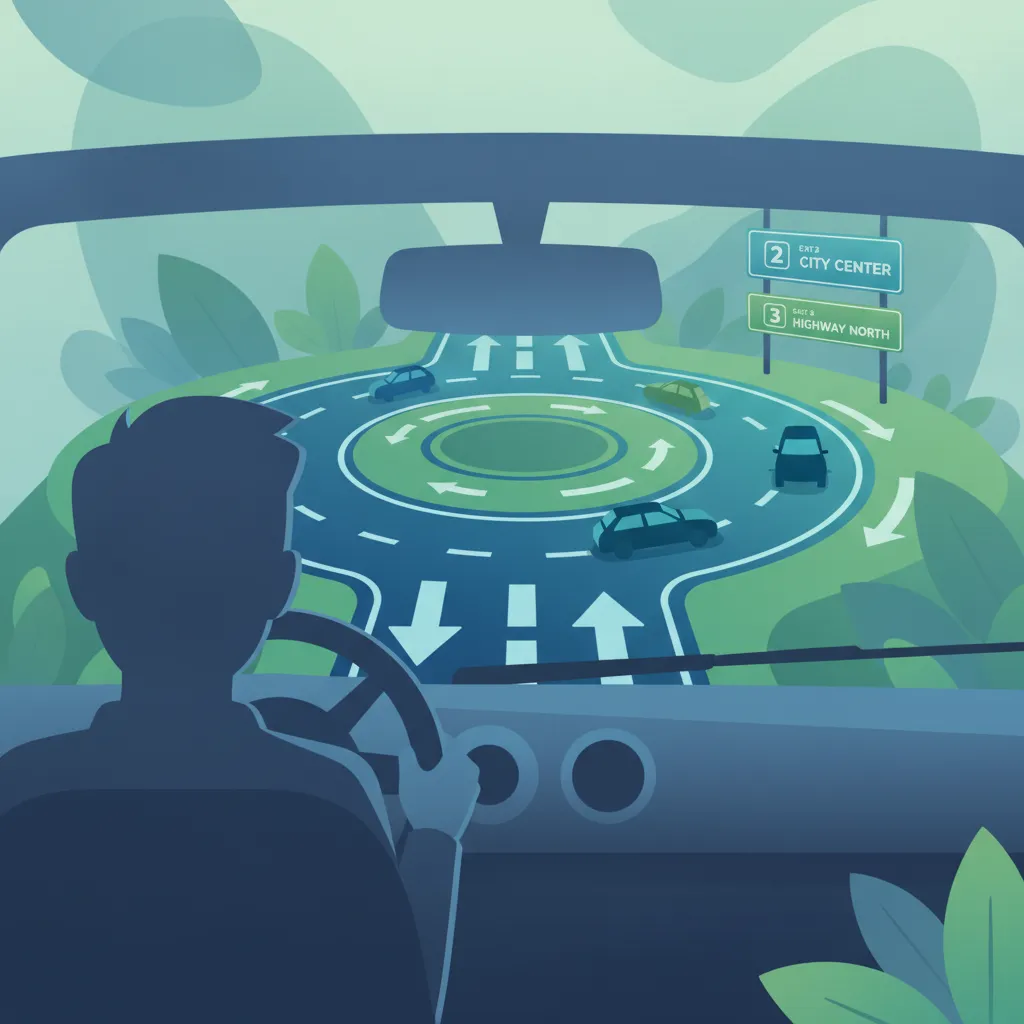
Navigating multi-lane roundabouts requires precise lane selection, continuous scanning, and timely signaling. This lesson teaches you the 'clock rule' for determining which lane to enter, how to yield to traffic already on the roundabout from your right, and when to activate your left indicator to exit. Mastering these procedures minimizes lane-drift accidents and ensures a seamless flow of traffic on busy roundabouts.

Irish driving theory demands that drivers keep to the left-hand side of the road unless overtaking or turning right. This lesson explains how to maintain consistent lane discipline on multi-lane roads, how to perform safe lane changes, and the dangers of drifting. You will learn the safety sequence of checking mirrors, checking blind spots, signalling, and smoothly executing a lane change without disrupting trailing traffic.
This lesson provides a comprehensive guide to navigating single and multi-lane roundabouts safely in accordance with the Irish Rules of the Road. It covers correct lane selection on approach, signaling rules for exiting, and maintaining a steady path through traffic. Riders will learn to anticipate lane-changing mistakes made by other drivers and manage the unique banking angles of roundabouts.
This lesson teaches the fundamental principles of priority and right-of-way at controlled and uncontrolled intersections across Ireland. It explains the legal obligations at yield signs, stop lines, and when meeting oncoming traffic turning across your lane. Motorcyclists will learn to carefully verify other drivers' intentions rather than assuming they will yield the correct right-of-way.
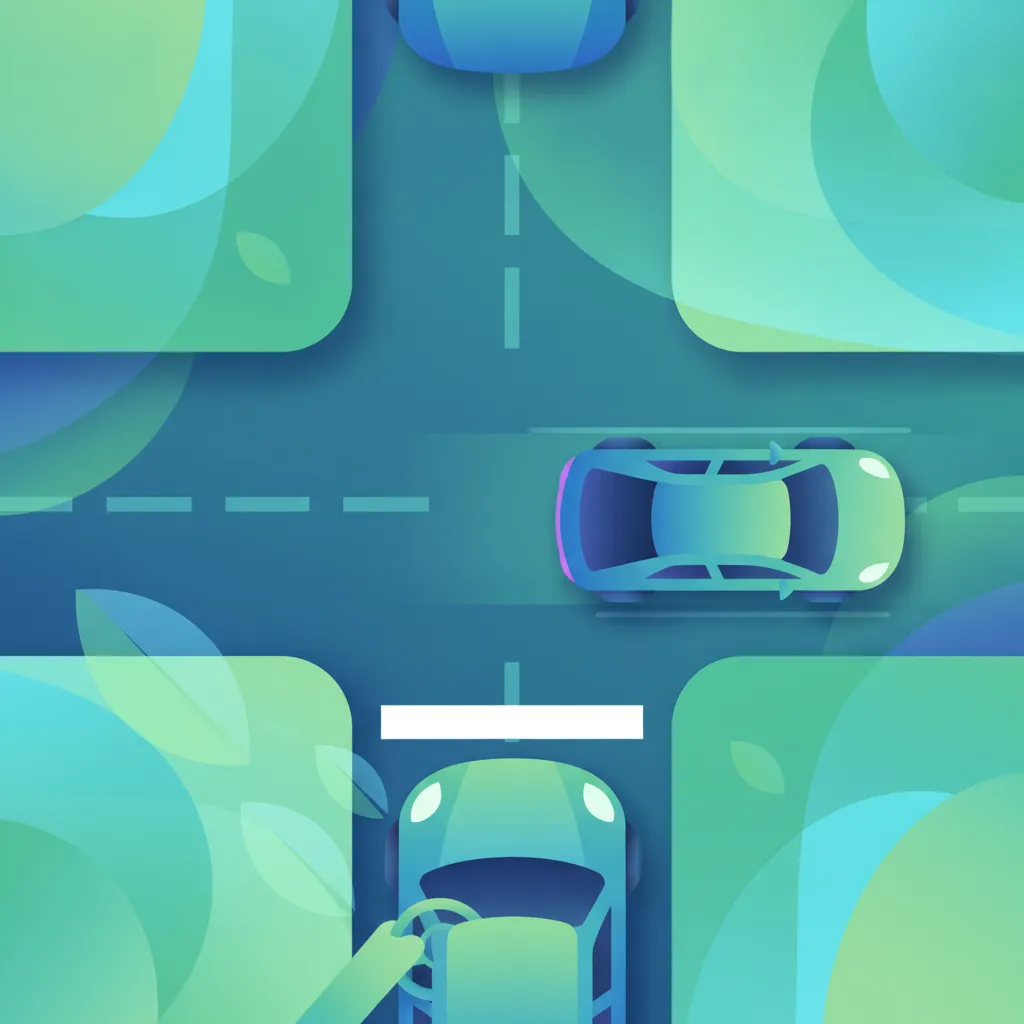
Right-of-way rules establish a clear order of precedence when the paths of two or more vehicles cross. This lesson explains how traffic on a major road has priority over traffic emerging from a minor road, and the general rule of yielding to oncoming vehicles when turning right. You will develop a solid understanding of how to approach intersections defensively, assessing speed and distance to make safe decisions.
This lesson covers the absolute rules of priority that regulate junctions, roundabouts, and pedestrian crossings in Ireland. It teaches riders when they must yield, who has right-of-way, and how to read Stop and Yield signs correctly. Understanding these priority hierarchies prevents collisions and maintains orderly, predictable movement at busy junctions.

Large passenger vehicles must maintain consistent lane positioning to prevent side-swipe incidents and sustain smooth urban traffic patterns. This lesson covers standard lane selection rules, safe overtaking procedures, and how to use designated public transit corridors correctly. Drivers will learn the importance of checking mirrors continuously and planning lane changes well in advance.
Motorways are designed for safe, high-speed travel, but require strict adherence to lane discipline and specific regulations. This lesson explains that the left lane is for normal driving, while middle and right lanes are strictly for overtaking slower traffic. You will learn how to identify motorway exits, use the hard shoulder during absolute emergencies, and understand the legal restrictions placed on learner permit holders.
This lesson explains the critical meanings of solid, broken, and continuous lines painted on Irish road surfaces. It defines the legal rules surrounding bus lanes, bicycle lanes, and yellow box junctions in urban settings. Riders will learn correct lane discipline to ensure their safety and maintain proper separation from surrounding traffic.

This lesson outlines the legal and safety requirements for maintaining proper lane discipline on multi-lane roads, roundabouts, and motorways in Ireland. It teaches drivers how to account for lane width, manage trailer off-tracking, and position the cab to prevent encroachment on neighboring lanes. Drivers will master safe lane-changing strategies, signaling protocols, and traffic merging techniques.
Discover systematic techniques for scanning and identifying potential hazards at complex intersections. This guide explains how to effectively monitor the behaviour of other road users, anticipate conflict points at junctions, and maintain safe observation patterns to improve defensive driving skills on Irish roads.
Proactive hazard perception involves constantly scanning the road ahead to identify potential dangers before they turn into actual emergencies. This lesson covers active scanning techniques, helping you look far ahead, check mirrors regularly, and identify subtle risk clues such as exhaust smoke from parked cars or children playing near kerbs. Anticipating these developments gives you the time to adjust speed and position safely.
This lesson details the sequential steps required to approach and exit junctions safely under the Irish driving rules. It teaches riders how to select the correct lane, utilize mirrors, apply early signals, and reduce speed appropriately. Effective observation strategies are highlighted to help riders identify crossing pedestrians or approaching side traffic.

This lesson focuses on the safe approach and execution of turns at T-junctions, staggered intersections, and blind crossroads. It explains the critical mirror-signal-manoeuvre routine and how to select the best position for maximum visibility to cross-traffic. Motorcyclists will learn to identify potential hazards like vehicles pulling out suddenly or turning across their direct path.
Find clear answers to common questions learners have about Priority at Uncontrolled Junctions. Learn how the lesson is structured, which driving theory objectives it supports, and how it fits into the overall learning path of units and curriculum progression in Ireland. These explanations help you understand key concepts, lesson flow, and exam focused study goals.
An uncontrolled junction is an intersection that does not have traffic lights, stop signs, yield signs, or road markings to manage the flow of traffic. Drivers must rely on the Rules of the Road and their own judgement to proceed safely.
In the absence of other signs or signals, the rule is to yield to traffic approaching from your right. You must monitor your right side carefully, reduce your speed as you approach the junction, and be ready to stop if another vehicle is approaching.
Not necessarily, but you must always slow down to a speed that allows you to stop safely if required. If the road is completely clear, you may proceed with caution, but always prioritize the safety of all road users.
Yes, understanding priority and junction navigation is a core component of the Irish Driver Theory Test. You can expect scenario-based questions that test your knowledge of who has the right of way in various junction layouts.
Use the practice question search tool to pinpoint specific topics, road signs, or rules you need to master for your official Driver Theory Test. Refine your study strategy and ensure comprehensive preparation for all aspects of the Irish driving exam. Start your focused revision now and build confidence for your learner permit test.