This lesson explores the essential priority and right-of-way rules required to pass your Irish motorcycle theory test. You will learn to correctly interpret road signage and traffic flow at controlled and uncontrolled junctions to ensure your safety on the road.
Lesson content overview
Navigating junctions, intersections, and roundabouts safely is one of the most critical skills you will develop as a motorcyclist. According to collision statistics compiled by the Road Safety Authority (RSA) of Ireland, junctions are among the most common locations for multi-vehicle accidents involving motorcycles.
This lesson provides a comprehensive breakdown of priority and right-of-way rules under Irish road traffic legislation. It is designed to prepare you for your Category A, A1, and A2 theory exams, while also equipping you with the defensive riding strategies needed to survive and thrive on Irish roads.
In driving theory, "priority" and "right-of-way" are often used interchangeably, but they represent two distinct elements of road safety.
For motorcyclists, this distinction is a matter of life and death. Because of a motorcycle's slim profile, other drivers frequently suffer from "inattentional blindness" (failing to perceive an object that is fully visible because they are not actively looking for it). As a rider, you must always verify that another driver is actually yielding before you exercise your legal priority. Never assume that because you have the legal right-of-way, the path is safe.
Controlled junctions use physical signs and road markings to establish a clear hierarchy of priority. In Ireland, the two primary regulatory signs governing these intersections are the Yield sign and the Stop sign.
The Yield sign is an internationally recognized symbol consisting of a red-bordered, downward-pointing triangle with a white or yellow background. In Irish-speaking regions (Gaeltacht areas), the sign may display the words "Géill Slí".
When approaching a Yield sign, you must slow down and prepare to stop if there is traffic approaching on the intersecting road.
The Stop sign is an octagonal red sign with white lettering. It imposes a much stricter legal obligation than a Yield sign.
At a Stop sign, you must bring your motorcycle to a complete, absolute halt. Rolling stops (slowly creeping through the line without fully stopping) are illegal and carry penalty points.
The "Rolling Stop" Danger: Many riders treat Stop signs like Yield signs, merely slowing down. This is a primary cause of failing the practical motorcycle riding test and increases the risk of side-impact collisions with fast-moving cross-traffic.
Understanding who has priority when signs or markings are absent or damaged is vital for maintaining a smooth, safe flow of traffic.
At a T-junction, a minor road meets a major (through) road. The default rule of the road in Ireland is that traffic on the major road has priority over traffic emerging from the minor road.
If you are riding on the minor road:
If you are riding on the major road, you technically have priority over emerging traffic. However, you must remain highly alert for drivers pulling out of side roads who may not have seen your motorcycle.
At intersections where there are no signs, traffic lights, or road markings to indicate priority (often found in rural areas or quiet residential estates), the junction is considered "equal status."
Because Ireland utilizes a left-hand traffic system (driving on the left side of the road), turning right requires you to cross the oncoming lane of traffic. This is one of the most hazardous maneuvers for a motorcyclist.
When you are preparing to turn right at a junction, oncoming traffic traveling straight ahead or turning left has priority over you.
Conversely, when you are traveling straight ahead and an oncoming vehicle wants to turn right across your path, you have priority. However, this is the classic "Sorry Mate, I Didn't See You" (SMIDSY) scenario.
Oncoming drivers turning right often look for large metallic profiles (cars, buses, trucks) and completely fail to register an oncoming motorcycle. They may begin their turn directly across your path, presenting an immediate collision hazard.
Analyze the hazard: Identify oncoming vehicles that are slowing down, positioning near the center line, or showing a right indicator.
Adjust your lane position: Move slightly to the left or center of your lane (Position 2 or 3) to increase your "visual footprint" and create a larger buffer space.
Perform a speed check: Reduce your speed slightly and cover your front and rear brakes to slash your reaction and braking times.
Watch the driver's eyes and wheels: Do not look at the car's body; look at the front wheels. If the wheels begin to roll or turn, prepare to take immediate evasive action or brake to a stop.
Roundabouts are designed to keep traffic moving continuously while reducing the severity of collisions. However, they require precise lane discipline and an absolute understanding of priority.
The primary legal rule for entering any roundabout in Ireland is: Yield to traffic already circulating on the roundabout, which approaches from your right.
Multi-lane roundabouts are highly dynamic environments. Other drivers may make sudden, unsignaled lane changes or cut across lanes to reach their exit.
Traffic light signals override standard sign and junction priority rules. However, green does not mean "go blindly"; it means "proceed if the way is clear and it is safe to do so."
| Light Color | Legal Meaning | Practical Application for Motorcyclists |
|---|---|---|
| Red | STOP. Do not pass the stop line. | Remain in first gear with your clutch pulled in and rear brake applied so you can move quickly if a hazard approaches from behind. |
| Amber | STOP, unless you are too close to the stop line to do so safely. | Do not accelerate to "beat" an amber light. Abrupt stopping on a motorcycle can cause a rear-end collision if a vehicle behind is tailgating. Evaluate your stopping distance realistically. |
| Green | PROCEED, provided the intersection is clear. | Scan the junction to the left and right before entering to ensure no cross-traffic is running a red light. |
At complex intersections, you may encounter green filter arrows alongside main traffic signals.
Right-of-way rules are absolute in law, but their safe execution is highly dependent on environmental and vehicle conditions.
In wet weather, heavy rain, or thick fog, your ability to perceive priority cues and execute stops is severely compromised.
At night, your headlights must be clean, adjusted correctly, and switched to dipped beam when meeting oncoming traffic or riding behind another vehicle.
When applying priority rules, you must show extra consideration to road users who are more vulnerable than yourself.
To reinforce the importance of these rules, let us look at the direct consequences of correct versus incorrect priority execution.
[APPROACHING A JUNCTION]
       │
       ├─► Correct Execution: Reduce speed, scan early, verify driver eye contact, yield as required.
       │   └── RESULT: Controlled passage, zero conflict points, smooth traffic flow.
       │
       └─► Incorrect Execution: Assume right-of-way, fail to stop completely, ignore blind spots.
           └── RESULT: Near-miss or high-impact collision (SMIDSY / side-impact), legal liability, severe injury.
By choosing to ride defensively and prioritizing safety over legal entitlement, you protect yourself against the errors of other road users.
This lesson establishes the critical distinction between priority (your legal entitlement) and right-of-way (the act of another road user yielding to you), emphasizing that motorcyclists must always verify rather than assume. It covers the specific legal obligations at Yield signs (slow and give way) versus Stop signs (absolute halt), T-junction and uncontrolled junction rules, right-turn priority dynamics including the SMIDSY hazard, roundabout navigation with correct signaling, and traffic light phases including filter arrows. The lesson also addresses environmental factors like wet weather braking distances, night riding visibility limitations, and extra care required around pedestrians and cyclists. Defensive riding—prioritizing safety over legal entitlement—is the consistent theme throughout.
A short set of high-value points that capture the most important learning from this lesson.
Priority is the legal framework established by signs and markings; right-of-way is the practical act of another road user yielding that priority to you
Stop signs require a complete, absolute halt behind the line; Yield signs require slowing and yielding but not necessarily stopping if the road is clear
At T-junctions, traffic on the major road has priority; at uncontrolled equal-status junctions, give way to traffic approaching from your right
When turning right across oncoming traffic, that traffic has priority over you; when they turn right across your path, you have priority but must watch for SMIDSY collisions
Always verify another driver's intentions before exercising your legal priority—never assume you are seen or will be yielded to
Explore all units and lessons included in this driving theory course.
Yield sign = broken white line, slow down and give way; Stop sign = solid white line, complete halt required
On unfamiliar rural roads at night, motorcycle headlights can be mistaken for distant car lights or blend into streetlights—never assume a driver has accurately judged your distance
At roundabouts, always yield to traffic already circulating on the roundabout approaching from your right
A standard circular green light does NOT guarantee oncoming traffic has stopped; only a green arrow pointing right gives exclusive priority to turn
Inattentional blindness means other drivers may fail to see you even when you are clearly visible—always make eye contact or watch their front wheels, not their body
Treating a Stop sign like a Yield sign by performing a rolling stop without coming to a complete halt, which is illegal and dangerous
Assuming oncoming traffic will yield when you are turning right across their lane without waiting for a clear, safe gap
Failing to verify driver intentions at roundabouts and riding in a vehicle's blind spot, especially near HGVs
Confusing a circular green light with a green filter arrow—oncoming traffic may still have priority under a standard green
Approaching Yield signs too fast without an observation sweep and assuming a gap exists when it does not
Lesson content overview
A short set of high-value points that capture the most important learning from this lesson.
Priority is the legal framework established by signs and markings; right-of-way is the practical act of another road user yielding that priority to you
Stop signs require a complete, absolute halt behind the line; Yield signs require slowing and yielding but not necessarily stopping if the road is clear
At T-junctions, traffic on the major road has priority; at uncontrolled equal-status junctions, give way to traffic approaching from your right
When turning right across oncoming traffic, that traffic has priority over you; when they turn right across your path, you have priority but must watch for SMIDSY collisions
Always verify another driver's intentions before exercising your legal priority—never assume you are seen or will be yielded to
Explore all units and lessons included in this driving theory course.
Yield sign = broken white line, slow down and give way; Stop sign = solid white line, complete halt required
On unfamiliar rural roads at night, motorcycle headlights can be mistaken for distant car lights or blend into streetlights—never assume a driver has accurately judged your distance
At roundabouts, always yield to traffic already circulating on the roundabout approaching from your right
A standard circular green light does NOT guarantee oncoming traffic has stopped; only a green arrow pointing right gives exclusive priority to turn
Inattentional blindness means other drivers may fail to see you even when you are clearly visible—always make eye contact or watch their front wheels, not their body
Treating a Stop sign like a Yield sign by performing a rolling stop without coming to a complete halt, which is illegal and dangerous
Assuming oncoming traffic will yield when you are turning right across their lane without waiting for a clear, safe gap
Failing to verify driver intentions at roundabouts and riding in a vehicle's blind spot, especially near HGVs
Confusing a circular green light with a green filter arrow—oncoming traffic may still have priority under a standard green
Approaching Yield signs too fast without an observation sweep and assuming a gap exists when it does not
Explore search topics learners often look for when studying Understanding Right-of-Way and Priority Rules. These topics reflect common questions about road rules, driving situations, safety guidance, and lesson level theory preparation for learners in Ireland.
Browse additional driving theory lessons that cover connected traffic rules, road signs, and common driving situations related to this topic. Improve your understanding of how different rules interact across everyday traffic scenarios.
Understand the legal priority hierarchy at Irish roundabouts and how to navigate multi-lane junctions safely. This lesson explains standard lane positioning, signaling requirements, and how to effectively manage traffic flow while sharing the road with other motorists, cyclists, and pedestrians under official Rules of the Road.

Navigating multi-lane roundabouts requires precise lane selection, continuous scanning, and timely signaling. This lesson teaches you the 'clock rule' for determining which lane to enter, how to yield to traffic already on the roundabout from your right, and when to activate your left indicator to exit. Mastering these procedures minimizes lane-drift accidents and ensures a seamless flow of traffic on busy roundabouts.

Irish driving theory demands that drivers keep to the left-hand side of the road unless overtaking or turning right. This lesson explains how to maintain consistent lane discipline on multi-lane roads, how to perform safe lane changes, and the dangers of drifting. You will learn the safety sequence of checking mirrors, checking blind spots, signalling, and smoothly executing a lane change without disrupting trailing traffic.
Motorways are designed for safe, high-speed travel, but require strict adherence to lane discipline and specific regulations. This lesson explains that the left lane is for normal driving, while middle and right lanes are strictly for overtaking slower traffic. You will learn how to identify motorway exits, use the hard shoulder during absolute emergencies, and understand the legal restrictions placed on learner permit holders.
This lesson provides a comprehensive guide to navigating single and multi-lane roundabouts safely in accordance with the Irish Rules of the Road. It covers correct lane selection on approach, signaling rules for exiting, and maintaining a steady path through traffic. Riders will learn to anticipate lane-changing mistakes made by other drivers and manage the unique banking angles of roundabouts.
Large passenger vehicles must maintain consistent lane positioning to prevent side-swipe incidents and sustain smooth urban traffic patterns. This lesson covers standard lane selection rules, safe overtaking procedures, and how to use designated public transit corridors correctly. Drivers will learn the importance of checking mirrors continuously and planning lane changes well in advance.
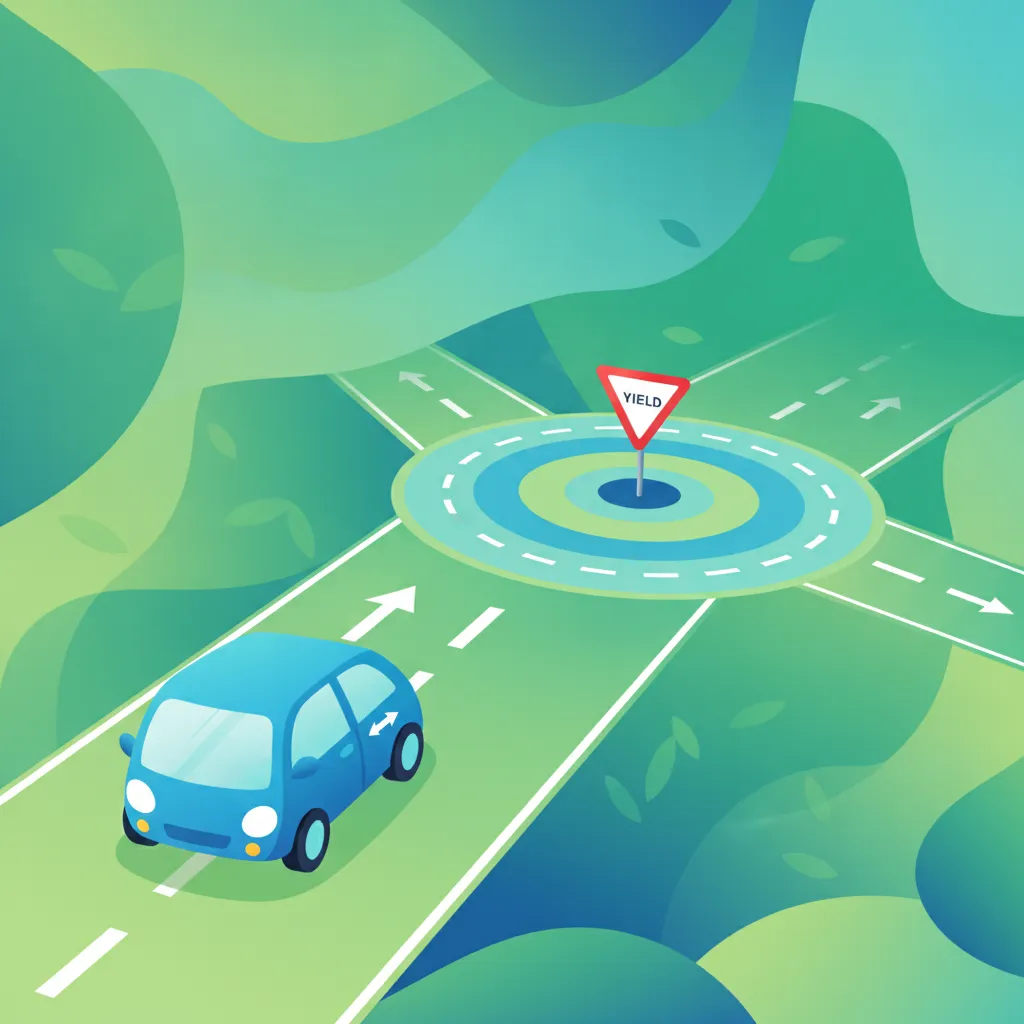
This lesson covers correct procedures for navigating roundabouts, which present significant risks for Category AM riders. It details lane selection rules, timely indicator signals for exiting, and the importance of checking blind spots before shifting lanes. Riders will learn to safely share the roundabout with large vehicles and vulnerable road users.
This lesson explains the critical meanings of solid, broken, and continuous lines painted on Irish road surfaces. It defines the legal rules surrounding bus lanes, bicycle lanes, and yellow box junctions in urban settings. Riders will learn correct lane discipline to ensure their safety and maintain proper separation from surrounding traffic.

Overtaking requires rapid judgment, clear visibility, and precise execution to avoid catastrophic head-on collisions. This lesson guides you through checking oncoming traffic, verifying legal passing zones via road markings, and checking mirrors and blind spots before accelerating. You will learn how to signal your intentions, maintain a safe gap, and return to your driving lane smoothly without cutting up the passed vehicle.
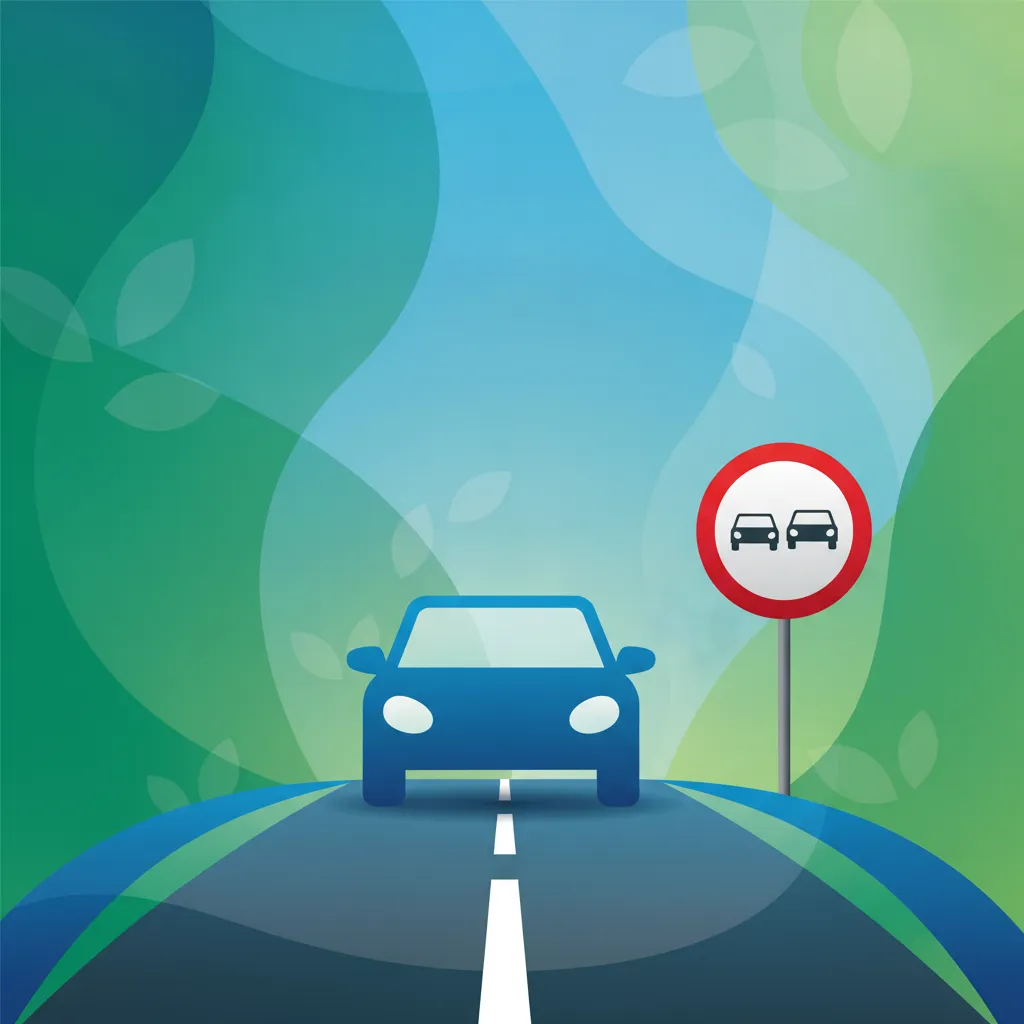
No-overtaking zones are marked in areas with restricted visibility, such as approaching bends, humps, or narrow bridges. This lesson details how continuous solid white lines legally prohibit passing, along with the very narrow exceptions allowed under Irish law. You will learn to identify these high-risk areas from visual markings, ensuring you never initiate a passing manoeuvre that puts oncoming traffic in immediate danger.
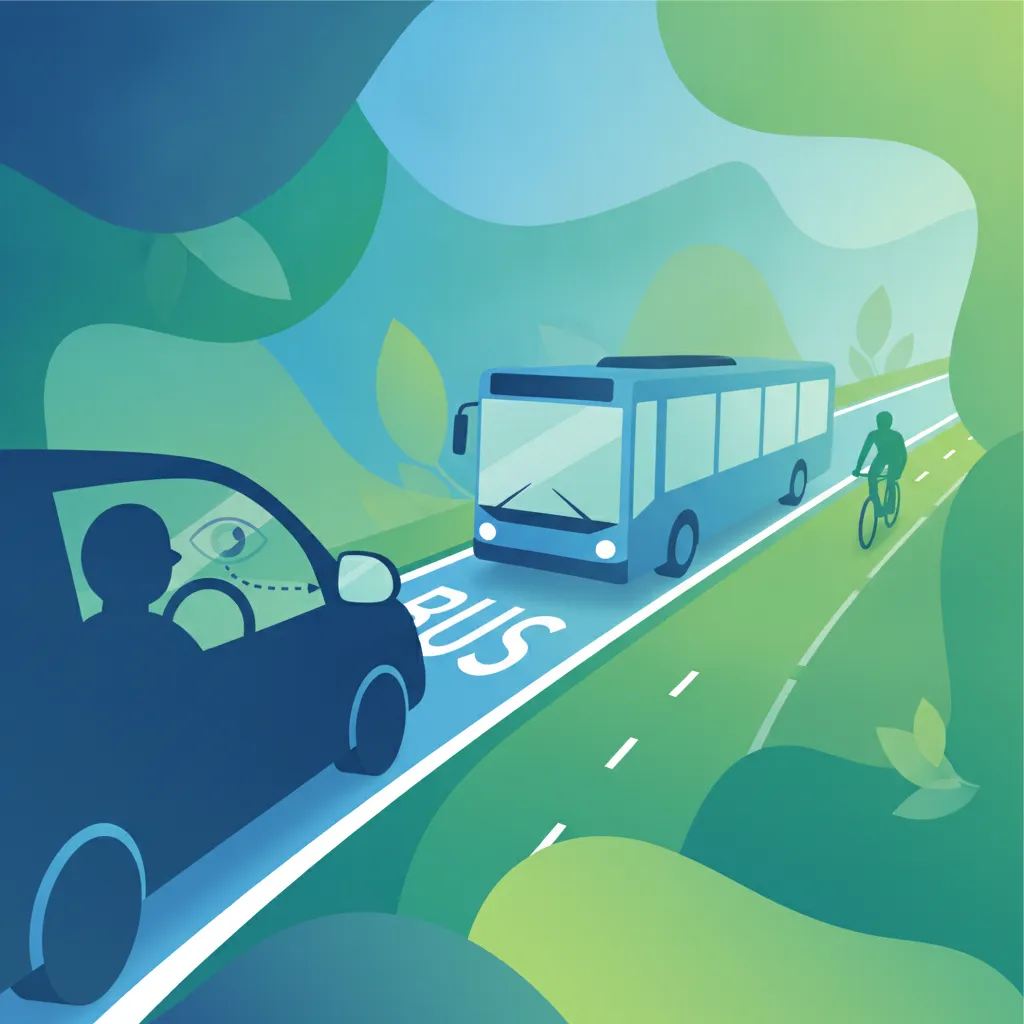
This lesson clarifies the legal regulations surrounding bus lanes and cycle lanes in Ireland, highlighting when motorcycles are permitted to enter them. It outlines how to cross these lanes safely when turning left, and how to scan for cyclists approaching from behind. Riders will learn to respect lane markings, observe signposted operational hours, and avoid blocking designated public transit lanes.
Learn to identify and anticipate common hazards when approaching junctions and turning across oncoming traffic. This guide focuses on visual scanning techniques, managing blind spots, and recognizing potential risks to avoid collisions at uncontrolled or complex intersections while applying official motorcycle safety standards for Irish roads.
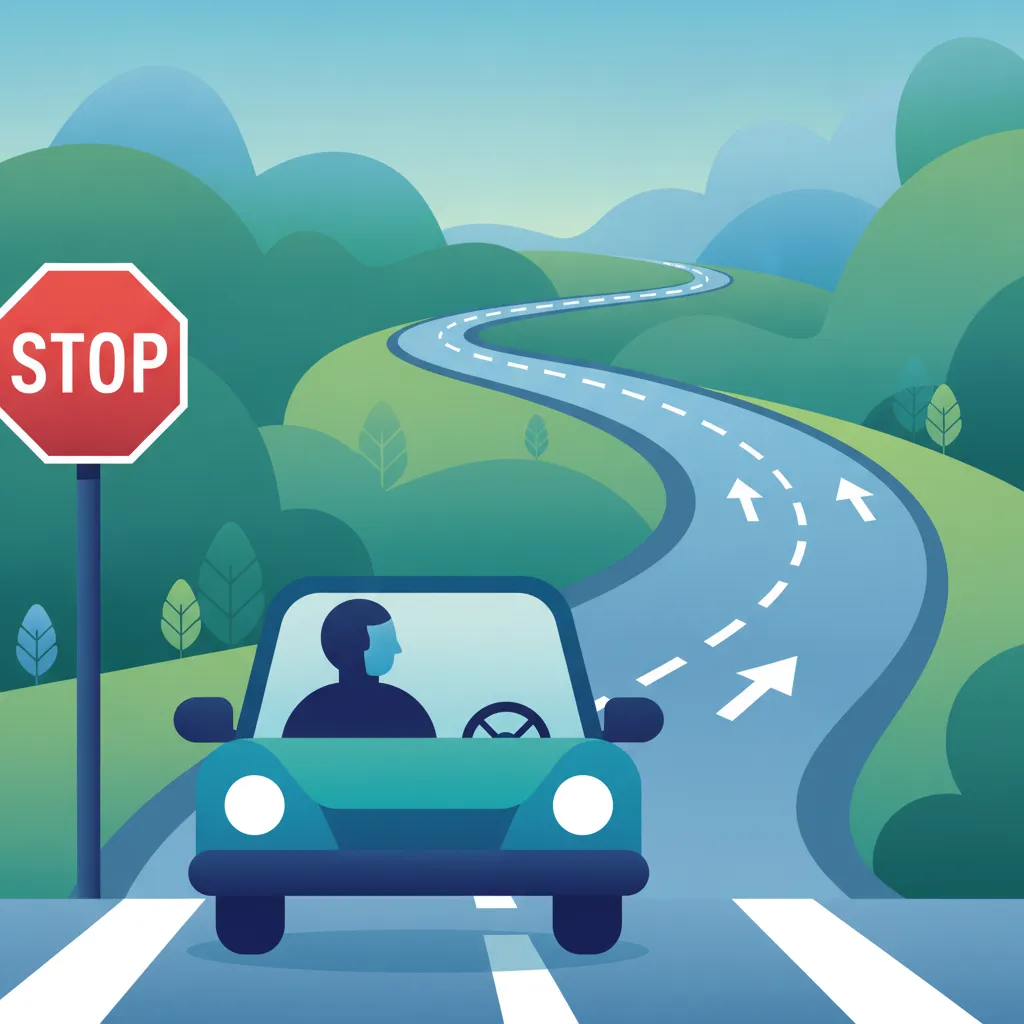
This lesson details the sequential steps required to approach and exit junctions safely under the Irish driving rules. It teaches riders how to select the correct lane, utilize mirrors, apply early signals, and reduce speed appropriately. Effective observation strategies are highlighted to help riders identify crossing pedestrians or approaching side traffic.

This lesson focuses on the safe approach and execution of turns at T-junctions, staggered intersections, and blind crossroads. It explains the critical mirror-signal-manoeuvre routine and how to select the best position for maximum visibility to cross-traffic. Motorcyclists will learn to identify potential hazards like vehicles pulling out suddenly or turning across their direct path.

This lesson teaches how to cultivate a proactive defensive riding mindset, focusing on situational awareness and constant hazard scanning. It describes the system of motorcycle control, encouraging riders to anticipate potential mistakes from other drivers, pedestrians, and cyclists. Motorcyclists will learn to position themselves defensively, leaving clear escape routes in all driving environments.

Uncontrolled junctions represent a high-risk scenario because they lack physical signs, lines, or lights to dictate priority. This lesson covers the crucial 'priority to the right' principle, where you must yield to any traffic approaching from your right-hand side. You will learn the importance of reducing your speed, preparing to stop, and verifying the intentions of other drivers at these equal-status crossings.
This lesson covers the strategic aspects of journey management, emphasizing the safety benefits of proactive route planning and weather checks. It teaches riders how to select safer roads, avoid high-congestion zones during rush hour, and schedule regular rest intervals. Motorcyclists will learn to pack essential tools, emergency contacts, and spare safety gear to remain prepared for any roadside situation.
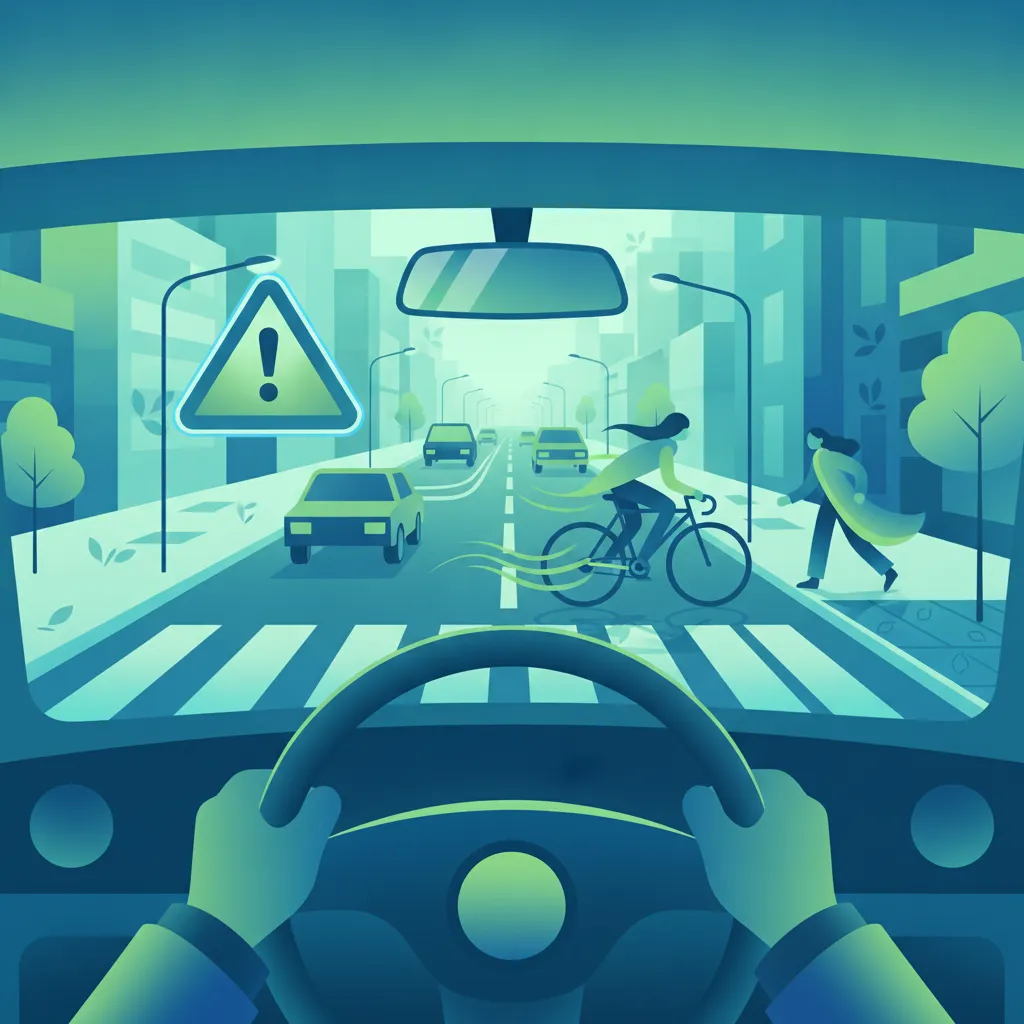
Proactive hazard perception involves constantly scanning the road ahead to identify potential dangers before they turn into actual emergencies. This lesson covers active scanning techniques, helping you look far ahead, check mirrors regularly, and identify subtle risk clues such as exhaust smoke from parked cars or children playing near kerbs. Anticipating these developments gives you the time to adjust speed and position safely.
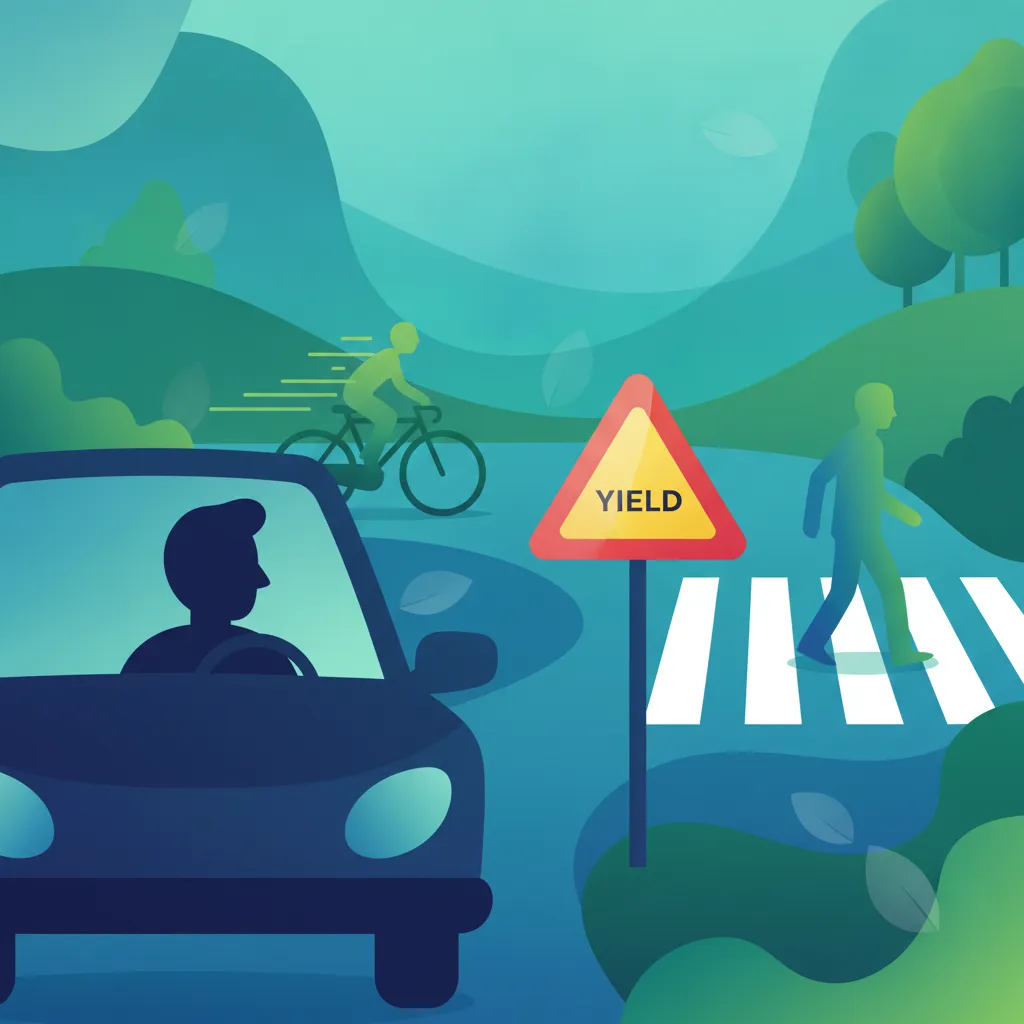
This lesson covers the absolute rules of priority that regulate junctions, roundabouts, and pedestrian crossings in Ireland. It teaches riders when they must yield, who has right-of-way, and how to read Stop and Yield signs correctly. Understanding these priority hierarchies prevents collisions and maintains orderly, predictable movement at busy junctions.

This lesson outlines how motorcyclists should respond when permanent road signs are dirty, damaged, or hidden by overgrown trees and hedges. It introduces the temporary signage, warning cones, and detour markers commonly deployed at active roadwork zones in Ireland. Riders will learn to read the road ahead defensively, reducing speed when visual information is incomplete or compromised.
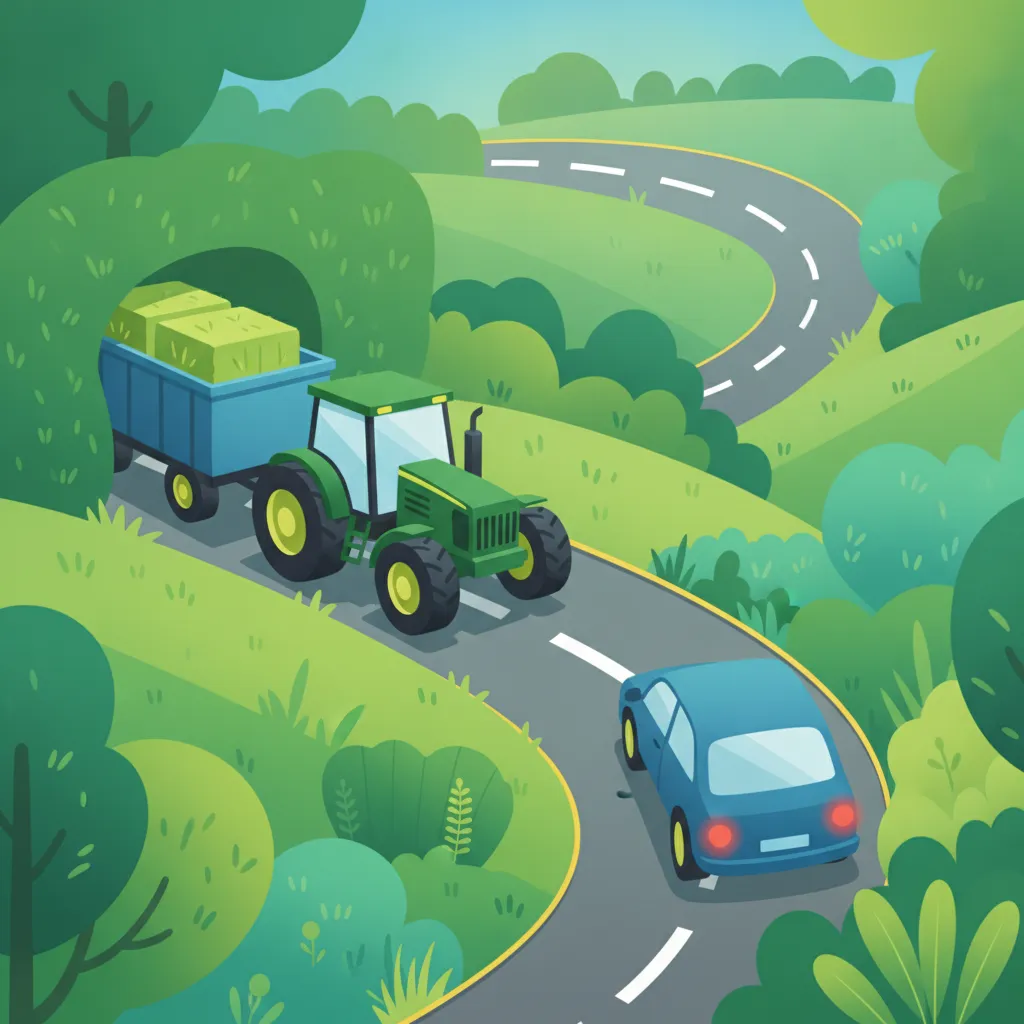
Irish rural roads are often narrow, winding, and bordered by high hedges, presenting unique hazards compared to urban streets. This lesson focuses on scanning for hidden hazards such as slow-moving farm machinery, mud on the road surface, and loose livestock. You will learn how to adjust your speed before entering blind bends, sound your horn at blind crests, and safely share the road with local agricultural traffic.
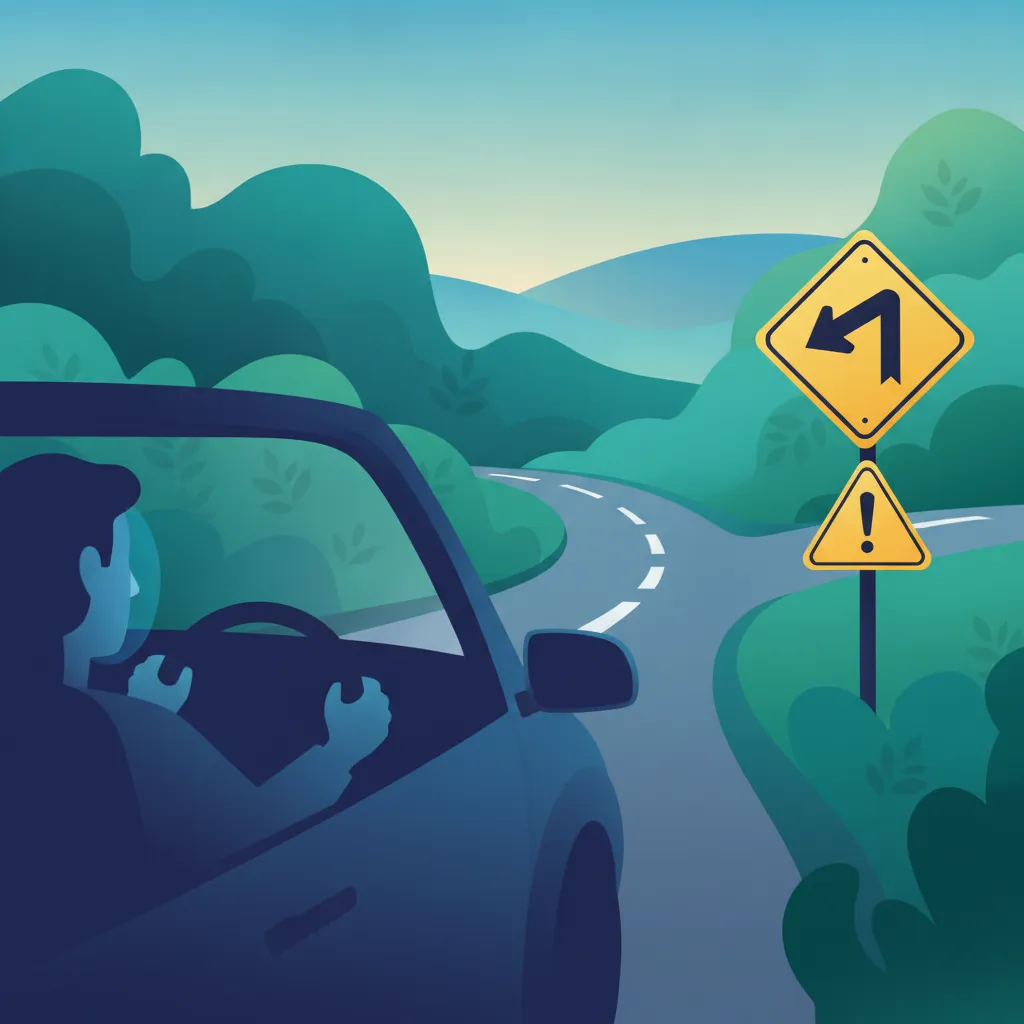
Warning signs in Ireland are typically diamond-shaped with yellow backgrounds and black symbols, indicating potential dangers on the road ahead. This lesson details signs for upcoming sharp bends, narrow roads, steep hills, pedestrian activity, and animal hazards. Learning to spot these warning indicators early allows you to reduce speed safely and adjust your vehicle positioning before encountering the hazard itself.
Find clear answers to common questions learners have about Understanding Right-of-Way and Priority Rules. Learn how the lesson is structured, which driving theory objectives it supports, and how it fits into the overall learning path of units and curriculum progression in Ireland. These explanations help you understand key concepts, lesson flow, and exam focused study goals.
A Stop sign requires you to come to a complete halt behind the line, ensuring the road is clear in both directions before proceeding. A Yield sign requires you to slow down and be prepared to stop if there is traffic, but you do not need to halt if the way is already clear.
Not necessarily. Unless you are governed by specific signage or markings, you should treat all junctions with caution. Always look for traffic from the right and never assume you have the right of way simply because you are on a wider road.
The test often presents diagrams of junctions where you must decide which vehicle has priority based on road signs, markings, or the direction of travel. You must be able to recognize the legal requirement for each specific traffic situation.
Generally, you must yield to oncoming traffic that is traveling straight through the junction. You should only turn when it is safe to do so, ensuring your path is completely clear of both oncoming vehicles and vulnerable road users.
Use the practice question search tool to pinpoint specific topics, road signs, or rules you need to master for your official Driver Theory Test. Refine your study strategy and ensure comprehensive preparation for all aspects of the Irish driving exam. Start your focused revision now and build confidence for your learner permit test.