
Driving Theory
Irish Driving Theory Courses

Lesson 2 of the Junctions, Roundabouts, Crossings and Road Positioning unit

Category AM Theory: Navigating Roundabouts on a Small Vehicle

This lesson guides you through the critical skills required to navigate roundabouts safely while operating a Category AM vehicle. It builds on your knowledge of junctions and road positioning, focusing specifically on the unique hazards and traffic flow patterns found on Irish roads.
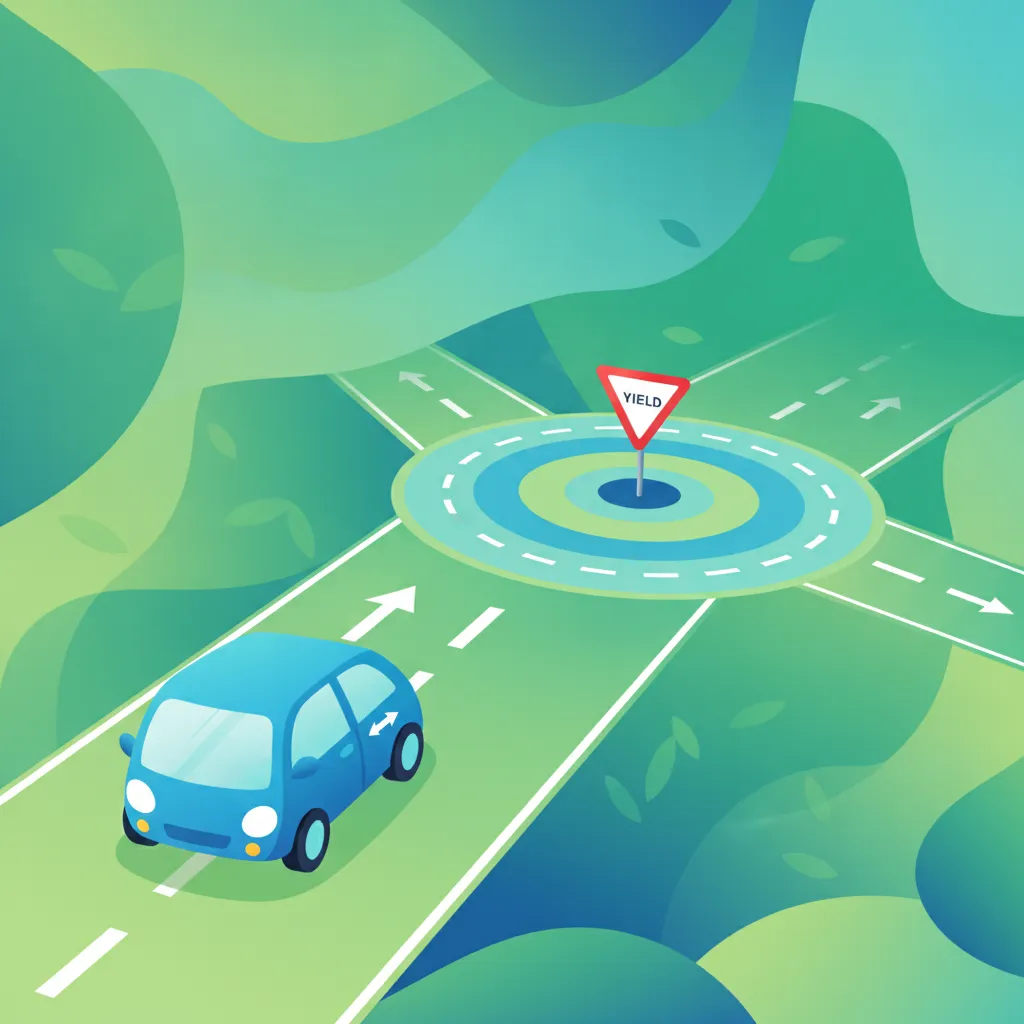
roundaboutstheory testCategory AMroad safetytraffic rules
Category AM Theory: Navigating Roundabouts on a Small Vehicle

Lesson content overview

Category AM Theory

Navigating Roundabouts Safely on a Moped or Light Vehicle (Category AM)

Navigating a roundabout on a small vehicle is one of the most critical skills you must master to pass your Irish Category AM theory test and ride safely on public roads. Roundabouts are designed to keep traffic moving smoothly, but they present a high-risk environment for riders of mopeds, scooters, and light quadricycles. Because of your vehicle’s small size, you are more vulnerable to being overlooked by other drivers, making correct lane discipline, flawless indicator usage, and active blind-spot monitoring essential for your survival.

This lesson details the procedures for safely approaching, circulating, and exiting roundabouts in accordance with the Road Safety Authority (RSA) standards. It builds directly upon your foundational knowledge of safe approaches at junctions, road positioning, and blind-spot management.


The Purpose and Design of Roundabouts

A roundabout is a circular intersection where traffic flows in one direction around a central island. In Ireland, traffic moves in a clockwise direction around the roundabout.

The primary safety logic behind a roundabout is to eliminate high-speed, direct crossing conflicts (such as T-bone collisions) that are common at traditional four-way junctions. By forcing all vehicles to slow down and travel in the same direction, roundabouts maintain predictable trajectories and consistent traffic gaps.

For Category AM riders, however, this continuous flow means you must constantly manage your space cushion while interacting with vehicles of varying sizes. Understanding who has priority and how to position yourself early is the key to negotiating these junctions without incident.


Core Rules of Roundabout Navigation

To ensure safety and predictability, you must strictly adhere to five core rules when riding a small vehicle on a roundabout.

Rule 1: Give Way to Circulating Traffic

You must yield the right-of-way to traffic already on the roundabout. This traffic approaches from your right.

  • Applicability: Every roundabout entry point.
  • Legal Status: Mandatory under Irish traffic law.
  • Rationale: Failing to yield forces circulating vehicles to brake or swerve, which easily destabilises two-wheeled vehicles or leads to side-impact collisions.
  • Correct Action: Slow down on approach, look to your right, and stop at the yield line if there is any circulating traffic close enough to require you to adjust your speed.
  • Incorrect Action: Rolling past the yield line without checking, or forcing your way into a tight gap in front of an oncoming vehicle.

Rule 2: Use the Correct Entry Lane

Your lane selection on approach must correspond directly to your intended exit.

  • Applicability: Dependent on the exit you plan to take.
  • Legal Status: Mandatory.
  • Rationale: Entering in the wrong lane forces you to make hazardous lane changes within the roundabout, cutting across the paths of other vehicles.
  • Correct Action: Read road signs and road markings early. Choose the appropriate lane before you reach the roundabout's entry threshold.
  • Incorrect Action: Entering in the outer lane to take a far exit, or entering in the inner lane to take the very first exit.

Rule 3: Signal Correctly and Timely

Signaling tells other road users where you intend to go, preventing rear-end collisions and side-swipes.

  • Applicability: When approaching and exiting.
  • Legal Status: Mandatory.
  • Rationale: Late signals or failing to signal leaves other drivers guessing your trajectory, while signaling too early can lure waiting drivers into pulling out directly in front of you.
  • Correct Action: Activate your indicator to signal your intent to leave the roundabout just as you pass the exit immediately preceding your chosen one. Keep the indicator on until you are completely clear of the roundabout.
  • Incorrect Action: Leaving your indicator off entirely, or turning it on before you have reached the roundabout, which confuses waiting traffic.

Rule 4: Check Mirrors and Blind Spots (The Lifesaver Check)

You must actively verify that there are no vehicles, cyclists, or other riders in your blind spots before you alter your course.

  • Applicability: Before entering, changing lanes, or exiting.
  • Legal Status: Mandatory for safe riding.
  • Rationale: Small vehicles have limited presence, and larger vehicles have massive blind spots. Relying solely on mirrors is insufficient because they do not cover the areas immediately to your sides.
  • Correct Action: Perform a quick, decisive look over your shoulder (known as a "lifesaver check") in the direction of your intended move immediately before changing position or exiting.
  • Incorrect Action: Relying only on your mirrors and assuming the space next to you is empty.

Rule 5: Maintain a Safe Space Cushion

You must keep an adequate distance between your small vehicle and all other road users.

  • Applicability: Continuous throughout the approach, circulation, and departure.
  • Legal Status: Mandatory.
  • Rationale: Mopeds and light quadricycles require stable braking zones. Following too closely reduces your reaction time if the vehicle ahead stops suddenly.
  • Correct Action: Maintain at least a two-second following gap in dry conditions, and increase this to four seconds or more in wet or icy weather.
  • Incorrect Action: Tailgating or squeezing between cars to gain a position on the roundabout.

Determining Your Entry Lane and Position

Your entry lane is determined by the "clock face" rule, which dictates your position based on which exit you intend to take.

Taking the First Exit (Turning Left / 9 O'Clock)

If you intend to take the first exit, you are making a left turn.

  1. Approach: Position your moped in the left-hand lane of the approach road. Signal left on approach.
  2. Entry: Yield to traffic from the right. When safe, enter the roundabout, staying in the left lane.
  3. Exit: Keep your left indicator on and exit smoothly into the left lane of the exit road.

Taking the Second Exit (Going Straight / 12 O'Clock)

If you intend to go straight ahead, you are taking the second exit.

  1. Approach: Position your vehicle in the left-hand lane (unless road markings indicate that the left lane is for left-turns only). Do not signal on approach.
  2. Entry: Yield to traffic on the roundabout. Enter in the left-hand lane.
  3. Circulating: Ride around the outer edge of the roundabout. Do not signal while passing the first exit.
  4. Exiting: As you pass the first exit, perform a mirror check and a lifesaver look over your left shoulder. Signal left to inform others you are exiting, and exit safely.

Taking the Third Exit or Beyond (Turning Right / 3 O'Clock or Further)

If you are taking any exit past the 12 o'clock position, you are turning right.

  1. Approach: Position your vehicle in the right-hand lane of the approach road. Signal right on approach.
  2. Entry: Yield to traffic from the right. Enter the inner lane of the roundabout.
  3. Circulating: Keep your right signal on as you travel around the central island in the inner lane.
  4. Exiting: As you pass the exit immediately preceding your desired exit, perform a mirror check and a lifesaver check to your left. Carefully signal left and move toward the outer edge to exit.

Warning

Changing Lanes Inside the Roundabout: Changing lanes while circulating is highly discouraged because it increases the likelihood of a collision. Always choose the correct lane before entry to minimize the need for mid-junction maneuvering.


Interacting Safely with Larger Vehicles

Larger vehicles, such as buses, heavy goods vehicles (HGVs), and large agricultural tractors, pose a severe threat to Category AM riders on roundabouts.

Understanding HGV Blind Spots and Off-Tracking

Large vehicles have massive blind spots directly in front, directly behind, and along both sides. If you ride in these zones, the driver cannot see you.

Furthermore, because of their length, long vehicles experience off-tracking. This means that when a truck turns, its rear wheels follow a shorter path than the front wheels, cutting across lanes and getting very close to the curbs.

  • Give Them Space: Never ride alongside a bus or truck on a roundabout. They may need to occupy both lanes to navigate the tight curve.
  • Do Not Overtake: It is highly dangerous to attempt to overtake a large vehicle within a roundabout. Stay behind them and allow them to complete their turn.
  • Expect the Unexpected: Large vehicles move slowly. Be patient and maintain a large space cushion behind them so you have a clear view of the road ahead.

Hazards, Environmental Variations, and Vulnerable Road Users

Your riding behavior must adapt to changing weather, lighting, and the presence of other road users.

Wet and Icy Weather Conditions

Two-wheeled vehicles lose traction easily on roundabouts because riders must lean the vehicle slightly to turn.

  • Debris and Oil Spills: Fuel leaks from trucks often accumulate on roundabouts, making the surface exceptionally slick, especially when it first begins to rain. Avoid the dark, shiny center of the lane where oil deposits are heaviest.
  • Speed Control: Reduce your entry speed significantly to keep your moped upright and stable. Avoid sudden braking or sharp steering inputs.
  • Gap Adjustment: Double your following distance to at least four seconds to compensate for reduced tyre grip and increased stopping distances.

Night Riding and Low Visibility

At night, your peripheral vision is limited, and it is harder for other drivers to judge your speed and distance.

  • Active Observation: Spend more time looking over your shoulder. Do not rely on headlight reflections in your mirrors to spot other vehicles.
  • Positioning: Wear high-visibility clothing to ensure you stand out against streetlights and vehicle glare.

Vulnerable Road Users

Roundabouts in urban areas often feature pedestrian crossings or cycle lanes immediately adjacent to the entry and exit points.

  • Pedestrians: Always check for pedestrians crossing the exit road you are entering. Be prepared to yield.
  • Cyclists: Cyclists may stay in the left-hand lane of a roundabout even if they are turning right. Give them plenty of room, expect them to make unexpected movements, and do not cut them off when exiting.

Common Violations and Edge Cases

Understanding common mistakes will help you avoid critical errors during your practical riding assessment and daily commutes.

  1. Changing Lanes Within the Roundabout: Squeezing between lanes or cutting across lanes because you missed your exit creates unpredictable conflict points. If you miss your exit, continue around the roundabout again rather than making a sudden lane change.
  2. Early Indicator Usage: Signaling too early when approaching a roundabout can lead a driver waiting at the first exit to believe you are turning left, prompting them to pull out directly into your path.
  3. Failing to Yield to Circulating Traffic: Entering the roundabout without stopping or slowing down when vehicles are approaching from your right is a leading cause of side-impact collisions.
  4. Insufficient Gaps on Entry: Forcing your way into a tight gap causes other road users to brake hard, which is highly dangerous on wet or slippery surfaces.
  5. Neglecting Blind-Spot Checks Before Exiting: If you do not perform a shoulder check before exiting, you risk colliding with a cyclist or another rider who may be traveling alongside you.
  6. Overtaking on the Roundabout: Squeezing past slower traffic within the roundabout reduces your reaction time and puts you directly in other drivers' blind spots.
  7. Abrupt Braking on Exit: Slamming on your brakes immediately after exiting without checking your mirrors can cause the driver behind you to rear-end your vehicle.
  8. Excessive Entry Speed: Approaching the roundabout too fast limits your time to assess traffic and can cause you to overshoot your lane or slide out on slippery asphalt.
  9. Misreading Road Markings: Failing to notice lane-dedication arrows can lead to sudden, unsafe corrective maneuvers at the last second.

Step-by-Step Procedure for Negotiating a Roundabout

Follow this sequential procedure every time you approach and negotiate a roundabout.

The Standard Roundabout Sequence

  1. Monitor and Assess: As you approach, look for road signs and markings. Identify your exit and select the correct entry lane early.

  2. Mirrors and Signal: Check your mirrors to understand the traffic behind you. If turning left or right, apply the correct indicator signal. If going straight, do not signal yet.

  3. Speed Control: Gently decelerate, downshifting if riding a manual moped, to match the speed of the traffic flow.

  4. Yield and Look Right: Look to your right as you approach the yield line. Assess if there is a safe gap in the circulating traffic. Stop if necessary; do not force your way in.

  5. Enter and Position: Merge smoothly onto the roundabout, maintaining your position in the center of your chosen lane to prevent other vehicles from squeezing past you.

  6. Circulate and Monitor: Maintain a safe space cushion. Keep a watchful eye on larger vehicles and remain out of their blind spots.

  7. The Lifesaver Check: As you pass the exit immediately before the one you want, perform a mirror check and a rapid shoulder check (lifesaver check) to ensure your exit path is clear.

  8. Signal and Exit: Activate your left indicator to signal your exit. Drive smoothly off the roundabout, ensuring you do not accelerate too hard or brake abruptly.


Safety and Human Factors Reasoning

Why are these rules so strict? Traffic safety is built on predictability. When you ride a moped or light quadricycle, your physical profile is slim, meaning you do not occupy a driver's central field of vision as easily as a car. By maintaining a highly predictable path, choosing the correct lane, and signaling exactly when expected, you allow other drivers' brains to process your presence and trajectory.

Conversely, sudden movements—like cutting across lanes or failing to signal—force other drivers to react in panic. On a small vehicle, any contact with a car, HGV, or the road surface carries a high risk of injury. Taking control of your safety means riding defensively, asserting your lane position, and never assuming that another driver has seen you.

Definition

Lifesaver Check

A quick, over-the-shoulder glance into your blind spot immediately before changing lanes, turning, or exiting, designed to detect road users who are not visible in your rear-view mirrors.

Definition

Off-Tracking

The tendency of the rear wheels of a long vehicle (like a truck or bus) to follow a shorter path than the front wheels during a turn, cutting closer to the inside of the bend or curb.


Summary of Key Takeaways

  • Yield to the Right: Always give priority to traffic already circulating on the roundabout.
  • Select Your Lane Early: Choose your lane on approach based on your exit. Avoid changing lanes while on the roundabout.
  • Time Your Signals: Use your indicator to signal your exit just as you pass the exit prior to your intended departure.
  • Always Look Shoulder-to-Shoulder: Do not rely only on mirrors; always perform a lifesaver check before exiting or changing lanes.
  • Stay Clear of Big Vehicles: Never ride alongside buses or HGVs. Keep back and allow them room to turn.
  • Ride for the Conditions: Reduce your speed in wet weather to prevent slipping on grease or oil accumulation.

Learn more with these articles

Check out these practice sets


Search topics related to Navigating Roundabouts on a Small Vehicle

Explore search topics learners often look for when studying Navigating Roundabouts on a Small Vehicle. These topics reflect common questions about road rules, driving situations, safety guidance, and lesson level theory preparation for learners in Ireland.

how to navigate roundabouts Category AMIrish driving theory test roundabout rulesmoped roundabout lane positioning Irelandsignalling on roundabouts theory testCategory AM theory test practice roundaboutsRules of the Road Ireland roundabouts explainedhow to pass roundabout questions on Irish theory test

Related driving theory lessons for Navigating Roundabouts on a Small Vehicle

Browse additional driving theory lessons that cover connected traffic rules, road signs, and common driving situations related to this topic. Improve your understanding of how different rules interact across everyday traffic scenarios.

Priority Rules at Junctions and Intersections in Ireland

Learn the official Road Safety Authority guidelines for navigating various types of junctions. This lesson explains yield signs, right-of-way hierarchies, and how to safely manage priority at unmarked and signaled intersections as part of the Irish driving theory curriculum.

priority rulesjunctionstraffic rulesRSAtheory overview
Priority at Uncontrolled Junctions lesson image

Priority at Uncontrolled Junctions

Uncontrolled junctions represent a high-risk scenario because they lack physical signs, lines, or lights to dictate priority. This lesson covers the crucial 'priority to the right' principle, where you must yield to any traffic approaching from your right-hand side. You will learn the importance of reducing your speed, preparing to stop, and verifying the intentions of other drivers at these equal-status crossings.
Irish Category B Driving TheoryPriority Rules, Junctions and Roundabouts
View lesson
Priority at Junctions, Roundabouts and Crosswalks lesson image

Priority at Junctions, Roundabouts and Crosswalks

This lesson covers the absolute rules of priority that regulate junctions, roundabouts, and pedestrian crossings in Ireland. It teaches riders when they must yield, who has right-of-way, and how to read Stop and Yield signs correctly. Understanding these priority hierarchies prevents collisions and maintains orderly, predictable movement at busy junctions.
Category AM TheoryIrish Road Signs, Markings, Lights and Priority Basics
View lesson
Understanding Right-of-Way at Intersections lesson image

Understanding Right-of-Way at Intersections

Right-of-way rules establish a clear order of precedence when the paths of two or more vehicles cross. This lesson explains how traffic on a major road has priority over traffic emerging from a minor road, and the general rule of yielding to oncoming vehicles when turning right. You will develop a solid understanding of how to approach intersections defensively, assessing speed and distance to make safe decisions.
Irish Category B Driving TheoryPriority Rules, Junctions and Roundabouts
View lesson
Understanding Right-of-Way and Priority Rules lesson image

Understanding Right-of-Way and Priority Rules

This lesson teaches the fundamental principles of priority and right-of-way at controlled and uncontrolled intersections across Ireland. It explains the legal obligations at yield signs, stop lines, and when meeting oncoming traffic turning across your lane. Motorcyclists will learn to carefully verify other drivers' intentions rather than assuming they will yield the correct right-of-way.

Irish Motorcycle TheoryIrish Road Signs, Markings, Lights and Priority Rules
View lesson
Giving Way at Stop and Yield Signs lesson image

Giving Way at Stop and Yield Signs

Stop and yield signs require drivers to surrender right-of-way to crossing traffic, but they command different physical actions. This lesson explains that a stop sign mandates a complete, absolute halt behind the line, whereas a yield sign requires you to slow down and stop only if other traffic is approaching. You will learn how to manage restricted visibility at junctions and how to creep forward safely when clear.

Irish Category B Driving TheoryPriority Rules, Junctions and Roundabouts
View lesson
Approaching and Navigating Junctions Safely lesson image

Approaching and Navigating Junctions Safely

This lesson focuses on the safe approach and execution of turns at T-junctions, staggered intersections, and blind crossroads. It explains the critical mirror-signal-manoeuvre routine and how to select the best position for maximum visibility to cross-traffic. Motorcyclists will learn to identify potential hazards like vehicles pulling out suddenly or turning across their direct path.

Irish Motorcycle TheoryJunctions, Roundabouts, Crossings and Urban Riding
View lesson
Traffic Officer Directions and Temporary Priorities lesson image

Traffic Officer Directions and Temporary Priorities

When traffic control is actively performed by a Garda, a school warden, or authorized marshals, their hand signals override all standard traffic lights and road signs. This lesson illustrates the common hand gestures used by officers to stop, release, or slow down traffic. You will learn your strict legal obligation to obey these manual commands, ensuring public safety during emergencies, events, or school crossings.
Irish Category B Driving TheoryPriority Rules, Junctions and Roundabouts
View lesson
Overtaking Restrictions and No Overtaking Zones lesson image

Overtaking Restrictions and No Overtaking Zones

No-overtaking zones are marked in areas with restricted visibility, such as approaching bends, humps, or narrow bridges. This lesson details how continuous solid white lines legally prohibit passing, along with the very narrow exceptions allowed under Irish law. You will learn to identify these high-risk areas from visual markings, ensuring you never initiate a passing manoeuvre that puts oncoming traffic in immediate danger.
Irish Category B Driving TheoryRoad Markings, Lane Use and Traffic Directions
View lesson
Navigating Multi-Lane Roundabouts Safely lesson image

Navigating Multi-Lane Roundabouts Safely

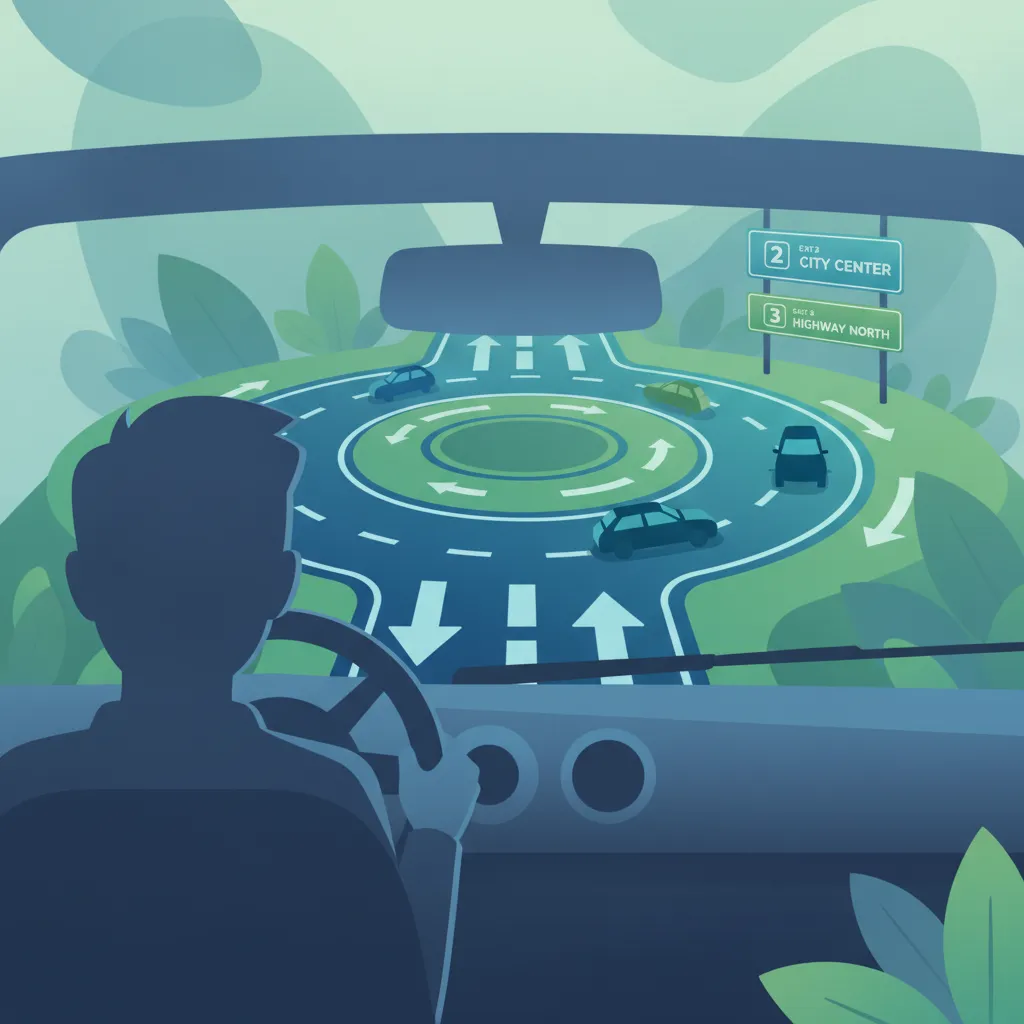
Navigating multi-lane roundabouts requires precise lane selection, continuous scanning, and timely signaling. This lesson teaches you the 'clock rule' for determining which lane to enter, how to yield to traffic already on the roundabout from your right, and when to activate your left indicator to exit. Mastering these procedures minimizes lane-drift accidents and ensures a seamless flow of traffic on busy roundabouts.
Irish Category B Driving TheoryPriority Rules, Junctions and Roundabouts
View lesson
Safe Approaches and Departures at Junctions lesson image

Safe Approaches and Departures at Junctions

This lesson details the sequential steps required to approach and exit junctions safely under the Irish driving rules. It teaches riders how to select the correct lane, utilize mirrors, apply early signals, and reduce speed appropriately. Effective observation strategies are highlighted to help riders identify crossing pedestrians or approaching side traffic.

Category AM TheoryJunctions, Roundabouts, Crossings and Road Positioning
View lesson

Road Positioning and Lane Discipline in Urban Traffic

Understand how to maintain a safe position on the road when sharing space with larger vehicles, cyclists, and pedestrians. This lesson provides a guide on managing blind spots and maintaining your space cushion in busy urban environments, essential for Category AM riders on Irish roads.
road positioningurban drivingvulnerable road userssafetylane discipline
Proper Lane Discipline for Passenger Vehicles lesson image

Proper Lane Discipline for Passenger Vehicles

Large passenger vehicles must maintain consistent lane positioning to prevent side-swipe incidents and sustain smooth urban traffic patterns. This lesson covers standard lane selection rules, safe overtaking procedures, and how to use designated public transit corridors correctly. Drivers will learn the importance of checking mirrors continuously and planning lane changes well in advance.

Passenger Vehicle TheoryLane Use, Turning, Blind Spots, Reversing and Manoeuvring
View lesson
Lane Discipline and Positioning on the Road lesson image

Lane Discipline and Positioning on the Road

Irish driving theory demands that drivers keep to the left-hand side of the road unless overtaking or turning right. This lesson explains how to maintain consistent lane discipline on multi-lane roads, how to perform safe lane changes, and the dangers of drifting. You will learn the safety sequence of checking mirrors, checking blind spots, signalling, and smoothly executing a lane change without disrupting trailing traffic.

Irish Category B Driving TheoryRoad Markings, Lane Use and Traffic Directions
View lesson
Correct Lane Discipline for Articulated Vehicles lesson image

Correct Lane Discipline for Articulated Vehicles

This lesson outlines the legal and safety requirements for maintaining proper lane discipline on multi-lane roads, roundabouts, and motorways in Ireland. It teaches drivers how to account for lane width, manage trailer off-tracking, and position the cab to prevent encroachment on neighboring lanes. Drivers will master safe lane-changing strategies, signaling protocols, and traffic merging techniques.

Irish Goods Vehicle TheoryLane Use, Turning, Reversing, Manoeuvring and Trailer Awareness
View lesson

Frequently asked questions about Navigating Roundabouts on a Small Vehicle

Find clear answers to common questions learners have about Navigating Roundabouts on a Small Vehicle. Learn how the lesson is structured, which driving theory objectives it supports, and how it fits into the overall learning path of units and curriculum progression in Ireland. These explanations help you understand key concepts, lesson flow, and exam focused study goals.

Do I have to signal when entering a roundabout for my AM test?

Yes. You must indicate your intentions clearly to other road users. Generally, you should signal left if taking the first exit, remain un-signalled or signal right if taking subsequent exits, and always signal left before leaving the roundabout.

Should I position my moped on the left of the lane at a roundabout?

You should position yourself in the correct lane according to the signs and road markings well before entering. Avoid hugging the left edge where larger vehicles might try to squeeze past you; take a strong, visible position within your lane.

What should I do if a large truck is on the roundabout beside me?

Always assume the driver may not see you. Maintain a significant safety cushion, avoid staying in their blind spots, and be prepared to hold back until you are certain the way is clear and your path is not going to be cut off.

Is it mandatory to yield to traffic from the right at an Irish roundabout?

Yes, standard Irish Rules of the Road dictate that you must yield to traffic already on the roundabout, which is typically approaching from your right. Always check traffic signs for specific modifications to this rule.

Ready to Target Your Irish Driver Theory Revision?

Use the practice question search tool to pinpoint specific topics, road signs, or rules you need to master for your official Driver Theory Test. Refine your study strategy and ensure comprehensive preparation for all aspects of the Irish driving exam. Start your focused revision now and build confidence for your learner permit test.

Search Practice Questions

Continue your Irish driving theory learning journey

Irish road signsIrish article topicsSearch Irish road signsCategory AM Theory courseIrish driving theory homeIrish road sign categoriesIrish driving theory topicsSearch Irish theory articlesIrish driving theory coursesIrish driving theory articlesIrish driving theory practiceIrish practice set categoriesIrish Motorcycle Theory coursePassenger Vehicle Theory courseIrish driving licence proceduresIrish Goods Vehicle Theory courseSearch Irish driving theory practiceIrish driving theory terminology A–ZIrish Category B Driving Theory courseIrish driving theory terms and glossaryHelmet, Visibility and Protective Behaviour unit in Category AM TheoryIrish Road Signs and Traffic Signals unit in Irish Category B Driving TheoryAM Licence Basics and Small Vehicle Responsibility unit in Category AM TheoryMotorcycle Licence Basics and Rider Responsibility unit in Irish Motorcycle TheoryVehicle Size, Weight, Dimensions and Road Space unit in Irish Goods Vehicle TheoryProtective Equipment, Visibility and Rider Condition unit in Irish Motorcycle TheoryCategory B Licence Basics and Driver Responsibility unit in Irish Category B Driving TheoryPassenger Safety, Comfort, Accessibility and Driver Conduct unit in Passenger Vehicle TheoryGoods Vehicle Licence Scope and Professional Responsibility unit in Irish Goods Vehicle TheoryPassenger Vehicle Licence Scope and Professional Responsibility unit in Passenger Vehicle TheoryManaging Blind Spots and Space Cushions lesson in Junctions, Roundabouts, Crossings and Road PositioningNavigating Roundabouts on a Small Vehicle lesson in Junctions, Roundabouts, Crossings and Road PositioningSafe Approaches and Departures at Junctions lesson in Junctions, Roundabouts, Crossings and Road PositioningPedestrian Crossings and Cyclist Interactions lesson in Junctions, Roundabouts, Crossings and Road PositioningOptimal Road Position Relative to Larger Vehicles lesson in Junctions, Roundabouts, Crossings and Road Positioning