This lesson details the critical priority rules governing junctions, roundabouts, and pedestrian crossings on Irish roads. As a Category AM rider, understanding these hierarchies is essential for safe navigation and passing your theory exam. Building on basic road sign recognition, this lesson prepares you to handle complex traffic situations with confidence.
Lesson content overview
Navigating the roads of Ireland requires a deep, instinctive understanding of priority. For riders preparing for the Category AM licence (mopeds and light quadricycles), mastering who has the right-of-way is not just a requirement for passing the Irish Driving Theory Test—it is a critical safety shield. Due to their smaller physical profile and lower top speeds, Category AM vehicles are uniquely vulnerable at conflict points such as intersections, roundabouts, and pedestrian crossings.
This lesson covers the absolute rules of priority under the official Irish Rules of the Road. It details the legal obligations of Stop and Yield signs, explains how to handle complex junctions, outlines roundabout dynamics, and teaches you how to share the road safely with pedestrians and other vulnerable road users.
In traffic law, "priority" determines which road user has the legal right to proceed first at a shared point of conflict, such as a junction or crossing. It is important to understand that having priority (often referred to as having the "right-of-way") is never an absolute license to proceed blindly. The Irish Rules of the Road emphasize that priority is something to be given, not taken. Even if you legally have priority, you must always be prepared to yield if another road user fails to respect the rules.
For Category AM riders, applying priority rules correctly prevents collisions and maintains an orderly, predictable flow of traffic. Since mopeds and light quads cannot accelerate as rapidly as larger passenger cars, pulling out when you do not have clear priority is exceptionally dangerous.
Absolute priority refers to situations where a specific road user or vehicle has an unambiguous, non-negotiable right-of-way. In these scenarios, all other road traffic must yield. Failing to recognize absolute priority is one of the most common causes of serious road traffic collisions in Ireland.
Emergency vehicles (such as Garda Síochána, ambulance services, fire brigade, and Irish Coast Guard vehicles) have absolute priority when they are using blue flashing lights, sirens, or both.
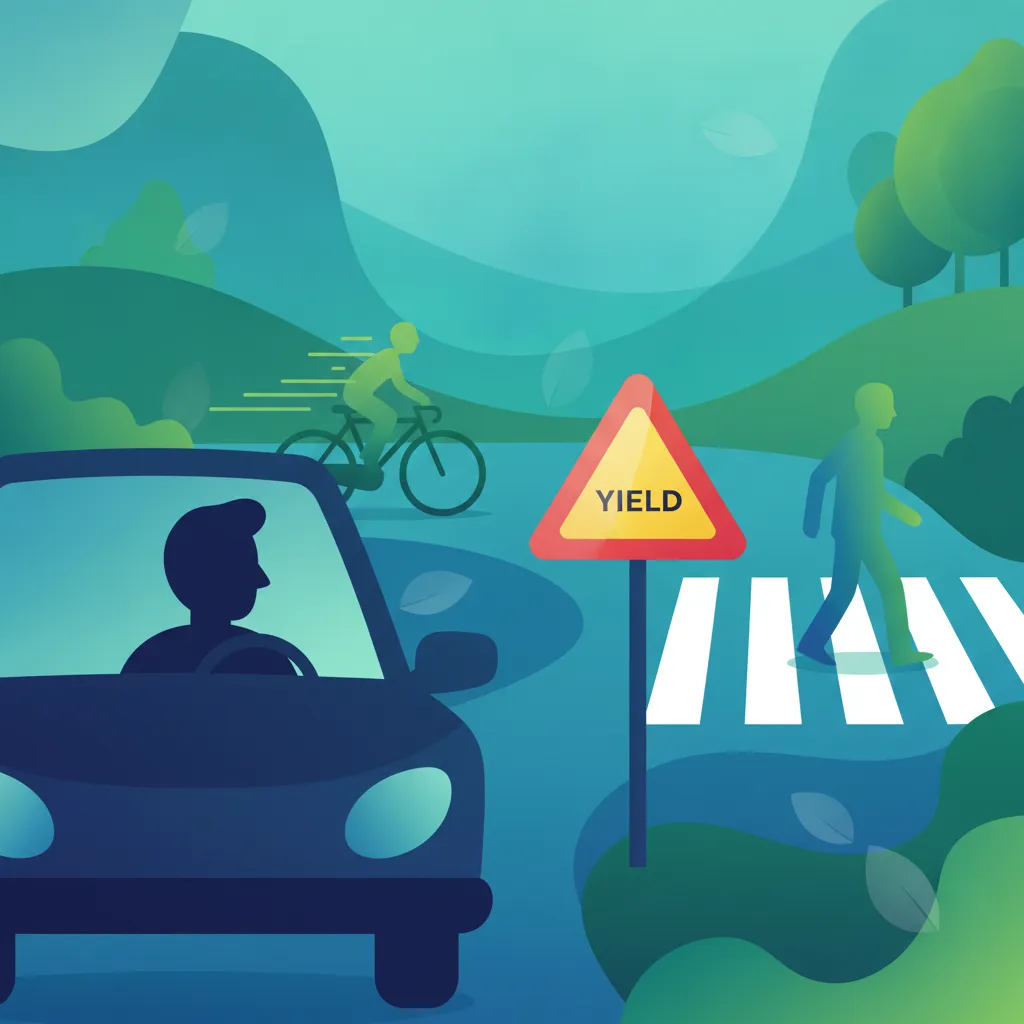
Pedestrians have absolute priority once they have stepped onto, or are clearly waiting to step onto, an uncontrolled pedestrian crossing (commonly known as a zebra crossing).
If you are turning across a cycle lane (whether mandatory or non-mandatory) or a designated cycle track, cyclists travelling within that lane have absolute priority.
Vulnerable Road Users: Always pay extra attention to children, older pedestrians, and people with mobility impairments. They may require more time to cross the road, and their movement can be less predictable.
A Stop sign is one of the most restrictive regulatory signs on Irish roads. When you encounter a Stop sign, your legal obligations are clear, absolute, and non-negotiable.
The most critical aspect of a Stop sign is the requirement to make a complete stop. A "rolling stop"—where you merely slow down to a crawl and peer out into the intersection without fully stopping your wheels—is a serious traffic violation and a frequent cause of test failure.
Decelerate Early: Begin braking smoothly as you approach the junction, keeping in mind the stopping capabilities of your moped or light quad, especially in wet weather.
Stop Completely: Bring your vehicle to a total halt behind the solid white stop line marked on the road surface. If there is no visible line, stop just before the edge of the major road.
Observe and Assess: Look right, then left, and right again. Because mopeds have a small physical profile, you must be absolutely certain that oncoming drivers have seen you and that there is a safe, gap-free window to merge or cross.
Proceed Safely: Select first gear (or prepare your automatic transmission) and accelerate smoothly into the flow of traffic once the road is entirely clear.
A Yield sign (often bearing the Irish words Géill Slí) instructs you to give way to traffic on the major road you are approaching. While it does not require an absolute stop in every circumstance, it does require you to be fully prepared to stop.
When approaching a Yield sign or a yield road marking (represented by a broken white line across your lane), you must reduce your speed and assess the crossing traffic.
To "yield" or "give way" means to conduct yourself in a manner that does not force other road users with priority to change their speed, direction, or lane of travel.
When two or more roads cross or meet, clear rules prevent gridlock and collisions. In Ireland, if there are no signs, traffic signals, or road markings indicating otherwise, the general rule of priority applies: always yield to traffic approaching from your right.
Turning right in Ireland requires you to cross the path of oncoming traffic, making it one of the most hazardous maneuvers for a moped rider.
An uncontrolled junction is an intersection with no signs, traffic lights, or road markings.
Roundabouts are designed to keep traffic moving efficiently, but they can be intimidating for Category AM riders on lightweight mopeds. Understanding the strict hierarchy of roundabout priority is essential for navigating them safely.
Vehicles already on the roundabout have absolute priority over vehicles entering it.
When you approach a roundabout, you must:
Because mopeds are smaller and generally slower, other drivers might fail to spot you or may misjudge your speed.
Sharing the road responsibly means protecting the most vulnerable users. In Ireland, pedestrians have specific rights at crossings that motorists and riders must legally respect.
A zebra crossing is marked by wide, parallel white stripes painted across the road and is accompanied by flashing amber beacons (known as Belisha beacons) on striped posts.
These are pedestrian crossings controlled by traffic lights.
To stay safe and ride within Irish law, memorize these core principles of priority:
| Scenario / Sign | Primary Obligation | Category AM Practical Riding Tip |
|---|---|---|
| Stop Sign (RUS 027) | Bring your vehicle to a complete halt behind the line. | Stop fully, select first gear, and double-check your blind spots before pulling off. |
| Yield Sign (RUS 026) | Slow down, prepare to stop, and give way to major road traffic. | Do not rush. Only merge if you have a gap large enough to match traffic speed safely. |
| Roundabout Entry | Yield to all circulating traffic and any traffic approaching from your right. | Maintain a dominant lane position to remain visible to larger vehicles entering the roundabout. |
| Zebra Crossing | Yield to pedestrians on or waiting to step onto the crossing. | Watch for Belisha beacons at night; reduce speed early to signal your intent to stop. |
| Emergency Vehicles | Pull over safely to the left to clear a path. | Do not panic or break red lights; signal your movements clearly. |
As a moped or light quadricycle rider, you must always practice defensive riding. This means anticipating that other road users may make mistakes, misinterpret signs, or simply fail to see you.
When waiting to turn right at a junction, position your vehicle near the center of the road, but do not hug the opposing lane too closely. Ensure you are visible in the wing mirrors of the vehicle in front of you if you are in a queue. Always conduct a "lifesaver look" (a final head check over your shoulder) before making any turn or lane change to confirm that a vehicle is not attempting to overtake you in your blind spot.
This lesson covers the essential priority rules that govern junctions, roundabouts, and pedestrian crossings in Ireland for Category AM moped riders. Key legal obligations include making complete stops at Stop signs, yielding appropriately at Yield signs and roundabouts, and respecting absolute priority for emergency vehicles, pedestrians at zebra crossings, and cyclists in cycle lanes. Understanding these hierarchies is critical for both passing the theory test and riding safely, as mopeds are particularly vulnerable at conflict points due to their smaller profile and lower acceleration. The lesson also emphasizes defensive riding practices, including anticipating other road users' mistakes and adjusting for environmental factors like wet weather and poor visibility.
A short set of high-value points that capture the most important learning from this lesson.
Priority determines which road user has the legal right to proceed first at junctions and crossings, but having priority does not mean proceeding blindly
Emergency vehicles with blue flashing lights and sirens have absolute priority; safely pull over to the left and do not break traffic laws to make way
Vehicles already circulating on a roundabout have absolute priority over those attempting to enter
Pedestrians have absolute priority at zebra crossings once they have stepped onto or are clearly waiting to cross
As a moped rider, always practice defensive riding by anticipating that other road users may make mistakes or fail to see you
Explore all units and lessons included in this driving theory course.
A Stop sign requires a complete halt behind the stop line; a rolling stop is illegal and a common test failure reason
At uncontrolled junctions without signs, yield to traffic approaching from your right
Belisha beacons (flashing amber globes on black-and-white posts) mark zebra crossings where pedestrians have absolute priority
Puffin crossings use sensors to detect pedestrians and keep the traffic light red until they have fully crossed
When turning right at a junction, position near the center line and perform a lifesaver look before committing to the turn
Failing to make a complete stop at Stop signs by slowing to a crawl and rolling through the junction
Assuming a Yield sign means never stopping; you must stop if oncoming traffic is busy or your view is obstructed
Hugging the left kerb on roundabouts, which makes you invisible to entering traffic and invites dangerous overtaking
Overtaking another vehicle that has stopped at a pedestrian crossing without checking if a pedestrian is crossing whom you cannot see
Following the vehicle in front through a Stop sign; each vehicle must independently come to a complete halt
Lesson content overview
A short set of high-value points that capture the most important learning from this lesson.
Priority determines which road user has the legal right to proceed first at junctions and crossings, but having priority does not mean proceeding blindly
Emergency vehicles with blue flashing lights and sirens have absolute priority; safely pull over to the left and do not break traffic laws to make way
Vehicles already circulating on a roundabout have absolute priority over those attempting to enter
Pedestrians have absolute priority at zebra crossings once they have stepped onto or are clearly waiting to cross
As a moped rider, always practice defensive riding by anticipating that other road users may make mistakes or fail to see you
Explore all units and lessons included in this driving theory course.
A Stop sign requires a complete halt behind the stop line; a rolling stop is illegal and a common test failure reason
At uncontrolled junctions without signs, yield to traffic approaching from your right
Belisha beacons (flashing amber globes on black-and-white posts) mark zebra crossings where pedestrians have absolute priority
Puffin crossings use sensors to detect pedestrians and keep the traffic light red until they have fully crossed
When turning right at a junction, position near the center line and perform a lifesaver look before committing to the turn
Failing to make a complete stop at Stop signs by slowing to a crawl and rolling through the junction
Assuming a Yield sign means never stopping; you must stop if oncoming traffic is busy or your view is obstructed
Hugging the left kerb on roundabouts, which makes you invisible to entering traffic and invites dangerous overtaking
Overtaking another vehicle that has stopped at a pedestrian crossing without checking if a pedestrian is crossing whom you cannot see
Following the vehicle in front through a Stop sign; each vehicle must independently come to a complete halt
Explore search topics learners often look for when studying Priority at Junctions, Roundabouts and Crosswalks. These topics reflect common questions about road rules, driving situations, safety guidance, and lesson level theory preparation for learners in Ireland.
Browse additional driving theory lessons that cover connected traffic rules, road signs, and common driving situations related to this topic. Improve your understanding of how different rules interact across everyday traffic scenarios.
Explore real world scenarios for navigating busy Irish intersections and junctions. This guide focuses on interpreting road markings and situational awareness to safely manage right-of-way when dealing with multiple lanes and heavy urban traffic conditions according to the official Rules of the Road.

Uncontrolled junctions represent a high-risk scenario because they lack physical signs, lines, or lights to dictate priority. This lesson covers the crucial 'priority to the right' principle, where you must yield to any traffic approaching from your right-hand side. You will learn the importance of reducing your speed, preparing to stop, and verifying the intentions of other drivers at these equal-status crossings.
This lesson details the sequential steps required to approach and exit junctions safely under the Irish driving rules. It teaches riders how to select the correct lane, utilize mirrors, apply early signals, and reduce speed appropriately. Effective observation strategies are highlighted to help riders identify crossing pedestrians or approaching side traffic.
This lesson focuses on the safe approach and execution of turns at T-junctions, staggered intersections, and blind crossroads. It explains the critical mirror-signal-manoeuvre routine and how to select the best position for maximum visibility to cross-traffic. Motorcyclists will learn to identify potential hazards like vehicles pulling out suddenly or turning across their direct path.
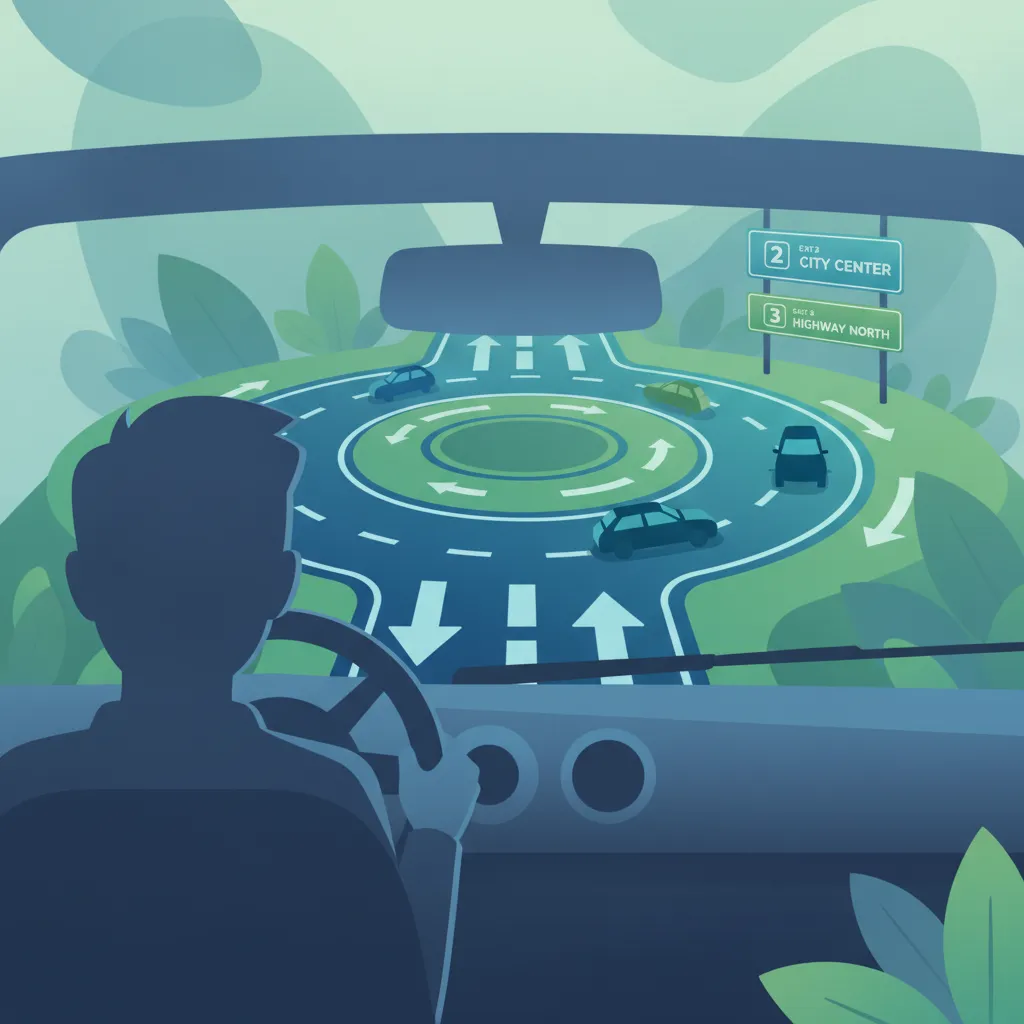
Navigating multi-lane roundabouts requires precise lane selection, continuous scanning, and timely signaling. This lesson teaches you the 'clock rule' for determining which lane to enter, how to yield to traffic already on the roundabout from your right, and when to activate your left indicator to exit. Mastering these procedures minimizes lane-drift accidents and ensures a seamless flow of traffic on busy roundabouts.
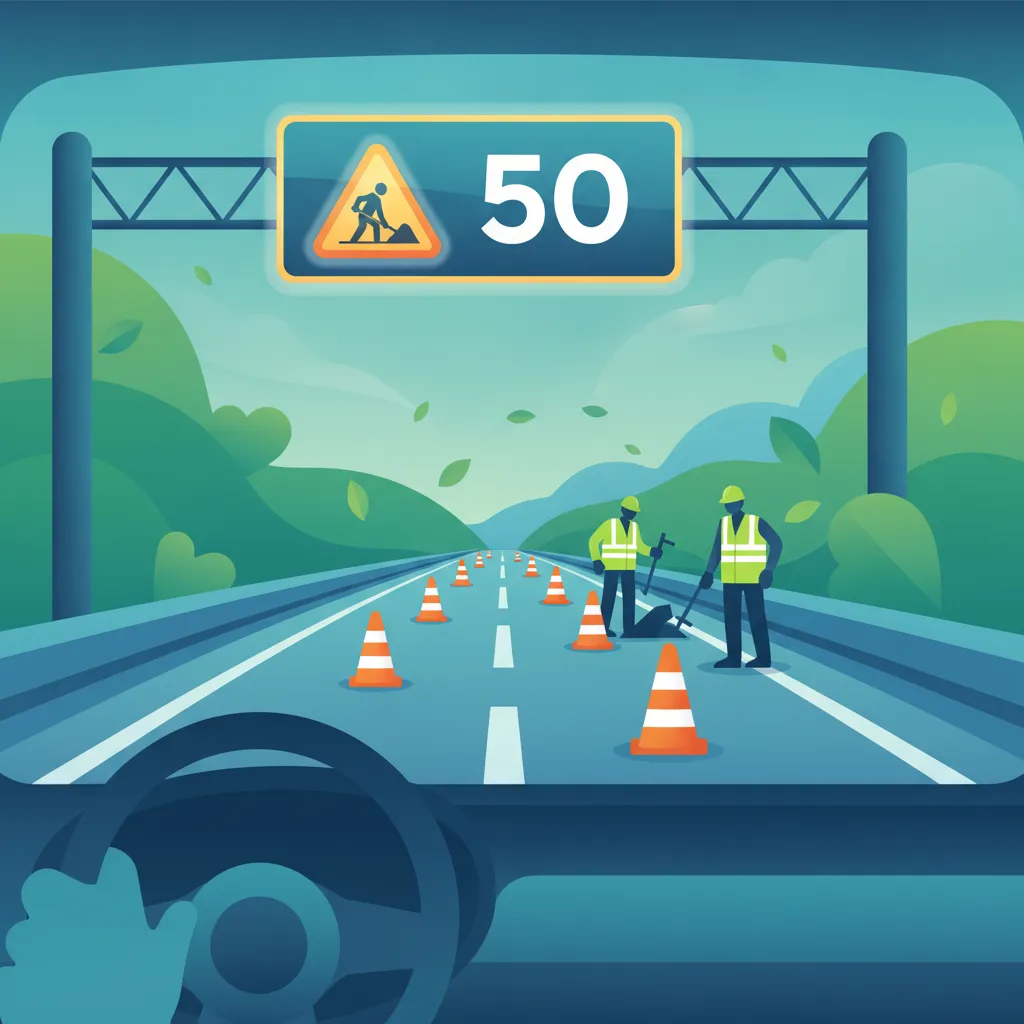
Variable Message Signs and roadwork indicators communicate temporary safety conditions, such as lane closures, heavy delays, or dynamic speed restrictions. This lesson teaches you how to interpret digital overhead gantries, temporary hazard cones, and specific detour layouts often encountered on Irish motorways and regional routes. Adhering to these real-time instructions protects both you and the vulnerable road crews working ahead.
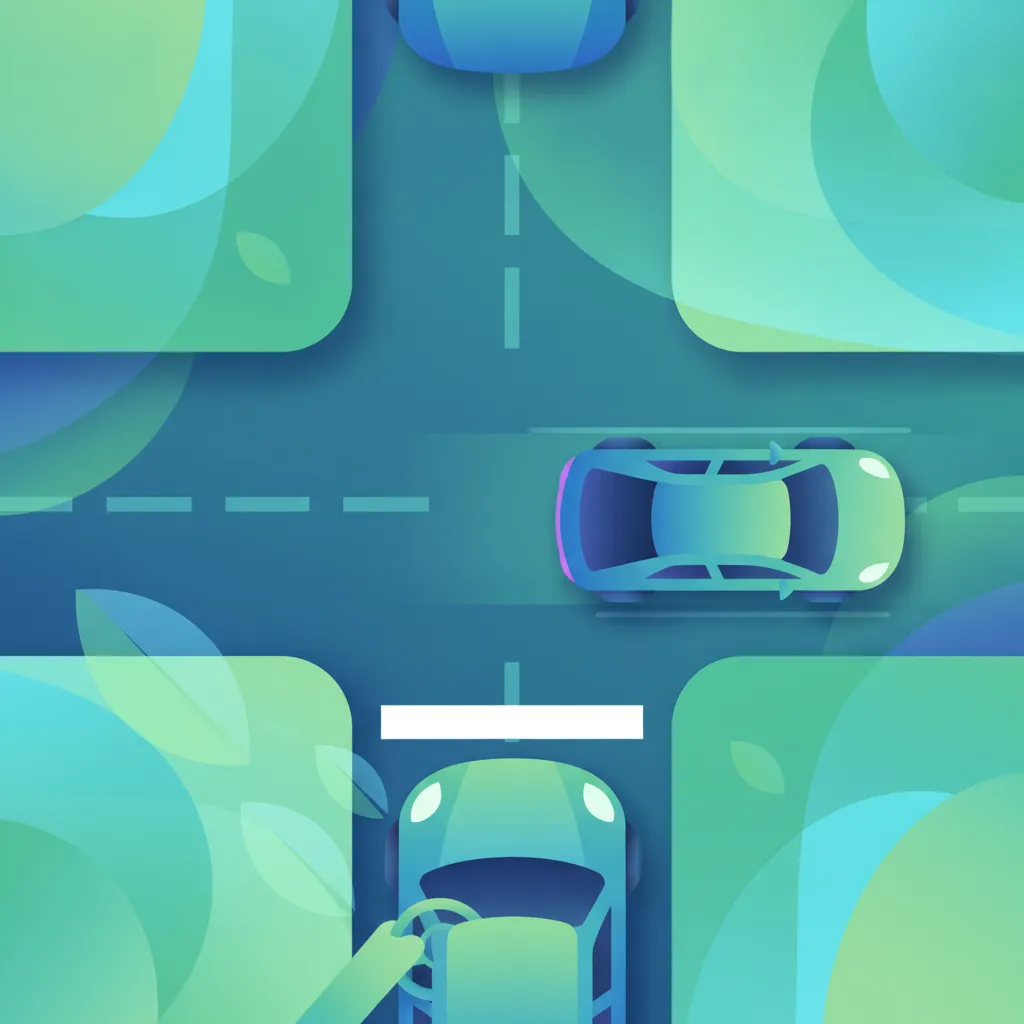
Right-of-way rules establish a clear order of precedence when the paths of two or more vehicles cross. This lesson explains how traffic on a major road has priority over traffic emerging from a minor road, and the general rule of yielding to oncoming vehicles when turning right. You will develop a solid understanding of how to approach intersections defensively, assessing speed and distance to make safe decisions.
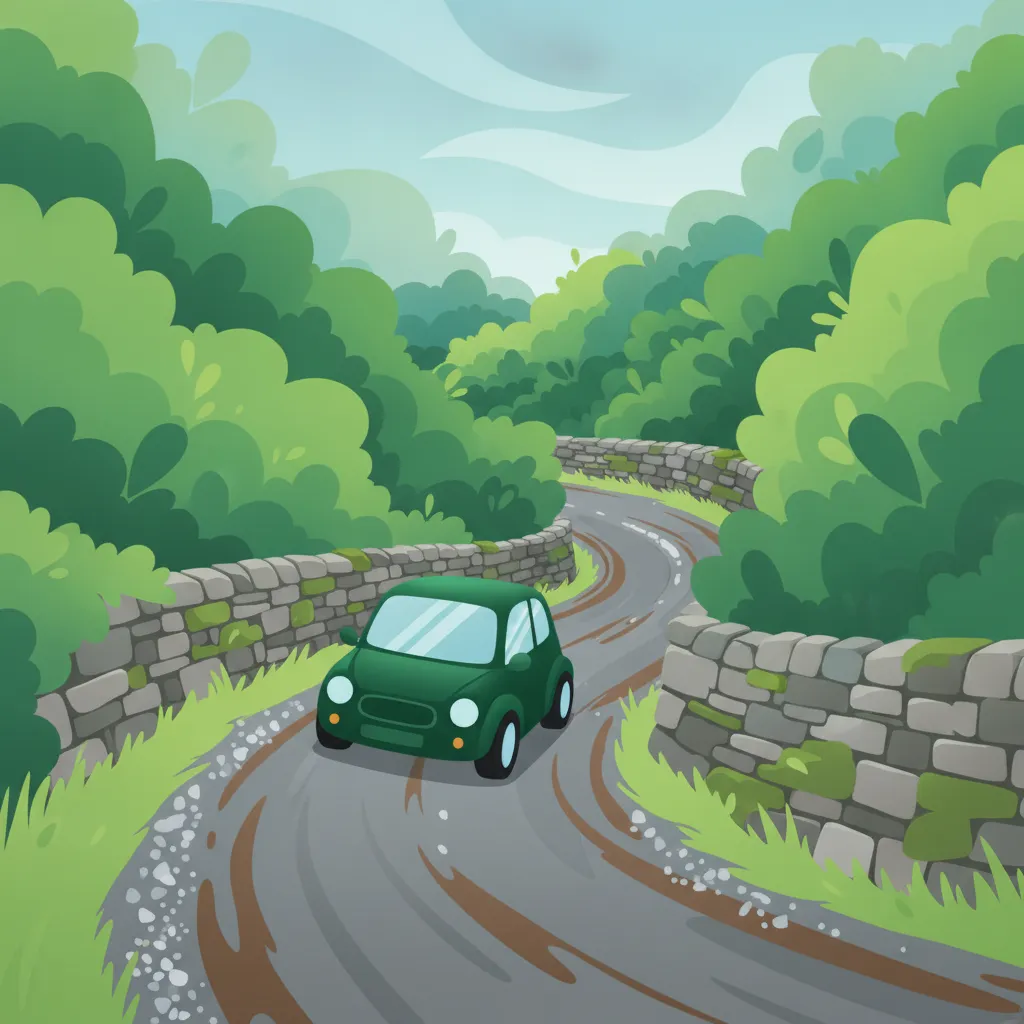
Irish rural routes are often narrow, lacking central markings, and bordered by tall hedges that restrict forward visibility on sharp bends. This lesson teaches drivers how to negotiate blind curves, anticipate slow-moving agricultural machinery, and respond to wandering farm animals. Drivers will learn to regulate vehicle speed proactively, maintaining a safe stopping margin in rural areas.
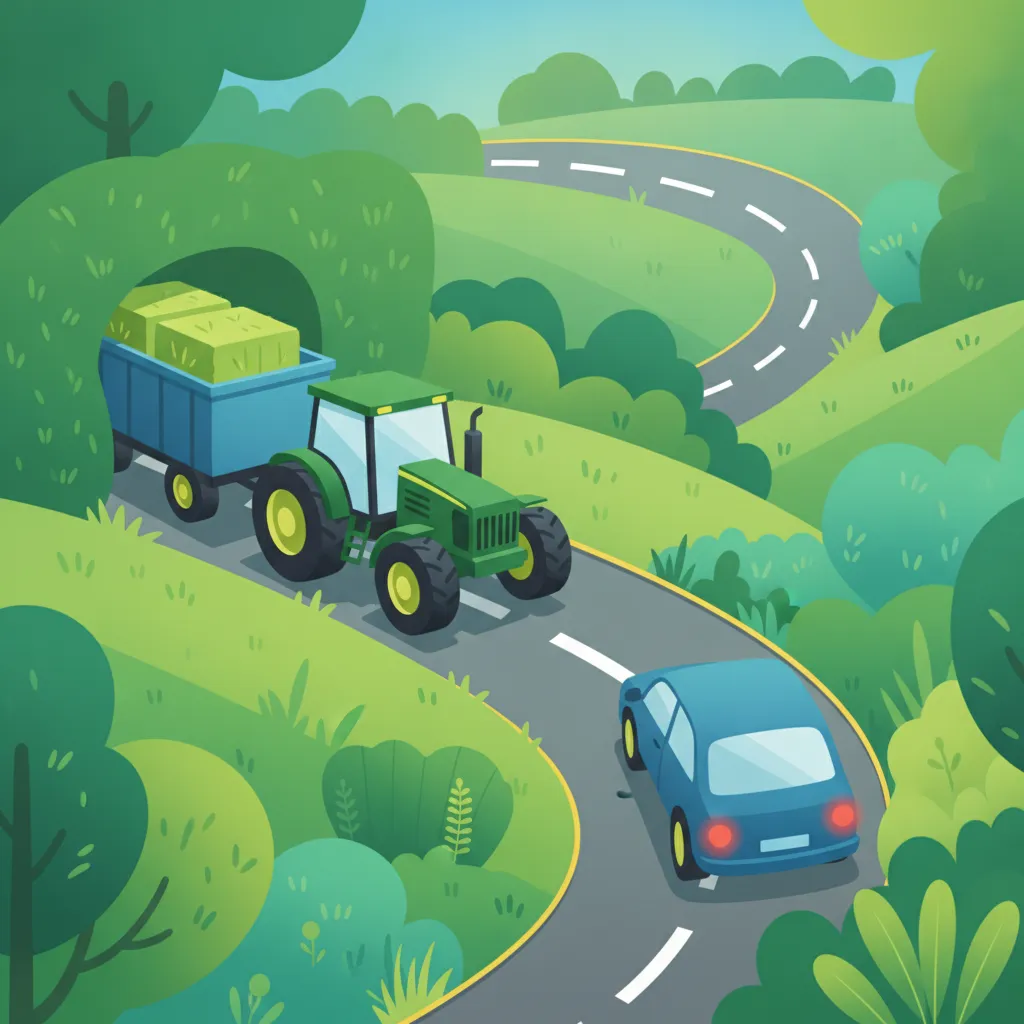
Irish rural roads are often narrow, winding, and bordered by high hedges, presenting unique hazards compared to urban streets. This lesson focuses on scanning for hidden hazards such as slow-moving farm machinery, mud on the road surface, and loose livestock. You will learn how to adjust your speed before entering blind bends, sound your horn at blind crests, and safely share the road with local agricultural traffic.
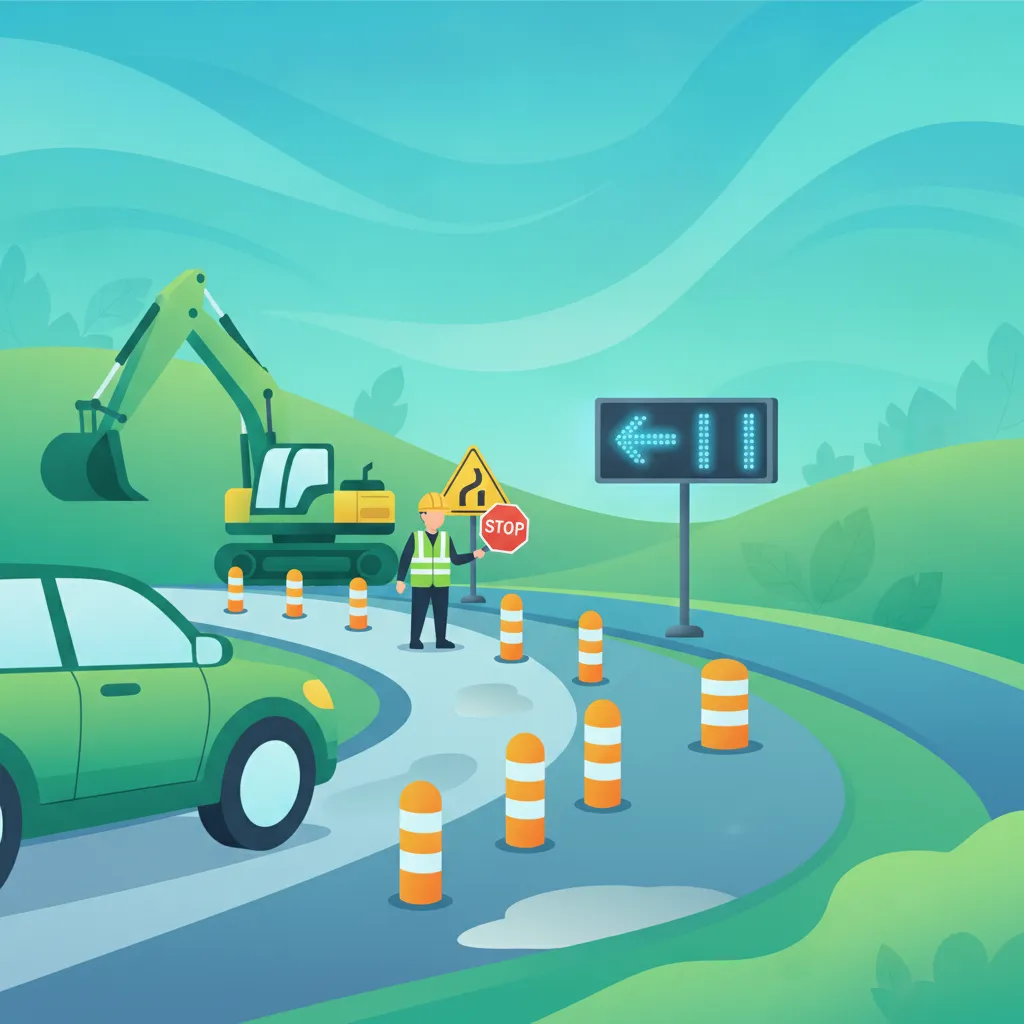
Road construction zones feature dynamic hazards, including changed lane configurations, temporary barriers, and workers near live traffic. This lesson details how to follow temporary signage, navigate narrow chicanes, and obey 'Stop-Go' flag systems or temporary traffic lights. You will understand the legal requirement to obey temporary speed limits, which are strictly enforced to protect both motorists and road crews.
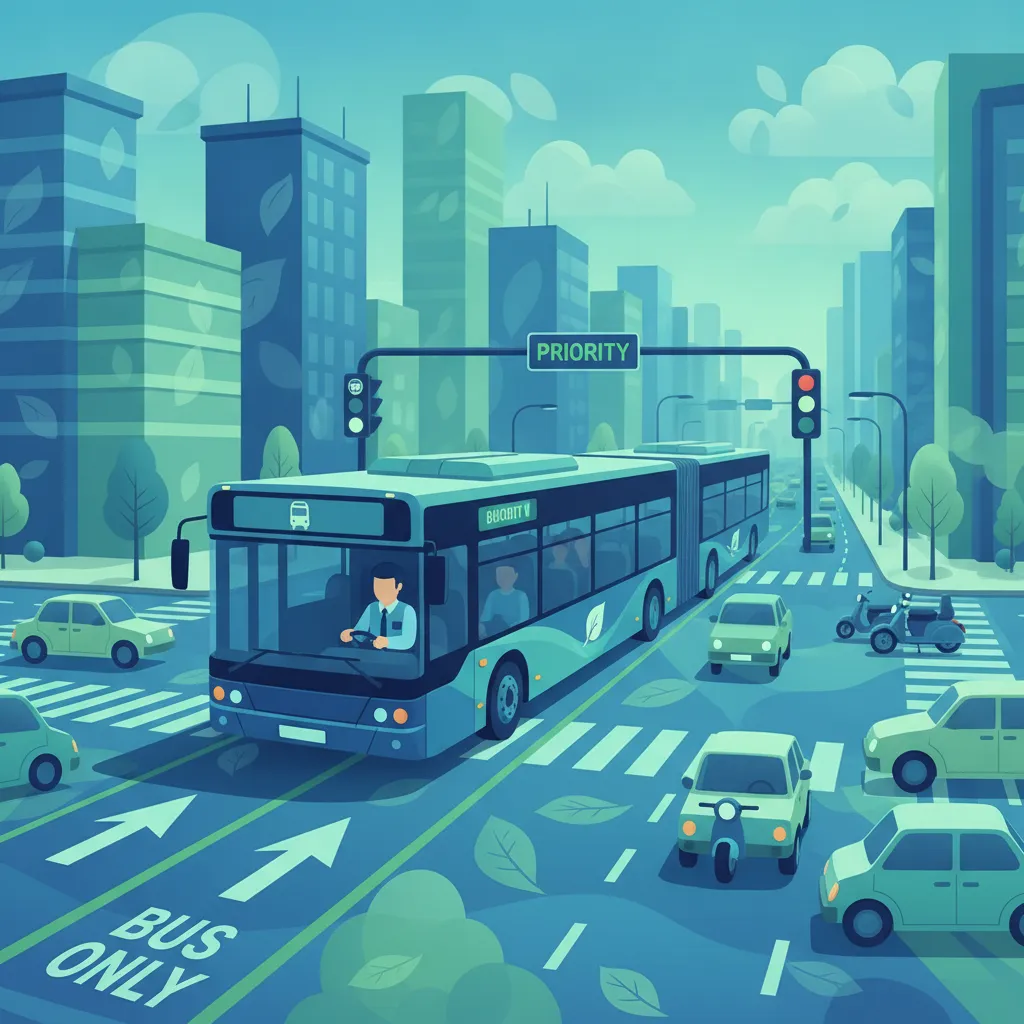
Driving large vehicles through dense city traffic requires outstanding lane discipline, spatial awareness, and consistent patience. This lesson teaches drivers how to utilize public bus corridors, manage tight yellow box intersections, and handle narrow city streets. It focuses on predicting traffic pattern shifts to maintain service timetables while minimizing fuel waste and driver stress.
Understand the legal obligations and safety protocols for interacting with pedestrians and cyclists on Irish roads. This lesson details the priority hierarchies at zebra, pelican, and puffin crossings, ensuring you know how to safely navigate shared road space with vulnerable users in various traffic environments.
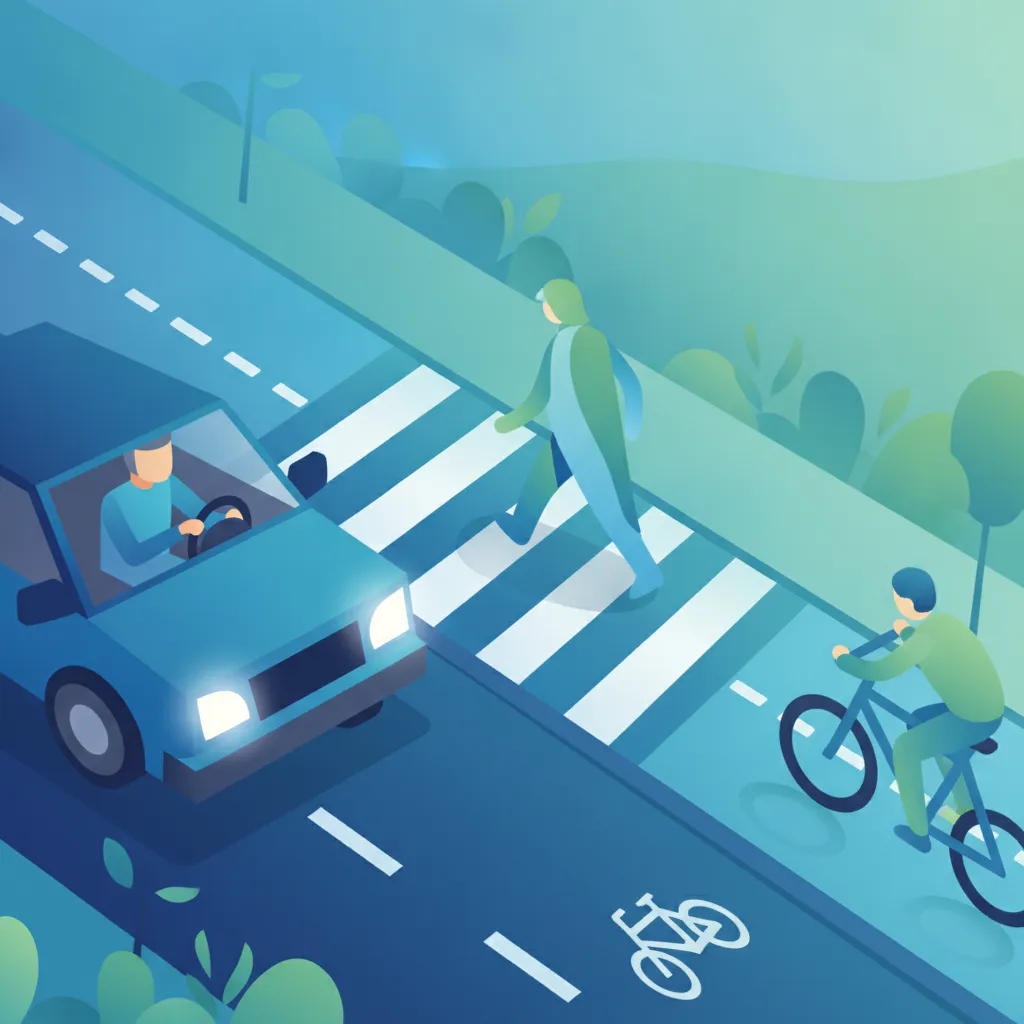
This lesson details how to approach zebra, pelican, and other pedestrian crossings safely, ensuring complete priority is given to walkers. It also covers the safe guidelines for overtaking cyclists and sharing lanes in busy urban centers without causing danger. Respecting these interactions is critical for maintaining overall safety and compliance with Irish road law.
This lesson covers the rules governing zebra, pelican, and toucan pedestrian crossings, focusing on driver obligations and rider safety. It details how to interact safely with cyclists, personal mobility devices, and pedestrians in busy urban sectors. Motorcyclists will learn to scan pavement edges, yield right-of-way, and maintain safe overtaking distances when passing slower road users.
Pedestrian crossings are dedicated refuge zones on public roads that require drivers to perform distinct actions depending on the crossing type. This lesson explores uncontrolled zebra crossings where pedestrians have immediate priority, and light-controlled pelican, toucan, and puffin crossings. You will learn how to handle the flashing amber light phase, avoid parking near crossings, and never overtake another vehicle in these zones.
This lesson details the sequential steps required to approach and exit junctions safely under the Irish driving rules. It teaches riders how to select the correct lane, utilize mirrors, apply early signals, and reduce speed appropriately. Effective observation strategies are highlighted to help riders identify crossing pedestrians or approaching side traffic.
Cyclists share public roads under unique safety constraints, requiring drivers to keep wide clearances and anticipate sudden steering changes. This lesson covers the minimum safe passing distance of 1 to 1.5 metres, rules for driving near cycle tracks, and the danger of the 'dooring' hazard when parking. You will also learn to check your left-side blind spot before turning, preventing dangerous side-swipe collisions.
Bus stops often intersect with designated bicycle lanes and busy walking pathways, creating high-risk conflict areas for drivers. This lesson trains drivers to check blind spots for oncoming cyclists before pulling into or exiting public stop bays. It emphasizes yielding right-of-way to passengers crossing the road, preventing collision risks in active urban transport hubs.
This lesson focuses on the safe approach and execution of turns at T-junctions, staggered intersections, and blind crossroads. It explains the critical mirror-signal-manoeuvre routine and how to select the best position for maximum visibility to cross-traffic. Motorcyclists will learn to identify potential hazards like vehicles pulling out suddenly or turning across their direct path.
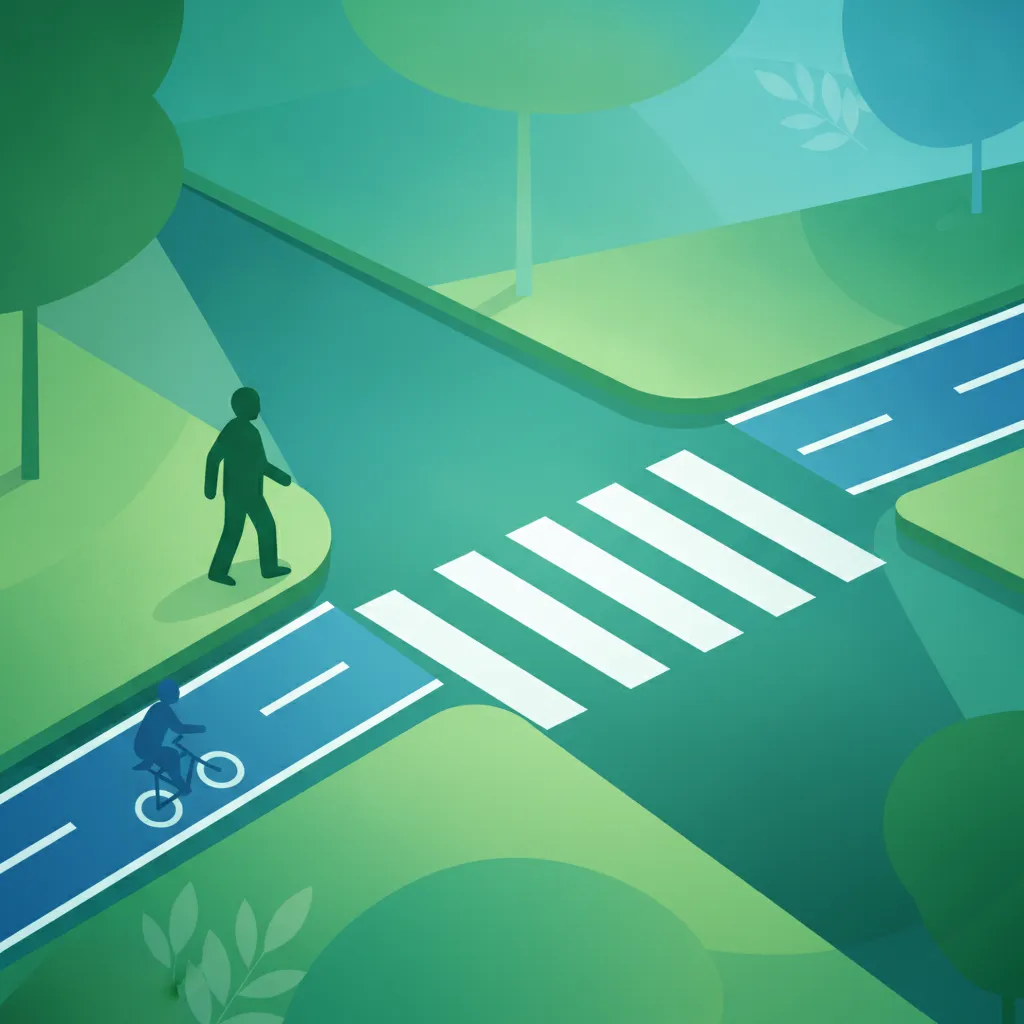
Specific road markings are used to create safety zones for pedestrians and cyclists, requiring extra care from motorists. This lesson explains the markings of zebra, pelican, and toucan crossings, with emphasis on the white zigzag lines that prohibit overtaking and parking. You will also learn about cycle lanes, mandatory versus non-mandatory cycle track markings, and the safety benefits of advanced stop lines at traffic lights.
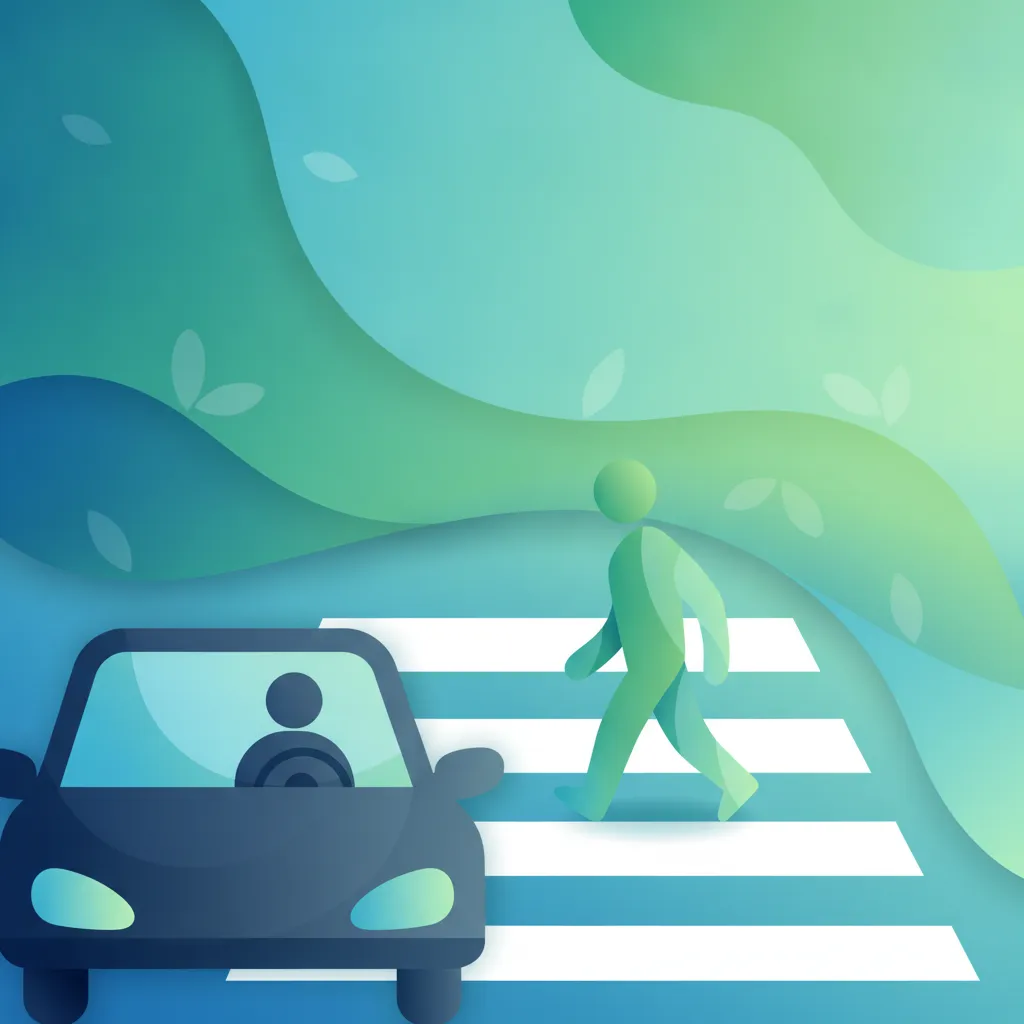
Pedestrians are the most common vulnerable road users, and drivers must maintain constant vigilance to protect them. This lesson covers pedestrian priority, especially when you are turning into side roads or navigating busy urban centres. You will learn why you must yield to pedestrians already crossing, how to scan blind spots for hidden walkers, and the safety dangers of blocking footpaths or pedestrian zones with your car.
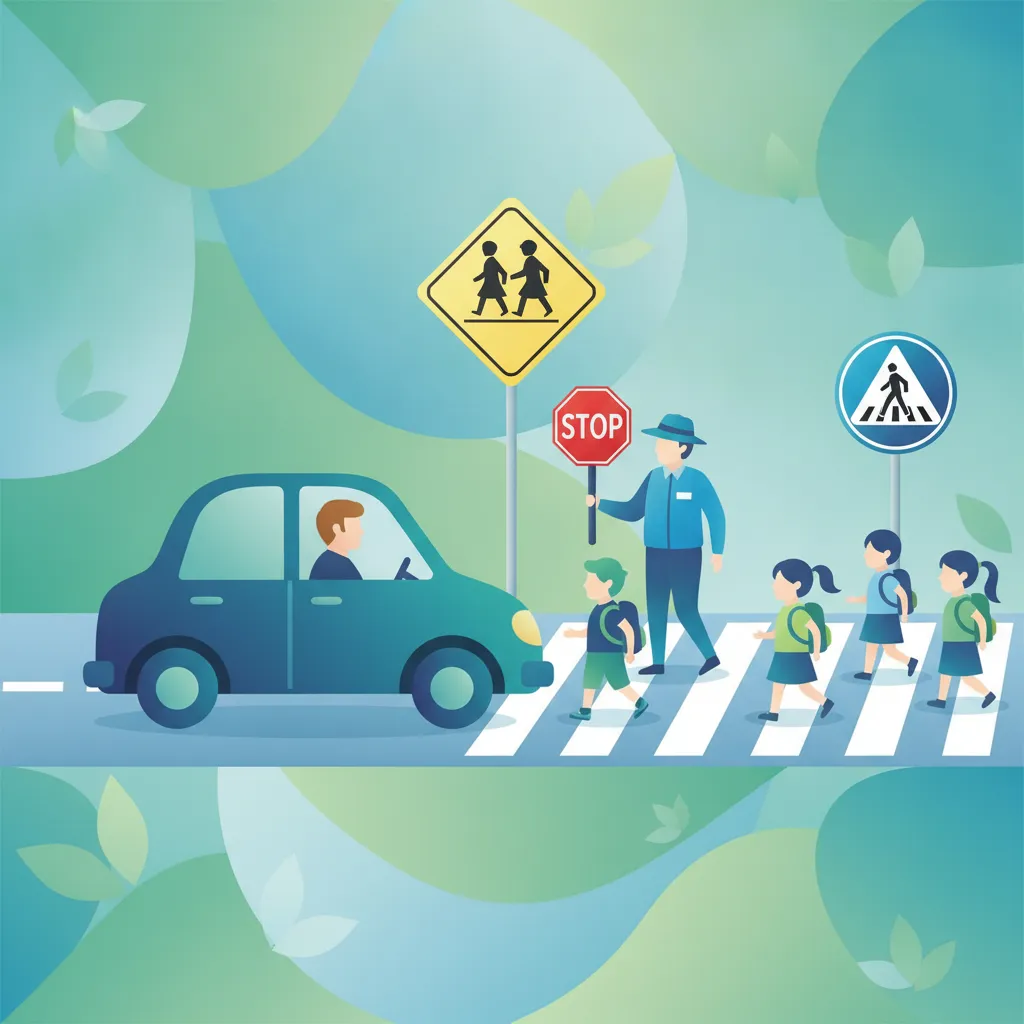
School zones and pedestrian crossings require high driver alertness and strict compliance with local speed limits in Ireland. This lesson details the legal rules of zebra and pelican crossings, explaining driver requirements when amber warning beacons are flashing. Drivers will study safety procedures for dropping off or picking up children, preventing common blind-spot accidents near schools.
Find clear answers to common questions learners have about Priority at Junctions, Roundabouts and Crosswalks. Learn how the lesson is structured, which driving theory objectives it supports, and how it fits into the overall learning path of units and curriculum progression in Ireland. These explanations help you understand key concepts, lesson flow, and exam focused study goals.
You must yield to all traffic coming from your right. Always check the road markings and signs, as they dictate the traffic flow, but the general rule is to give priority to those already on the roundabout or approaching from the right.
Not necessarily. A Yield sign means you must give priority to traffic on the major road. You only need to stop if there is traffic approaching that would be endangered by your movement. If the way is completely clear, you may proceed with caution without coming to a full stop.
You must always yield to pedestrians who have stepped onto a zebra crossing or are waiting at the edge. Never attempt to overtake another vehicle that has stopped at a pedestrian crossing, as this is illegal and highly dangerous.
Stay in your lane and be visible. Always signal your intentions clearly before exiting. Avoid riding in the blind spots of larger vehicles like trucks or buses that might be turning alongside you.
Use the practice question search tool to pinpoint specific topics, road signs, or rules you need to master for your official Driver Theory Test. Refine your study strategy and ensure comprehensive preparation for all aspects of the Irish driving exam. Start your focused revision now and build confidence for your learner permit test.