
Speed limits are fundamental regulations designed to ensure safety and efficient traffic flow across Austria's diverse road network. While they establish the absolute maximum speed allowed, drivers must always prioritize safety by adapting their speed to prevailing conditions, traffic, and visibility. This page clarifies the general speed limits in Austria and emphasizes the importance of defensive driving beyond just adhering to posted signs.
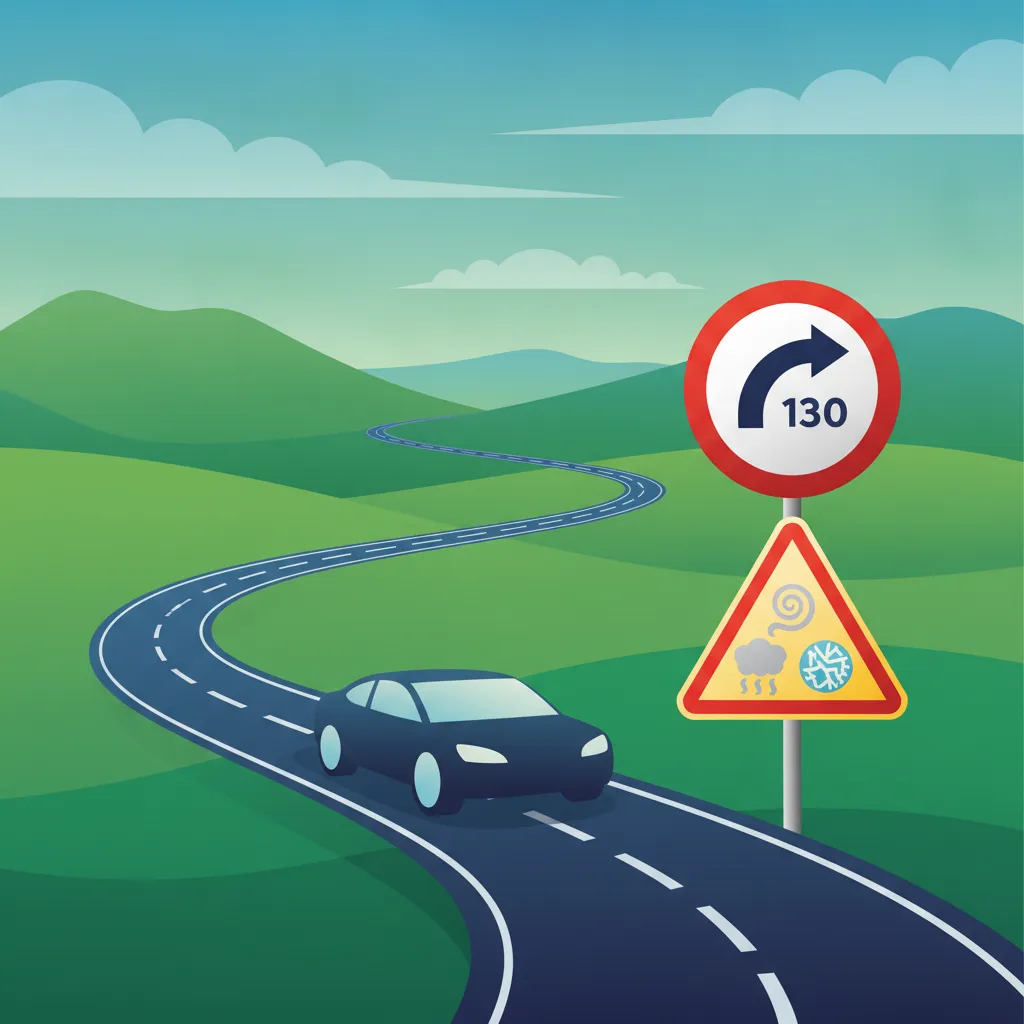
Theory topic content overview
Read the full theory topic guide for Austrian Speed Limits with structured, easy-to-scan content built for learners in Austria. This detailed section explains the exact rule, meaning, traffic context, comparison points, and exam logic behind this Austrian driving theory topic so you can study faster, understand the concept more clearly, and avoid common interpretation mistakes on the theory test.
GeschwindigkeitsbegrenzungSpeed limits, known in Austria as Geschwindigkeitsbegrenzung, are legally mandated maximum speeds at which vehicles are permitted to travel on specific roads or within designated areas. These limits are a cornerstone of road traffic regulations, designed to balance efficient traffic flow with paramount road safety. They are primarily set by the Austrian Road Traffic Act (StVO) and indicated by circular regulatory signs with a red border.
Their fundamental purpose is to reduce the risk and severity of road accidents by controlling vehicle kinetic energy and ensuring drivers have adequate time to react to hazards.
For Austrian driving theory learners and experienced drivers alike, understanding speed limits goes far beyond simple memorisation. It's about safety, legal compliance, and intelligent risk management on every journey.
Autobahnen, appropriate speed is vital for preventing collisions.Strafen) and potentially licence points (Vormerksystem) or even withdrawal of the driving licence, depending on the severity. Adherence to these limits is a strict legal requirement.Austria has standard maximum speed limits that apply unless otherwise indicated by signs. These are crucial to know:
Ortsgebiet): 50 km/h
Freilandstraße / Rural Roads): 100 km/h
Bundesstraßen (federal highways) and other rural roads.Autobahn): 130 km/h
Schnellstraße): 100 km/h
Schnellstraßen are typically signposted with an "S" prefix (e.g., S1, S2). These are often similar in construction to Autobahnen but have a lower maximum speed limit.Note: Specific vehicle types (e.g., lorries, buses, vehicles with certain types of trailers) have different, often lower, general speed limits regardless of the road type. It's essential to know the limits applicable to the vehicle category you are driving.
This is perhaps the most important concept regarding speed in Austrian driving theory:
A posted speed limit is the absolute maximum legal speed, not a recommendation for all conditions.
You are legally permitted to drive up to the posted limit, but you are obliged to drive at a speed appropriate to the prevailing circumstances. This angepasste Geschwindigkeit (adaptive speed) principle means:
Fahren auf Sicht). If visibility is reduced (fog, heavy rain, snow, darkness, bends), your speed must decrease.Gefahrensicht). If the road is slippery, traffic is dense, or pedestrians are present, you must reduce your speed even further.StVO explicitly states that a driver must adjust their speed to the road, traffic, and weather conditions, as well as to their own abilities and the characteristics of their vehicle.Failing to adapt your speed to conditions, even if you are below the posted limit, can be considered a traffic offense and is a common cause of accidents in Austria.
Many elements require a driver to reduce their speed below the legal maximum:
Rollsplitt (loose gravel) on many Austrian rural roads, especially after winter, demands much slower speeds.Autobahn during peak holiday periods is a prime example.A key concept in Austrian driving theory is the relationship between speed and stopping distance. Stopping distance is the sum of reaction distance (distance travelled during driver reaction time) and braking distance (distance travelled while braking).
This means that even a small increase in speed leads to a disproportionately larger stopping distance, making quick adaptation vital.
Beyond the standard circular red-bordered maximum speed limit signs, drivers in Austria must be aware of:
Vorgeschriebene Mindestgeschwindigkeit): A blue circular sign indicating the minimum speed required to be driven, unless conditions prevent it. Found on some Autobahn lanes or tunnels where slow driving would impede traffic flow.Tempo 30 Zonen (30 km/h zones) or Wohnstraßen (residential streets with walking speed limits) are common in urban areas and demand strict adherence.Autobahnen, these are displayed on overhead gantries and can change based on traffic flow, weather, or roadworks. Always follow the current displayed limit.Consider these common Austrian driving situations:
Bundesstraße in heavy rain: The posted limit is 100 km/h, but visibility is poor, and the road surface is extremely wet. An appropriate speed might be 70 km/h or even less, ensuring you can stop safely and avoid hydroplaning.Autobahn during holiday traffic: The maximum is 130 km/h, but if the merging lane is short and the Autobahn is congested, you must adapt your speed to find a safe gap, potentially waiting or slowing down more than usual.Tempo 30 Zone in an Ortsgebiet: Even if the street appears empty, the purpose of a 30 km/h zone is to protect pedestrians and cyclists. Maintaining 30 km/h is crucial, anticipating children, parked cars, or side street traffic.Many learners stumble on the topic of speed limits due to these misconceptions:
StVO demands adaptive driving.Ortsgebiet has a default 50 km/h limit without needing individual signs, or that Schnellstraßen are 100 km/h, not 130 km/h like Autobahnen.To excel in your Austrian driving theory exam and become a safe driver on Austrian roads, always embrace the "adaptive speed" mindset. Think of speed limits as a legal ceiling, not a target.
Your driving speed must be a dynamic decision, constantly reassessed based on:
Fahren auf Sicht).Gefahrensicht).Prioritising safety over speed is not just good practice; it's a fundamental requirement of Austrian road law.
Start with a short, direct summary of Austrian Speed Limits before reading the full explanation below.
Speed limits in Austria define the maximum legal speed for vehicles on specific roads or areas, such as 50 km/h in built-up areas and 130 km/h on Autobahnen. These limits exist to balance traffic flow with road safety, reducing accident risk and severity. Drivers are legally obliged to observe these limits, but must also independently assess and adjust their speed to ensure safety based on current road conditions, weather, and traffic, which may require driving significantly slower than the posted maximum.
Review the most important terms, rule signals, and traffic concepts linked to Austrian Speed Limits.
Explore related theory topic pages connected to Austrian Speed Limits and continue with the next useful rule explanation.
See the common search queries learners use when trying to understand Austrian Speed Limits in Austria.

Ready to delve deeper into specific theory topics? Continue exploring detailed explanations of Austrian road signs, traffic rules, and critical driving situations. Solidify your knowledge, clarify any doubts, and ensure you're fully prepared for every aspect of your official driving licence theory exam.
Austrian Driving Theory TopicsTheory topic content overview
Start with a short, direct summary of Austrian Speed Limits before reading the full explanation below.
Speed limits in Austria define the maximum legal speed for vehicles on specific roads or areas, such as 50 km/h in built-up areas and 130 km/h on Autobahnen. These limits exist to balance traffic flow with road safety, reducing accident risk and severity. Drivers are legally obliged to observe these limits, but must also independently assess and adjust their speed to ensure safety based on current road conditions, weather, and traffic, which may require driving significantly slower than the posted maximum.
Review the most important terms, rule signals, and traffic concepts linked to Austrian Speed Limits.
Explore related theory topic pages connected to Austrian Speed Limits and continue with the next useful rule explanation.
See the common search queries learners use when trying to understand Austrian Speed Limits in Austria.
Ready to delve deeper into specific theory topics? Continue exploring detailed explanations of Austrian road signs, traffic rules, and critical driving situations. Solidify your knowledge, clarify any doubts, and ensure you're fully prepared for every aspect of your official driving licence theory exam.
Austrian Driving Theory TopicsUse this exam-focused revision tip to understand how Austrian Speed Limits is likely to appear in theory questions for learners in Austria. This section helps you identify the most testable part of the rule, avoid common traps, and remember the concept more effectively during Austrian driving theory exam preparation.
In the Austrian theory exam, don't just memorize the maximum speed limits. Focus on the *principle of adapting speed*. Questions often test your understanding of how weather, visibility, road conditions, and traffic density should influence your actual driving speed, even if it's far below the posted maximum.
Read direct answers to the most common learner questions about Austrian Speed Limits in Austria. This FAQ focuses on rule confusion, practical meaning, comparison with similar concepts, and the exact uncertainties that appear most often in Austrian driving theory revision and exam preparation.
For passenger cars (up to 3.5 tonnes), the general speed limits in Austria are: 50 km/h within built-up areas (Ortsgebiet), 100 km/h outside built-up areas, and 130 km/h on Autobahnen. These are standard limits unless specific signs indicate otherwise.
The maximum speed is the highest legal speed permitted by law or signs. The appropriate speed, however, is the safe speed you should drive at, which might be significantly lower than the maximum due to factors like weather, road conditions, traffic, or visibility. Always drive at an appropriate speed for safety.
No, speed limits vary by vehicle type and weight. For example, lorries, buses, and vehicles with trailers often have lower maximum speed limits than passenger cars, especially on rural roads and motorways. Always check the specific limits for your vehicle class.
A built-up area (Ortsgebiet) in Austria is indicated by yellow rectangular signs with the town name at the entrance and a crossed-out version at the exit. The general speed limit of 50 km/h applies from the entrance sign until the exit sign, unless otherwise posted.
You should reduce your speed below the posted limit when faced with poor weather (rain, snow, fog), reduced visibility, heavy traffic, road hazards (e.g., construction, debris), sharp curves, school zones, or areas with high pedestrian/cyclist activity. The key is to maintain control and be able to stop safely.
Yes, certain roads or lanes, particularly on Autobahnen, may have a prescribed minimum speed limit, indicated by a circular blue sign with a white number. Driving below this minimum speed is prohibited unless traffic conditions prevent it, as it can hinder traffic flow and safety.
Speed significantly impacts stopping distance. Doubling your speed roughly doubles your reaction distance and quadruples your braking distance. This means a small increase in speed leads to a much larger increase in the total distance required to stop, making speed adaptation crucial for avoiding hazards.
A 'Schnellstraße' is a type of express road in Austria, similar to a motorway but often with slightly different construction or fewer lanes. The general speed limit on a Schnellstraße is 100 km/h, unless signs indicate a higher limit, typically up to 130 km/h where it functions like an Autobahn.
Refine your study plan by searching for specific Austrian driving theory practice sets. Pinpoint questions related to particular road rules, signs, or challenge levels, and begin practicing immediately to reinforce your knowledge and excel in your official exam with confidence. Get started with focused revision today.