
Learn about the specific authorities granted to Driver and Vehicle Standards Agency (DVSA) officers to conduct roadside vehicle stops in Great Britain. This guide covers the procedures they follow and the types of checks they are legally permitted to carry out, ensuring you are prepared and compliant with Highway Code regulations.
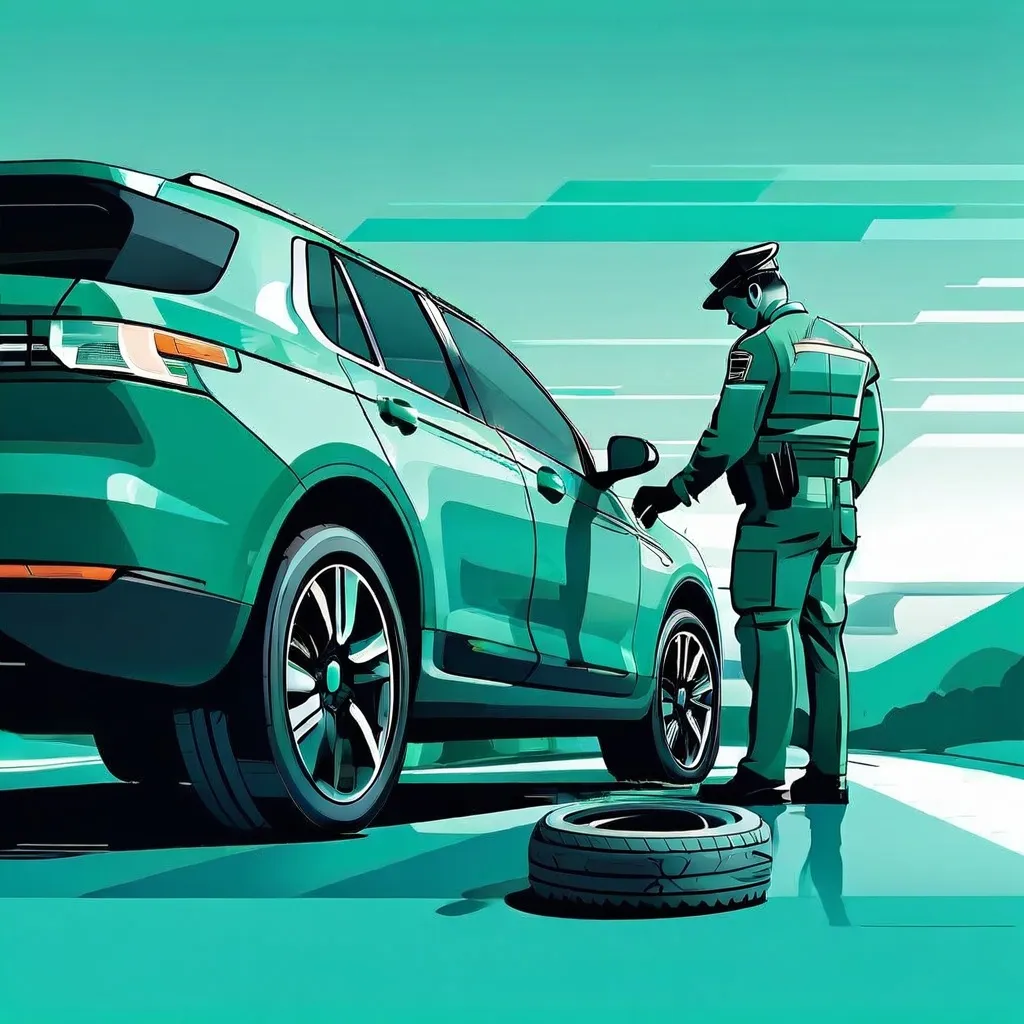
Article content overview
Driving on Great Britain's roads means adhering to a comprehensive set of rules and regulations designed to ensure safety and efficiency. While most interactions on the road involve fellow drivers, you may occasionally be stopped by an authorised official. The Driver and Vehicle Standards Agency (DVSA) plays a crucial role in road safety, and its officers possess specific powers to stop vehicles for various checks. Understanding these powers, as outlined in the Highway Code and relevant legislation, is essential for all drivers in England, Scotland, and Wales to ensure compliance and avoid unnecessary penalties. This guide will delve into the authority of DVSA officers and what they can inspect during a roadside stop, helping you prepare for such encounters.
Driver and Vehicle Standards Agency (DVSA) officers are empowered to stop vehicles on any public road in Great Britain, including motorways and trunk roads. This authority is vital for enforcing roadworthiness standards, ensuring drivers are licensed and insured, and checking for any signs of driver impairment. These powers are enshrined in law, making it an offence not to comply with their directions. When a DVSA officer wishes to stop you, they will typically use clear signals to attract your attention and direct you safely.
Rule 107 of the Highway Code details how DVSA officers will signal drivers. They may flash amber lights from the front of your vehicle, indicating for you to follow them to a safe place to stop. Alternatively, if they are behind you, they might use flashing amber lights at the rear, combined with pointing or using the left indicator, to direct you to pull over to the side of the road. It is a legal requirement to obey these signals promptly and safely. Failure to do so constitutes an offence.
Authorised officers from the Driver and Vehicle Standards Agency (DVSA) have the legal power to stop any vehicle on any public road in Great Britain to conduct checks related to road safety, vehicle condition, and driver compliance.
It is crucial to remember that these signals are not optional suggestions; they are lawful directions. The Highway Code explicitly states that you MUST obey any signals given by authorised persons, including DVSA officers. This ensures that checks can be carried out efficiently and safely, contributing to the overall safety of our roads. The legal basis for these powers is found in legislation such as the Road Traffic Act 1988 and the Police Reform Act 2002.
When a DVSA officer stops your vehicle, they are not simply looking to cause inconvenience; they are conducting checks to ensure compliance with various regulations. These inspections can cover a range of aspects, from your vehicle's mechanical condition to your personal driving documentation. Being aware of what they are looking for will help you remain calm and cooperative during such an encounter, knowing that you have met your obligations.
The primary areas of inspection typically include documentation, vehicle condition, and driver impairment. Officers are trained to identify potential issues in each of these categories. Understanding these aspects will not only prepare you for a roadside stop but also reinforce good driving habits and vehicle maintenance practices.
One of the most common reasons for a roadside stop is to check your vehicle documentation. This is a fundamental requirement for all drivers and vehicle operators in Great Britain. DVSA officers will expect you to be able to produce certain documents to prove your vehicle is legally on the road and that you are legally permitted to drive it.
Key documents that may be requested include your driving licence, which confirms your entitlement to drive a particular class of vehicle. They will also likely ask for your vehicle's insurance certificate, proving that it is covered by valid third-party insurance as required by law. Furthermore, the vehicle's most recent MOT (Ministry of Overall Test) certificate, if applicable for its age and type, may be requested to demonstrate that it meets roadworthiness standards. Finally, the vehicle registration certificate (V5C), often referred to as the logbook, may also be checked to verify ownership and vehicle details.
The V5C, also known as the 'logbook', is an official document issued by the DVLA that contains important information about a vehicle, including its make, model, chassis number, engine number, and registered keeper details.
It is a legal obligation to have these documents available and to produce them when requested by an authorised officer. For learner drivers, carrying the correct provisional licence and ensuring the vehicle is properly insured and displaying L-plates (in Wales, red 'L' plates) is paramount. Failure to produce any of these required documents can result in a fixed penalty notice or further action.
Beyond documentation, DVSA officers are keenly interested in the mechanical condition and safety of your vehicle. A poorly maintained vehicle poses a significant risk to the driver, passengers, and other road users. Therefore, officers are authorised to conduct visual inspections of various components to ensure they are functioning correctly and safely.
This can include checks on your tyres, ensuring they have adequate tread depth and are free from damage, as well as checking that they are correctly inflated. The condition of your lights, including headlights, brake lights, and indicators, will be examined to confirm they are all working and visible. Similarly, the effectiveness and condition of your brakes are a critical safety aspect that may be assessed. Officers may also check for obvious signs of mechanical defects, such as excessive exhaust emissions, insecure bodywork, or steering issues.
The objective of these checks is to identify and rectify potential hazards before they lead to an accident. A vehicle that is not roadworthy can be subject to prohibition notices, requiring immediate repairs before it can be legally driven. In severe cases, the vehicle may be deemed unsafe to drive and could be taken off the road until repairs are completed and verified.
Ensuring that drivers are fit to be in control of a vehicle is a critical aspect of road safety. DVSA officers have the authority to conduct checks to assess whether a driver is impaired by drink, drugs, or fatigue. These checks are designed to remove potentially dangerous drivers from the road and prevent accidents.
If an officer suspects a driver may be under the influence of alcohol or drugs, they can request the driver to undergo a roadside screening test. This test uses a breathalyser device. If the screening test indicates a reading above the legal limit, or if the driver refuses to take the test, they will be arrested and taken to a police station for a more accurate evidential breath test. Similar procedures apply if drug impairment is suspected, often involving a roadside drug test kit followed by further tests at a station if necessary.
It is a serious offence to drive or attempt to drive a vehicle while under the influence of alcohol or drugs, or when too tired to do so safely. The penalties are severe and can include significant fines, driving bans, and imprisonment. Always ensure you are fit to drive before starting your journey.
Furthermore, officers can also assess if a driver appears excessively tired or unwell. While there isn't a specific test for fatigue in the same way as for alcohol or drugs, if an officer believes a driver is too tired to drive safely, they can take action to prevent them from continuing their journey. This might involve advising the driver to stop and rest, or in more serious cases, taking measures to ensure they do not drive.
As highlighted earlier, obeying signals from authorised persons is a legal requirement. This applies not only to DVSA officers but also to police officers directing traffic. The Highway Code provides guidance on various signals, including those given by police and traffic wardens. DVSA officers' signals are designed to be clear and unambiguous.
When a DVSA officer flashes amber lights from the front and gestures for you to follow, it means they have identified a reason to stop you and want you to proceed to a suitable location where the stop can be made safely. This might be the next available lay-by, a side road, or a quiet area. Do not attempt to ignore this signal or continue your journey, as this can lead to prosecution.
If the officer is behind you and directs you to pull over using pointing and/or the left indicator, you should signal your intention to stop, check your mirrors, and safely manoeuvre your vehicle to the left-hand side of the road. Find a safe and legal place to stop, away from traffic where possible. Ensure your vehicle is parked securely and do not obstruct other road users.
An individual who has been granted legal authority by statute or regulation to enforce traffic laws or conduct specific checks, such as DVSA officers, police constables, or traffic wardens.
It is also important to note that in situations where a police officer is directing traffic, their directions take precedence over any traffic signs or signals. While DVSA officers focus more on vehicle condition and driver compliance, their signals to stop are equally mandatory. Always remain calm and courteous during a roadside stop. Cooperative behaviour can make the process smoother for everyone involved.
The information regarding DVSA officer powers and roadside stops is a critical component of the Great Britain driving theory test. Understanding your obligations and the authorities of officials ensures you can drive safely and legally. Questions in the theory test often assess your knowledge of rules concerning stopping procedures, the significance of official signals, and the consequences of non-compliance.
For instance, you might be asked what action to take when signalled to stop by a DVSA officer, or what documents you must carry while driving. Scenario-based questions may also present situations where a driver is stopped and tested on their knowledge of the officer's rights and their own responsibilities. It's vital to grasp the nuances of these rules, particularly the mandatory nature of obeying signals.
When preparing for your theory test, pay close attention to the sections on 'Other stopping procedures' (Rules 107-112) in the Highway Code. Familiarise yourself with the different signals used by authorised persons and the reasons why a DVSA officer might stop your vehicle.
Remember, the theory test is designed to equip you with the knowledge to become a safe and responsible driver. Knowing how to react when stopped by an authority figure is part of that essential learning. This includes understanding what checks are permissible and what documentation you must have readily available.
Drivers often have questions about specific aspects of roadside stops. Understanding these common queries can further clarify your rights and responsibilities.
What is the difference between a DVSA officer and a police officer for roadside stops? While both can direct you to stop, DVSA officers primarily focus on vehicle roadworthiness, driver licensing, and compliance with transport legislation. Police officers have broader powers, including enforcing traffic laws, investigating criminal offences, and managing traffic flow. However, both are authorised persons whose signals must be obeyed.
Can a DVSA officer stop me on a private road? Generally, DVSA officers' powers to stop vehicles apply to public roads. Their authority to stop vehicles is typically related to their enforcement duties on roads where public access is permitted.
What happens if I don't stop for a DVSA officer? Failing to stop when signalled by a DVSA officer is an offence and can lead to prosecution, resulting in a fine and potential penalty points on your licence. It indicates a disregard for authority and road safety regulations.
What if I don't have my driving licence with me? If you are stopped and cannot produce your driving licence, you may be asked to produce it at a police station or DVLA office within a specified period (usually seven days). Failure to do so could lead to a fixed penalty notice. It is always best practice to carry your licence whenever you are driving.
Can DVSA officers inspect my mobile phone use while driving? Yes, if a DVSA officer observes you using a hand-held mobile phone while driving, they can stop you and take appropriate action. This is because using a hand-held mobile phone is illegal and dangerous.
This article explains the legal powers granted to DVSA officers to stop vehicles on any public road in Great Britain under Highway Code rules 107-112. Drivers must obey signals from amber lights or officer gestures and pull over to a safe location without delay. During a roadside stop, officers may inspect documentation (licence, insurance, MOT, V5C), assess vehicle condition (tyres, lights, brakes, mechanical defects), and conduct impairment checks for alcohol, drugs, or fatigue. Failure to stop when signalled is a prosecutable offence, and vehicles found unroadworthy may receive prohibition notices. Understanding these obligations is essential for both theory test preparation and legal compliance as a driver.
A short set of high-value points that capture the most important ideas from this article.
DVSA officers have legal authority to stop any vehicle on any public road in Great Britain, and it is a criminal offence not to comply with their signals
When signalled to stop, follow the officer to a safe location as directed—amber lights from the front mean follow them; pointing/left indicator from behind means pull over safely
You must be able to produce your driving licence, insurance certificate, MOT certificate (if applicable), and V5C registration document when requested
DVSA officers can check vehicle roadworthiness including tyres, lights, brakes, and visible mechanical defects, and may issue prohibition notices for unsafe vehicles
Officers can request roadside screening tests if they suspect alcohol, drug, or fatigue impairment, with refusal constituting an offence
Highway Code Rule 107 requires you to obey signals from DVSA officers—these are mandatory legal directions, not optional suggestions
The legal basis for DVSA stopping powers includes the Road Traffic Act 1988 and Police Reform Act 2002
If you cannot produce your driving licence at the roadside, you must present it at a police station or DVLA office within seven days
A prohibition notice means the vehicle cannot be legally driven until specified defects are rectified and verified
Police officers directing traffic take precedence over traffic signs and signals when in conflict
Assuming DVSA officer signals are advisory rather than legally binding directions that must be obeyed
Confusing DVSA officer powers with police powers—DVSA focuses on roadworthiness and compliance, while police have broader enforcement authority
Believing you cannot be stopped on a motorway or trunk road; DVSA officers have authority on all public roads
Assuming only police can conduct impairment checks; DVSA officers can request roadside breathalyser or drug tests if impairment is suspected
Forgetting that mobile phone use observed by a DVSA officer is grounds for stopping and enforcement action
Article content overview
A short set of high-value points that capture the most important ideas from this article.
DVSA officers have legal authority to stop any vehicle on any public road in Great Britain, and it is a criminal offence not to comply with their signals
When signalled to stop, follow the officer to a safe location as directed—amber lights from the front mean follow them; pointing/left indicator from behind means pull over safely
You must be able to produce your driving licence, insurance certificate, MOT certificate (if applicable), and V5C registration document when requested
DVSA officers can check vehicle roadworthiness including tyres, lights, brakes, and visible mechanical defects, and may issue prohibition notices for unsafe vehicles
Officers can request roadside screening tests if they suspect alcohol, drug, or fatigue impairment, with refusal constituting an offence
Highway Code Rule 107 requires you to obey signals from DVSA officers—these are mandatory legal directions, not optional suggestions
The legal basis for DVSA stopping powers includes the Road Traffic Act 1988 and Police Reform Act 2002
If you cannot produce your driving licence at the roadside, you must present it at a police station or DVLA office within seven days
A prohibition notice means the vehicle cannot be legally driven until specified defects are rectified and verified
Police officers directing traffic take precedence over traffic signs and signals when in conflict
Assuming DVSA officer signals are advisory rather than legally binding directions that must be obeyed
Confusing DVSA officer powers with police powers—DVSA focuses on roadworthiness and compliance, while police have broader enforcement authority
Believing you cannot be stopped on a motorway or trunk road; DVSA officers have authority on all public roads
Assuming only police can conduct impairment checks; DVSA officers can request roadside breathalyser or drug tests if impairment is suspected
Forgetting that mobile phone use observed by a DVSA officer is grounds for stopping and enforcement action
Explore related topics, search based questions, and concepts that learners often look up when studying DVSA Roadside Checks. These themes reflect real search intent and help you understand how this topic connects to wider driving theory knowledge in Great Britain.
Find clear and practical answers to common questions learners often have about DVSA Roadside Checks. This section helps explain difficult points, remove confusion, and reinforce the key driving theory concepts that matter for learners in Great Britain.
Driver and Vehicle Standards Agency (DVSA) officers have the power to stop vehicles on all roads, including motorways and trunk roads.
DVSA officers will typically attract your attention by flashing amber lights. They might signal from the front to follow them to a safe place, or from behind by pointing and/or using the left indicator to direct you to pull over.
DVSA officers can check various aspects, including vehicle condition, driver documentation (like driving licence), and signs of driver impairment, based on their powers under the relevant legislation.
Yes, it is an offence not to comply with the directions or signals given by DVSA officers.
Highway Code rules 107 to 112 specifically cover other stopping procedures, including the powers of DVSA officers.
Explore our extensive library of Great Britain driving theory articles to clarify any topic, review specific road rules, or gain deeper insights into vehicle safety and the Highway Code. Use the search to find exactly what you need for comprehensive DVSA theory test preparation.