
Our articles help you develop vital hazard perception skills, crucial for safe driving and passing your DVSA theory test. Learn to scan, anticipate, and plan your actions effectively on UK roads.
These expert resources guide you through the essential techniques required to identify developing hazards and practice safe defensive driving maneuvers for your DVSA theory test. By learning to scan effectively and react to evolving traffic scenarios, you will improve your road safety awareness and increase your chances of exam success.
Understanding the hazards linked to work-related travel is a critical component of becoming a safer, more aware driver. This article breaks down how common pressures like tight schedules and long journeys influence your decision-making behind the wheel and why these factors are vital for your theory test hazard perception training.
Fatigue significantly impairs your reaction times and hazard perception skills, making it a major factor in many road traffic collisions. This guide clarifies your legal responsibility to ensure you are fit to drive before starting any journey and explains why common habits like loud music fail to address physical exhaustion. You will learn the importance of regular breaks and how to identify the early warning signs of sleep deprivation to ensure your safety and that of others on the road.
Professional driving techniques are not just for high-performance cars; they are essential tools for every road user to improve safety and anticipation. This guide breaks down core principles like maintaining optimal road positioning and strategic planning, helping you bridge the gap between basic driving rules and advanced defensive awareness. By internalizing these habits, you will be better equipped to handle real-world traffic scenarios and excel in your DVSA theory and practical exam assessments.
Explore articles detailing vital hazard perception techniques and defensive driving strategies essential for your Great Britain theory test. Understand how to scan, anticipate, and react to road scenarios to ensure safe driving and successful licence acquisition.

Understanding the hazards linked to work-related travel is a critical component of becoming a safer, more aware driver. This article breaks down how common pressures like tight schedules and long journeys influence your decision-making behind the wheel and why these factors are vital for your theory test hazard perception training.
Updated on Oct 9, 2026
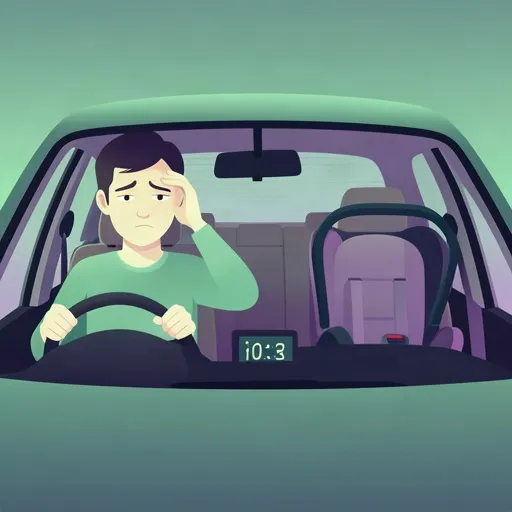
Fatigue significantly impairs your reaction times and hazard perception skills, making it a major factor in many road traffic collisions. This guide clarifies your legal responsibility to ensure you are fit to drive before starting any journey and explains why common habits like loud music fail to address physical exhaustion. You will learn the importance of regular breaks and how to identify the early warning signs of sleep deprivation to ensure your safety and that of others on the road.
Updated on Oct 3, 2026

Professional driving techniques are not just for high-performance cars; they are essential tools for every road user to improve safety and anticipation. This guide breaks down core principles like maintaining optimal road positioning and strategic planning, helping you bridge the gap between basic driving rules and advanced defensive awareness. By internalizing these habits, you will be better equipped to handle real-world traffic scenarios and excel in your DVSA theory and practical exam assessments.
Updated on Sep 29, 2026

Understanding the definition of a developing hazard is the key to achieving a high score in the hazard perception section of the Great Britain theory test. We break down the difference between static road features and genuine hazards, explaining how to spot the early signs that require a change in your vehicle's speed or direction. This guide ensures you are prepared to react correctly to the scenarios presented in your exam.
Updated on Sep 22, 2026

Understanding what constitutes a developing hazard is the most important skill for passing the hazard perception part of your theory test. This guide clarifies the official DVSA definition, teaching you how to recognize road events that require you to change speed or direction. By learning the subtle signs of hazard development, you will be better prepared to react quickly and secure your points.
Updated on Sep 22, 2026

Learners will discover how to translate professional driving philosophies into daily habits that help pass the DVSA theory and practical tests. By emphasizing hazard perception and anticipation, this guide explains how to identify risks early and interact courteously with other road users. These behavioral insights are vital for achieving test-day success and maintaining long-term road safety.
Updated on Sep 18, 2026

While passing the driving test is a major milestone, developing the skills necessary for real-world traffic requires ongoing practice and awareness. This guide examines why young drivers are considered a high-risk group and how funded skills days provide the essential experience needed to build confidence and refine hazard anticipation, as encouraged by the DVSA and the Highway Code.
Updated on Jul 16, 2026

Learn the essential steps of the Dutch Reach, a simple yet effective technique for opening car doors without causing danger to passing cyclists or pedestrians. This method is a key part of safe parking procedures and is frequently tested in the driving theory exam context for Great Britain.
Updated on Jul 8, 2026

The Great Britain Hazard Perception Test requires careful observation and precise interaction. This guide focuses on two prevalent errors: clicking too early and excessive clicking, both of which can significantly reduce your score. Learn to correctly identify developing hazards and understand how the DVSA scoring system penalises improper responses to maximise your chances of success in 2026.
Updated on Jul 8, 2026

The Great Britain hazard perception test requires precise timing to score effectively. This guide details how to avoid critical errors like clicking too soon or too repetitively, which can result in zero points for a developing hazard. Understanding these nuances is crucial for learners aiming to achieve a high score and pass their theory test.
Updated on Jul 8, 2026

Learn how to reverse your vehicle safely by thoroughly checking mirrors, identifying and mitigating blind spots, and scanning for all potential hazards like pedestrians and cyclists. This comprehensive guide aligns with Highway Code Rule 202 and is essential for passing your Great Britain driving theory test and ensuring road safety.
Updated on Jul 8, 2026
Discover other categories connected to Hazard Perception & Defensive Driving GB. These sections help you explore additional topics, expand your understanding of driving theory in British, and build a more complete picture of the rules and situations tested during the exam.
Find answers to common questions learners ask about Hazard Perception & Defensive Driving GB. This section helps clarify difficult concepts, highlight critical exam information, and support your preparation for the British driving theory exam in Great Britain.
Hazard perception tests your ability to spot developing hazards on the road that could require you to take action, such as braking or steering. It involves watching video clips and identifying potential dangers as they emerge.
Practice regularly using official DVSA materials and resources like this app. Focus on actively scanning your environment, looking for clues like pedestrians near roads, parked cars that might move, or cyclists at junctions. Understand the 'developing hazard' concept – something that would naturally cause you to take action (mirrors, signals, position, speed).
Common hazards include children playing near roads, buses pulling out of stops, cyclists at junctions, pedestrians crossing unexpectedly, parked cars that might suddenly open doors or pull out, rural bends with limited visibility, and adverse weather conditions like rain or fog.
Defensive driving is a proactive approach. It involves anticipating potential hazards and making safe driving decisions to avoid dangerous situations, even when other road users make mistakes. It emphasizes being prepared for the unexpected.
The skills learned in hazard perception and defensive driving are directly transferable to the practical test. Your examiner will assess your ability to identify and respond to hazards safely, making this theoretical knowledge essential for your success on the road.
Continue your Great Britain driving theory revision by selecting a category above to access detailed articles, practice questions, and expert explanations. Build your knowledge systematically across all official DVSA topics to ensure you're fully prepared for your licence examination.
Browse Theory Article Categories