
Welcome to the unit on Vehicle Size, Weight, Dimensions and Road Space, crucial for your Category C licence. This section will equip you with the knowledge of legal limits and practical implications of large goods vehicles' dimensions and weight. Mastering these concepts is vital for safe maneuvering, compliant route planning, and passing your DVSA theory test.
Browse all lessons that make up Vehicle Size, Weight, Dimensions and Road Space. Each lesson focuses on specific topics, learning objectives, and core concepts, helping you build essential knowledge and follow a clear, structured progression toward your study goals in Great Britain.
This lesson introduces the statutory limits governing the dimensions and mass of goods vehicles in Great Britain, including gross vehicle weight and individual axle loads. It explains how to calculate a vehicle's loaded weight to ensure it remains within legal parameters, preventing penalties and safety risks. Understanding these regulations is crucial for preventing damage to road infrastructure and ensuring the vehicle's stability and safe operation on every journey.
This lesson examines the physical space a goods vehicle occupies on the road and its impact on maneuvering at junctions, roundabouts, and in tight spaces. Learners will understand the concepts of tail swing and off-tracking, and how to calculate the necessary clearance for safe turns. The content emphasizes maintaining safe distances from other road users and infrastructure, which is a key component of professional spatial awareness and accident prevention.
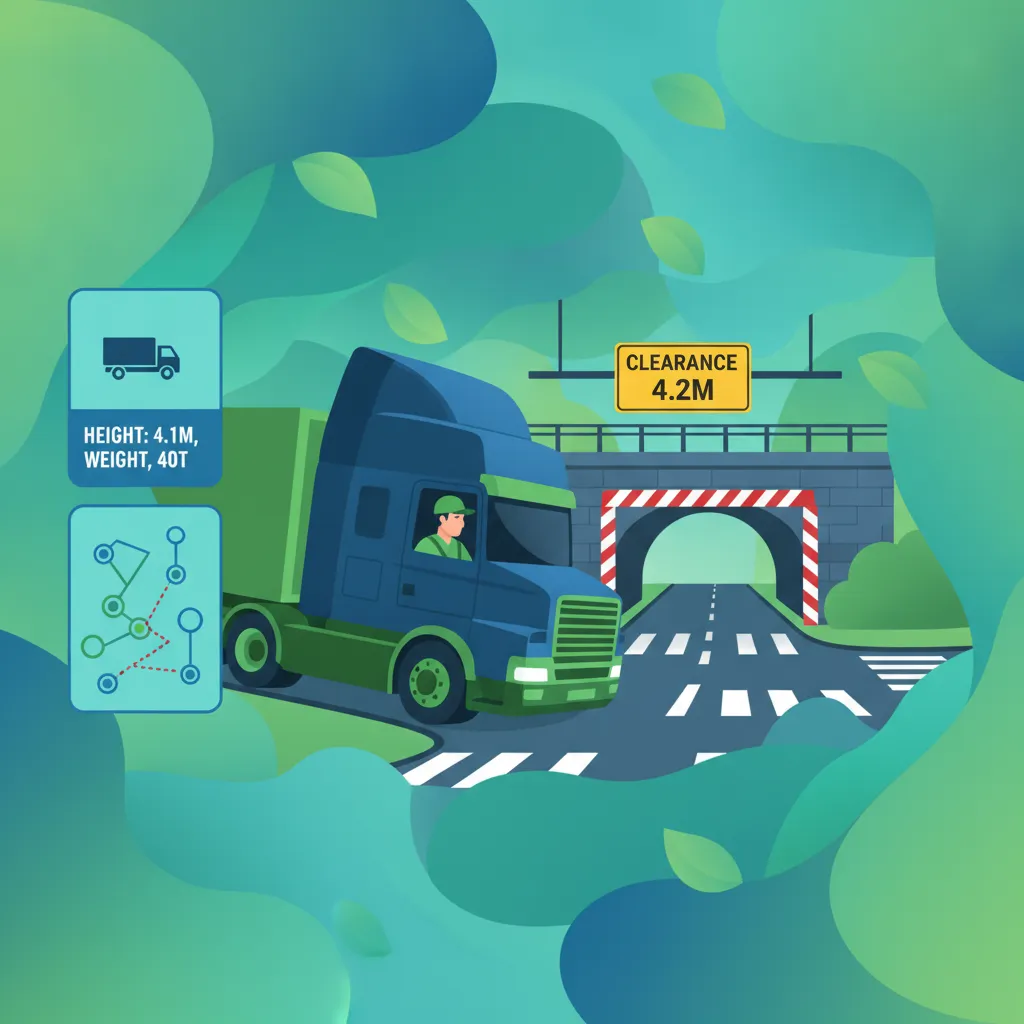
This lesson teaches drivers how to interpret and act on crucial height restriction warnings for bridges, tunnels, and other overhead structures. You will learn the importance of knowing your vehicle's exact height and using this information for effective route planning to avoid bridge strikes. The content stresses the legal and financial ramifications of ignoring these restrictions, reinforcing the necessity of thorough pre-journey checks and awareness while on the road.
This lesson provides detailed instruction on the geometry of loading bays and the precise techniques required for safe vehicle docking. Learners will understand how to align their vehicle correctly, manage clearance from structures, and interpret ground markings and signals. It emphasizes safety protocols for protecting personnel in the loading area and preventing damage to the vehicle, trailer, or docking equipment during these critical maneuvers.
This lesson analyzes the significant impact that large goods vehicles have on overall traffic flow, particularly in congested urban areas and on narrow roads. It discusses how their size can contribute to lane blockages, reduced overtaking opportunities, and bottlenecks at junctions. Learners will study strategies to minimize these effects, such as careful lane selection, maintaining steady speeds, and allowing adequate space, to promote safer and more efficient traffic movement for everyone.
Explore high-intent keywords and long-tail search topics learners use when researching Vehicle Size, Weight, Dimensions and Road Space. These terms reflect how people search for reliable study materials, structured explanations, and unit-level theory preparation support in Great Britain.
Find clear answers to the most common questions learners ask about Vehicle Size, Weight, Dimensions and Road Space. Understand how the unit is organized, what learning goals it supports, and how it contributes to your study progression with structured explanations and practical guidance tailored for learners in Great Britain.
In Great Britain, the standard legal limits for a single rigid goods vehicle are 11 meters for length, 2.55 meters for width, and 4.15 meters for height. The maximum gross vehicle weight for a typical 3-axle rigid is 26 tonnes, with variations for articulated vehicles. Axle weights also have specific limits, typically 11.5 or 12 tonnes for driven axles and 10 tonnes for non-driven axles, depending on type and number. Always consult the latest Highway Code and DVSA guidance for precise figures as these can be complex and vary.
Large goods vehicles occupy significantly more road space than smaller vehicles, especially when turning or maneuvering. Understanding this is crucial for anticipating the space you need, ensuring you don't obstruct traffic, and maintaining safe distances from other vehicles, pedestrians, and cyclists. It also directly impacts your ability to navigate junctions, roundabouts, and confined spaces safely without causing damage or endangering others.
Bridge and tunnel restrictions are critical safety considerations dictated by height and width limits, which are often lower than standard road allowances. Drivers must be aware of their vehicle's exact dimensions and consult route plans or navigation systems that highlight these potential hazards. Failing to do so can lead to catastrophic damage to the vehicle, the infrastructure, and severe injury or worse.
A turning circle refers to the diameter of the smallest circle your vehicle can complete a 360-degree turn within. For HGVs, this circle is much larger than for cars due to their length and wheelbase. Understanding your vehicle's turning circle is vital for safely negotiating junctions, roundabouts, narrow streets, and driveways, preventing collisions with kerbs, street furniture, or other vehicles.
Larger vehicles inherently move slower, accelerate more gradually, and require more space to maneuver, which can affect overall traffic flow. Drivers need to be aware of how their vehicle's presence might influence surrounding traffic, particularly on single-lane roads or during overtaking. Maintaining appropriate speeds and giving other road users clear indications of intent helps to minimise disruption.
All included lessons
Lessons in Vehicle Size, Weight, Dimensions and Road Space
See who benefits most from studying Vehicle Size, Weight, Dimensions and Road Space. This overview explains how the unit supports different learning needs, what level of knowledge is helpful before starting, and how it fits into the overall study path in Great Britain.
This unit is essential for all aspiring Category C licence holders preparing for their professional goods vehicle theory test in Great Britain. It is particularly beneficial for drivers new to operating large vehicles who need to understand the specific regulations and practical challenges related to their size and weight.

Ready to prepare effectively for your DVSA driving theory test? Explore our structured courses and guided study paths. They cover every topic of the Great Britain Highway Code and official exam requirements, ensuring systematic learning and success.
Explore Driving Theory CoursesExplore all units and lessons included in this driving theory course.
Ready to prepare effectively for your DVSA driving theory test? Explore our structured courses and guided study paths. They cover every topic of the Great Britain Highway Code and official exam requirements, ensuring systematic learning and success.
Explore Driving Theory Courses