
Speed limits are fundamental to road safety and traffic management across England, Scotland, and Wales. They define the legal maximum speed for different road types and environments. However, simply adhering to the posted limit isn't enough; the Highway Code explicitly states you must always drive at a safe speed for the prevailing conditions, which is often significantly lower than the legal maximum.
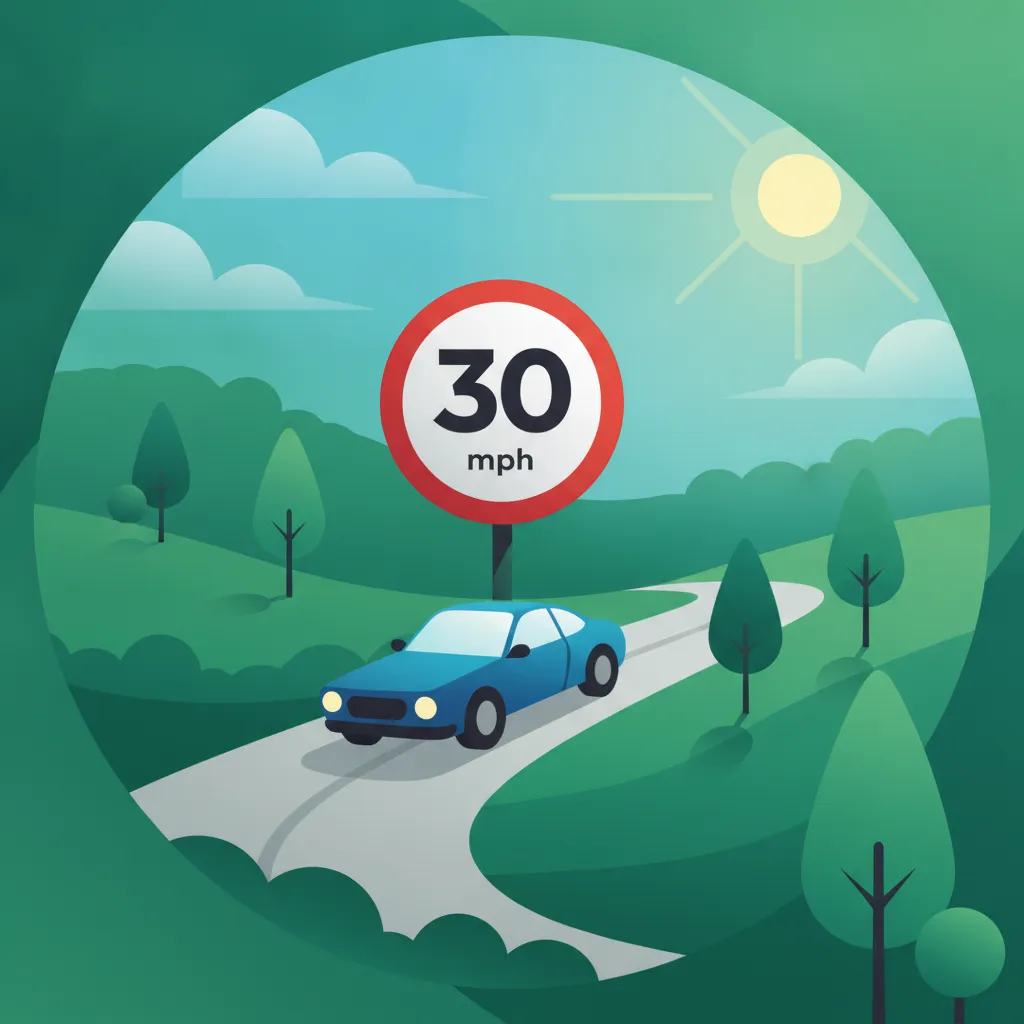
Theory topic content overview
Read the full theory topic guide for Speed Limits with structured, easy-to-scan content built for learners in Great Britain. This detailed section explains the exact rule, meaning, traffic context, comparison points, and exam logic behind this British driving theory topic so you can study faster, understand the concept more clearly, and avoid common interpretation mistakes on the theory test.
In Great Britain, speed limits are the legal maximum speeds at which vehicles are permitted to travel on a particular stretch of road or within a defined area. They are not targets to be aimed for, but rather absolute upper boundaries. The primary purpose of speed limits is to enhance road safety by controlling traffic speed, reducing the risk and severity of collisions, and creating a more predictable road environment for all users.
Understanding speed limits goes beyond simply knowing the number on a sign. The Highway Code (specifically Rule 125) makes it clear: the speed limit is the absolute maximum and does not mean it is safe to drive at that speed irrespective of conditions. Your driving speed must always be appropriate for the prevailing circumstances.
Speed limits are fundamental to safe driving and are a key area of the DVSA theory test in Great Britain. Misinterpreting or disregarding them has serious consequences:
Speed limits in Great Britain are typically indicated by circular signs with a red border and the speed in miles per hour (mph) at the centre. However, not all speed limits are explicitly signed.
On some sections of motorways, particularly "smart motorways," variable speed limits are used. These are displayed on overhead gantries and can change to manage traffic flow or in response to hazards (e.g., congestion, incidents, roadworks). These limits are mandatory and must be obeyed.
The legal speed limit is just one factor. As a driver in Great Britain, you are legally obliged (under the Highway Code) to adjust your speed according to conditions. You must always reduce your speed when:
This is the most critical distinction for learners in Great Britain.
Example: Driving at 70 mph on a motorway is legal in clear, dry conditions. However, driving at 70 mph in heavy rain, thick fog, or dense traffic is highly unsafe and illegal, even though it's within the posted limit.
Consider these common scenarios on Great Britain's roads:
Learner drivers often make these mistakes regarding speed limits and safe speeds:
The Highway Code places the responsibility squarely on the driver to determine a safe speed for every situation. This requires constant observation, anticipation, and sound judgment. Always consider:
By consistently applying this judgment, you not only comply with the law in Great Britain but also significantly contribute to the safety of all road users.
Speed limits in Great Britain set the legal maximum speed for different road types, but the Highway Code requires drivers to always choose a safe speed appropriate for current conditions. The default 30 mph limit applies on built-up roads with street lighting, while the National Speed Limit (60 mph on single carriageways, 70 mph on dual carriageways and motorways) is shown on white circular signs with a black diagonal stripe. Variable speed limits on smart motorways, displayed on overhead gantries, are mandatory when active. Understanding that the speed limit is not a target and that you must adjust your speed for weather, visibility, traffic, and road conditions is essential for both road safety and the DVSA theory test.
A short set of high-value points that capture the most important ideas from this theory explanation.
Speed limits are absolute legal maximums, not targets to drive at
Rule 125 of the Highway Code requires you to drive at a safe speed for conditions, which is often lower than the posted limit
The presence of street lights spaced no more than 200 yards apart usually means a 30 mph limit, even without a sign
Variable speed limits on smart motorways, shown on overhead gantries, are mandatory and must be obeyed
Your safe speed must account for road layout, weather, traffic, visibility, and your vehicle type
30 mph is the default limit on built-up roads with street lights unless signed otherwise
National Speed Limit (white circle with black diagonal) means 60 mph on single carriageways and 70 mph on dual carriageways and motorways for cars and motorcycles
Stop within the distance you can see to be clear
Street lighting spacing (no more than 200 yards apart) indicates 30 mph even without a sign
Lower limits apply to certain vehicles such as those towing trailers or heavy goods vehicles
Treating the posted speed limit as a recommended speed rather than an absolute maximum
Failing to reduce speed for adverse weather conditions such as rain, fog, ice, or strong wind
Not anticipating speed limit changes and braking too late when entering a lower limit zone
Assuming the National Speed Limit sign always means 70 mph without considering road type
Driving too close to the vehicle ahead and not leaving enough space to stop safely at your chosen speed
Start with a short, direct summary of Speed Limits before reading the full explanation below.
Speed limits in Great Britain are the legally enforced maximum speeds for specific roads or areas, designed to balance traffic flow with safety. It is crucial for drivers to understand that these are absolute maximums, and the Highway Code (Rule 125) requires you to reduce your speed further when road layout, weather, traffic, or other hazards make it unsafe to drive at the posted limit.
Review the most important terms, rule signals, and traffic concepts linked to Speed Limits.
Explore related theory topic pages connected to Speed Limits and continue with the next useful rule explanation.
See the common search queries learners use when trying to understand Speed Limits in Great Britain.

Continue your journey to a successful Great Britain driving theory test by delving deeper into specific topics. Enhance your understanding of complex rules, review detailed explanations, and solidify your knowledge of the Highway Code, preparing you thoroughly for all aspects of the official DVSA exam. Start mastering key concepts today.
Great Britain Driving Theory TopicsTheory topic content overview
A short set of high-value points that capture the most important ideas from this theory explanation.
Speed limits are absolute legal maximums, not targets to drive at
Rule 125 of the Highway Code requires you to drive at a safe speed for conditions, which is often lower than the posted limit
The presence of street lights spaced no more than 200 yards apart usually means a 30 mph limit, even without a sign
Variable speed limits on smart motorways, shown on overhead gantries, are mandatory and must be obeyed
Your safe speed must account for road layout, weather, traffic, visibility, and your vehicle type
30 mph is the default limit on built-up roads with street lights unless signed otherwise
National Speed Limit (white circle with black diagonal) means 60 mph on single carriageways and 70 mph on dual carriageways and motorways for cars and motorcycles
Stop within the distance you can see to be clear
Street lighting spacing (no more than 200 yards apart) indicates 30 mph even without a sign
Lower limits apply to certain vehicles such as those towing trailers or heavy goods vehicles
Treating the posted speed limit as a recommended speed rather than an absolute maximum
Failing to reduce speed for adverse weather conditions such as rain, fog, ice, or strong wind
Not anticipating speed limit changes and braking too late when entering a lower limit zone
Assuming the National Speed Limit sign always means 70 mph without considering road type
Driving too close to the vehicle ahead and not leaving enough space to stop safely at your chosen speed
Start with a short, direct summary of Speed Limits before reading the full explanation below.
Speed limits in Great Britain are the legally enforced maximum speeds for specific roads or areas, designed to balance traffic flow with safety. It is crucial for drivers to understand that these are absolute maximums, and the Highway Code (Rule 125) requires you to reduce your speed further when road layout, weather, traffic, or other hazards make it unsafe to drive at the posted limit.
Review the most important terms, rule signals, and traffic concepts linked to Speed Limits.
Explore related theory topic pages connected to Speed Limits and continue with the next useful rule explanation.
See the common search queries learners use when trying to understand Speed Limits in Great Britain.
Continue your journey to a successful Great Britain driving theory test by delving deeper into specific topics. Enhance your understanding of complex rules, review detailed explanations, and solidify your knowledge of the Highway Code, preparing you thoroughly for all aspects of the official DVSA exam. Start mastering key concepts today.
Great Britain Driving Theory TopicsUse this exam-focused revision tip to understand how Speed Limits is likely to appear in theory questions for learners in Great Britain. This section helps you identify the most testable part of the rule, avoid common traps, and remember the concept more effectively during British driving theory exam preparation.
A common trap in the DVSA theory test is confusing the speed limit with a recommended driving speed. Always remember that the posted speed limit is the absolute legal maximum, but a safe speed for the conditions is often much lower. Questions frequently test your understanding of when to reduce your speed, emphasizing driver judgment over just the sign.
Read direct answers to the most common learner questions about Speed Limits in Great Britain. This FAQ focuses on rule confusion, practical meaning, comparison with similar concepts, and the exact uncertainties that appear most often in British driving theory revision and exam preparation.
The National Speed Limit (NSL) applies to roads where no other signs are present. For cars, it's typically 70 mph on motorways and dual carriageways, and 60 mph on single carriageway roads, unless otherwise indicated by signs or street lighting. Different limits apply to certain vehicles.
No. Highway Code Rule 125 states the speed limit is the absolute maximum and does not mean it is safe to drive at that speed irrespective of conditions. You must always reduce your speed when conditions like weather, road layout, traffic, or other road users make it unsafe.
On unlit roads in Great Britain, the speed limit is typically 30 mph unless signs indicate otherwise. Beyond built-up areas, if there are no repeater signs, the National Speed Limit applies, which depends on the road type (single or dual carriageway) and your vehicle type.
You should reduce your speed when the road layout presents hazards (like bends), when sharing the road with vulnerable users (pedestrians, cyclists, horse riders), in adverse weather, when driving at night, or in heavy traffic conditions.
Variable speed limits are displayed on overhead gantries on some motorways, particularly Smart Motorways. These limits can change dynamically to manage traffic flow or in response to incidents, and drivers must obey them as they are legally enforceable.
Exceeding the speed limit is a serious offence in Great Britain. Consequences can include a fine, penalty points on your licence, attending a speed awareness course, or even disqualification from driving, depending on the severity.
Yes, certain vehicles like goods vehicles, vehicles towing trailers, or buses have lower speed limits on certain roads, even if the general limit for cars is higher. Always check the specific limits for your vehicle type.
Dive into our comprehensive question bank to find exactly what you need for your Great Britain theory test. Use our advanced filters to pinpoint specific subjects or test your knowledge on challenging areas, ensuring you're fully prepared for success.