
Prepare for your driving theory test and real-world driving by mastering the complexities of parking and stopping regulations in Great Britain. This section covers everything from double yellow lines and bus stop clearways to loading restrictions and safe stopping distances, ensuring you can navigate urban environments safely and legally.
These guides detail the specific Highway Code rules governing parking, waiting, and loading restrictions across Great Britain to ensure your compliance during the driving theory test. You will learn to correctly identify road markings and signage like yellow lines and clearways to avoid penalties and drive safely in urban areas.
Learning where and when you can park is a fundamental skill for passing your theory test and driving safely on public roads. This guide clarifies the roles of local authorities versus the police in parking enforcement and explains what happens if you receive a Penalty Charge Notice. Gaining this knowledge will help you navigate parking restrictions confidently and keep your driving record clean.
Learners often struggle with complex parking restrictions that can lead to test failures or unexpected penalties. This article breaks down the Highway Code rules regarding pavement access, restricted zones, and road markings, ensuring you are prepared for both exam questions and practical driving scenarios. You will gain a clear understanding of the legal requirements for stopping and waiting in Great Britain to keep your driving record clean.
Learn the essential Highway Code rules (specifically rules 243 and 191) that prohibit parking near junctions, bends, and pedestrian crossings in Great Britain. This knowledge is crucial for both safe driving and passing your theory test, as failing to adhere to these restrictions can lead to dangerous situations and fines. We detail the distances and visibility requirements you must observe to avoid obstruction and ensure road safety.
Master the essential parking, stopping, and urban traffic rules critical for your Great Britain driving theory test. Understand official guidance on restrictions, road markings, and safe urban navigation to drive legally and safely.

Learning where and when you can park is a fundamental skill for passing your theory test and driving safely on public roads. This guide clarifies the roles of local authorities versus the police in parking enforcement and explains what happens if you receive a Penalty Charge Notice. Gaining this knowledge will help you navigate parking restrictions confidently and keep your driving record clean.
Updated on Aug 26, 2026
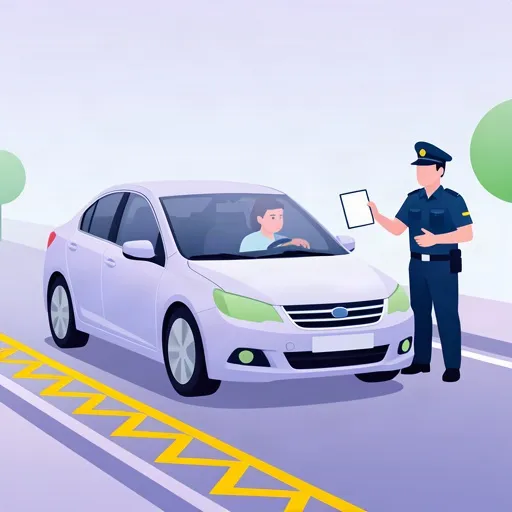
Learners often struggle with complex parking restrictions that can lead to test failures or unexpected penalties. This article breaks down the Highway Code rules regarding pavement access, restricted zones, and road markings, ensuring you are prepared for both exam questions and practical driving scenarios. You will gain a clear understanding of the legal requirements for stopping and waiting in Great Britain to keep your driving record clean.
Updated on Aug 26, 2026

Learn the essential Highway Code rules (specifically rules 243 and 191) that prohibit parking near junctions, bends, and pedestrian crossings in Great Britain. This knowledge is crucial for both safe driving and passing your theory test, as failing to adhere to these restrictions can lead to dangerous situations and fines. We detail the distances and visibility requirements you must observe to avoid obstruction and ensure road safety.
Updated on Jul 8, 2026

Navigate the complexities of parking regulations in Great Britain by understanding the strict 'MUST NOT' rules outlined in the Highway Code. This guide explains the critical reasons behind parking restrictions at junctions, pedestrian crossings, school entrances, and other sensitive locations, essential knowledge for both your theory exam and safe driving practice across England, Scotland, and Wales.
Updated on Jul 8, 2026
Learn the critical parking rules mandated by the Highway Code to prevent obstructions and ensure safety for all road users. This guide covers essential restrictions, including prohibitions near schools, emergency access points, junctions, and specific pavement parking rules in London and Scotland. Understanding these regulations is key to passing your Great Britain driving theory test and driving responsibly.
Updated on Jul 8, 2026
Discover other categories connected to Parking and Stopping Rules GB. These sections help you explore additional topics, expand your understanding of driving theory in British, and build a more complete picture of the rules and situations tested during the exam.
Find answers to common questions learners ask about Parking and Stopping Rules GB. This section helps clarify difficult concepts, highlight critical exam information, and support your preparation for the British driving theory exam in Great Britain.
Double yellow lines indicate that parking is prohibited at any time on the road or pavement. There may be specific times when you can stop briefly to load or unload, but this will be indicated by nearby signs.
Single yellow lines mean you cannot park during the times shown on the adjacent time plate. Outside of these restricted hours, parking is usually permitted, but always check the signs for specific local rules.
Red Routes are major roads in London where traffic management is critical. Stopping or parking is generally prohibited at all times, even for a short time to pick up or drop off passengers, unless indicated otherwise by signs (e.g., for loading bays). Fines are enforced by cameras.
You must not park near a junction or a pedestrian crossing (including zebra crossings and crossings with traffic lights) if it obstructs visibility or traffic flow. This is to ensure safety for pedestrians and other road users.
Parking at or near a dropped kerb, whether for pedestrians or vehicles, is generally not allowed. This is to ensure accessibility for wheelchair users, prams, and cyclists. This is enforced by local authorities.
Continue your Great Britain driving theory revision by selecting a category above to access detailed articles, practice questions, and expert explanations. Build your knowledge systematically across all official DVSA topics to ensure you're fully prepared for your licence examination.
Browse Theory Article Categories