
Pedestrian crossings are designated areas designed to help people cross the road safely. As a driver in Great Britain, you must understand the rules governing various crossing types, such as Zebra, Pelican, Puffin, Toucan, and Parallel crossings. Your primary responsibility is to protect pedestrians by yielding priority and adjusting your driving appropriately.
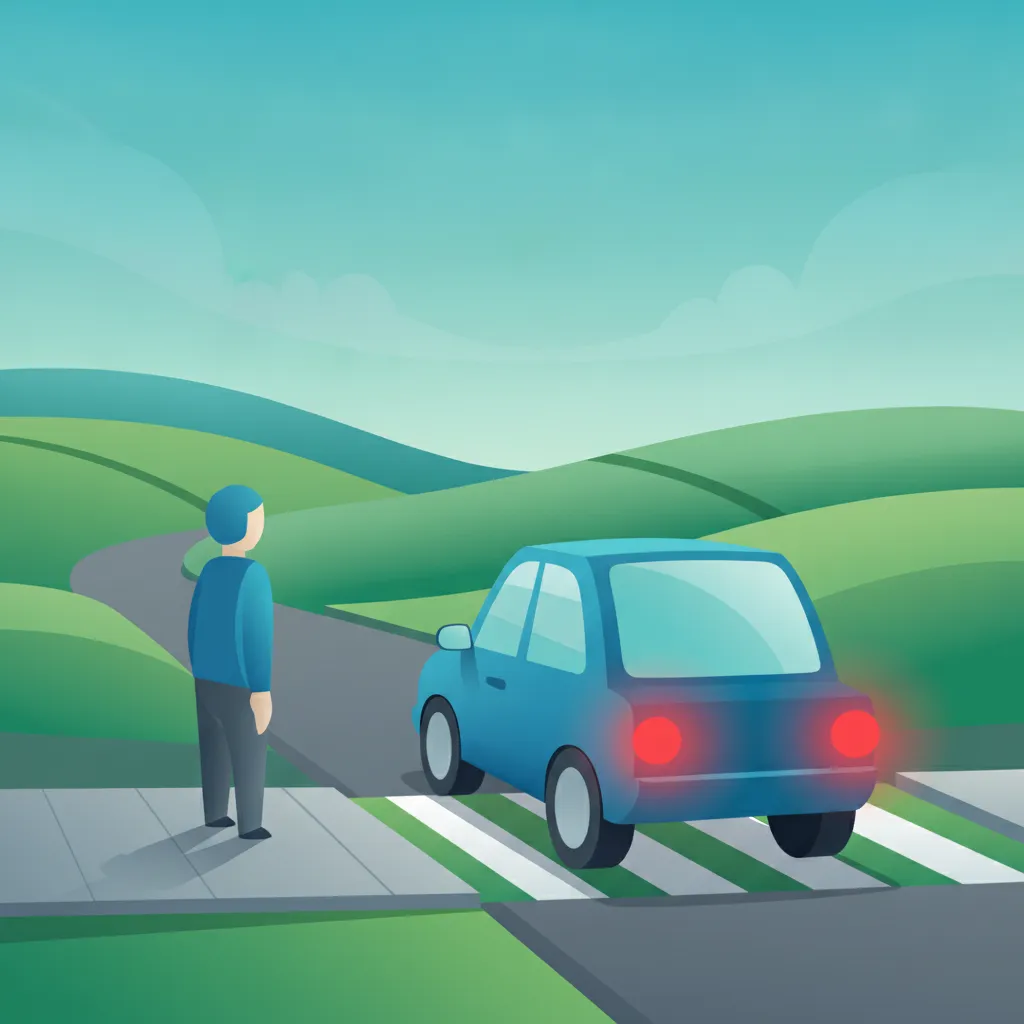
Theory topic content overview
Read the full theory topic guide for Pedestrian Crossings with structured, easy-to-scan content built for learners in Great Britain. This detailed section explains the exact rule, meaning, traffic context, comparison points, and exam logic behind this British driving theory topic so you can study faster, understand the concept more clearly, and avoid common interpretation mistakes on the theory test.
Pedestrian crossings are specially designated areas on roads in Great Britain designed to allow pedestrians to cross safely. As a driver, understanding the rules and your responsibilities at these crossings is not just crucial for road safety; it's a fundamental part of the DVSA driving theory test. Your primary duty is to protect vulnerable road users by adjusting your speed, maintaining vigilance, and giving way according to the specific type of crossing and the presence of pedestrians.
In Great Britain, a pedestrian crossing is a marked section of road where pedestrians have priority over vehicles under specific conditions. They act as critical junctions where drivers and walkers interact, requiring clear rules to prevent collisions. These crossings vary in design, from simple painted stripes to sophisticated traffic light systems, each with distinct rules that drivers MUST obey, as outlined in The Highway Code.
The emphasis on driver responsibility at pedestrian crossings is paramount for several reasons:
Great Britain features several distinct types of pedestrian crossings, each identified by unique markings and signals. Knowing these types and their associated rules is vital for every driver.
Identification: Marked by black and white stripes on the road, with flashing yellow 'Belisha beacons' on either side. There are no traffic lights for vehicles. Driver Rules:
Identification: Similar to a Zebra crossing but includes a cycling path marked parallel to the pedestrian stripes. It features a continuous white line between the pedestrian and cycle sections, and Belisha beacons. Driver Rules:
Identification: Controlled by traffic lights for both vehicles and pedestrians. Pedestrians press a button, and the lights change in a fixed sequence. The pedestrian phase includes a flashing amber light for vehicles. Driver Rules:
Identification: A more modern version of a Pelican crossing, also with traffic lights, but with sensors to detect pedestrians. The pedestrian demand button and lights for pedestrians are on the same side of the road. Driver Rules:
Identification: Designed for both pedestrians and cyclists to cross together. Similar to Puffin crossings with traffic lights and sensors, but wider to accommodate both. Driver Rules:
Approaching any pedestrian crossing in Great Britain requires a systematic and cautious approach:
Several factors influence driver behaviour and safety at pedestrian crossings:
Understanding the nuances of the Highway Code is key for the DVSA theory test:
Learners in Great Britain often make specific mistakes regarding pedestrian crossings, which can lead to practical test failures and theory test errors:
The golden rule for pedestrian crossings in Great Britain is to adopt a proactive and anticipatory mindset. Don't wait for a pedestrian to step into danger before reacting. Instead:
By internalising these rules and adopting a responsible approach, you not only ensure safety for everyone on the road but also equip yourself thoroughly for your DVSA theory and practical driving tests.
Pedestrian crossings in Great Britain are designated areas where pedestrians have priority under specific conditions, and drivers must understand the rules for each type. Zebra and Parallel crossings are uncontrolled with Belisha beacons—drivers MUST give way to those on the crossing and SHOULD give way to those waiting. Pelican crossings use traffic lights with a flashing amber phase, while Puffin and Toucan crossings use sensors and switch directly from red to green with no flashing amber. All crossings require proactive observation, early speed reduction, and patience to ensure vulnerable road users can cross safely.
A short set of high-value points that capture the most important ideas from this theory explanation.
Zebra and Parallel crossings are uncontrolled; you MUST give way to pedestrians already on the crossing and SHOULD give way to those waiting to cross.
Pelican crossings have a flashing amber phase allowing you to proceed if clear, but Puffin and Toucan crossings do not—they stay red until it is safe to go green.
Parallel crossings serve both pedestrians and cyclists; you must give way to both when they are on the crossing.
Never overtake a vehicle that has stopped at any crossing, as this is illegal and extremely dangerous.
At Zebra and Parallel crossings, stopping well before the crossing lines and allowing pedestrians ample time to cross completely is required.
Zebra crossings are identified by black and white stripes and flashing Belisha beacons—no traffic lights control vehicles.
Pelican crossings feature a flashing amber light; Puffin and Toucan crossings do not—they switch directly from red to green.
Highway Code 'MUST' rules are legal requirements; 'SHOULD' rules are advisory but essential for safety.
For Zebra and Parallel crossings, give way to pedestrians waiting at the side as well as those already on the crossing.
Toucan crossings are designed for both pedestrians and cyclists to cross together, similar to Puffin rules.
Believing you only need to stop if a pedestrian is already on the crossing, when the Highway Code advises giving way to those waiting to cross.
Confusing Pelican crossings (flashing amber phase) with Puffin or Toucan crossings (no flashing amber, direct red-to-green).
Overtaking a vehicle that has stopped to allow pedestrians to cross, which is illegal and a common hazard perception failure.
Stopping your vehicle on the crossing itself rather than behind the give-way line, obstructing pedestrians.
Failing to check for hidden pedestrians or cyclists when vision is obscured by large vehicles or queuing traffic.
Start with a short, direct summary of Pedestrian Crossings before reading the full explanation below.
When approaching any pedestrian crossing in Great Britain, drivers must reduce speed, be prepared to stop, and give way to pedestrians who are waiting to cross or are already on the crossing. For Zebra and Parallel crossings, you MUST give way when a pedestrian has moved onto the crossing. Always allow ample time and space for pedestrians to cross safely, even if they are only waiting to cross.
Review the most important terms, rule signals, and traffic concepts linked to Pedestrian Crossings.
Explore related theory topic pages connected to Pedestrian Crossings and continue with the next useful rule explanation.
See the common search queries learners use when trying to understand Pedestrian Crossings in Great Britain.

Continue your journey to a successful Great Britain driving theory test by delving deeper into specific topics. Enhance your understanding of complex rules, review detailed explanations, and solidify your knowledge of the Highway Code, preparing you thoroughly for all aspects of the official DVSA exam. Start mastering key concepts today.
Great Britain Driving Theory TopicsTheory topic content overview
A short set of high-value points that capture the most important ideas from this theory explanation.
Zebra and Parallel crossings are uncontrolled; you MUST give way to pedestrians already on the crossing and SHOULD give way to those waiting to cross.
Pelican crossings have a flashing amber phase allowing you to proceed if clear, but Puffin and Toucan crossings do not—they stay red until it is safe to go green.
Parallel crossings serve both pedestrians and cyclists; you must give way to both when they are on the crossing.
Never overtake a vehicle that has stopped at any crossing, as this is illegal and extremely dangerous.
At Zebra and Parallel crossings, stopping well before the crossing lines and allowing pedestrians ample time to cross completely is required.
Zebra crossings are identified by black and white stripes and flashing Belisha beacons—no traffic lights control vehicles.
Pelican crossings feature a flashing amber light; Puffin and Toucan crossings do not—they switch directly from red to green.
Highway Code 'MUST' rules are legal requirements; 'SHOULD' rules are advisory but essential for safety.
For Zebra and Parallel crossings, give way to pedestrians waiting at the side as well as those already on the crossing.
Toucan crossings are designed for both pedestrians and cyclists to cross together, similar to Puffin rules.
Believing you only need to stop if a pedestrian is already on the crossing, when the Highway Code advises giving way to those waiting to cross.
Confusing Pelican crossings (flashing amber phase) with Puffin or Toucan crossings (no flashing amber, direct red-to-green).
Overtaking a vehicle that has stopped to allow pedestrians to cross, which is illegal and a common hazard perception failure.
Stopping your vehicle on the crossing itself rather than behind the give-way line, obstructing pedestrians.
Failing to check for hidden pedestrians or cyclists when vision is obscured by large vehicles or queuing traffic.
Start with a short, direct summary of Pedestrian Crossings before reading the full explanation below.
When approaching any pedestrian crossing in Great Britain, drivers must reduce speed, be prepared to stop, and give way to pedestrians who are waiting to cross or are already on the crossing. For Zebra and Parallel crossings, you MUST give way when a pedestrian has moved onto the crossing. Always allow ample time and space for pedestrians to cross safely, even if they are only waiting to cross.
Review the most important terms, rule signals, and traffic concepts linked to Pedestrian Crossings.
Explore related theory topic pages connected to Pedestrian Crossings and continue with the next useful rule explanation.
See the common search queries learners use when trying to understand Pedestrian Crossings in Great Britain.
Continue your journey to a successful Great Britain driving theory test by delving deeper into specific topics. Enhance your understanding of complex rules, review detailed explanations, and solidify your knowledge of the Highway Code, preparing you thoroughly for all aspects of the official DVSA exam. Start mastering key concepts today.
Great Britain Driving Theory TopicsUse this exam-focused revision tip to understand how Pedestrian Crossings is likely to appear in theory questions for learners in Great Britain. This section helps you identify the most testable part of the rule, avoid common traps, and remember the concept more effectively during British driving theory exam preparation.
A common mistake in theory tests is failing to recognise that you MUST give way to pedestrians who are waiting to cross at Zebra and Parallel crossings, not just those already on it. Also, be aware of the specific light sequences for Pelican, Puffin, and Toucan crossings. Always anticipate pedestrian movement, especially near schools or shops.
Read direct answers to the most common learner questions about Pedestrian Crossings in Great Britain. This FAQ focuses on rule confusion, practical meaning, comparison with similar concepts, and the exact uncertainties that appear most often in British driving theory revision and exam preparation.
The primary rule is to give way to pedestrians. You MUST give way to pedestrians on a Zebra or Parallel crossing once they have stepped onto it, and you SHOULD give way to pedestrians waiting to cross.
'MUST' indicates a legal requirement in the Highway Code that carries a penalty if broken. 'SHOULD' indicates advice, but failure to follow it could be used as evidence in court to show that you drove without due care and attention.
Slow down, be prepared to stop, and look out for pedestrians waiting or moving onto the crossing. You MUST give way to anyone on the crossing. Do not use your horn or flash your lights to invite them across, as this can be dangerous.
These are light-controlled crossings. Pelican crossings have flashing amber lights for drivers. Puffin crossings have sensors to detect pedestrians and cancel their crossing if they step off. Toucan crossings allow both pedestrians and cyclists to cross at the same time.
A Parallel crossing is similar to a Zebra crossing but includes a separate marked section for cyclists parallel to the pedestrian section. Drivers MUST give way to both pedestrians and cyclists on the crossing.
You should take extra care if your view is blocked by queuing traffic or parked vehicles. Pedestrians may be crossing between stationary vehicles, so proceed with extreme caution and be ready to stop.
Dive into our comprehensive question bank to find exactly what you need for your Great Britain theory test. Use our advanced filters to pinpoint specific subjects or test your knowledge on challenging areas, ensuring you're fully prepared for success.