
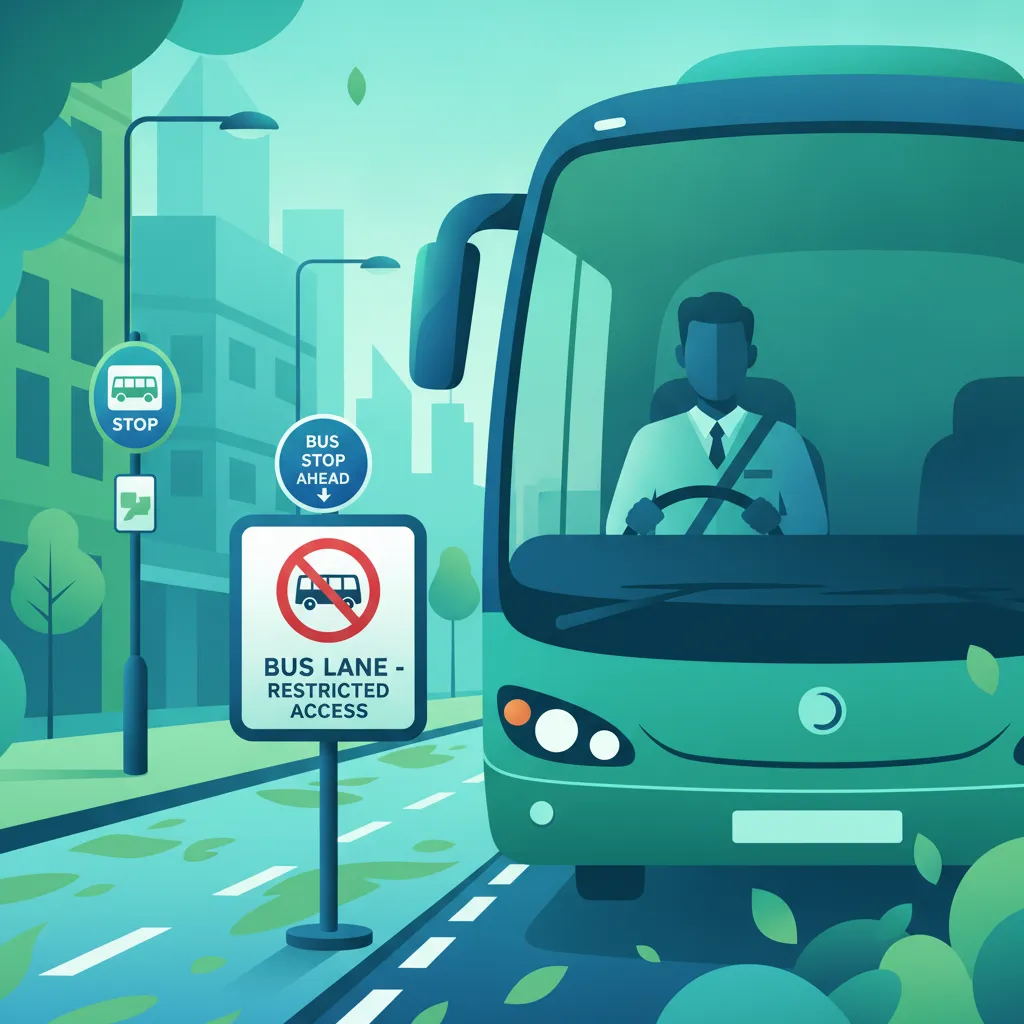
Welcome to the Signs, Bus Rules, Restrictions, Stops and Route Awareness unit. This section of your Category D or D1 licence preparation focuses on understanding the critical road signs, markings, and specific regulations that govern passenger vehicle operation. You will learn to interpret these signals and apply them to navigate bus lanes, identify restrictions, and correctly use designated stops, ensuring safe and efficient journeys across Great Britain.
Browse all lessons that make up Signs, Bus Rules, Restrictions, Stops and Route Awareness. Each lesson focuses on specific topics, learning objectives, and core concepts, helping you build essential knowledge and follow a clear, structured progression toward your study goals in Great Britain.
This lesson covers the full range of road signs encountered by passenger vehicle drivers, focusing on regulatory, warning, and informational signs. It explains the visual characteristics of sign shapes, colors, and symbols, particularly those associated with bus lane usage and priority rules. By mastering sign hierarchy and meaning, drivers can quickly interpret the sign's intent and adjust their driving behaviour accordingly, ensuring full compliance with the Highway Code and enhancing road safety.
This lesson examines the unique rules and restrictions governing buses and coaches, focusing on bus lane priority, time-based restrictions, and loading zone limitations. Learners will explore the criteria for using bus-only routes and understand the legal consequences of non-compliance. The content also reviews signage indicating bus gate operation and areas where passenger vehicles are prohibited from stopping or loading outside of designated zones, ensuring lawful and efficient urban navigation.
This lesson explores the specifics of bus lane markings, operating times, and priority situations where buses have precedence over other traffic. It emphasizes correct lane discipline, lawful entry and merging practices, and the exemptions granted to designated passenger vehicles. Learners will also understand how bus lane enforcement works and what penalties may be incurred for non-compliance, ensuring safe and efficient movement through urban traffic systems.
In this lesson, learners will study the specific signage and markings related to bus stops and designated passenger loading zones. Topics include correct stop approach, positioning the bus for safe boarding and alighting, and the proper use of these areas. Learners will also examine the legal expectations for passenger loading zones, including restrictions on stopping outside these zones and best practices for managing passenger flow safely and efficiently during busy periods.
This lesson focuses on the fundamentals of route planning and wayfinding for passenger vehicle drivers. Learners will examine how to use timetables, journey maps, and GPS navigation to identify stops and maintain schedule adherence. The discussion includes best practices for handling route deviations, detours, and unexpected obstructions while keeping passengers informed. Emphasizing service reliability and accurate passenger information, this lesson equips drivers for efficient and safe route execution.
Explore high-intent keywords and long-tail search topics learners use when researching Signs, Bus Rules, Restrictions, Stops and Route Awareness. These terms reflect how people search for reliable study materials, structured explanations, and unit-level theory preparation support in Great Britain.
Find clear answers to the most common questions learners ask about Signs, Bus Rules, Restrictions, Stops and Route Awareness. Understand how the unit is organized, what learning goals it supports, and how it contributes to your study progression with structured explanations and practical guidance tailored for learners in Great Britain.
Bus lane signs specifically indicate areas reserved for buses, often with associated times or days of operation. General restriction signs, like 'No Entry' or 'Weight Limit', apply to all vehicles unless otherwise specified. Understanding the specific context and accompanying signage is crucial for passenger vehicle drivers to avoid penalties.
Passenger loading zones are typically marked with specific signs and road markings indicating where buses or coaches may stop to pick up or drop off passengers. These zones often have time limits or restrictions, so always check the accompanying signs for details to ensure you are stopping legally and safely.
Yes, while many signs are universal, their interpretation for a large passenger vehicle like a bus or minibus may involve considering vehicle dimensions, off-tracking, and the need for wider clearance. For instance, a sign indicating a narrow road requires extra caution for a long vehicle. Always consider how the sign's restriction impacts your specific vehicle type.
In situations with unclear or conflicting signs, prioritise safety. If possible, seek clarification from official signage further ahead or consult your route planner if safe to do so. If unsure and it poses a safety risk, proceed with extreme caution, adhere to general traffic rules, and report the issue to the relevant authorities after your journey.
Route awareness and the ability to interpret signs related to routes, restrictions, and stops are highly important for the passenger vehicle theory test. The exam assesses your ability to navigate safely and efficiently, which includes understanding how signs and markings guide you and affect your journey, especially in complex urban environments or on specific bus routes.
Ignoring bus lane restrictions can lead to significant penalties, including fines and penalty points on your licence. Automated cameras often enforce these lanes, meaning you can receive a ticket even if no enforcement officer is present. It also disrupts public transport schedules and can cause congestion.
All included lessons
Lessons in Signs, Bus Rules, Restrictions, Stops and Route Awareness
See who benefits most from studying Signs, Bus Rules, Restrictions, Stops and Route Awareness. This overview explains how the unit supports different learning needs, what level of knowledge is helpful before starting, and how it fits into the overall study path in Great Britain.
This unit is specifically designed for individuals preparing for their Category D, D1, D1E, or DE driving licence theory test in Great Britain. It is particularly beneficial for those who may be new to driving larger passenger vehicles or who need to refresh their understanding of specific road rules, signs, and route planning requirements for professional bus and coach operations.

Ready to prepare effectively for your DVSA driving theory test? Explore our structured courses and guided study paths. They cover every topic of the Great Britain Highway Code and official exam requirements, ensuring systematic learning and success.
Explore Driving Theory CoursesExplore all units and lessons included in this driving theory course.
Ready to prepare effectively for your DVSA driving theory test? Explore our structured courses and guided study paths. They cover every topic of the Great Britain Highway Code and official exam requirements, ensuring systematic learning and success.
Explore Driving Theory Courses